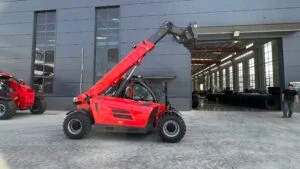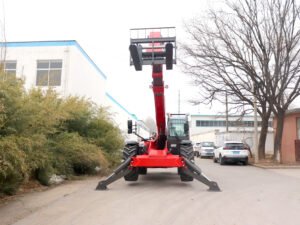
Facing a project, you need a telehandler. Do you rent one for convenience or buy one outright? Many assume rental is always cheaper, but this choice hides complex cost efficiencies.
Deciding between telehandler rental VS purchase depends on project duration, utilization rates, and long-term financial strategy. While rental offers lower upfront costs, purchase often provides greater value for projects exceeding 16-18 months or with high telehandler utilization, turning an expense into a valuable asset.
When I first started in this industry, the choice between telehandler rental and purchasing seemed straightforward. Short-term needs meant renting, long-term meant buying. But as I’ve learned, the actual cost efficiency of a telehandler isn’t just about the initial outlay; it’s a dynamic interplay of hidden fees, asset depreciation, and strategic financial planning that impacts your bottom line. Let’s dig deeper into the details.
Are telehandler rental costs truly cheaper in the long run?
Daily telehandler rental rates often look appealingly low, but this apparent affordability can quickly become a significant financial drain. It’s easy to overlook how these small, daily charges accumulate.
No, telehandler rental, despite lower daily rates, is rarely cheaper in the long run. Rental companies structure fees to maximize equipment utilization, meaning short-term savings often transform into substantial, underestimated costs for projects extending beyond a few months, making telehandler ownership more economical.
Many clients approach me, showing me quotes for daily or weekly telehandler rental, believing they’ve found a bargain. I always caution them to look beyond the surface. What many don’t realize is that rental companies design their pricing to ensure their telehandler machines achieve a utilization rate of 800-1200 hours per year, which is their profit sweet spot, not necessarily your cost-saving sweet spot. For instance, an industry rule of thumb I often share is that daily rental rates are typically 1-1.5% of the monthly rate.
This means that a seemingly “cheap” daily rate quickly adds up. If you need a telehandler for more than a couple of weeks, that daily rate advantage vanishes. My experience shows that if a project requires a 5-ton, 14-18 meter lifting capacity telehandler for anything beyond a short, one-off task, the daily rental model becomes a very expensive proposition. The illusion of low entry cost blinds many to the compounding effect of these daily rates over time. We need to remember that the core business of a telehandler rental company is to make their equipment work for them, not primarily to save you money. Therefore, understanding this underlying financial structure is crucial for any business owner evaluating telehandler options.
Unpacking Rental Rate Structures
| Rental Term | Typical Rate Structure | Long-term Impact on Telehandler Cost |
|---|---|---|
| Daily | Highest relative rate | Rapidly accumulates, costly for extended use |
| Weekly | Moderate relative rate | Better than daily, but still adds up fast |
| Monthly | Lowest relative rate | Most cost-effective for short-medium projects |
As you can see, the perceived savings from short-term daily rates for a telehandler are often a mirage, especially when your project unexpectedly extends.
What hidden fees lurk in telehandler rental agreements?
Beyond the base telehandler rental rate, a myriad of additional charges can quickly inflate your overall expenditure. These hidden fees often catch businesses off guard, drastically altering the true cost.
Telehandler rental agreements commonly include extra charges like maintenance, fuel, wear, cleaning, transportation, and damage waivers, significantly increasing the overall cost beyond the quoted base rate. Overtime usage also incurs substantial hourly fees, turning a budget-friendly telehandler option into an unexpected financial burden.
When clients ask me about telehandler rental, I always emphasize reading the fine print. The base telehandler rental fee is just the beginning. I’ve seen countless cases where businesses are surprised by a long list of additional charges that weren’t initially apparent. Imagine needing a 5-ton, 14-meter telehandler for a critical construction phase.
You budget for the monthly rental, but then the invoice arrives with line items for maintenance fees, fuel surcharges, charges for excessive wear and tear, and even cleaning fees if the telehandler isn’t returned spotless. There are often transport fees for delivery and pickup, which can be substantial depending on the distance, adding significantly to the overall cost of the telehandler. Moreover, many rental companies require you to take out a damage waiver, an additional daily or weekly charge that protects against accidental damage, another unavoidable cost when renting a telehandler.
Common Telehandler Rental Surcharges
| Fee Category | Description | Impact on Telehandler Budget |
|---|---|---|
| Maintenance Fee | Routine servicing, wear parts | Can be a fixed percentage or hourly |
| Fuel Surcharge | Cost of fuel at pickup/return | Varies, often higher than market rate |
| Wear & Tear | Charges for damage beyond “normal” use | Subjective, can be disputed |
| Cleaning Fee | If telehandler not returned clean | Simple but adds up |
| Transportation | Delivery and pickup costs | Significant, distance-based |
| Damage Waiver | Optional (often mandatory) insurance for damage | Daily/weekly cost, non-refundable |
| Overtime Usage | Hourly charges for exceeding agreed operating hours | Extremely high hourly rates |
I had a client once who rented a telehandler for a major agricultural project, thinking it would be cost-effective. They ended up paying almost 30% more than the base rental cost due to overtime charges during peak harvest season and significant transport fees. This experience cemented my belief that the true cost of telehandler rental is often heavily underestimated.
For a 12-month project, I’ve seen rental costs for a 6-ton machine easily spiral to $54,000-$74,400. In fact, if you continuously rent a telehandler for 16-18 months, the total expense can approach the price of buying a brand-new machine. After that point, every single telehandler rental payment is pure, irrecoverable expenditure. This is a critical point when considering telehandler rental vs purchase.
How does buying a telehandler turn expenditure into an asset?
Many perceive purchasing a telehandler as a large expenditure, but I see it differently. It’s not just a cost; it’s a strategic conversion of cash into a tangible, income-generating asset.
Purchasing a telehandler transforms an operational expense into a depreciating asset that retains significant residual value, making the initial outlay an investment rather than a sunk cost. This financial approach allows businesses to build equity and provides potential resale value, distinguishing it from the purely consumptive nature of telehandler rental.
When I discuss the option of purchasing a telehandler with my clients, I emphasize this fundamental shift in financial perspective. With telehandler rental, you pay for temporary access, and that money is gone forever. With a purchase, you acquire an asset that works for you, has a lifespan, and can be resold. This is why I always bring up the concept of Total Cost of Ownership (TCO) for a telehandler, which provides a much clearer picture than just the initial price tag. TCO includes the initial purchase price, but it also factors in ongoing maintenance and servicing, fuel costs, potential repair expenses, and crucially, the depreciation and eventual residual value.
Total Cost of Ownership (TCO) Components for a Telehandler
| Cost Category | Description | Financial Impact |
|---|---|---|
| Initial Purchase Price | Upfront cost of the telehandler | Major initial outlay, but recoverable |
| Maintenance & Service | Routine inspections, preventative maintenance | Ongoing operational cost, preserves asset value |
| Fuel | Operational fuel consumption | Variable operational cost |
| Repairs | Unexpected breakdowns, component replacement | Contingency cost, can be mitigated by warranty |
| Insurance & Taxes | Asset protection and statutory obligations | Ongoing fixed cost |
| Depreciation/Residual Value | Decline in value over time, offset by resale value | Accounting adjustment, source of capital recovery |
I’ve seen European brands of 4-5 ton telehandlers priced at FOB $72k-$115k. In contrast, Chinese factories, like HIXEN, can supply comparable telehandlers for about $32k-$45k FOB. This significant price difference means the entry barrier to owning a telehandler is much lower than many assume, especially when you consider direct factory sourcing. The residual value aspect is also critical. A well-maintained, quality brand telehandler can retain 15-20% of its value even after 3-5 years of use. This isn’t just an accounting entry; it’s tangible capital that can be reinvested. So, the money you spend on a telehandler isn’t “gone”; it’s “configured” into a productive, reclaimable asset. This perspective is vital when comparing telehandler rental vs purchase.
Can purchasing a telehandler offer better long-term value?
Beyond the asset conversion, purchasing a telehandler unlocks significant long-term financial advantages, especially through economies of scale and strategic market timing. These factors are rarely considered in short-term rental calculations.
Yes, purchasing a telehandler often delivers superior long-term value due to greater control over operational costs, access to residual value, and substantial savings realized through economies of scale for larger fleets. Strategic acquisition during favorable market conditions further enhances the long-term economic benefits of owning a telehandler over renting.
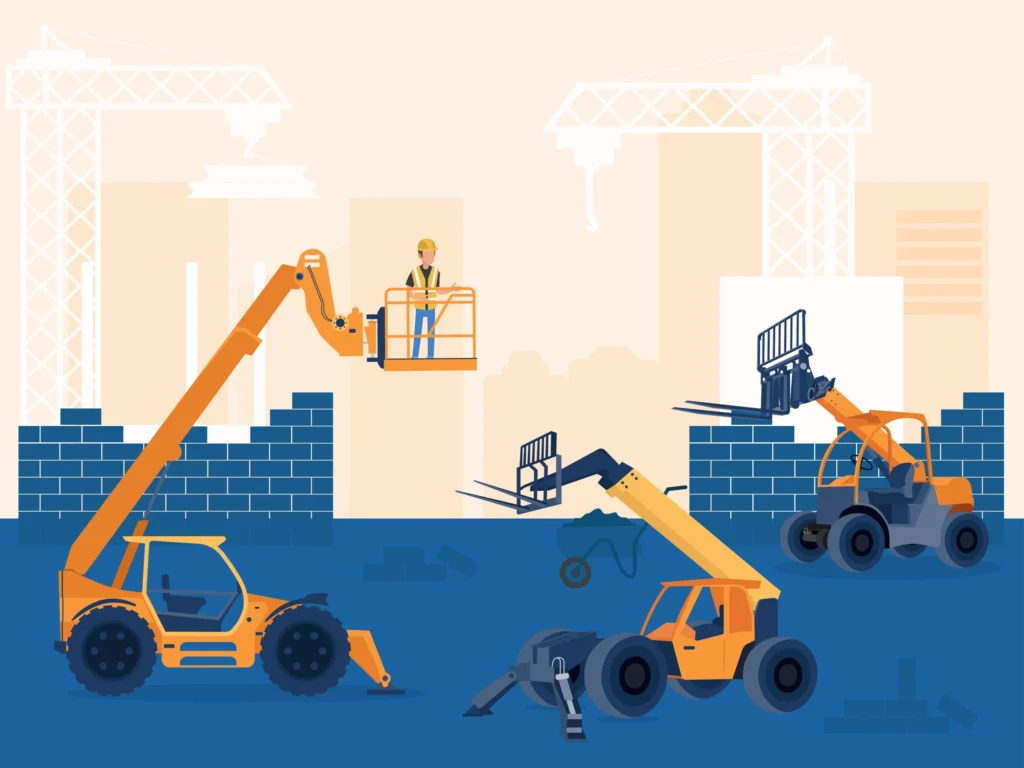
When I advise businesses with larger operations, particularly those with fleet requirements, the long-term value of purchasing a telehandler becomes overwhelmingly clear. For companies managing a fleet of 20-50 telehandler units, direct purchasing from a factory like HIXEN, compared to a five-year rental contract, can result in total cost savings of 25-35%. This is a massive difference, directly impacting profitability.
These savings are driven by the elimination of rental company markups, bulk purchasing discounts, and the ability to amortize maintenance costs across a larger asset base. The key metric I encourage my clients to consider is equipment utilization. If your telehandler’s annual utilization rate consistently exceeds 60%, the economic benefits of owning a telehandler significantly outweigh those of telehandler rental. This threshold is where the cost per operational hour drops dramatically for an owned machine.
Economic Benefits of Telehandler Purchase vs. Rental
| Factor | Telehandler Purchase (Long-term) | Telehandler Rental (Long-term) |
|---|---|---|
| Cost Control | High | Low (hidden fees, rate changes) |
| Asset Value | Equity building, residual value | None, sunk cost |
| Bulk Savings | Significant for fleet purchases | Minimal/Non-existent |
| Utilization (>60%) | Highly economical | Very expensive |
| Customization | Full flexibility | Limited/Impossible |
| Capital Recovery | Yes, via resale | No |
I’ve also observed interesting market dynamics. For example, new telehandler machine prices for 2026 models have already seen a 5-8% increase. However, because factories often have inventory telehandler machines (pre-built or previous year models), you can still find telehandler units that are $3k-$6k cheaper than ordering a brand-new custom build. This market window presents a golden opportunity. For projects with high utilization and a definite long-term need for a telehandler, securing one of these inventory machines now means you lock in a lower price and avoid future increases. The sooner you make that purchase, the more you leverage these market efficiencies and solidify the long-term value of your telehandler investment.
When is telehandler rental the smarter financial choice?
While the long-term financial benefits often favor buying, there are specific scenarios where telehandler rental genuinely makes more sense. It’s crucial to recognize these situations to avoid unnecessary capital expenditure.
Telehandler rental is the smarter financial choice for projects under 12 months, infrequent or varied equipment needs, or when a company lacks internal maintenance capabilities. It provides flexibility, avoids large capital outlays, and transfers maintenance burdens, making it ideal for short-term, uncertain, or specialized telehandler requirements.
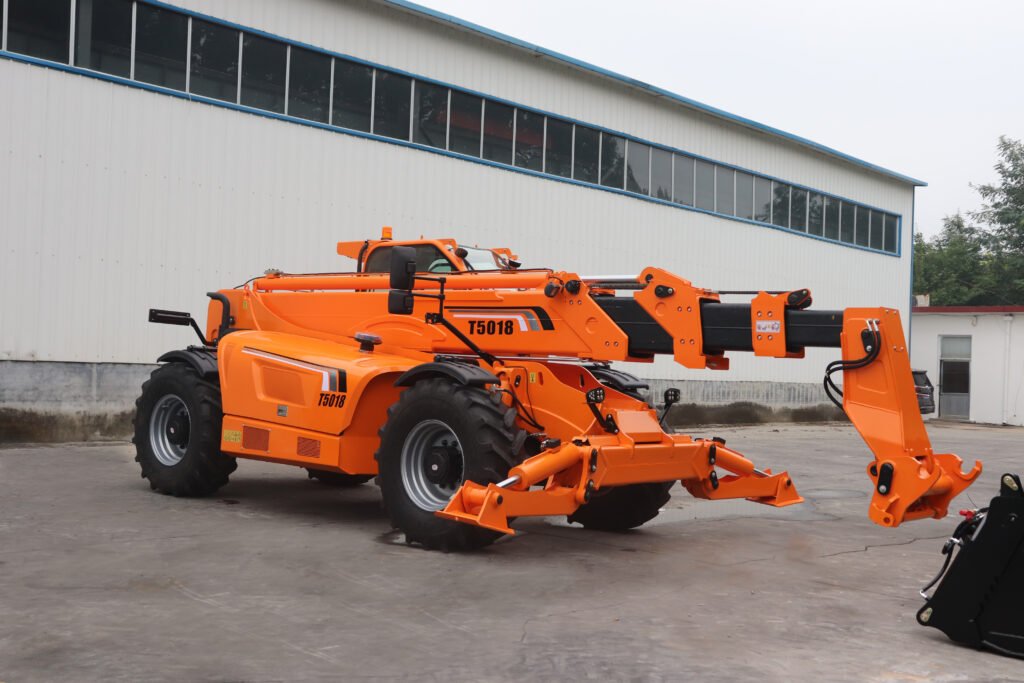
I always tell my clients that there’s no one-size-fits-all answer. Despite the compelling arguments for purchasing a telehandler, I understand that sometimes, telehandler rental is the pragmatic and financially sound option. The primary scenario where telehandler rental shines is for short-duration projects. If your project cycle is less than 12 months, the initial capital outlay and long-term commitment of purchasing a telehandler simply don’t make sense. The cost of ownership, including depreciation and interest on financing, often outweighs the rental costs for such brief periods. For instance, a small, independent contractor who only needs a telehandler for a few weeks to assist with a specific residential build might find rental ideal.
Ideal Scenarios for Telehandler Rental
| Scenario | Rationale | Benefit of Telehandler Rental |
|---|---|---|
| Short-term Projects (<12 months) | Purchase costs (depreciation, financing) outweigh rental for brief periods. | Avoids large capital investment, minimal commitment. |
| Variable Equipment Needs | Different projects require different telehandler specifications. | Flexibility to switch telehandler models without asset burden. |
| No Maintenance Capability | Lack of in-house technicians, repair facilities, or spare parts inventory. | Maintenance, repairs, and compliance are handled by the rental company. |
| One-off Specialized Tasks | Need for a highly specialized telehandler model that won’t be used frequently. | Cost-effective for unique, infrequent telehandler applications. |
| Cash Flow Constraints | Limited capital for outright telehandler purchase. | Converts capital expense to operational expense, preserving cash. |
Another common situation is when your equipment needs are not fixed. One project might require a compact telehandler for tight spaces, while the next demands a high-reach, heavy-duty machine. If you purchase, you’re locked into one type of telehandler. With rental, you have the flexibility to procure the exact telehandler model needed for each specific job, optimizing efficiency without tying up capital in underutilized assets. Finally, if your company lacks the internal resources, expertise, or infrastructure for telehandler maintenance and repair, telehandler rental eliminates that burden entirely. The rental company is responsible for ensuring the telehandler is operational and compliant. In these specific cases, telehandler rental isn’t just convenient; it’s a strategic choice.
When does telehandler purchase make the most economic sense?
While rental offers flexibility for certain situations, I consistently see that for businesses with sustained demand and a long-term vision, purchasing a telehandler provides unparalleled economic advantages.
Telehandler purchase is economically superior when annual utilization exceeds 60%, project cycles surpass 16-18 months, or for large fleets benefiting from bulk buying. It also makes sense for niche high-specification telehandler models, like 5-ton/18-meter units, which are often scarce and expensive to rent, ensuring long-term operational efficiency and cost savings.
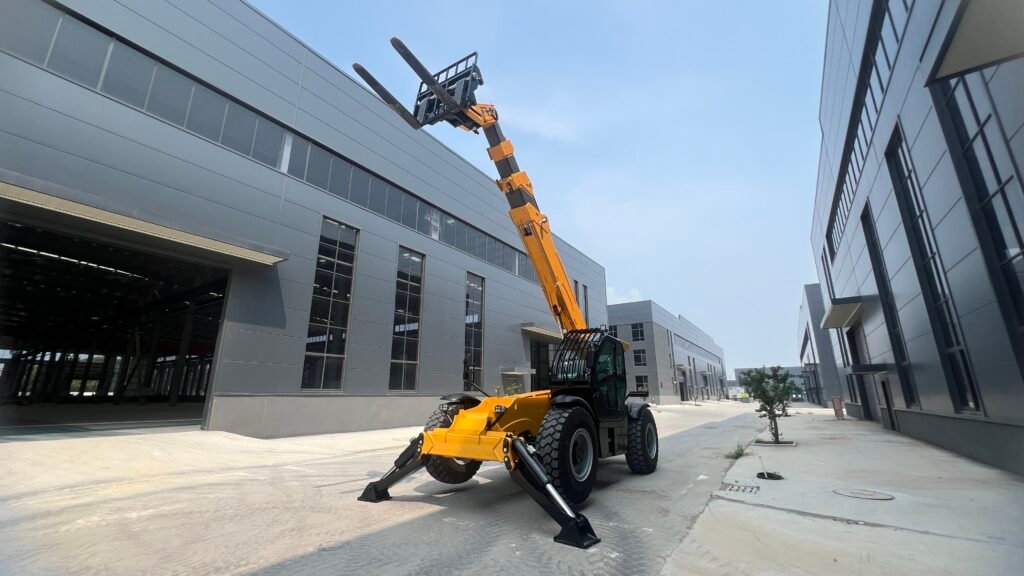
From my vantage point, advising businesses on equipment acquisition, the decision to purchase a telehandler crystallizes when certain operational and financial conditions are met. The most significant indicator is high utilization. If your telehandler is expected to be in use for more than 60% of its potential operating hours annually, the per-hour cost of ownership plummets, making it far more economical than even a long-term rental contract.
This is particularly true for businesses in active construction, large-scale agriculture, or busy port operations where a telehandler is a daily necessity. I often illustrate this with real-world examples: imagine a construction firm consistently using a telehandler 6-8 hours a day, five days a week. Over a year, their utilization rate easily exceeds 60%, and their savings from ownership compared to telehandler rental become substantial.
Key Indicators for Telehandler Purchase
| Indicator | Rationale | Economic Advantage |
|---|---|---|
| Annual Utilization > 60% | Spreads fixed costs (depreciation, initial purchase) over more operational hours. | Lower effective cost per hour of telehandler use. |
| Project Cycle > 16-18 Months | Rental costs typically approach purchase price after this duration. | Avoids accumulated sunk rental costs, builds asset equity. |
| Large Fleet Requirements | Bulk purchasing discounts, standardized maintenance, better control. | Significant total cost savings, operational synergies for the telehandler fleet. |
| Need for Specific Models | Specialized telehandlers (e.g., 5-ton/18-meter) are rare to rent. | Guaranteed availability, avoids high premium rental rates. |
| Long-term Strategic Growth | Equipment as a core asset for sustained business operations. | Enhances operational independence, improves balance sheet. |
Moreover, if your project horizon stretches beyond 16-18 months, the accumulated cost of telehandler rental often surpasses the outright purchase price of a new telehandler. At this point, every subsequent rental payment is pure expense, whereas an owned telehandler continues to be an asset. For companies needing specific high-capacity telehandler models, like a 5-ton, 18-meter unit, purchasing is often the only viable long-term solution. These specialized telehandlers are scarcer in the rental market, driving up rental premiums significantly, if they are even available. My experience tells me that for any business planning for consistent growth and sustained equipment needs, purchasing a telehandler is not just a financial decision; it’s a strategic investment in long-term operational efficiency and financial stability.
Why is HIXEN making telehandler ownership more affordable?
I’ve shown you why buying a telehandler can be better, but I know cost is often the biggest hurdle. This is where HIXEN steps in, fundamentally changing the economics of telehandler ownership, making it accessible and advantageous.
HIXEN makes telehandler ownership more affordable by offering factory-direct pricing that undercuts traditional European brands significantly, eliminating middleman costs. For high-specification telehandlers like our 5-ton/18-meter models, our competitive pricing means long-term ownership becomes a viable, cost-effective alternative to expensive and scarce rental options, ensuring superior ROI.
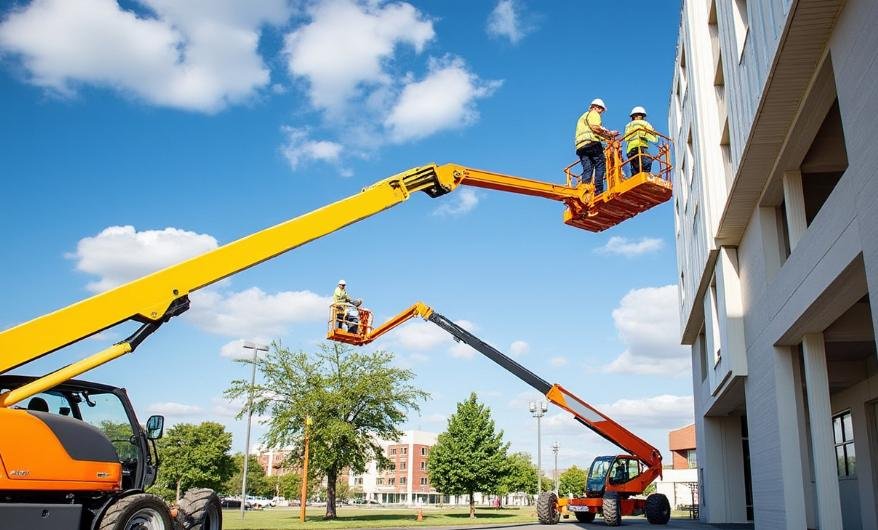
As someone deeply involved in the telehandler industry, I’ve seen firsthand how HIXEN’s business model disrupts the traditional cost structure of equipment ownership. Our factory-direct approach, based in Shandong, China, with 15 years of export experience, eliminates multiple layers of distributors and dealers. This direct-to-customer model means we can offer telehandlers at prices that are dramatically lower than comparable European brands. Let me put it into perspective: for a 4-5 ton/8-meter telehandler, a European brand’s FOB price might range from $72k-$115k.
A HIXEN telehandler of the same class, supplied directly from our factory, can be yours for approximately $32k-$45k. This isn’t just a small discount; it’s a fundamental re-evaluation of what a high-quality telehandler should cost. This competitive pricing significantly lowers the barrier to telehandler ownership, making the purchase decision much more appealing when compared to telehandler rental.
HIXEN Telehandler Price Comparison (FOB)
| Telehandler Specification | European Brand (Estimated FOB) | HIXEN (Estimated FOB) |
|---|---|---|
| 4-5 Ton / 8 Meter | $72,000 – $115,000 | $32,000 – $45,000 |
| 5 Ton / 14-18 Meter | $95,000 – $130,000 | $40,000 – $55,000 |
Beyond just the price, consider the specific value of our high-specification telehandler models. My factory, HIXEN, specializes in telehandlers with capacities ranging from 2-7 tons and lifting heights from 7-18 meters. Our 5-ton/18-meter telehandler, for example, is a powerhouse for many demanding applications. Such high-capacity and high-reach telehandlers are often scarce in the rental market, and when available, they command exorbitant rental premiums. The long-term accumulated rental fees for a telehandler of this caliber could easily exceed the cost of purchasing multiple HIXEN units. By making these robust, high-performance telehandlers directly accessible and affordable, HIXEN isn’t just selling machines; we’re providing a strategic alternative to the often-unpredictable and expensive world of telehandler rental.
How can HIXEN telehandlers offer a superior ROI compared to rental?
I’ve laid out HIXEN’s pricing advantage, but the true benefit of our telehandlers extends beyond the initial purchase price. It’s about delivering a superior Return on Investment, making your capital work harder and smarter.
HIXEN telehandlers deliver superior ROI compared to rental through significantly lower acquisition costs, robust 12-month warranties reducing repair risks, and specialized features like 5-ton/18-meter capacity and crab steering that enhance productivity. Our direct model and quality ensure that the investment’s return on a HIXEN telehandler becomes evident within 18-26 months, far outperforming long-term telehandler rental.
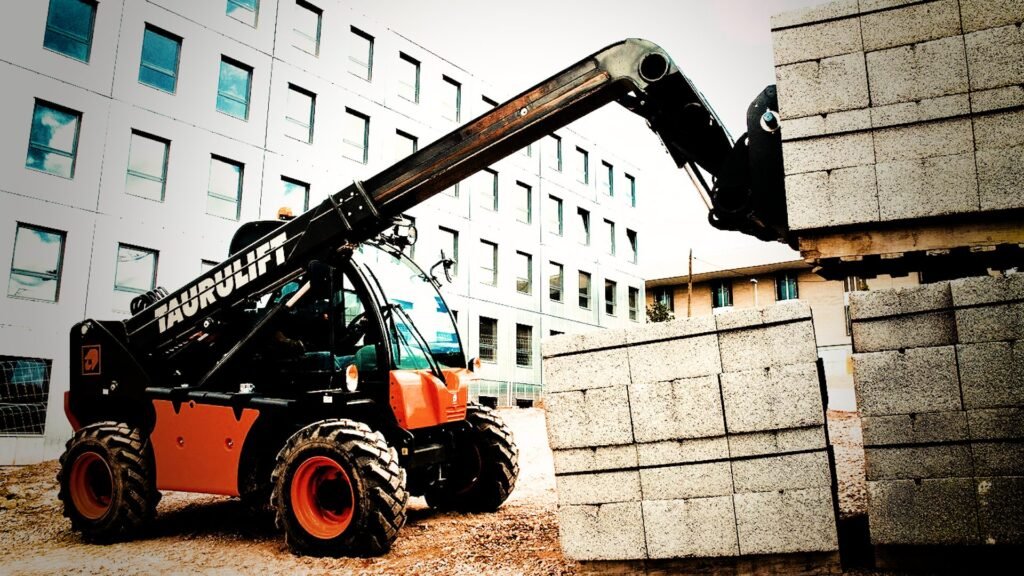
When I speak with customers about their telehandler acquisition, the conversation inevitably turns to ROI – Return on Investment. With HIXEN telehandlers, we don’t just offer a competitive price; we structure the deal to maximize your ROI within a surprisingly short timeframe. Based on industry data and our own customer feedback, the ROI advantage of a Chinese factory-direct telehandler, especially when paired with a pre-purchased spare parts package, typically becomes evident within 18-26 months. This means that within two years, your HIXEN telehandler has effectively paid for itself in terms of cost savings compared to continuous telehandler rental. This rapid ROI is a game-changer for businesses looking to optimize their equipment budgets.
HIXEN Telehandler ROI Advantages
| Factor | HIXEN Telehandler Purchase | Telehandler Rental (Comparable) |
|---|---|---|
| Initial Investment | Low (factory-direct pricing) | Low (no purchase), but accumulated rental costs quickly exceed. |
| ROI Realization | 18-26 months (with parts package) | Never, as it’s a pure expense |
| Warranty | 12-month quality guarantee | Varies, often basic liability on operator error |
| Residual Value | Retains value, can be resold or traded | None |
| Operational Control | Full control over usage, maintenance schedule, parts. | Limited by rental terms, dependent on rental company. |
| Productivity Features | High-spec models, 4-wheel steer, crab mode (HIXEN) | Standard models typically, less specialized features. |
Furthermore, every HIXEN telehandler comes with a comprehensive 12-month quality guarantee. This significantly mitigates your risk regarding unexpected repairs and maintenance costs during the critical initial period of ownership, further bolstering your ROI. My factory prides itself on the robustness and versatility of our telehandlers. For instance, our 5-ton/18-meter telehandler offers an exceptional combination of capacity and reach, which is a rare find in the rental market.
This capability is complemented by features like four-wheel steering and crab mode, enabling precise maneuverability even in confined construction sites or agricultural settings. We also ensure all our telehandlers have full export certifications, such as CE/UKCA, meaning they meet the strict import requirements of major international markets. This combination of affordability, robust quality, advanced features, and comprehensive support means that a HIXEN telehandler isn’t just an expense; it’s a high-performing investment that consistently delivers superior returns compared to the transient nature of telehandler rental.
Conclusion
Renting a telehandler seems easy, but often hides escalating costs. Purchasing, especially a HIXEN telehandler, becomes an asset with clear ROI for projects over 16-18 months or with high utilization.
Follow us on :YouTube.