Your powerful telehandler is stuck, wheels spinning uselessly. This costly downtime eats into your profits and project timelines. The solution is simpler than you think: it all comes down to the rubber meeting the road.
ال best telehandler tire types are chosen based on your primary work surface, not the machine’s price tag. For soft soil and mud, R-1 agricultural tires are ideal. For mixed-use on hard and soft ground, R-4 industrial tires are a solid choice. For pavement and high-puncture risk areas, L-5 rock tires excel.
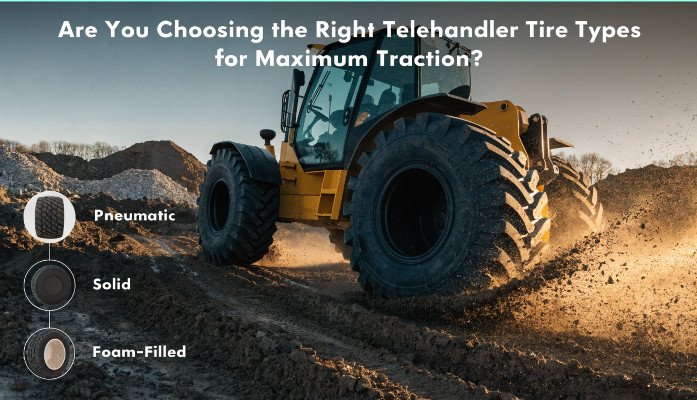
I’ve been in this business for over 15 years, exporting our telehandlers from our factory in Shandong, China. I’ve seen firsthand how a simple tire choice can make or break a machine’s performance. Many people think of tires as just an accessory, but they are a function amplifier. The right set of tires transforms your telehandler from a good machine into a great one, perfectly suited for its task. It’s not about engine power; it’s about how efficiently that power gets to the ground. Let’s dive deep into the world of telehandler tires so you can make the right choice every time.
What are the fundamental telehandler tire types available?
You see codes like R-1, R-4, and L-5, and it feels like a confusing alphabet soup. Choosing the wrong one can lead to poor performance, rapid wear, or even damage to the job site. You shouldn’t have to guess.
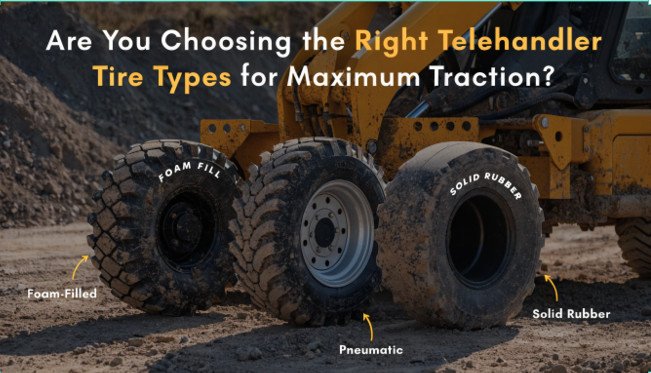
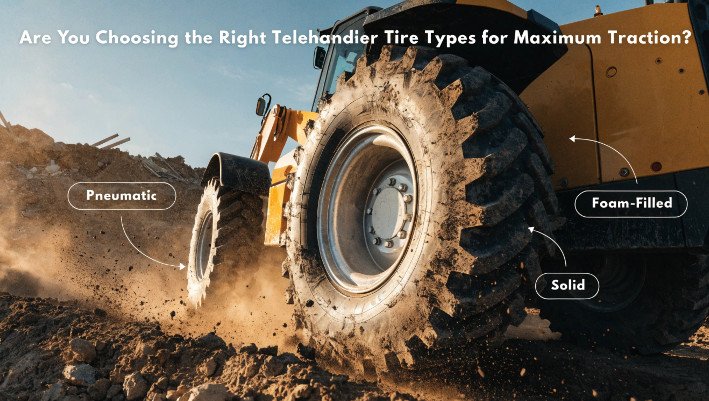
The main categories are Agricultural (R-1/R-1W), Industrial (R-4), Construction/Rock (L-2/L-3/L-5), and Flotation. Each is designed for a specific ground condition, from soft farm soil to hard quarry rock. Understanding these basic telehandler tire types is the first step.
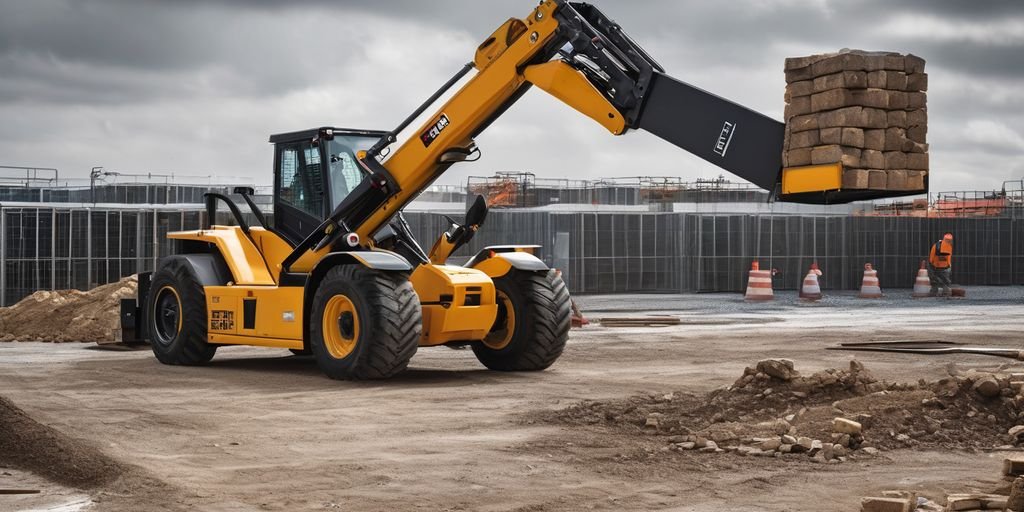
Over my 15 years of helping customers spec their machines, the most common point of confusion is right here. People often default to the tire that comes standard, not realizing it might be completely wrong for their main application. Let’s break down the most common telehandler tire types in a simple way. Think of it as choosing the right shoes for a specific activity. You wouldn’t wear hiking boots to run a marathon on pavement.
Here’s a simple table to get you started:
| Tire Type | Common Name | الاستخدام الأساسي | ميزة رئيسية |
|---|---|---|---|
| R-1 / R-1W | Agricultural (Ag) Tire | Soft soil, mud, fields | Deep, V-shaped lugs for digging |
| R-4 | Industrial / All-Terrain | Mixed surfaces, hardpack, dirt | Wide, interlocking blocks |
| L-5 | Rock Tire | Quarries, demolition, pavement | Very deep tread, high cut resistance |
| Flotation | High Flotation Tire | Very soft/sandy ground, turf | Wide, rounded profile to spread weight |
The R-1 tire is the king of the farm. Its deep lugs are designed to bite into the earth and pull. The R-4 is the generalist, a good compromise for contractors who work on both dirt lots and paved areas. The L-5 is the tough guy, built to resist cuts and last a long time on abrasive surfaces. Finally, flotation tires are specialists that prevent the machine from sinking into very soft ground. Understanding these core categories of telehandler tire types is the foundation for getting maximum performance.
How does tire tread really impact telehandler traction?
You see a tire with deep, aggressive lugs and assume it means more traction everywhere. But then you see that same tire on a muddy site, completely caked with clay, spinning like a racing slick. What went wrong?
Tire tread design dictates how a tire grips a surface and, just as importantly, how it cleans itself. Deep, spaced-out lugs (like R-1) are for digging into soft ground. Wider, interlocking blocks (like R-4) provide stability and wear life on harder surfaces.
I remember a call from a frustrated customer in a rainy region. His crew’s new telehandler was completely immobilized in wet clay, while an older, less powerful tractor nearby was moving around just fine. The problem wasn’t the machine; it was the R-4 industrial tires he had chosen. They were completely packed with mud. This is a perfect example of traction not being about engine power, but about “adhesion conversion efficiency.” Your engine can produce all the power in the world, but if the tires can’t transfer it to the ground, you go nowhere.
The magic is in the tread design’s relationship with the ground.
- Lug-to-Void Ratio: This is the balance between the solid rubber part of the tread (the lug) and the empty space (the void).
- High Voids (like an R-1 tire): The large gaps between the deep lugs allow mud and debris to be squeezed out as the tire rotates. This is called “self-cleaning.” The lugs stay clear to take a fresh bite into the ground with every rotation.
- Low Voids (like an L-5 tire): More rubber is in contact with the ground. This is great for wear and stability on hard, dry surfaces like concrete, but in mud, there’s nowhere for the mud to go. It packs into the shallow voids, and you lose all grip.
Choosing from the various telehandler tire types is about matching this self-cleaning ability and grip style to your environment.
Which telehandler tire types should I use for soft or muddy ground?
The forecast calls for rain all week, and you have a deadline. Your job site is about to turn into a swamp, and you’re worried your telehandler will become a very expensive, stationary piece of art.
For extreme mud, soft soil, or agricultural applications, R-1 or R-1W (which has an even deeper tread) agricultural tires are the best choice. Their deep, V-shaped, widely spaced lugs are engineered specifically to dig in, self-clean, and provide maximum pulling power in these conditions.
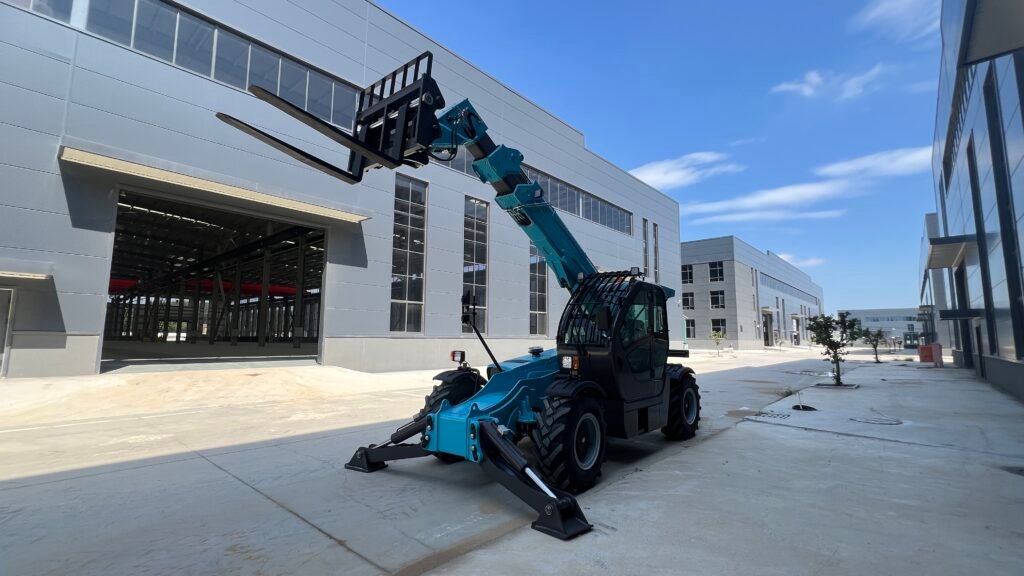
Let’s run a thought experiment I’ve seen play out in real life countless times. Imagine we take one of our 4-ton, 10-meter telehandlers and place it on a wet, 20% clay slope. We test it with three different telehandler tire types.
- With R-4 Industrial Tires: The machine starts to climb, but the treads quickly pack with the sticky clay. The tires begin to spin. The operator has to back down, losing time and churning up the ground, making the problem worse.
- With Flotation Tires: The machine sits on top of the mud better than the R-4s, but the rounded, less aggressive tread doesn’t provide enough directional bite to climb the slope effectively. It’s great for not sinking on flat ground but lacks pulling power.
- With R-1 Agricultural Tires: The deep lugs dig past the slick surface layer, finding firmer ground beneath. As the tire rotates, the flexing action and wide voids eject the mud, keeping the tread clean for the next bite. The telehandler climbs the slope steadily.
Here’s how the performance might look in a simplified table:
| Tire Type | Performance on 20% Wet Clay Slope | Key Action |
|---|---|---|
| R-4 | Poor – High slip rate after 5 meters | Clogs with mud |
| Flotation | Poor to Fair – Sinks less, but low traction | Floats, but doesn’t dig |
| R-1 | Excellent – Consistent climb with minimal slip | Digs and self-cleans |
This is why we always ask our customers about their ground conditions. For anyone working regularly on farms, undeveloped land, or in rainy climates, choosing R-1 telehandler tire types is a decision that pays for itself on the first muddy day.
What are the best telehandler tire types for hard surfaces like concrete?
You are running your telehandler mostly on pavement, moving materials around a storage yard or on a construction site with established roads. You feel a constant, bumpy vibration, and you notice your aggressive tires are wearing down much faster than you expected.
For job sites where the telehandler operates primarily on hard surfaces like concrete, asphalt, or heavily compacted gravel, an L-5 rock tire offers the best durability. An R-4 industrial tire is a good, more versatile second choice if you still encounter some dirt.
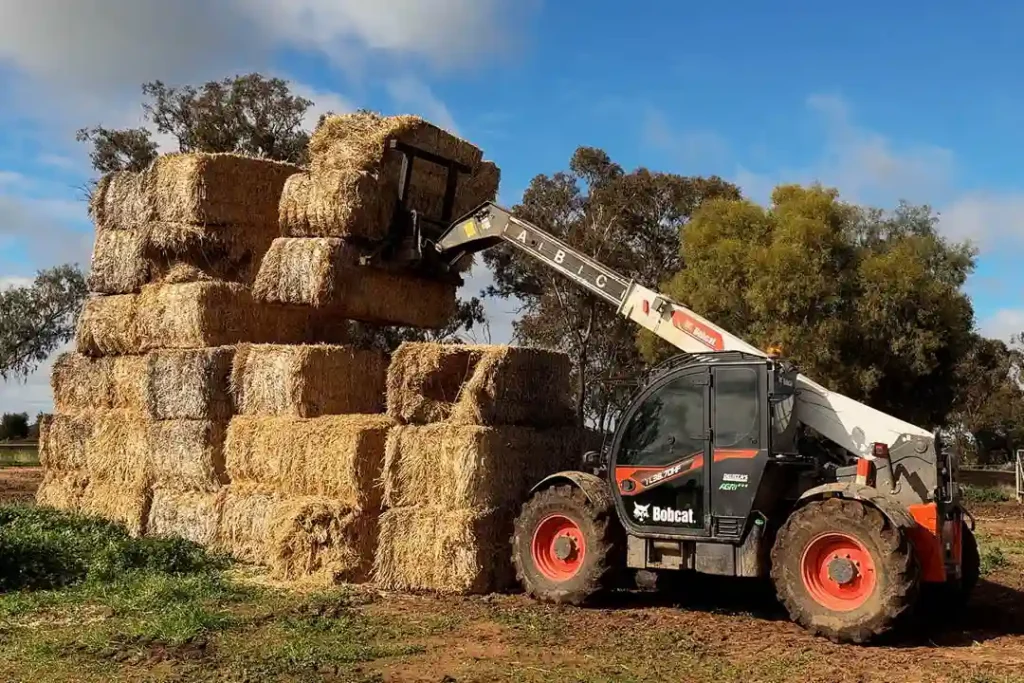
Using an aggressive R-1 agricultural tire on concrete is like using a cheese grater on a block of ice. It works, but it destroys the tool. The deep, narrow lugs of an R-1 tire are designed to be cushioned by soft soil. On an unforgiving surface like concrete, they face immense pressure and friction. This leads to several problems:
- Rapid Wear: The lugs are literally scrubbed away, drastically shortening the tire’s life.
- Poor Stability: The tall lugs can flex and “squirm” under load, especially during turns, which can make the machine feel unstable.
- Reduced Contact Patch: An R-1 tire on a flat surface is only touching the ground on the tips of its lugs. This reduces braking effectiveness and overall grip.
- Fuel Inefficiency: The friction and tread squirm create rolling resistance, forcing the engine to work harder just to move, which burns more fuel.
This is where the less aggressive telehandler tire types shine. An R-4’s wider, flatter blocks provide a much larger contact patch for stability and even wear. For the ultimate in hard-surface performance, the L-5 rock tire is the champion. It has an extremely deep tread made of a special compound designed to resist cuts and abrasion. It has more rubber and less void space, maximizing the contact area and providing a stable, long-lasting platform. Choosing the right telehandler tire types for hard surfaces is key to lower operating costs.
How can I calculate the real cost of my telehandler tires?
You look at two quotes for tires. One set is 30% cheaper, and it’s tempting to just go for the lower price to save money upfront. But six months later, you’re replacing those cheap tires while your fuel consumption has mysteriously gone up.
The true cost of a tire is its Total Cost of Ownership (TCO), not its initial purchase price. TCO includes the price, plus its effect on fuel economy, its expected lifespan, and the cost of downtime and lost productivity when it fails or needs replacement.
As a manufacturer, we want our customers to be profitable. A telehandler that is cheap to run makes for a happy customer. That’s why I always talk about TCO, especially concerning telehandler tire types. A more expensive tire that is correct for the application can be far cheaper in the long run.
Let’s create a simplified Life Cycle Cost comparison for a machine that works 1,500 hours per year, primarily on a mix of dirt and mud.
| عامل التكلفة | Option A: Cheap R-4 Tire | Option B: Premium R-1 Tire |
|---|---|---|
| سعر الشراء الأولي | $2,000 / set | $3,000 / set |
| Estimated Lifespan | 1000 ساعة | 2,000 hours |
| Productivity Impact | High slip in mud = 10% lost time | Low slip in mud = 0% lost time |
| Fuel Impact | Slipping wastes fuel (+5%) | Good traction is efficient |
| Cost over 3,000 hours (2 years) | ||
| Tire Purchases | 3 sets = $6,000 | 1.5 sets = $4,500 |
| Lost Productivity Cost* | 300 hours x $75/hr = $22,500 | $0 |
| Extra Fuel Cost** | ~$2,000 | $0 |
| Total Cost over 2 years | $30,500 | $4,500 |
*Assuming machine operational cost is $75/hour.
**Based on average fuel use and cost.
As you can see, the “cheap” tire ends up costing over six times more when you factor in its poor performance. The initial $1,000 savings is wiped out many times over by lost work and extra tire purchases. This is why analyzing the application is so crucial when selecting from the available telehandler tire types. A smart investment in the right tires delivers returns every single day.
Is it safe to mix different telehandler tire types on my machine?
You have a flat tire, and the only spare available is a completely different tread pattern. You need to get the machine working again, but you’re worried about causing damage. Is it okay to mix and match?
As a general rule, you should never mix different telehandler tire types, sizes, or wear levels on the same axle. However, in very specific applications, some operators mix tire types between the front and rear axles, but this requires expert knowledge and should be done with caution.
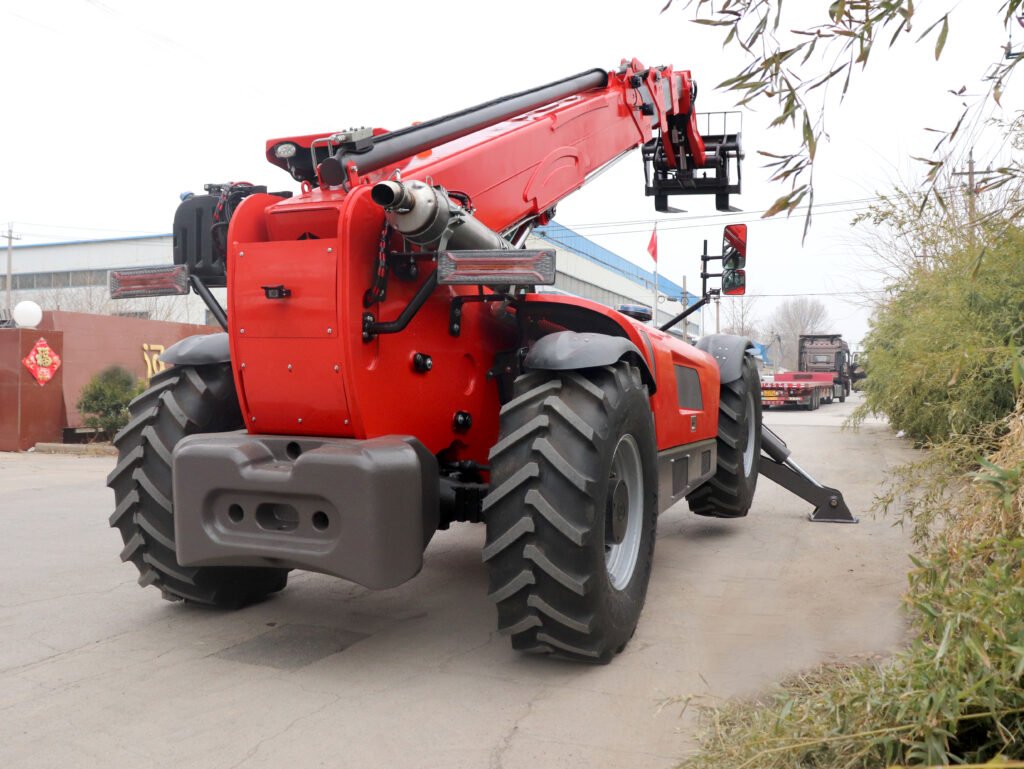
Mixing tires on the same axle is a definite no. A tire with a deeper tread will have a slightly larger overall diameter than a worn tire of the same size. This difference forces the drivetrain to work constantly, causing significant strain and premature wear on the differential and axles, especially on a 4-wheel-drive machine.
However, the more interesting conversation is about intentionally mixing telehandler tire types on the front and rear axles. This is an advanced strategy, and I only recommend it after a thorough analysis of the machine’s primary tasks. Here’s a scenario where it might make sense:
- Application: A telehandler that spends most of its time lifting heavy loads from a soft, muddy stockpile and loading them onto trucks on a paved road.
- The Strategy:
- Front Axle: Fit R-1 agricultural tires. The front axle bears the most weight during lifting and pushing. The aggressive R-1 tread will provide the raw digging traction needed to push into the stockpile without spinning.
- Rear Axle: Fit R-4 industrial tires. The rear axle handles most of the steering. The R-4’s block tread provides better lateral stability, a smoother ride when traveling, and longer wear life on the pavement section of the route.
Crucial Caveats:
- Check with the Manufacturer: Always confirm if your specific telehandler model’s drivetrain can handle this.
- Identical Rolling Circumference: The overall diameter/circumference of the front and rear tires must be identical to prevent drivetrain binding.
- Understand the Risks: This setup can be less stable during high-speed travel on hard surfaces. It is a specialist solution for a specific problem.
Mixing telehandler tire types isn’t for everyone, but it shows how nuanced tire selection can be.
What are the biggest mistakes people make when choosing telehandler tire types?
You’ve invested six figures in a brand-new, top-of-the-line telehandler. But on-site, it’s underperforming. You’re frustrated, blaming the machine’s hydraulics or engine, but the real culprit is sitting right underneath it.
The single biggest mistake is choosing a tire based on price alone or defaulting to a “one-size-fits-all” R-4 tire for every job. Other major errors include ignoring the machine’s travel-to-work ratio and failing to maintain proper tire pressure.
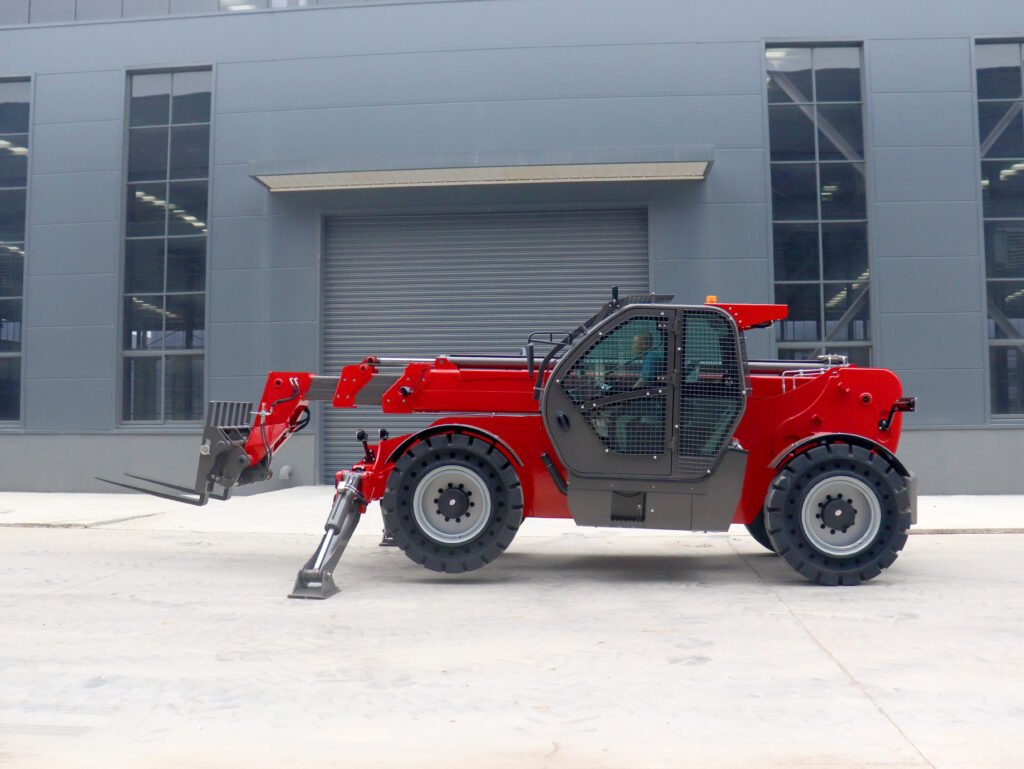
In my role, I often act as a troubleshooter. More often than not, performance issues trace back to a mismatch between the machine’s setup and its job. Here are the top mistakes I see regarding telehandler tire types:
- The “Generalist” Trap: The R-4 industrial tire is the default for many because it’s “good enough” at most things. But “good enough” is the enemy of “great.” If 90% of your work is in deep mud, an R-4 is the wrong tire. You are sacrificing massive amounts of productivity by not using a specialized R-1. Don’t let a generalist tire cripple your specialist machine.
- Ignoring the Travel Factor: A customer once specified R-1 tires for his telehandler because his site was a farm. What he didn’t mention was that the machine had to travel two miles on a paved country road between barns. His aggressive R-1 tires were worn out in less than a year. We should have discussed an R-4 or even a specific hybrid tire. Always consider the entire duty cycle, not just the worksite itself.
- The Pressure Problem: This is the easiest and cheapest thing to get right, yet it’s often overlooked. Tire pressure affects everything.
- Under-inflation: Causes the sidewalls to flex excessively, building up heat and leading to tire failure. It also increases rolling resistance and fuel consumption.
- Over-inflation: Reduces the size of the contact patch, concentrating the machine’s weight on a smaller area. This accelerates center tread wear and reduces traction.
- Forgetting Load Index: Especially with our larger 5-ton and 6-ton models, lifting to full capacity puts immense stress on the tires. Choosing a tire with an insufficient load rating is a major safety hazard that can lead to catastrophic failure. Always match the tire’s load capacity to your machine’s maximum lift capacity. A poor choice among telehandler tire types can have serious consequences.
How do I build a simple framework for selecting the right telehandler tire types?
You need to buy new tires for your machine or an entire fleet. The options are overwhelming, and you’re worried about making a costly mistake. You need a simple, repeatable process to guide your decision.
Create a “Work Condition Scorecard.” Rate your typical job site on a scale of 1 to 5 for four key factors: Soft Ground, Hard Surface Travel, Puncture Risk, and Side Slope Work. The tire type with the highest total score is your best choice.
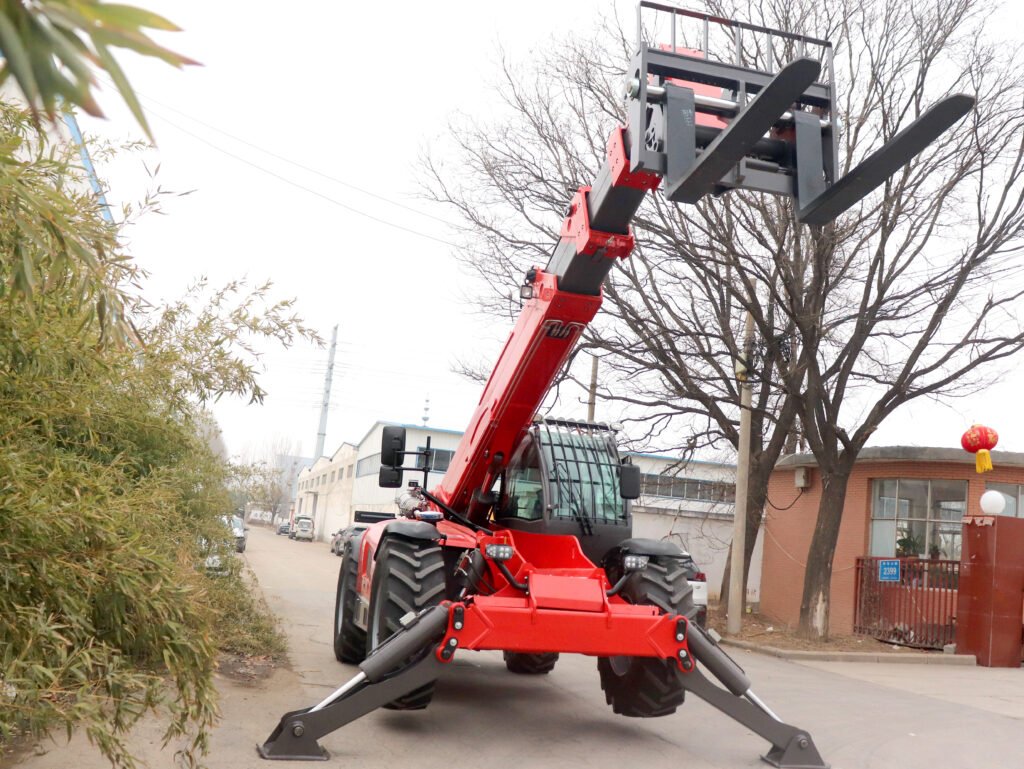
Let’s make this process incredibly simple. This is a framework I’ve developed with customers to take the guesswork out of choosing from the many telehandler tire types. Grab a pen and fill this out for your operation. For each factor, give your worksite a score from 1 (never happens) to 5 (happens all the time).
Step 1: Score Your Worksite
| عامل | Your Worksite Score (1-5) | توضيح |
|---|---|---|
| Soft Ground / Mud | How often are you on soft soil, mud, or loose dirt? (5 = Daily farm work) | |
| Hard Surface Travel | How often do you drive on concrete or asphalt? (5 = Paved yard only) | |
| Puncture Risk | How often are you around sharp rocks or debris? (5 = Demolition site) | |
| Side Slope Stability | How often do you work or travel across slopes? (5 = Hilly terrain) |
Step 2: Compare to Tire Strengths
Now, let’s use this standard chart that rates each tire type’s strengths.
| عامل | R-1 (Agri) Score | R-4 (Indust) Score | L-5 (Rock) Score |
|---|---|---|---|
| Soft Ground / Mud | 5 | 3 | 1 |
| Hard Surface Travel | 1 | 4 | 5 |
| Puncture Resistance | 2 | 3 | 5 |
| Side Slope Stability | 2 | 4 | 4 |
Step 3: Find Your Match
Now, multiply your worksite score by the tire score in each category and add them up.
- Example 1: A Dairy Farm.
- Soft Ground: 5, Hard Surface: 2, Puncture Risk: 2, Side Slopes: 3
- R-1 Total: (5×5)+(2×1)+(2×2)+(3×2) = 25+2+4+6 = 37
- R-4 Total: (5×3)+(2×4)+(2×3)+(3×4) = 15+8+6+12 = 41
- Wait, R-4 scored higher? Let’s re-evaluate. The R-4’s better stability and slightly better puncture resistance gave it the edge in this mixed farm scenario. This shows how the framework challenges assumptions!
- Example 2: A Paved Rental Yard.
- Soft Ground: 1, Hard Surface: 5, Puncture Risk: 3, Side Slopes: 1
- R-1 Total: (1×5)+(5×1)+(3×2)+(1×2) = 5+5+6+2 = 18
- R-4 Total: (1×3)+(5×4)+(3×3)+(1×4) = 3+20+9+4 = 36
- L-5 Total: (1×1)+(5×5)+(3×5)+(1×4) = 1+25+15+4 = 45
- The L-5 is the clear winner for maximum durability.
This simple framework transforms a complex decision about telehandler tire types into a logical, evidence-based choice tailored to your exact needs.
خاتمة
اختيار right telehandler tire types isn’t a minor detail; it is a fundamental decision that directly impacts traction, fuel efficiency, operational safety, and ultimately, your profitability.
تابعنا في:يوتيوب.