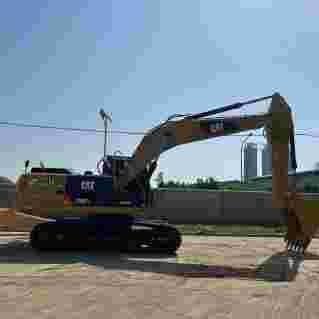
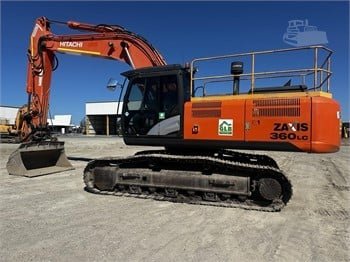
Is your Komatsu excavator showing signs of distress with strange sounds, lack of performance, and leaking oil? If so, it’s time for a replacement part. Proactive replacement before it fails completely can save you a lot of money, and you can keep your excavator working every day.
If you’re experiencing issues like slow digging, strange noises, or fluid leaks, it could be a sign that certain Piezas de excavadora de Komatsu need replacing. Identifying these signs early can prevent extensive damage, improving your machine’s performance and lifespan. Stay proactive with regular inspections and avoid unexpected downtime by addressing issues promptly.
Now, let’s dive into the common signs that suggest your excavadora Komatsu parts are due for replacement.
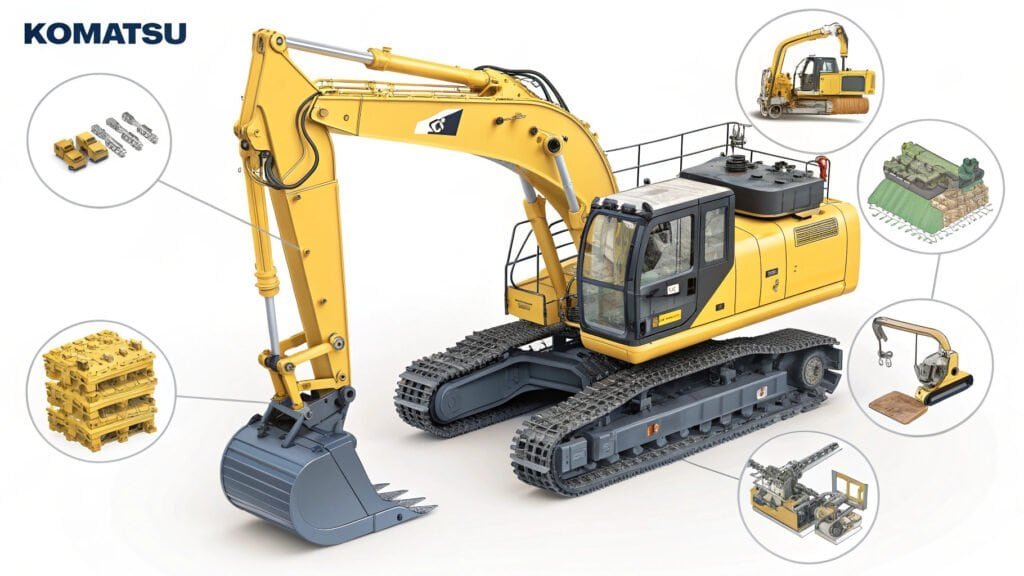
Unusual Sounds and Vibrations
By and large, unusual sounds and increased vibrations are often the first indication that something is starting to go wrong. This could be anything from the hydraulic pump to the tracks to the engine. The quicker you identify these problems, the less time you’ll spend broken down on a job site.
Common Noises and Their Causes:
- Grinding Noise: This could mean your hydraulic pump is worn out, or that your tracks are failing.
- Squealing Sounds: Usually belts and pulleys—quampron or pressure rebuild.
- Vibración excesiva: Could be a number of things: tracks, a bearing, or some other moving part.
What to Do:
If you hear grinding or squealing, check the hydraulic pump for the grinding noise or the belt for the squealing. If you have excessive vibration, this can be caused by worn tracks, a worn bearing, or some other moving component of the machine.
| Sound/Vibration Type | Likely Damaged Part | Acción a tomar |
|---|---|---|
| Grinding Noise | bomba hidráulica | Replace the pump |
| Squealing Sound | Belt, pulley | Adjust tension or replace |
| Vibración excesiva | Tracks, bearings | Inspect and replace |
As long as you are aware and listening for sounds and vibrations, you’ll catch the issues early and prevent the breakdown from causing other parts to fail.
Power Loss or Reduced Performance
If your excavadora Komatsu begins to lose power, the machine’s performance gradually decreases, or it doesn’t perform the way it did just two weeks ago, you will have a problem with the hydraulic system, engine, or fuel system. All of these will directly affect the amount of power your machine
is producing.
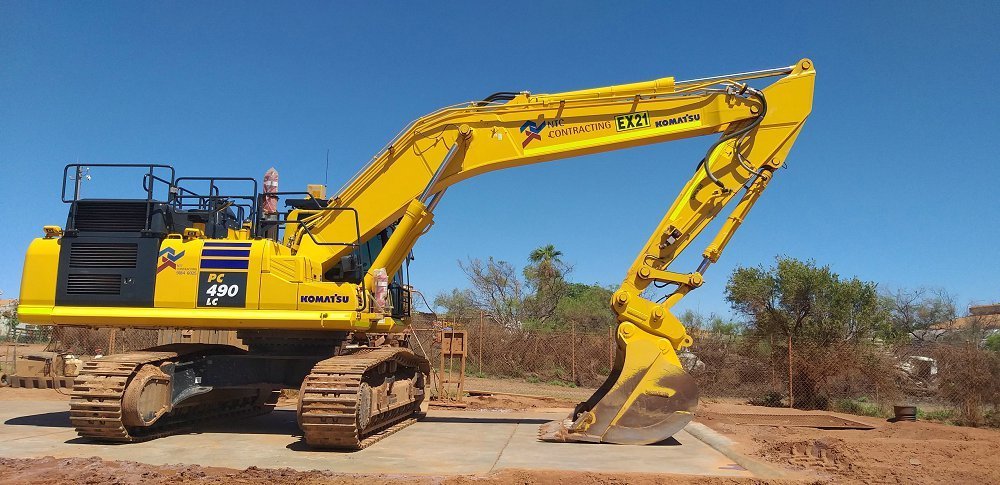
Common Signs of Reduced Performance:
- Slower Digging: The pump is going out or there is a problem with the hydraulic fluid level.
- Loss of Lifting Power: Something is wrong with the engine or the hydraulic system.
- Loss of Speed: Fuel system, fuel filter, or something in the engine is acting up.
What to Do:
In the event of slow digging, check hydraulic fluid levels, and the system for air. In the case of losing lift power, check the engine for damage or performance issues. If you are losing speed, check the fuel system and replace any clogged filters or lines.
| Emisión de rendimiento | Possible Faulty Part | Check/Action Needed |
|---|---|---|
| Slower digging | Hydraulic system, pump | Inspect hydraulic system |
| Loss of lifting power | Engine, hydraulic system | Check engine and fluid levels |
| Reduced speed | Fuel system, engine filter | Clean or replace fuel filter |
If you stay on top of these issues, you will be able to keep that great digging performance.
Komatsu excavator parts Fluid Leaks and Low Fluid Levels
In most cases, your first signs that your Komatsu may need some mechanical attention will be fluid leaks or low fluid levels. When it comes to fluid leaks, the excavator can leak hydraulic fluid, engine oil, transmission fluid, and cooling fluid. Catching and reacting to fluid loss can many times prevent a complete mechanical failure.
Signs of Fluid Issues:
- Oil Puddles: Hydraulic hoses or engine seals are leaking.
- Niveles bajos de fluido: Seals are worn out or you have a damaged hydraulic pump directly connected to the hydraulic fluid reservoir.
- Coolant Leaks: Radiator, coolant hoses, or engine seals are leaking.
What to Do:
See oil puddles, take a hard look at the hydraulic hoses and engine seals for any cracks. Low fluids means you need to see where your hydraulic and/or engine are leaking. Coolant leaks can come from the radiator or the coolant hoses, and you should replace them if they’re damaged.
| Fluid Type | Sign of Leak | Likely Faulty Part | Acción recomendada |
|---|---|---|---|
| Fluido hidráulico | Oil puddles, low fluid level | Hydraulic hose, pump | Replace hoses or pump |
| Engine Oil | Low oil levels | Oil seals, engine gasket | Replace seals, refill oil |
| refrigerante | Coolant spots, overheating | Radiator, hoses | Replace hoses, inspect radiator |
If you address the fluids leaks on time, then you typically keep from having bigger, more expensive repairs down the road.
Visible Wear and Tear
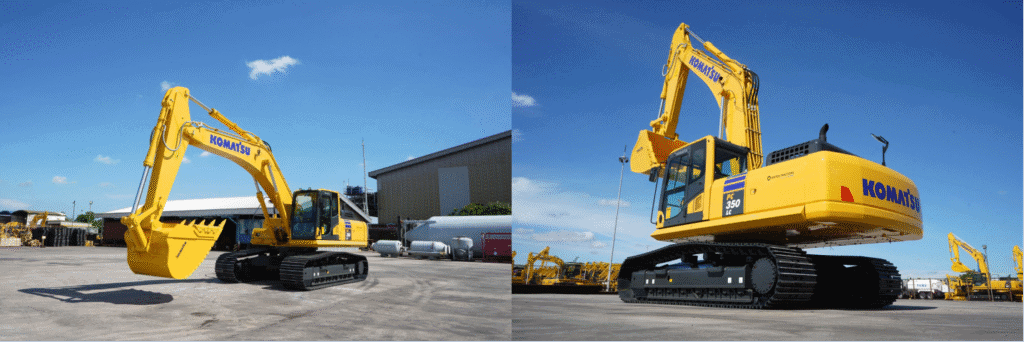
You can see wear and tear on the excavadora Komatsu parts. Quite frankly, the biggest sign is seeing something broken or not in one piece or not operating correctly. Once we see something broken, we can usually back up from that and discover the additional non-broken part or parts that have caused the failure.
Common Visible Damage:
- Cracks or Bends: Bucket, frame, and arm have a crack or are bent.
- Rust or Corrosion: Tracks, undercarriage, and bucket show rust or have corrosion damage.
- Distortion: Boom and arm show distortion or twisting.
What to Do:
Cracks or bends, then replace the affected bucket or frame part. Clean rust or corrosion off, replacing affected components if the wear impedes effectiveness. Do not ignore distortion or bending that affect the critical features of your Komatsu excavator.
| Daño visible | Parte para inspeccionar | Action Required |
|---|---|---|
| Cracks or Bends | Bucket, frame, arm | Replace damaged parts |
| Rust or Corrosion | Tracks, undercarriage | Clean and replace components |
Visual checks are hugely important because you can catch the early signs of something that could potentially become catastrophic if it goes unnoticed and repairs aren’t made.
Malfunctioning Attachments
Attachments are the most valuable factor of a backhoe when it comes to how you can use it. Buckets, augers, breakers, and those types of things are the main things that will give you trouble over time. If an attachment isn’t operating properly, typically the problem will be a worn-out hydraulic cylinder, hydraulic motor, or a bad seal.
Signs of Malfunctioning Attachments:
- Bucket moves too slow: Can be the hydraulic cylinders.
- Unequal digging force: Usually the arm is tweaked or the hydraulic pump is bad.
What to Do:
| Attachment Issue | Likely Faulty Part | Acción recomendada |
|---|---|---|
| Slow bucket movement | Hydraulic cylinder | Replace seals or cylinder |
| Uneven digging force | Arm, hydraulic pump | Inspect and replace components |
If your attachment’s not operating properly, take the time to replace whatever parts are malfunctioning so that your machine will run well.
Error Codes and Troubleshooting
Many modern Excavadoras de Komatsu are equipped with diagnostic systems that will throw error codes to indicate a piece of equipment is malfunctioning. It could be traced to the hydraulic system, fuel engine, or fuel system.
Common Error Codes and Their Meanings:
- Error 202: Hydraulic failure — usually a problem with the hydraulic pump or valves.
- Error 301: Engine failure — could be any part of the engine or a sensor.
- Error 505: Fuel system failure — most likely the fuel pump or filters
What to Do:
If you encounter any of these error codes, look it up in the manual to determine the problem. Replace the bad hydraulic parts. Replace the engine parts. Replace the bad parts in the fuel system.
| Error Code | Descripción | Possible Faulty Part | Next Steps |
|---|---|---|---|
| Error 202 | Hydraulic failure | Hydraulic pump, valves | Inspect and replace hydraulic parts |
| Error 301 | Engine failure | Engine parts, sensors | Check engine components |
| Error 505 | Fuel system malfunction | Fuel pump, filters | Inspect and replace fuel parts |
By quickly responding to error codes, you can prevent bigger problems and keep the excavator running efficiently.
Conclusión
Knowing when to replace your excavator parts can save you a fortune and extend the life of this critical machine. If you hear unusual noises, performance is down, leaks are present, or you can see damage and excess wear – then it’s time to act. The easiest way to catch these immediately is to make regular inspections and to have an established program of machine maintenance. And if you’re not sure, get a mechanic to look at it.
Síguenos en:YouTube.