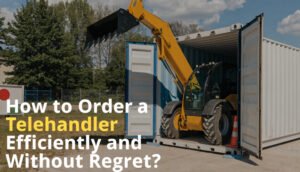
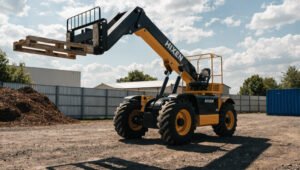
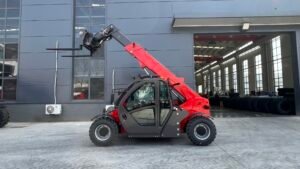
Struggling to find one machine that does it all? Juggling multiple machines on a job site is expensive and slows you down. A telehandler is the versatile solution you need.
A telehandler basics, or telescopic handler, is a powerful machine that combines the reach of a crane with the functionality of a forklift. It uses a telescopic boom to lift, move, and place materials far beyond the reach of standard equipment, making it essential on modern job sites.
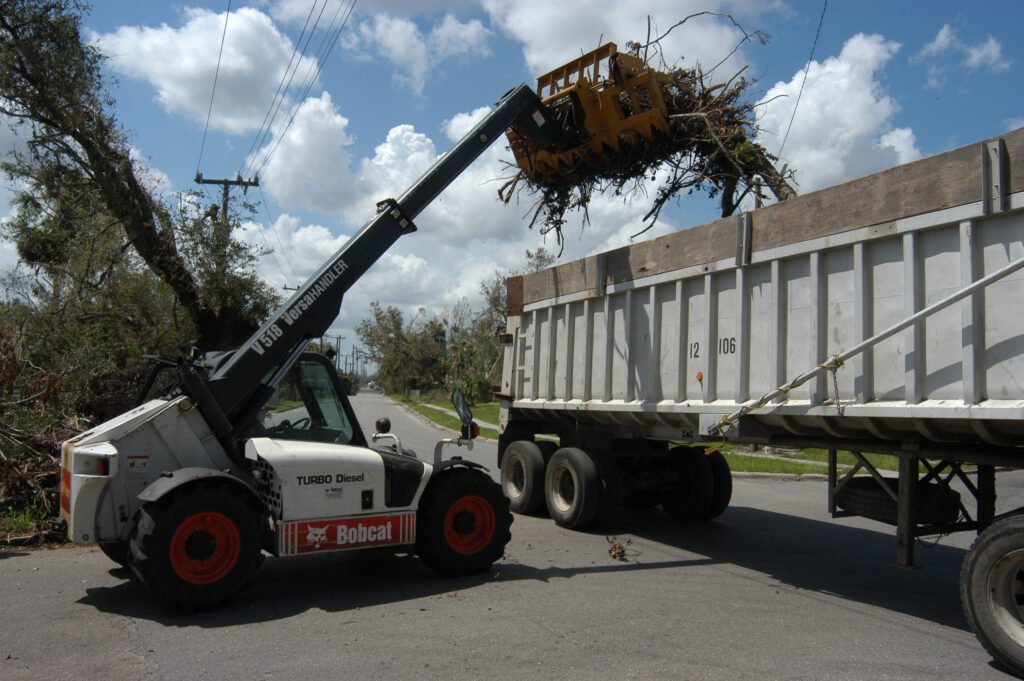
You have probably seen these machines on construction sites or large farms. They look like a mix between a tractor and a crane. Their true power isn’t just in their appearance, but in how they fundamentally change the way work gets done. For over 15 years, my company has been manufacturing and exporting these machines, and I’ve seen firsthand how they transform operations for our customers. Let’s break down what makes them so special.
¿Cómo funciona un manipulador telescópico?
Ever wonder how one machine can lift so high and far? It looks simple, but its physics are complex and crucial for safety. Understanding its core mechanics is key.
A manipulador telescópico operates using a hydraulic-powered telescopic boom that can extend, retract, and lift. Unlike a forklift with a fixed capacity, a telehandler’s stability depends entirely on managing a dynamic center of gravity, which changes as the boom moves. This is the most important concept to understand.
The Boom and Variable Load Capacity
The magic of a telehandler is its telescopic boom. But this magic comes with a critical rule. As the boom extends forward, its ability to lift heavy loads decreases dramatically. This is the most significant difference between a telehandler and a standard forklift. A forklift has a relatively fixed load center. A telehandler’s load center is always changing.
I remember a new operator who was used to forklifts. He tried to lift a 2-ton pallet and extend it to the third story of a building. The machine’s safety alarm started screaming. He didn’t realize that while the machine was rated for 4 tons, that capacity only applied when the boom was retracted. At full forward reach, its capacity might drop to less than 1 ton. This principle of “variable torque” is the root of all telehandler safety and operation.
| Boom Extension | Maximum Load Capacity |
|---|---|
| Retracted (2m) | 4000 kilogramos |
| Half Extended (5m) | 2000 kg |
| Fully Extended (10m) | 800 kg |
| Note: This is an example. Always consult the machine-specific load chart. |
Managing a Dynamic Center of Gravity
Because the boom angle and extension are always changing, so is the machine’s center of gravity. A telehandler’s stability is not a fixed thing. It is a dynamic state that the operator must constantly manage. Factors like the boom’s angle, how far it’s extended, the steering mode being used, and even a slight slope on the ground can affect stability. This is why operator training is so important and, sadly, why telehandlers can have a higher accident rate if not used correctly. A good operator doesn’t just drive the machine; they feel the balance and respect the load chart.
What Key Functions Can a Telehandler basics Perform on a Job Site?
Do you think a telehandler is just a fancy, long-reach forklift? Thinking that way means you are missing out on its true potential and wasting money on other machines.
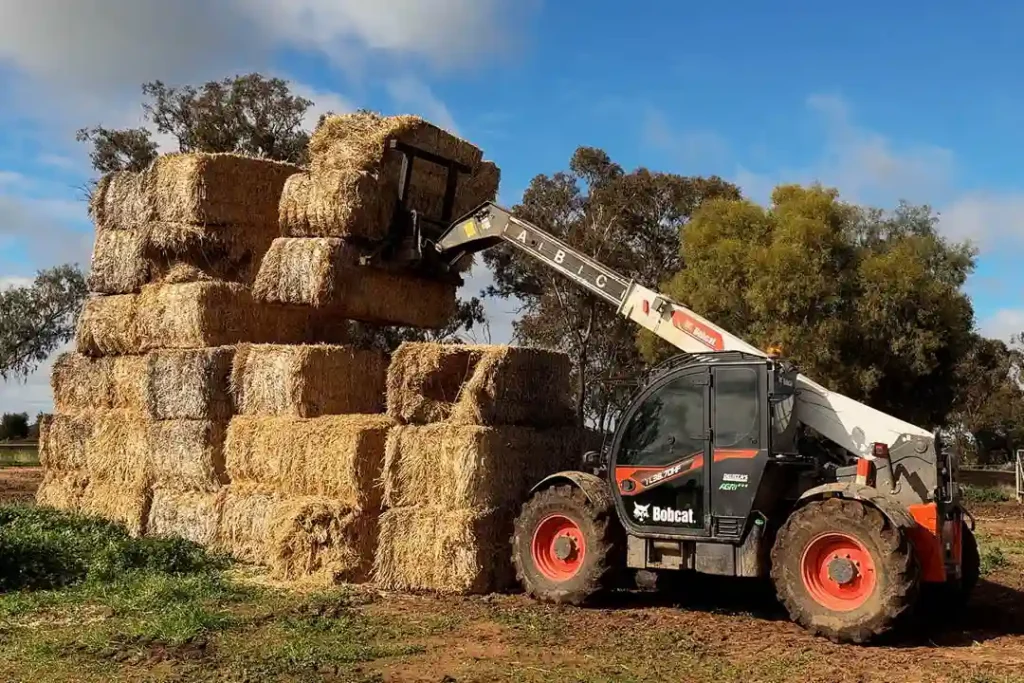
A telehandler lifts and places materials like a combined forklift and crane. Its real power comes from its incredible versatility. By using different attachments, it can dig, scoop, grab, sweep, and even safely lift people, becoming a true multi-tool for any job site.
From Forks to a Multi-Tool Arsenal
The front of a telehandler is designed to carry much more than just forks. This is where the machine transforms. By switching out the attachment, you can give it a completely new job.
- Forks: For lifting pallets of bricks, lumber, or other materials.
- Buckets: For moving loose materials like sand, gravel, or dirt.
- Grapples: For handling awkward items like logs, pipes, or recycling bales.
- Jib & Winch: To operate like a small crane, lifting and suspending loads.
- Work Platform: To safely lift personnel to perform tasks at height.
This adaptability means one machine can do the work of several. We have customers who have replaced a forklift, a small loader, and a mobile scaffolding rental with a single one of our telehandlers.
The Power of Quick-Change Systems
Many articles talk about attachments, but they miss the most important part: the speed of the change. Modern telehandlers, including the ones we build, feature hydraulic quick-change systems. This means an operator can switch from forks to a bucket in less than a minute, often without even leaving the cab. This is what truly makes it a “multi-functional mother machine.” The management value is huge. You don’t have three machines sitting idle; you have one machine that is always working.
| Tarea | Traditional Method (3 Machines) | Telehandler Method (1 Machine) |
|---|---|---|
| Unload palletized bricks | Máquina elevadora | Telehandler with forks (10 min) |
| Move a pile of sand | Small wheel loader | Switch to bucket (1 min), move sand (15 min) |
| Lift workers to inspect a roof | Scissor lift rental | Switch to platform (1 min), lift workers (20 min) |
| Total Time/Cost | High cost, 3 machines, 3 operators or idle time | Low cost, 1 machine, 1 operator, high utility |
Hydraulics – The Power Behind Every Movement?
All this lifting, extending, and grabbing needs serious power. Without a robust hydraulic system, a telehandler is just a heavy piece of metal. Let’s look at the machine’s lifeblood.
Hydraulics are the muscles of the telehandler. An engine-driven pump sends pressurized fluid through a network of hoses and valves to hydraulic cylinders. These cylinders expand and contract to lift the boom, extend its sections, and power the various attachments with immense force.

The Core Hydraulic Components
The system seems complex, but it works on a simple principle. Think of it like your body’s circulatory system.
- The Pump (The Heart): Driven by the engine, the hydraulic pump creates a powerful flow of hydraulic oil. The size and quality of this pump determine how fast and strong the machine’s movements are.
- The Valves (The Brain): When the operator moves a joystick, it sends a signal to a valve block. The valves open and close in precise ways, directing the flow of oil to the correct cylinder. This is what allows for smooth, controlled movements.
- The Cylinders (The Muscles): These are the parts that do the actual work. When high-pressure oil is pumped into a cylinder, it pushes a piston, causing the boom to lift or extend. To lower the boom, a valve releases the oil, allowing it to retract under control.
After 15 years in this business, I’ve seen that the quality of these hydraulic components, especially the seals and hoses, is what separates a reliable machine from one that constantly needs repairs. This is why at our factory in Taian, we focus on sourcing and using high-quality parts for our export models. A small leak can bring an entire job site to a halt.
Basic Hydraulic System Care
| Componente | Check Frequency | Que buscar |
|---|---|---|
| Oil Level | A diario | Level is within the correct range |
| Hoses | A diario | Cracks, leaks, or abrasive wear |
| Cylinders | Semanalmente | Leaking seals, damage to the rods |
| Filter | Per Schedule | Replace as per manufacturer’s hours |
What are the Real Benefits of Owning a Telehandler?
Investing in large equipment is a major decision. You need to be sure it will provide a strong return on your investment. Let’s look at the clear benefits a telehandler brings.
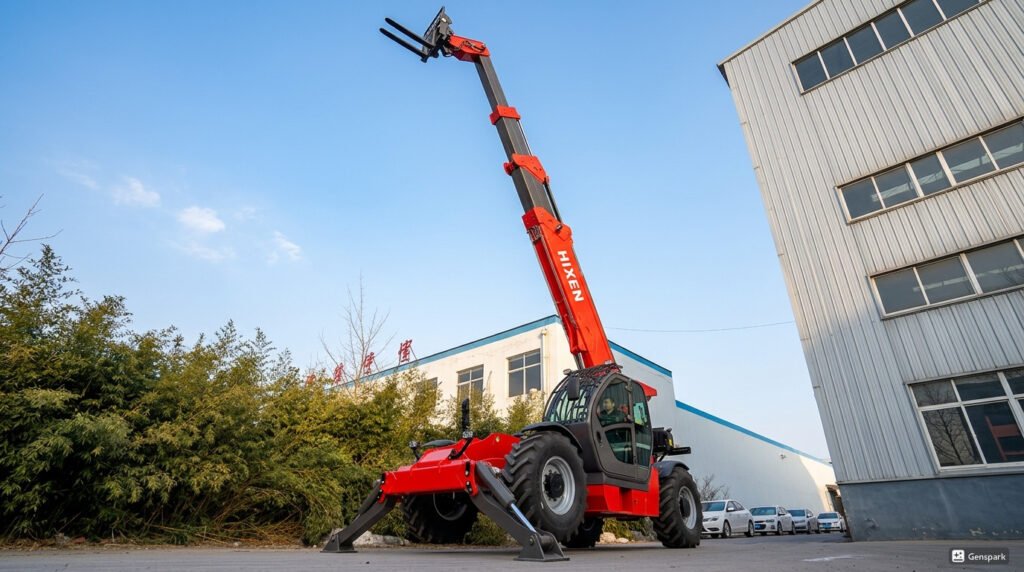
The primary benefits of a telehandler are its unmatched versatility, improved site efficiency, and incredible reach. One machine can replace several, saving you money on purchasing, maintenance, and operator costs while reaching places other machines simply cannot.
Cost Savings: One Machine, Many Jobs
The most obvious benefit is financial. Think about the costs associated with owning multiple pieces of equipment. You have the purchase price, insurance, fuel, maintenance, and operator training for each one. A telehandler consolidates these costs. I had a customer in France, a medium-sized construction contractor, who bought one of our 4-ton, 14-meter telehandlers. He told me six months later that he sold his rough-terrain forklift and a small loader because the telehandler did 90% of their work more efficiently. His savings on fuel and maintenance alone were significant, not to mention the reduced headache of managing less equipment.
Increased Productivity and Site Efficiency
A telehandler doesn’t just save money; it saves time. Its ability to reach up and over obstacles is a game-changer. Instead of unloading a truck with a forklift and then using a crane or hoist to get materials to the upper floors, a telehandler does it in one smooth operation. This reduces cycle times and keeps the project moving. It also means less machine traffic on a crowded site, which improves safety. A single, well-utilized telehandler can set the pace for the entire workflow, from material delivery to final placement. The result is projects that get finished faster, which is the ultimate goal for any business.
| Beneficio | How a Telehandler Delivers |
|---|---|
| Versatilidad | Replaces multiple machines (forklift, loader, crane) with one unit via quick-change attachments. |
| Rentabilidad | Reduces initial investment, fuel, maintenance, and operator costs. |
| Enhanced Reach | Places materials at height and distance, over obstacles, where other machines can’t go. |
| Site Efficiency | Speeds up material handling, reduces site congestion, and shortens project timelines. |
How Do You Select the Right Telehandler for Your Needs?
Choosing the wrong telehandler is a costly mistake. You could end up with a machine that is too small for the job or one that is too large and expensive for your needs.
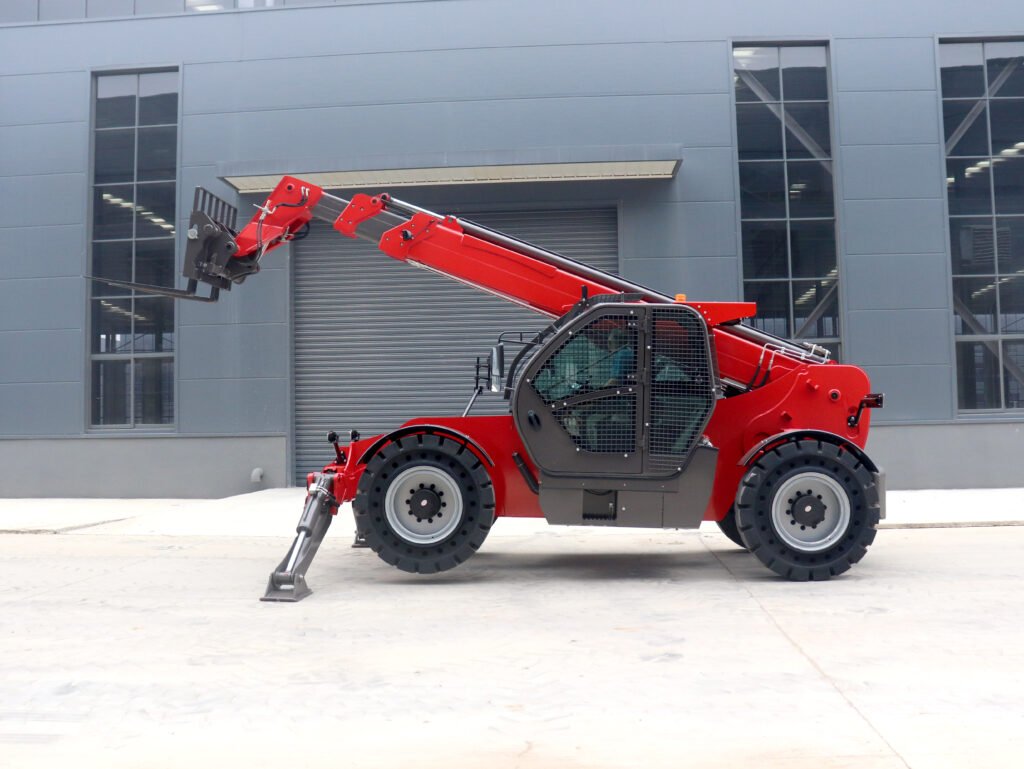
To choose the right manipulador telescópico, you must first clearly define your most common tasks. You must know the maximum weight you need to lift and, crucially, the maximum height and forward reach you need to place that weight at. These two numbers are your starting point.
Step 1: Define Your Lifting Requirements
This is the most important step. Don’t just think about the heaviest thing you will ever lift. Think about where you need to lift it. Ask yourself:
- What is the heaviest single item I need to move (e.g., a pallet of concrete blocks)?
- What is the maximum height I need to reach (e.g., the roofline of a two-story house)?
- What is the maximum forward reach I need (e.g., to place a pallet in the center of a flatbed truck from one side)?
Remember the principle of variable load capacity. Lifting 3 tons near the machine is easy. Lifting 1 ton at a 10-meter forward reach is a completely different challenge and requires a much more capable machine. Always look at the full load chart, not just the headline lifting capacity.
Step 2: Analyze Your Job Site
Where will the machine be working? The environment dictates the machine’s specifications.
- Terrain: Will you be on smooth concrete or rough, muddy ground? This determines if you need a machine with two-wheel, four-wheel, or crab steering and what kind of tires you need.
- Space: Are you working in tight, confined spaces or open fields? Pay close attention to the machine’s turning radius and overall dimensions.
- Frequency of Use: Will the machine be working 8 hours a day, 5 days a week, or just for specific tasks? This impacts your decision on new versus used and the level of robustness you require.
Step 3: Compare Specifications for Your Application
Once you know your requirements, you can start comparing models. As a manufacturer, we offer a range to meet different needs. Looking at a simple comparison can make the choice much clearer.
| Model / Specs | 3 Ton / 7m Reach | 4 Ton / 10m Reach | 6 Ton / 18m Reach |
|---|---|---|---|
| Capacidad máxima de elevación | 3000 kilogramos | 4000 kilogramos | 6000 kg |
| Max Lift Height | 7 metros | 10 metros | 18 meters |
| Potencia del motor | ~75 hp | ~100 hp | ~130 hp |
| Ideal Application | Agriculture, small building sites, landscaping. | General construction, industrial yards, rental. | Large-scale construction, bridge work, high-reach tasks. |
By matching your needs from Steps 1 and 2 with a chart like this, you can quickly narrow down the field and make an informed decision. Don’t hesitate to ask for a demonstration or speak with a specialist. We are always happy to help customers find the perfect fit.
Conclusión
A telehandler is a powerful and versatile tool. Understanding its core principles helps you operate safely, improve efficiency, and choose the perfect machine to drive your business’s success.
Síguenos en:YouTube.