I didn’t realize how much the proper attachments would affect my projects when I first started using used excavators. I soon came to the conclusion that without the proper attachments, even the best excavator cannot operate to its maximum capacity. Consequently, when buying a used excavator, selecting the appropriate attachments is essential. We ought to thoroughly investigate this.
Acheter un pelle d'occasion can save you a lot of money. But the attachments are what really make the machine work for you. Over the years, I’ve learned that attachments like buckets, hammers, and grapples can help you dig, break, lift, and drill. The right attachments make a huge difference in how efficient your work is. I’ll share some of the most important types of excavator attachments and how they fit with different jobs. Choosing the right ones can save you time and help you get more done.
Now, let’s go through the main types of excavator attachments I’ve used and seen work best on different projects. You’ll want to pay attention to what you need before making your choice.
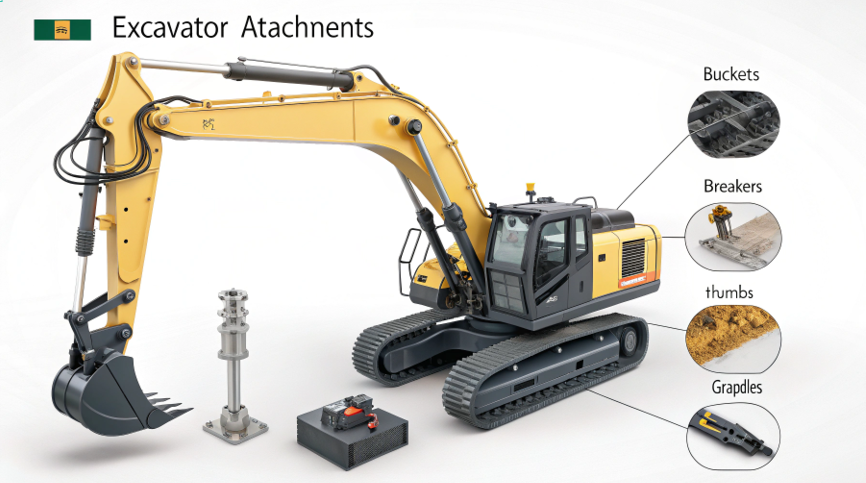
What Are Excavator Attachments and Why Do They Matter?
Un excavator attachment is simply a tool that connects to your excavator to help it do different tasks. The right attachment can help you dig, break, lift, or drill. I’ve seen how choosing the wrong attachment can lead to wasted time and money. On the other hand, the right attachment makes your excavator a multi-purpose machine.
I remember one job where I bought a used excavator without considering the types of attachments it came with. The excavator was in great condition, but it had a standard bucket that wasn’t useful for the specific job. It cost me a lot of extra time and money to replace it with a more suitable attachment. That’s why it’s so important to consider the right attachments before buying.
| Type d'attachement | Main Function | Industries That Use It |
|---|---|---|
| Seaux | Digging, lifting, and grading | Construction, Landscaping |
| Marteaux hydrauliques | Breaking tough materials (rock, concrete) | Demolition, Mining |
| Grappins | Handling heavy materials like logs | Forestry, Demolition |
| Tarières | Drilling holes for posts and foundations | Construction, Agriculture |
| Thumbs & Clamshells | Gripping and handling materials | Construction, Material Handling |
Top Types of Excavator Attachments You Should Consider
1. Seaux
Buckets are the most common attachment for an excavator. I’ve seen so many different types. The type of bucket you choose depends on what you need it for.
| Type de seau | Idéal pour | Typical Uses |
|---|---|---|
| Seau standard | Digging and lifting materials | Excavation, General Digging |
| Seau de tranchage | Digging narrow, deep trenches | Utility work, Plumbing |
| Seau de notation | Leveling and smoothing surfaces | Landscaping, Roadwork |
For example, if you’re doing general digging, a seau standard is perfect. But if you need to dig deep, narrow trenches, a seau de tranchage is the better choice. I remember using a seau de notation for a landscaping project—it helped me level the surface so much faster than I expected.
2. Marteaux hydrauliques
Hydraulic hammers are strong and used for breaking hard materials like concrete and rock. I’ve used one of these attachments on several demolition jobs. It’s heavy-duty and requires a bit of maintenance, but it gets the job done quickly.
| Type d'attachement | Mieux utilisé pour | Typical Jobs | Things to Check for Wear |
|---|---|---|---|
| Marteau hydraulique | Breaking tough materials | Demolition, Mining | Cracks in housing, worn seals |
Lors de l'achat d'un pelle d'occasion with a hydraulic hammer, make sure to check for wear and tear. The hammer is under a lot of stress. If it’s damaged, you might end up spending a lot more money fixing it.
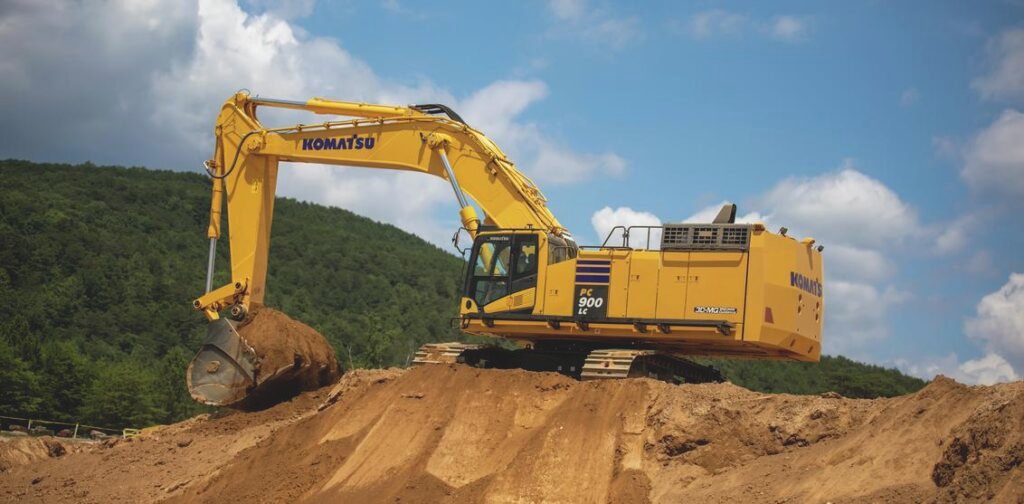
3 et 3 Grappins
Grapples are attachments that help you grab and handle large materials like logs, debris, or scrap. I’ve seen grapples used in forestry, demolition, and even recycling. They are great for materials that you need to grip tightly and move around.
| Grapple Type | Mieux pour | Utilisations courantes | Caractéristiques |
|---|---|---|---|
| Log Grapple | Handling logs and tree trunks | Forestry, Tree removal | Strong grip, large capacity |
| Scrap Grapple | Handling metal and debris | Demolition, Recycling | Lightweight, designed for scrap |
| Multi-Purpose Grapple | Handling various materials | Demolition, Material Sorting | Adjustable arms, versatile |
I once used a scrap grapple on a demolition site, and it made moving heavy debris much easier. If you’re doing forestry work, a log grapple would be ideal for handling logs.
4 Tarières
Augers are attachments used for drilling holes into the ground. I’ve used them to drill holes for fences, foundations, and more. The auger’s size can vary, depending on how deep and wide the hole needs to be.
| Auger Type | Idéal pour | Common Projects | Drilling Range (Diameter/Depth) |
|---|---|---|---|
| Post Hole Auger | Drilling for fence posts | Fencing, Utility work | 6”-36” diameter, up to 15 feet |
| Earth Auger | Drilling for general purposes | Landscaping, Agriculture | 12”-48” diameter, varies by model |
| Heavy Duty Auger | Large-scale drilling tasks | Piling, Foundation work | 24”-60” diameter, up to 50 feet |
I’ve used a post hole auger for installing fence posts—it’s quick and efficient. But for a large-scale foundation, you’ll need a heavy-duty auger.
5 Thumbs and Clamshells
Thumbs are great for grabbing large or irregularly shaped materials like logs and rocks. Clamshells, on the other hand, are more precise and can be used for digging and lifting smaller materials. I’ve used thumbs many times on jobs where I needed to pick up rocks and other materials that were awkward to grab.
| Type d'attachement | Fonction | Mieux utilisé pour | Avantages |
|---|---|---|---|
| Thumb | Grabbing heavy materials | Forestry, Demolition | Versatile, cost-effective |
| Clamshell | Precise material handling | Excavation, Dredging, Landscaping | Precision, higher control |
On a construction project, I found that using a thumb gave me better control over heavy materials. But for more delicate jobs, a clamshell attachment would be more suitable for lifting and handling smaller materials.
6. Shears and Pulverizers
Shears are cutting tools used for demolition and cutting metal. Pulverizers crush and process concrete. I’ve used these attachments in several demolition projects, and they’re crucial for breaking down tough materials.
| Type d'attachement | Fonction | Mieux utilisé pour | Projets |
|---|---|---|---|
| Cisailles | Cutting through metal and debris | Demolition, Recycling | Structural Demolition, Recycling |
| Pulverizers | Crushing concrete and other hard materials | Concrete processing | Building Demolition |
I’ve worked on buildings that needed to be demolished, and using shears made cutting through metal structures much easier. For concrete, I relied on pulverizers to break it down quickly.
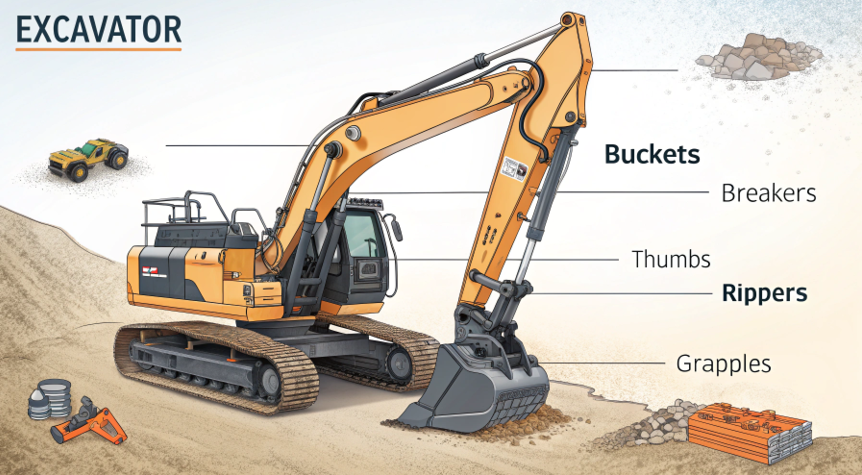
Why Choosing the Right Excavator Attachments Is Crucial When Buying Used Excavators
Choisir le droit excavator attachments is one of the most important things you can do when buying a pelle d'occasion. The right attachment can make a machine far more useful. I once bought an excavator without really thinking about the attachments, and I regretted it. The pelle d'occasion was in great condition, but the wrong attachment made the job much harder than it needed to be.
| Type d'attachement | Impact sur les performances | Project Suitability | Considérations relatives aux coûts |
|---|---|---|---|
| Seau standard | Versatile, good for general digging | Construction, Landscaping | Affordable, versatile |
| Marteau hydraulique | Excellent for tough materials | Demolition, Roadwork | Expensive, maintenance required |
| Grappin | Good for handling materials | Forestry, Demolition | Moderate cost, high utility |
Choosing an attachment that matches your project needs is critical. When I switched to the right attachments, it made a world of difference in terms of speed and efficiency.
How to Choose the Right Excavator Attachments for Your Needs
When I bought my first pelle d'occasion, I didn’t fully understand how to match the right attachment to the project. Over time, I learned that it’s crucial to focus on what the job requires, and then select attachments that will help you perform efficiently. Here’s how I go about it:
- Compatibilité: I always check if the attachment fits the excavator. For example, if you’re buying a pelle d'occasion that’s larger, you’ll need heavier-duty attachments.
- Exigences du projet: I think about the specific tasks—whether I need to dig, break, lift, or drill—and choose accordingly.
- Condition: I always inspect attachments closely for wear, especially with used attachments.
- Budget: It’s important to stick to a budget. I try not to overspend on attachments that aren’t necessary for the job.
Attachment Condition and Compatibility with Used Excavators
When I look at attachments for pelles d'occasion, I always check for wear and tear. Attachments like buckets and hammers take a lot of abuse over time. If an attachment is in bad shape, it can cost a lot to repair or replace it.
| Type d'attachement | Problèmes communs | Conseils d'inspection | Conseils d'entretien |
|---|---|---|---|
| Seau | Worn edges, cracks | Check the edges and welds | Regular sharpening, rust protection |
| Marteau hydraulique | Cracks, oil leaks | Look for visible cracks or leaks | Regular lubrication, seal checks |
| Grappin | Loose pins, worn seals | Check hydraulic lines and pins | Tighten connections, maintain fluid levels |
I’ve learned the hard way that buying a used attachment without checking its condition can lead to expensive repairs down the line.
How the Right Excavator Attachments Can Increase the Versatility of Your Used Excavator
Choisir le droit excavator attachments can turn a pelle d'occasion into a much more versatile tool. I’ve used machines with multiple attachments to handle a variety of tasks. This flexibility saves money because you don’t have to buy separate machines for each job.
| Type d'attachement | Versatility Benefit | Suitable Projects | Example Uses |
|---|---|---|---|
| Thumb | Allows precise material handling | Forestry, Demolition | Moving logs, handling debris |
| Cière | Drilling for posts and foundations | Construction, Landscaping | Fencing, foundation work |
| Marteau hydraulique | Breaks through tough materials | Roadwork, Demolition | Concrete, rock breaking |
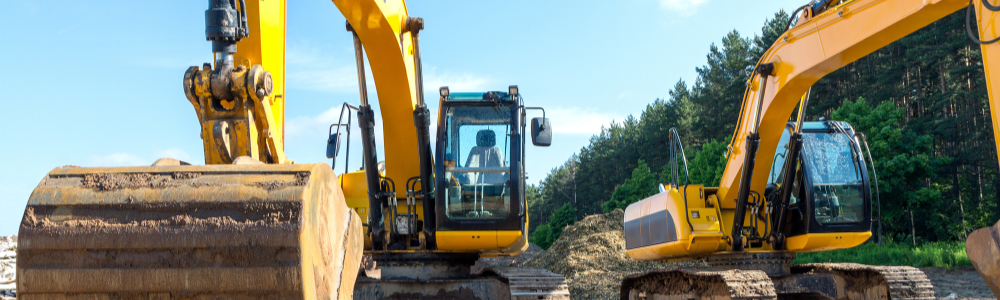
For example, using a thumb makes the excavator great for moving large pieces of wood and debris on a demolition site. I’ve also found that adding an auger makes a pelle d'occasion perfect for any post or foundation work. It adds real value to the machine.
Conclusion: Make Informed Decisions to Maximize Your Investment
Acheter un pelle d'occasion can be a smart investment if you choose the right attachments. The right attachments make your excavator much more useful and versatile. I’ve learned from experience that choosing attachments carefully will save you time, money, and frustration. Always inspect the condition of any attachment and make sure it fits your project needs. If you make the right choices, your pelle d'occasion can become a powerful, cost-effective tool that will serve you for years to come.
Suivez-nous sur:Youtube.