Struggling to figure out if a telehandler can reach your job’s highest point? You need the right machine, but the specs are confusing. This uncertainty can lead to costly mistakes.
UM telehandler lift anywhere from 17 to over 70 feet (about 5 to 21 meters). The exact height depends on the model. But the most important factor is the load chart, which shows how much weight it can safely lift at different heights and reaches.
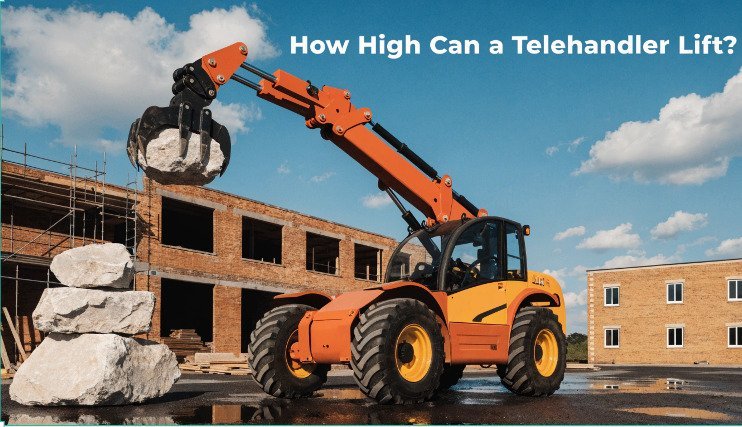
When people ask me about our telehandlers, their first question is almost always about height. It’s a natural starting point. But after 15 years in this business, I’ve learned that the most important answer isn’t just a number in feet or meters. The real story is about what the machine can do safely and efficiently once it’s up there. Thinking only about maximum height is like asking about a car’s top speed without considering its brakes. Let’s look at the whole picture to make sure you get the job done right.
What Are the Different Telehandler Dimensions and Sizes?
Are you wondering if a bigger machine is always better for your needs? Choosing the wrong size can waste money or, worse, not be able to access your site at all.
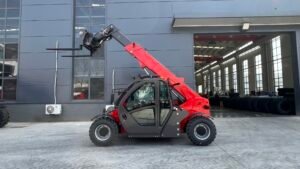
Telehandlers come in three main sizes: compact, standard, and high-lift. Compact models are for tight spaces, standard models are all-around performers, and high-lift models are for reaching extreme heights. The physical size directly impacts its stability, turning radius, and overall reach.
When we design our telehandlers here in Shandong, we think about the job sites they will be on. The size of the machine is a trade-off. A bigger machine has a longer boom and a heavier chassis, which gives it more height and stability. But it also needs more room to move around. A smaller, compact telehandler can zip around a crowded construction site or inside a building, but its reach will be more limited. It’s not about which is “best,” but which is the right fit for your work. We always ask our customers about their site access first, because the most powerful machine is useless if it can’t get to the job.
Comparing Telehandler Size Classes
| Size Class | Typical Lift Height | Typical Capacity | Melhor para |
|---|---|---|---|
| Compact | 17-25 ft (5-7.5 m) | 2-3 toneladas | Tight spaces, indoor work, landscaping |
| Padrão | 25-55 ft (7.5-17 m) | 3-5 tons | General construction, farming, rental |
| High-Lift | 55+ ft (17+ m) | 4-6 tons | Multi-story construction, industrial sites |
How Much Can a Telehandler Lift?
You know the height you need, but can the telehandler actually lift your materials that high? Misjudging this is how accidents happen. It’s a critical detail that can stop your project cold.
UM telehandler’s lifting capacity changes with every foot of height and forward reach. A machine rated for 4 tons might only lift 1 ton at its maximum height and extension. Always check the machine’s load chart, as it is the only true guide to its capacity.
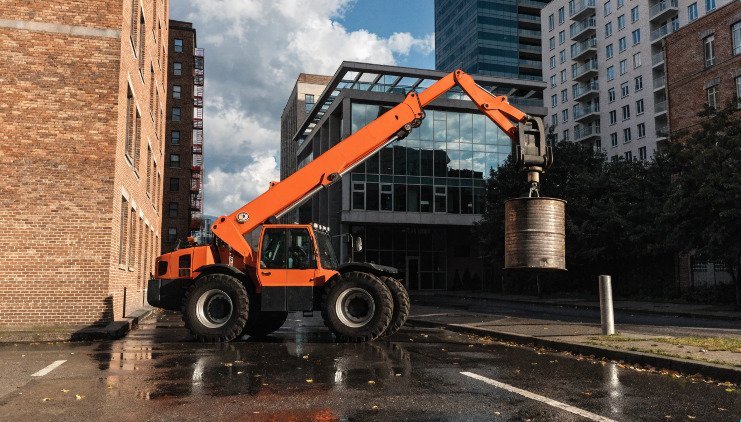
The load chart is the soul of the telehandler. I cannot stress this enough. The number painted on the side of the machine, like “4 Ton,” is its maximum capacity under ideal conditions. That means the load is close to the machine, and the boom is not extended far. As soon as you start to lift the boom up and extend it out, the laws of physics take over. The machine’s stability decreases, and so does its safe lifting capacity. Every machine we ship has a clear, easy-to-read load chart in the cab. The operator must understand this chart before starting any lift. It’s not just a suggestion; it’s the most important safety feature on the machine.
Understanding a Basic Load Chart
A load chart is a graph or table that shows you two key things:
- Lifting Height: How high up the load is.
- Forward Reach: How far out from the front wheels the load is.
By finding where your required height and reach intersect on the chart, you can see the maximum weight the telehandler can safely handle at that specific point. It’s a visual representation of the machine’s safety limits.
How Does a Telehandler Work?
Ever wondered what makes a telehandler so versatile and powerful? Understanding the basic parts helps you appreciate its capabilities and limitations. It’s not just a forklift with a long arm.
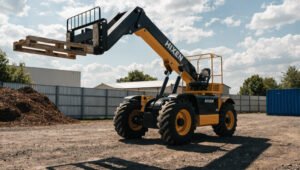
A telehandler works using a telescopic boom mounted on a robust chassis. Powerful hydraulics control the boom’s extension, lifting, and tilting functions. The engine powers the hydraulic pump and the drivetrain, often with 4-wheel drive for rough terrain, making it a multi-functional lifting machine.
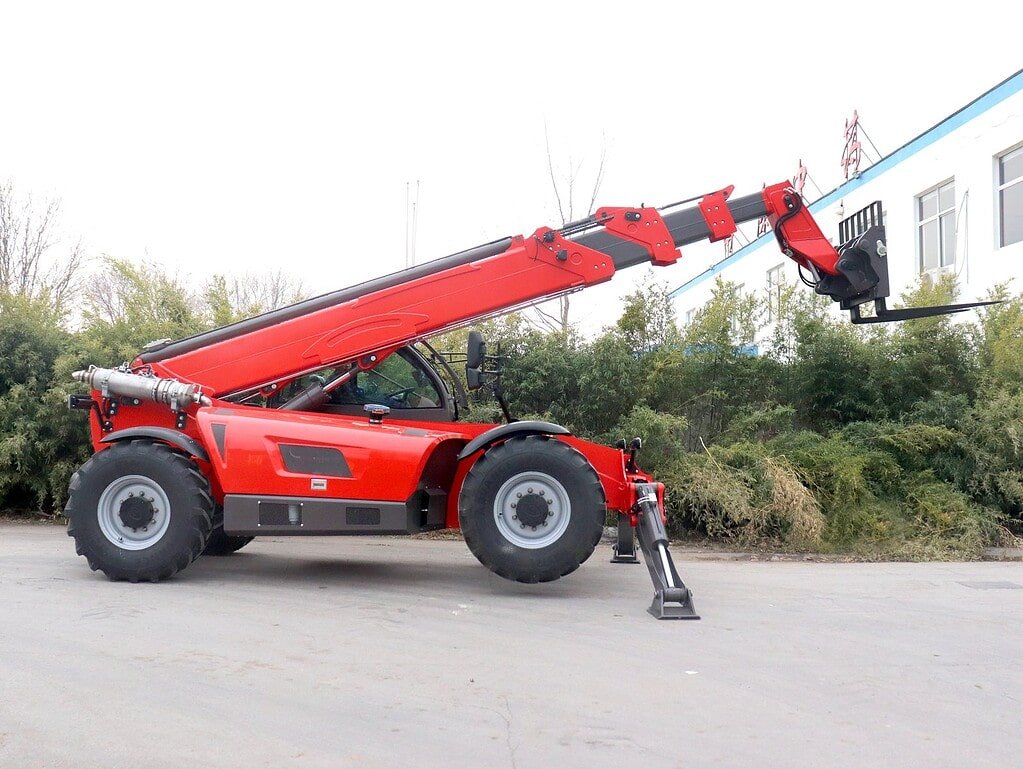
Think of a telehandler as three key systems working together. First, you have the chassis. This is the strong base, containing the engine, the operator’s cab, and the axles. We build our chassis to be tough because it’s the foundation for everything else. Second is the estrondo. It’s made of several sections that slide into each other, like a telescope.
This is what gives the machine its incredible reach. Third, and most important, is the sistema hidráulico. This is the muscle. The engine powers a pump that sends high-pressure oil through hoses to large cylinders, which push and pull to move the heavy boom and the load with precision. It’s a simple, strong system that we’ve perfected over the years to be reliable on any job site.
Key Components and Their Functions
| Componente | Função | Por que é importante |
|---|---|---|
| Chassis | The main frame of the vehicle. | Provides stability and houses the engine and cab. A strong chassis is the base for safe lifting. |
| Telescopic Boom | The arm that extends and retracts. | This is what provides the unique height and reach capabilities of the machine. |
| Sistema hidráulico | Powers the movement of the boom. | It provides the immense force needed to lift thousands of pounds smoothly and safely. |
| Operator’s Cab | Where the operator controls the machine. | Good visibility and intuitive controls are critical for safe and efficient operation. |
What Factors Influence Lifting Capacity?
Why can a telehandler lift less weight the higher it goes? It seems simple, but many factors are at play. Ignoring them can put your crew and equipment at serious risk.
The primary factors are boom angle and extension; the further out and up the boom goes, the lower the capacity. Other critical factors include whether stabilizers are used, the evenness of the ground, the type of attachment, and even strong winds. All of these reduce stability.
Every lift is a balance of power and stability. The telehandler itself is a counterweight to the load it is lifting. When you extend the boom, you are moving the load further away from the machine’s center of gravity. This acts like a giant lever, trying to tip the machine over.
That’s why the capacity must decrease. We see this in the field all the time. An operator on flat, solid ground with stabilizers down can perform amazing lifts. The same operator on a slight slope without stabilizers has a fraction of that capacity. It’s not the machine that changes; it’s the conditions. A good operator knows that their brain is the most important safety tool they have. They must constantly assess these factors.
Key Stability Factors
- Ground Condition: Is the ground level and firm? Soft or uneven ground can cause the machine to become unstable.
- Stabilizers (Outriggers): Using stabilizers dramatically increases the machine’s stable base, allowing for much heavier lifts at reach. The load chart has different sections for “on tires” vs. “on stabilizers.”
- Wind Speed: At height, a large load can act like a sail. High winds can be very dangerous and can push a machine past its tipping point.
- Dynamic Loads: Moving the machine with a raised load, or jerky movements, creates forces that can destabilize the telehandler. All movements should be slow and smooth.
What Are the Most Important Telehandler Specs to Consider?
When you’re looking at a brochure, what numbers really matter? Focusing on just one or two specs can be misleading. You need to look at the whole package to find the right machine.
Beyond maximum lift height and capacity, the most important spec is the full load chart. You should also consider engine horsepower for terrain performance, hydraulic flow for operational speed, and the turning radius for maneuverability in tight job sites. Look for certifications like CE for safety.
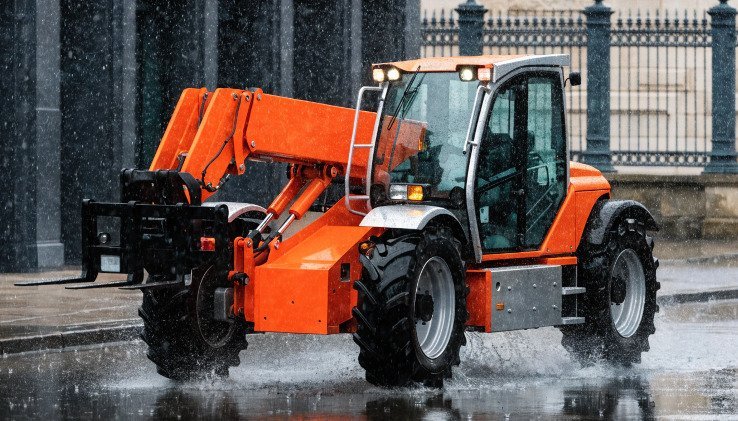
When a customer asks for a quote, I encourage them to look past the big numbers. Yes, our 4-ton, 14-meter machine is very popular, but is it right for them? I ask about their work. Do they need to travel long distances on the site? Then engine power and travel speed are important. Are they doing repetitive tasks, like loading trucks? Then the speed of the hydraulic system matters for cycle times.
Are they working in a crowded area? The turning radius is critical. And of course, we always point to our CE certification. This isn’t just a sticker; it means our machines are built to a high standard of safety and quality, which is essential for customers in Europe and many other regions. A good machine is a complete, balanced package.
Specs Beyond the Basics
| Especificação | Por que isso importa | O que procurar |
|---|---|---|
| Load Chart | The true guide to the machine’s ability. | Does it cover the specific weights and positions you need for your most common tasks? |
| Engine Power (HP/kW) | Determines performance on slopes and rough terrain. | Higher power is better for demanding outdoor sites. |
| Hydraulic Flow (L/min) | Affects the speed of boom and attachment functions. | Higher flow means faster cycle times and better productivity. |
| Raio de giro | Measures maneuverability. | A smaller number is better for working in confined spaces. |
What Are the Advantages of Telehandler Forklifts?
Why choose a telehandler over a regular forklift or a small crane? Knowing the unique benefits of a telehandler helps you justify the investment. It’s more than just a forklift.
A telehandler’s main advantages are its unmatched versatility, reach, and rough-terrain capability. It combines the functions of a forklift, a crane, and a wheel loader into one machine, saving time and money by reducing the need for multiple pieces of equipment on site.
I often call the telehandler the “Swiss Army knife” of the construction site. One minute, you can use forks to lift a pallet of bricks to the third story. The next minute, you can quickly swap the forks for a bucket and start moving gravel. Then, you can put on a jib to lift an engine into place. This ability to do many different jobs is its biggest strength. A standard masted forklift is great on a concrete slab, but it’s useless in the mud. A telehandler, with its 4-wheel drive and large tires, can work almost anywhere. It fills a perfect gap between other machines, providing reach and versatility that nothing else can match.
Telehandler vs. Other Machines
| Máquina | Vantagem Principal | Key Disadvantage |
|---|---|---|
| manipulador telescópico | Versatility, reach, rough terrain | Lower capacity than a crane |
| Masted Forklift | Excellent capacity in a small footprint | Limited to flat surfaces, no forward reach |
| Guindaste Móvel | Extremely high lifting capacity | Slow to set up, less versatile |
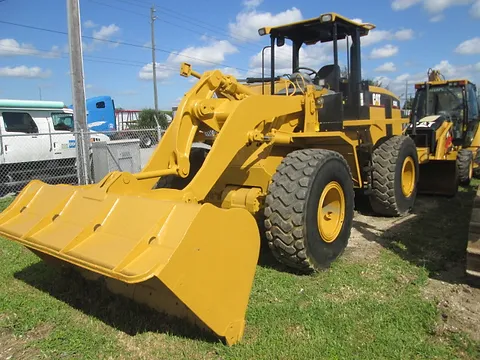
| Carregadeira de rodas | Excellent at moving bulk material | Limited lifting height and reach |
How Do I Choose the Right Telehandler?
Ready to buy, but worried about making the wrong choice? A systematic approach can simplify the process. Asking the right questions ensures you get a machine that truly meets your needs.
To choose the right telehandler, first define your maximum load weight and the height/reach it needs to go to. Then, find a machine with a load chart that exceeds those needs. Finally, consider your job site conditions, like terrain and space, and the attachments you’ll require.
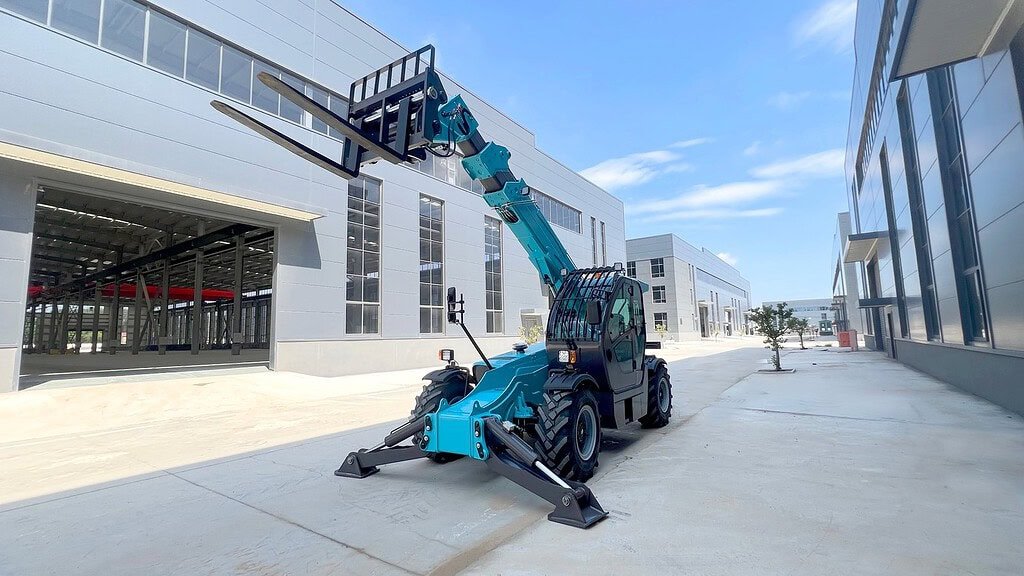
The best way to choose the right machine is to work backward from your toughest job. Don’t think about the average lift; think about the heaviest, highest, and furthest lift you will need to do. Let’s say you need to lift a 2-ton pallet to a height of 10 meters and place it 4 meters inside a building. That is your target. Now, we look at the load charts for our machines.
We would find a model that can safely handle 2 tons at that specific point, with a bit of extra capacity for a safety margin. Then we discuss your site. Is it muddy? You’ll need 4-wheel drive. Do you have narrow gates? We’ll check the machine’s width. As a manufacturer, we can even offer some customizations. This step-by-step process ensures you get a machine that works for you from day one.
A 4-Step Buying Checklist
- Define the Load: What is the absolute maximum weight you need to lift?
- Define the Placement: What is the highest and farthest point you need to place that load?
- Check the Chart: Match your load and placement needs to a machine’s load chart, ensuring there is a safety margin.
- Assess the Site: Evaluate your terrain, access points, and required attachments to finalize your choice.
Conclusão
In the end, a telehandler’s height is just a number. The key is understanding its load chart, respecting its stability limits, and choosing the right size for your specific job site.
Siga -nos em:YouTube.