Choosing the wrong telehandler is a costly mistake. It can disrupt your project and waste your money. This guide will help you make the right choice for your needs.
To choose the right telehandler, you must match its capacity, reach, and size to your daily job site needs. Pay close attention to the load chart, not just the maximum lift height. Also, consider tires, attachments, and after-sales support before you buy.
I want to tell you a story that I hear all too often. It’s a perfect example of what can go wrong when buying heavy equipment. This story will help you avoid the same mistakes. It will guide you to find a machine that truly works for you and your business. Let’s get started.
Did you hear about the farmer who bought a telehandler that couldn’t fit in his barn?
You found what seems like the perfect machine. You are excited. But a single overlooked detail can turn your big investment into a giant, useless paperweight on your property.
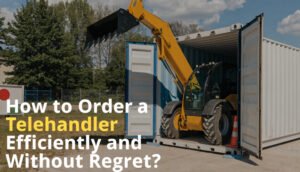
A farmer I know bought a 4-ton, 12-meter telehandler. He was focused on the impressive lift height. He completely forgot to measure his barn door. The machine was too tall to enter, making it useless for his most common task of stacking hay inside.
This story is not unique. I have been in this business for over 15 years, and I see buyers make similar mistakes all the time. They focus on one big number, like maximum lift height or maximum capacity. But a telehandler is a complex tool. You need to think about the whole picture. Where will you use it every day? What are the ground conditions like? What are the tightest spaces it needs to navigate? A machine’s overall dimensions, turning radius, and weight are just as important as its lifting power.
For example, our 3-ton model with a 7-meter boom might be a much better fit for a farm with tight spaces than a larger 5-ton machine. Even if the farmer thinks they might need that extra capacity one day. Thinking through your daily workflow is the first step to avoiding a costly mistake.
Should you choose a right telehandler to rent or buy?
Deciding between renting and buying is a tough choice. A wrong move can drain your budget quickly. Let’s make sure your money is spent wisely for your project’s needs.
If you need a telehandler for more than 60% of your workdays, buying is usually more cost-effective in the long run. For short-term or specialized, one-off jobs, renting is the smarter option. It saves you maintenance costs and gives you access to different machines.
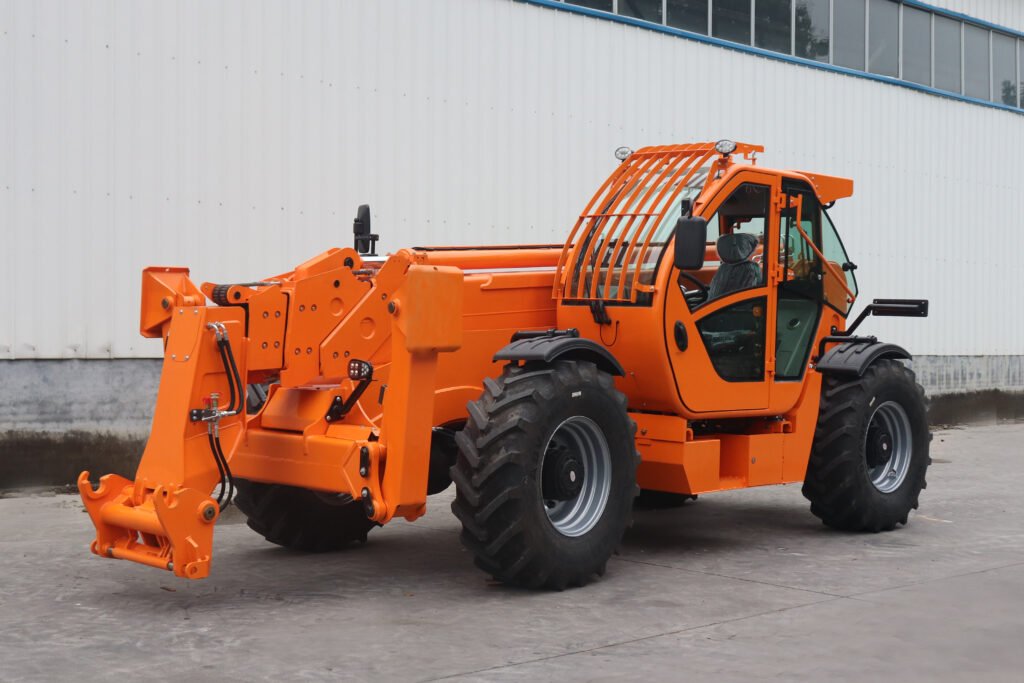
Let’s break this down with a simple table. This will help you see the pros and cons clearly.
| Aspecto | Comprando um manipulador telescópico | Renting a Telehandler |
|---|---|---|
| Custo | High initial investment | Lower short-term cost |
| Availability | Always ready for your use | Subject to rental company stock |
| Manutenção | Your responsibility | Rental company’s problem |
| Personalização | You can customize it | Limited to what’s available |
| ROI de longo prazo | Becomes a valuable asset | It is just an expense |
I often advise customers to think about their 80/20 rule. If 80% of your jobs require a standard 3-ton, 10-meter machine, you should buy that one. For the rare 20% of jobs that need a massive 18-meter reach, just rent one for the day. Do not buy an oversized machine for that “just in case” scenario. It costs more upfront, uses more fuel every day, and is harder to transport between job sites.
What type of telehandler tires are needed for my application?
The wrong tires can get you stuck, literally. This can stop your entire job site. Let’s make sure your telehandler has the right footing for the ground you work on.
Choose pneumatic tires for rough, uneven terrain like farms or construction sites. They offer better traction and cushioning. For smooth, hard surfaces like warehouses or concrete pads, solid or foam-filled tires are better. They prevent flats and offer more stability for heavy lifting.
Tires are about more than just avoiding flats. They are a key part of your machine’s stability and performance. The tires are the only part of the telehandler that touches the ground. The right choice affects safety and efficiency. For example, a telehandler’s ability to lift its rated capacity depends on stable ground. On soft mud, a machine that can lift 4 tons on concrete might only safely lift 2 tons. The wider footprint of pneumatic tires helps distribute the weight better on soft ground. That’s why we always ask our customers about their ground conditions. Here is a simple guide:
- Pneumatic (Air-filled): Best for outdoors, dirt, grass, and uneven surfaces. They act like a shock absorber for the machine and operator.
- Foam-filled: A good compromise. They cannot go flat but are heavier and less cushioning than pneumatic tires. They are great for sites with lots of nails and sharp debris.
- Solid: Best for indoor use on concrete floors. They are completely puncture-proof and very stable, but they offer a rough ride on uneven ground.
What can a Telehandler be used for?
You might think a telehandler just lifts things high. You are missing out on its true potential. This single machine can replace several others, saving you significant time and money.
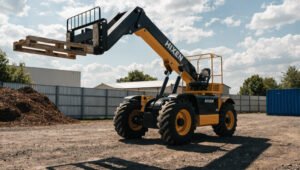
A telehandler is a multi-purpose machine. With different attachments, it can act as a forklift, a small crane, a work platform, or a wheel loader. It’s used in construction, agriculture, and industry to move materials, lift workers, and clear sites with ease.
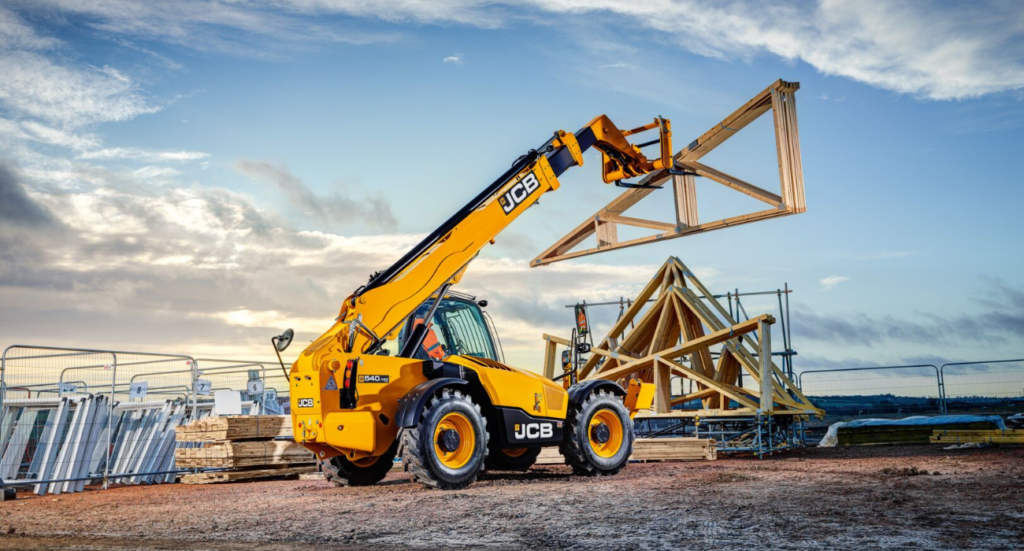
The real magic of a telehandler is its versatility. The “tele” part stands for “telescopic,” but its real power comes from the quick-hitch system. This system allows you to change attachments in minutes. Think of it as a swiss army knife for your job site. One minute you are lifting pallets of bricks with forks. The next minute, you can swap to a bucket and move gravel or dirt. Need to lift a person for inspection or repair work? Attach a work platform basket. We have customers who use them for everything from farming to building construction.
Here are some common attachments and their uses:
- Pallet Forks: The standard attachment for lifting pallets, lumber, and other stacked materials.
- Buckets: For moving loose materials like sand, dirt, snow, or grain.
- Jibs & Hooks: This turns your telehandler into a small crane for lifting engines, trusses, or other suspended loads.
- Work Platforms: Safely lifts personnel to work at height for maintenance or installation.
- Grapples: For handling logs, scrap metal, or bulky waste materials.
By investing in a few key attachments, one machine can truly do the work of three or four.
How do you understand a telehandler’s load capacity chart?
Ignoring the load chart is a recipe for disaster. It can lead to dangerous tipping accidents. Let’s learn how to read it correctly to keep your worksite and your crew safe.
The load chart is the most important safety feature on the machine. It shows you how much weight you can safely lift at different heights and forward reaches. Always check the chart before any lift. Remember, the further you extend the boom, the less weight you can carry.
Many buyers make a critical mistake. They see “4-ton capacity” on a brochure and think they can lift 4 tons anywhere. That is not true. The 4-ton rating is usually for when the load is close to the machine with the boom retracted. As you extend the boom up or out, the capacity decreases dramatically. This is basic physics. I always tell my clients, “Maximum lift height does not equal effective working height.” You might be able to reach 14 meters, but at that full reach, you might only be able to lift a few hundred kilograms.
The load chart is a graph that shows this relationship. It has an X-axis for reach (distance forward) and a Y-axis for height. The lines on the chart show the safe lifting limit. Always consult it before you lift. It’s usually located in the operator’s cab for easy reference.
How do you match telehandler capacity to your job site needs?
Buying a machine that is too big or too small for your job wastes money. It either cannot do the job, or it costs too much to run and transport. Let’s find the perfect fit.
First, identify the heaviest item you lift regularly. Then, measure the maximum height and forward reach you need for that lift. Use this specific information to find a machine on the load chart that can safely handle that lift, with a 20% safety margin.
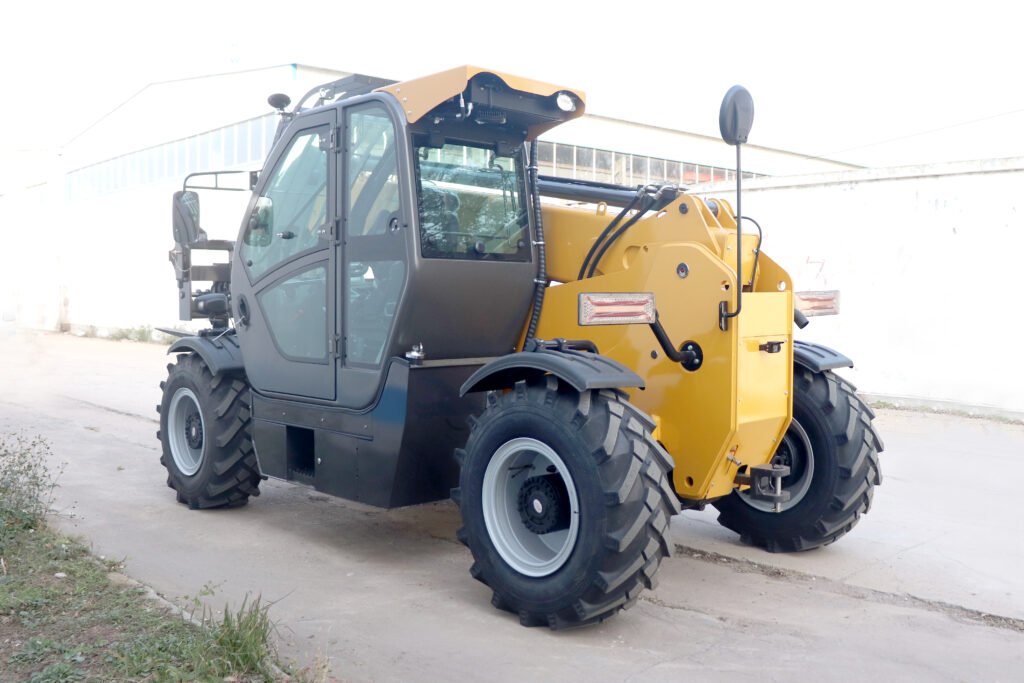
Let’s get practical. Grab a pen and paper. Answer these questions about your most common, most difficult lift:
- What is the typical weight of the materials you lift? (For example, a pallet of bricks is about 1.5 tons).
- What is the maximum height you need to place that material?
- How far forward from the front of the telehandler’s tires do you need to reach?
Once you have these three numbers, you can look at different telehandler load charts. For example, you need to lift a 1.5-ton pallet to a height of 8 meters and a forward reach of 4 meters. You would look for a machine whose load chart shows a capacity of at least 1.5 tons at that specific point. I always recommend adding a safety buffer. If your need is 1.5 tons, look for a machine that can handle about 1.8 tons in that exact position. This covers any miscalculations and ensures safe operation every time.
Is safety first in the design of today’s worksite telehandlers?
An unsafe machine puts everyone at risk on the job site. Accidents are costly and tragic. Let’s look at the features that make a modern telehandler safe for your crew.
Yes, modern telehandlers are designed with safety as the top priority. They include features like load management systems that prevent overloading, ROPS/FOPS cabs to protect the operator, and improved visibility. Our machines, for example, are all CE certified, which means they meet high European safety standards.
When you are looking at a telehandler, safety is not just a sticker. It is built into the design of the machine. Here are some key features to look for and ask about:
- Load Management System: This is a computer that monitors the load’s weight and position. It will give an audible warning or even lock the controls if you try to lift something beyond the safe limit on the load chart.
- ROPS/FOPS Cab: This stands for Roll-Over Protective Structure and Falling Object Protective Structure. It is a reinforced steel cage that protects the operator if the machine tips or if something falls on the cab.
- Stabilizers: Also known as outriggers. These extend from the front of the machine to the ground. They create a wider, more stable base for very heavy or high lifts.
- Good Visibility: A well-designed cab should give the operator a clear 360-degree view. Rearview cameras are also becoming standard and are a huge safety plus, especially on busy sites.
- Boom and Frame Design: The quality of the steel and welding is critical. We use high-strength steel and robotic welding to ensure our machines can handle the stress of daily work for years.
What other important things should you consider?
You have checked the specs, but there is more to a good purchase. Overlooking these final details can lead to future headaches and lost money. Let’s cover the last important points.
Beyond the machine itself, you must consider after-sales support, parts availability, and warranty. A machine that is down waiting for a part for two weeks is very expensive. A strong local dealer network is often more valuable than a small initial discount.
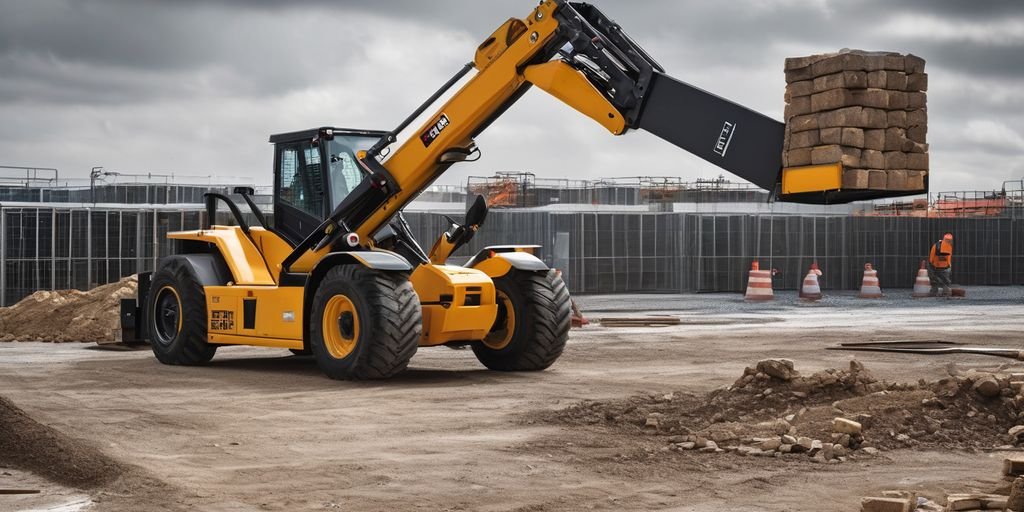
I want to share a crucial insight from my 15 years of exporting these machines. A lower price tag can be very tempting. But what happens when the machine breaks down? For many of our customers—small contractors and farmers—downtime is a disaster. If you save $2,000 on the purchase but then have to wait two weeks for a hydraulic part to be shipped from overseas, how much money have you lost? The lost revenue and project delays will cost you far more than the $2,000 you saved. That is why I always stress the importance of the support network.
Before you buy, ask the seller these direct questions:
- Where can I get service?
- How quickly can I get common spare parts like filters, hoses, and sensors?
- What does the warranty cover, and for how long?
A good manufacturer will have a solid plan for this. We have a global network of distributors and a system to ship parts quickly. We know that your uptime is your profit.
Conclusão
Escolhendo o right telehandler involves matching the machine’s capabilities to your daily work, not just its max specs. Focus on the load chart, support, and overall long-term value.
Siga -nos em:YouTube.