Breaking through tough concrete or rock? Manual demolition is slow, dangerous, and not cost-effective. The breaker hammer paired with the excavator is a fast, powerful solution for large-scale demolition. Say goodbye to costly downtime and dangerous methods—see how this hydraulic powerhouse can change your job now.
UM breaker hammer is a powerful attachment for escavadeiras, designed to break through tough materials like concrete and rock with ease. It uses hydraulic force to deliver repeated high-impact blows, speeding up demolition and reducing manual labor. In this article, we explore how to operate and maintain a breaker hammer effectively for maximum productivity and safety.
Now, let’s go deeper into how the breaker hammer works and the main benefits it provides for your excavation and demolition jobs.
What is a Breaker Hammer?
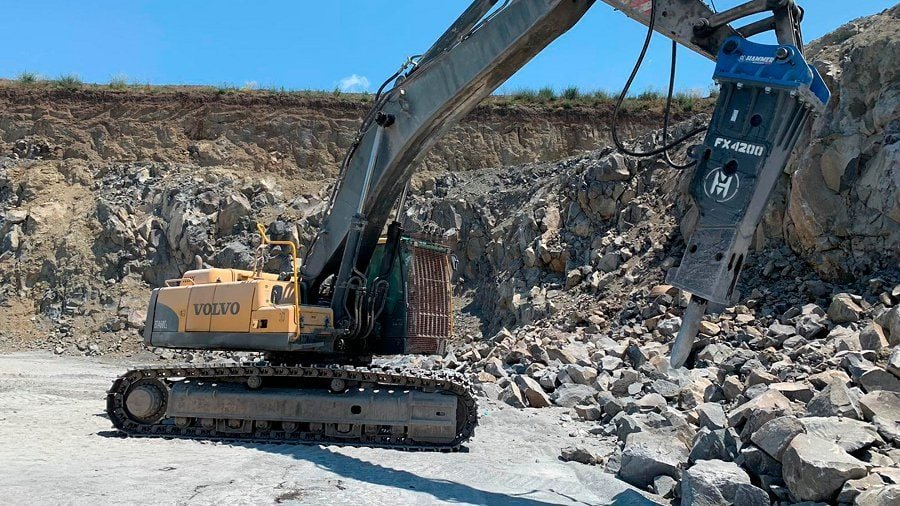
UM breaker hammer, also known as a hydraulic hammer or rock breaker, is a heavy attachment that attaches to an excavator, skid-steer, or CTL to break hard surfaces like concrete, rock, and asphalt. Unlike other tools used for demolition, which require mechanical force or human labor, a breaker hammer uses hydraulic pressure to deliver high-impact blows to break material apart. This type of demolition tool is used in large scale for mining, construction, and demolition because the hydraulic system of the host machine delivers the power to the breaker.
Components of a Breaker Hammer:
- Housing: The housing is designed to protect all the internal components of the breaker hammer. It is made of high-strength steel to withstand the forces generated as it breaks up material.
- Pistão: The piston is the working part of the breaker hammer. It is forced back and forth by hydraulic pressure, producing the force necessary to drive the tool you have attached to it.
- Chisels/Tools: The chisel (often called a tool, bit, or moil) is the part that actually touches the material you are attempting to break. Chisels are available in different shapes (flat, pointed, pointed wide, moil, etc.) and sizes depending on your application and the material you are attempting to break.
- Sistema hidráulico: The hydraulic system is what makes the breaker hammer work. The breaker hammer is powered by the hydraulic system of the skid steer or excavator, which provides the power to move the piston back and forth and generate the impact necessary to break up the material.
Common Uses of Breaker Hammers:
- Demolição: Breaking down old buildings, concrete structures, and road surfaces.
- Mineração e pedreira: Breaking rocks into smaller, manageable pieces for extraction.
- Construção de estradas: Clearing debris, breaking asphalt, and preparing surfaces for resurfacing.
- Tunneling: Breaking through hard earth or rock to make tunnels for new roads or utilities.
A breaker hammer is invaluable when you need precise, powerful, forceful impact applied over a long period to hard materials.
How Does a Breaker Hammer Work?
The operation of a breaker hammer is a combination of hydraulic force and mechanical impact. This combination gives it the capability to break through the hardest of materials with precision and efficiency.
Working Mechanism:
- Poder hidráulico: Pressurized fluid is sent from the excavator’s hydraulic system to the breaker hammer.
- Força de impacto: The chisel is the point of impact of the piston, making a high-impact force that breaks the material.
- Repetition: It constantly beats up and down with hydraulic pressure so that the material is first weakened each time and then broken up into small pieces.
Their ability to make rapid, powerful blows over and over again enable breakers to break through concrete, rock, or whatever much quicker than a person or a sledgehammer could.
A breaker works well because it doesn’t rely on force from the operator. The excavator supplies the force, and the only thing the operator has to concentrate on is controlling the breaker and putting the force where it needs to be.
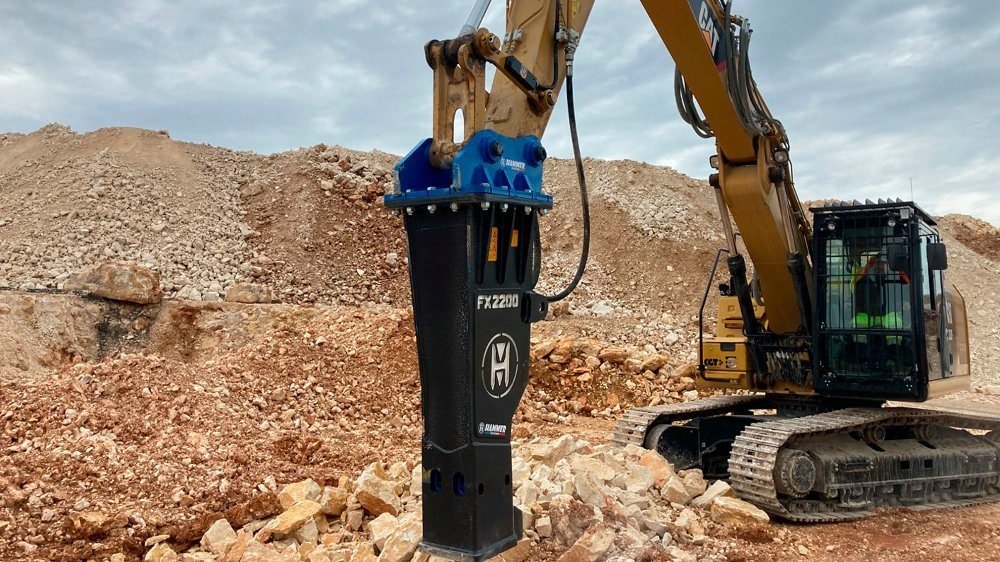
Types of Breaker Hammers for Excavators
A ripper, a chisel, and a hammerhead are the main types. A chisel breaker has a flat tool that comes down like a chisel. A ripper is a single tool that rips with edges on the front and back of the tool. A hammerhead comes down with a sharp, thin point and hits like a hammer.
Common Types of Breaker Hammers:
- Light-Duty Hammers: These hammers are perfect for smaller projects. They can be used to break up asphalt or light concrete. They are often used in road construction or repair work.
- Medium-Duty Hammers: Medium-duty hammers are used for general construction work and small demolition jobs. They are a good overall hammer that can be used on a wide range of materials, including regular concrete and soft rock.
- Heavy-Duty Hammers: These hammers are used to break up the hardest materials, such as concrete slabs that are several feet thick or large rock formations. They are used in large scale construction or large mining projects.
| Tipo | Aplicativo | Tamanho recomendado da escavadeira |
| Light-Duty | Asphalt, concrete, and smaller rocks | < 10 tons |
| Medium-Duty | General construction, roadwork | 10-20 tons |
| Heavy-Duty | Hard rock, large concrete structures | > 20 tons |
How to Choose the Right Hammer:
- Tamanho da escavadeira: Choose a breaker hammer that matches the size of your excavator. Using a hammer too large for your machine can put unnecessary wear and tear on the hydraulic system. Conversely, using a hammer that is too small will not generate enough force to efficiently break up materials.
- Tipo de material: Consider the type of material you will be breaking up with the hammer. Hard, dense materials like granite, large concrete slabs or large rock formations require heavy-duty breaker hammers. Softer materials like asphalt, small concrete slabs, or soft rock can be broken up with smaller hammers.
- Job Size: For large demolition or breaking projects, using heavier-duty breakers is more efficient. For lighter breaking tasks, like breaking up road surfaces, use lighter-duty breakers.
Selecting the right breaker hammer ensures your equipment operates efficiently, preventing unnecessary wear and tear.
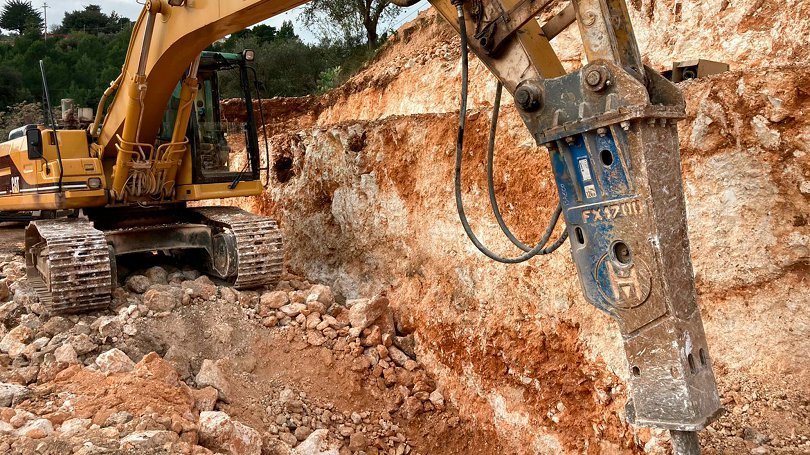
How to Attach and Operate a Breaker Hammer with an Excavator
Attaching and operating a breaker hammer with an escavadora may look quick and simple, but making sure it’s done right is key to safety, performance, and equipment life. Here’s a more in-depth detailed step-by-step to ensure you are using your equipment efficiency.
Step-by-Step Guide:
Attach the Breaker Hammer:
- Check Compatibility: Before you start, verify that the breaker hammer is compatible with your excavator. The hammer should be designed to fit your machine’s specific quick coupler or mounting bracket. Compatibility is important to ensure proper function and a secure fit.
- Inspect Hydraulic Connections: Look over the hydraulic hoses and fittings for leaks or damage. Hydraulic leaks will cause a loss of pressure, decreasing the hammer’s performance. Make sure your hoses are tightened and that no fittings leak while you’re operating the equipment.
- Secure the Hammer: Use the correct pins or bolts provided with your breaker hammer to securely attach it to the excavator. Double-check to make sure the hammer is secure with no loose parts before you begin using it. You don’t want anything to come loose and have the hydraulic breaker fall off while it’s in operation.
Activate the Hydraulic System:
- Power Up the Excavator: Start up your excavator and get the hydraulic system running. Check to make sure you have enough hydraulic fluid. If your fluid level is too low, it can affect the performance of the breaker hammer and the life of the hydraulic components in your machine.
- Adjust Hydraulic Flow: Most excavators have adjustable hydraulic flow settings. Check your machine’s manual to see how to set the flow rate and pressure. Make sure you have it set to the right pressure for your breaker hammer. If it’s not set to the right pressure, the hydraulic breaker may not work properly. If it’s set to too high of a pressure, you can overload your machine’s hydraulics and damage the breaker hammer.
Operating the Hammer:
- Position the Hammer: Once your hydraulic breaker is securely attached and your hydraulic system is on, position your hammer over the material you want to break. Lower the breaker hammer gently onto the surface so the chisel is perfect contact with the material. Make sure the breaker is at the right angle so weight distributes correctly or you will experience undue wear and damage on the breaker itself.
- Engage the Hammer: Engage your hydraulic controls to allow the breaker to start striking the material. Inside the hydraulic breaker, the piston hammers quickly to provide high-impact force and shatter the material. Watch your pressure and control the speed based upon the hardness of the material as you work on the job.
- Stay in Control: Hold controls on your excavator tightly to be sure the breaker is hitting in the spot you want. Don’t jerk the breaker with quick or sudden moves. The breaker will miss and take the abuse if you don’t operate smoothly and efficiently. Make adjustments in position frequently to also make sure you’re breaking the material in the most efficient way possible.
Avoid Overstraining
Do not force the breaker to multiply times to destroy extremely tough material if it isn’t breaking. Never abuse your breaker or your machine by trying to do more than it’s capable of doing. This can cause wear and tear
on the breaker and the excavator, leading to expensive repairs and downtime. If it’s really tough material, back off and try to figure out what you’re doing wrong at the controls. This helps to determine if the breaker can handle the job at all.If not, engineers at the breaker manufacturer can help you troubleshoot and find a solution. Take a break if the material is really hard so that you don’t overheat your breaker.
Tips for Safe Operation:
- Wear safety gear: Always wear your personal protective equipment (PPE). You should have on a hard hat, safety glasses, gloves, some kind of hearing protection, and steel toe boots. You don’t want to be caught without any of these features when using a hydraulic breaker. All of these PPE helps to save you from debris flying around or getting hurt by other means on the job site when the hydraulic breaker is being operated.
- Stay in control: Control your machine and the breaker tightly. Hold onto the joystick all the way as you control the breaker and your excavator’s stability.
- Check your equipment: Daily, prior to use, check all of your hydraulic connections, the hammer itself and your machine for things that are worn out or busted. Be proactive in looking at your hydraulic breaker and pay attention to your machine. If you do, it’ll work for you a long time and you’ll be safe.
Benefits of Using a Breaker Hammer with an Excavator
Using a hydraulic breaker attached to your excavator provides many benefits in your ability to work more safely and efficiently, and work smarter overall.
Maior eficiência:
One of the biggest benefits when breaking material with your breaker hammer on an excavator is the increase in efficiency. When you do manual demolition, it is your blood, sweat, and tears to break up the material. It takes a long time to get the work done if you’re doing it by hand. With the power of your hydraulics, your breaker hammer will crush through rock or concrete, and make it occur rapidly. The speed at which you can get material broken will save you time and money on every job.
Reduced Manual Labor:
When using a breaker with your excavator, you get the benefit of having less exposure to risking people’s lives and limbs in demolition scenarios. Traditional demolition involves swinging a hammer or jackhammer, where a person is holding those elements. This type of work will jar someone’s body to death and can put them at high risk for a bad back, carpal tunnel, or other overuse injuries from doing the same activity over and over again. When using a breaker hammer, the person tearing stuff down is highly insulated from that hard work within the well-insulated cab of the excavator. This reduces the wear and tear on workers and the risk of overusing their body to the point of injury.
Segurança aprimorada:
The additional layer of security from your breaker with your excavator is the operator is in a controlled environment. Being inside the machine means the unit offers protection from debris, dust, and falling material
(you name it) that results from using the breaker hammer to crush rock or concrete. Having the ability to strike at a precise spot on the material and control how you tear down the material reduces the overall safety risks
associated with elements coming loose or using too much force to break down something.
Precision and Control:
The big plus when you’re in that machine is you have a lot of buttonology at your fingertips. If you have a pair of rocks, a piece of concrete you’re trying to manipulate, or doing some project with selective demolitions, you can use that breaker to just have perfectly controlled downward force. Those machines are so good the operator can move the stick in any direction and six ways from Sunday to have it break only the material you want and not the thing right next to it, which was not the goal of the operator.
Safety Precautions When Using a Breaker Hammer with an Excavator
- Protective Gear
Always wear appropriate personal protective equipment(PPE) including hard hat, gloves, safety boots and hearing protection to avoid injury. - Treinamento adequado
Make sure the operator is trained in the proper use of the excavator as well as the breaker hammer. Incorrect operation could cause damage to the equipment or lead to dangerous situations. - Safe Operation Techniques
Never stand under the breaker hammer while it is in operation. Always keep a safe distance. Be aware of what is around you and watch for other workers, vehicles, or equipment which could be in the way. - Be Aware of Environmental Dangers
Check the area for potential hazards such as electrical lines, structures, or underground utilities. Make sure you do not hit anything that could cause a disruption or a safety issue.
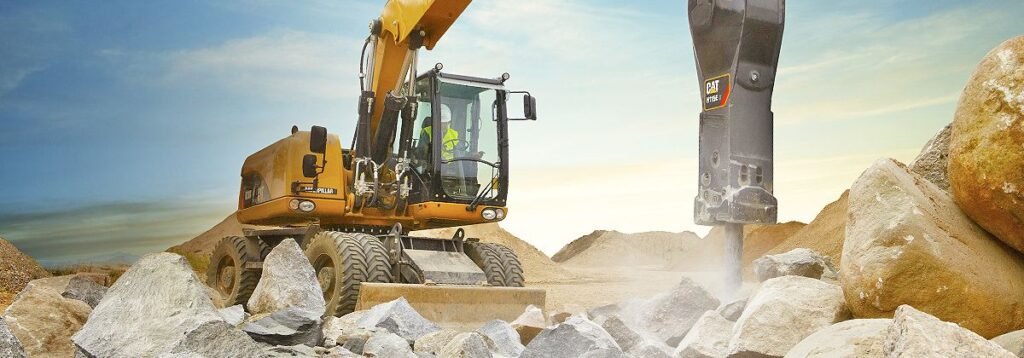
How to Maintain a Breaker Hammer for Long-term Use
To begin, remove and discard any debris and dirt. Then, wipe the machine down with a dry cloth. Make sure you clean it after each use, especially if using it in a dusty or dirty environment. Proper maintenance helps extend the life of your breaker and keeps it in top working condition.
- Regular Inspections:
Conduct routine inspections of the breaker hammer to ensure proper function. Visually inspect the chisel, piston, and housing. Look for cracks, dents, or areas where oil may leak. Keep an inspection log to track recurring issues or to keep an eye on potential issues before they become significant problems. - Clean:
Thoroughly clean the breaker hammer after each use. Cleans all dirt, debris, and excess grease from the tool to avoid rust/corrosion. Use a soft brush or compressed air to clean hard-to-reach areas, especially the hydraulic ports, to avoid build-up that clogs these critical parts. - Lubrication:
Proper lubrication of moving parts, such as the piston and chisel, keeps things running smoothly. Well-lubricated components have less friction and last longer. Be sure to use the manufacturer-recommended lubricant for the hammer. - Storage:
Keep the breaker hammer in a dry, clean place when not in use to avoid weather-related damage. For example, rust and freezing hydraulic fluid can easily ruin your tool. Whenever possible, cover the unit and keep it out of direct sunlight. This process will extend the life of your hammer.
Conclusão
A breaker hammer is a very nice piece of equipment but needs to be respected. In the hands of an inexperienced user, a breaker hammer can cause injury or death. Always value safety over production and equipment. Once you get used to the power of a breaker hammer, you’ll find it can easily pay for itself in reduced manual labor costs and faster project completion times.
The right breaker hammer, used correctly, and maintained regularly will pay for itself many times over in faster project completions, safer work, and less manual labor. When you need a reliable, high-quality breaker hammer for your excavator, Contate-nos to discuss which makes and models will best suit your needs.