Confused about whether you need a telehandler VS forklift? Choosing the wrong machine can cost you time and money. This guide will help you understand the key differences.
А телескопический погрузчик is a versatile machine for high reaches and rough terrain, acting like a crane and forklift in one. A standard forklift is best for lifting pallets on flat surfaces, like in a warehouse. The right choice depends entirely on your job site and tasks.
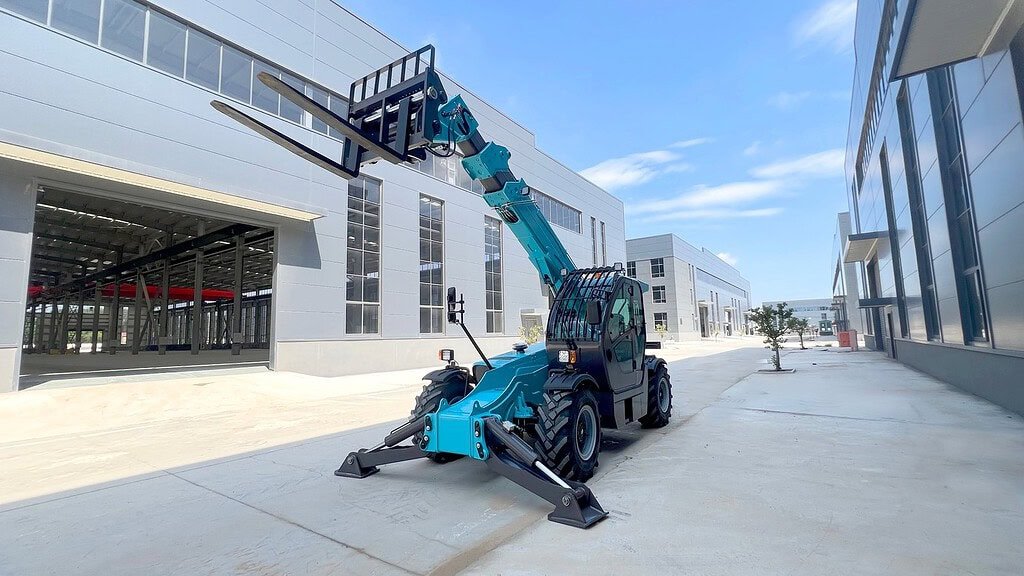
Making the right choice in machinery is a big deal. It affects your project’s efficiency, budget, and even safety. As someone who has been manufacturing these machines for 15 years, I’ve seen firsthand how the right equipment can transform an operation. Let’s break down each machine so you can see which one truly fits your needs. We’ll look at what they are, what they do best, and where they fall short. This will help you invest wisely.
What Exactly Is a Telehandler?
You see these powerful machines all over construction sites, but you might not be sure what they do. Are they cranes? Are they loaders? Let’s clarify what a telehandler is.
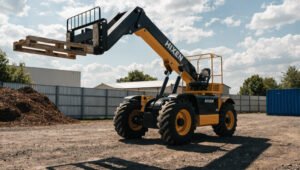
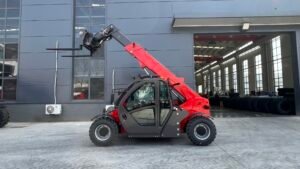
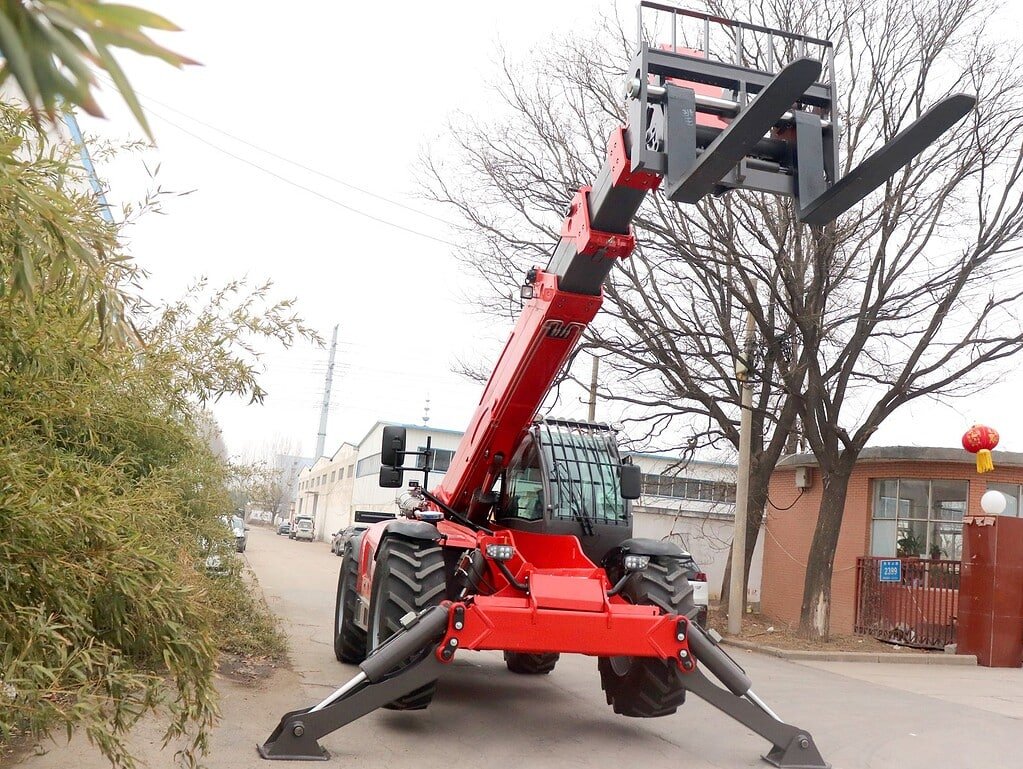
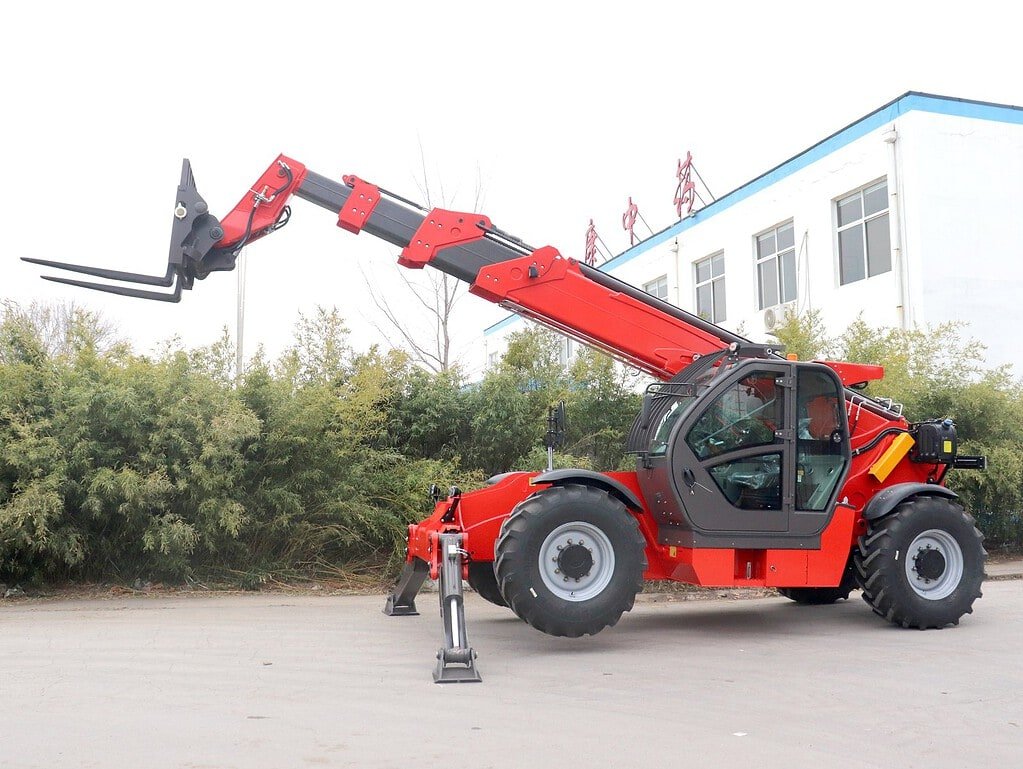
A telehandler, or telescopic handler, is a powerful machine with a telescopic boom. It can lift, move, and place materials high up and far away, much like a small crane, but with the versatility of using different attachments.

Think of a телескопический погрузчик as a combination of a small, mobile crane and a powerful loader. Instead of a vertical mast that only goes up and down like a forklift, it has a hinged, telescopic boom. This is the key difference. This boom allows it to do so much more.
How the Boom Works
The boom on a telehandler can:
- Lift High: Our models, for example, can lift materials up to 7, 10, 14, or even 18 meters. This is far beyond a standard forklift.
- Reach Forward: The boom extends forward for several meters. This means you can place a pallet of bricks on the second floor of a building from the ground, or reach over an obstacle to place a load.
- Angle Up and Down: The boom can be angled, allowing it to reach below ground level, like into an excavation.
This versatility is why you see them everywhere, from construction sites and farms to ports. One machine can do the job of both a forklift and a crane, which can save a lot of money. You buy one machine instead of two, and you may only need one operator.
So, What Is a Standard Forklift Then?
Everyone recognizes a forklift, the workhorse of warehouses worldwide. But do you really know its specific design purpose and, more importantly, its limitations? Let’s look closer at the traditional forklift.
A standard forklift, or lift truck, uses a vertical mast system. Its forks only move straight up and down. It’s perfectly designed for lifting and moving palletized loads on smooth, level surfaces.
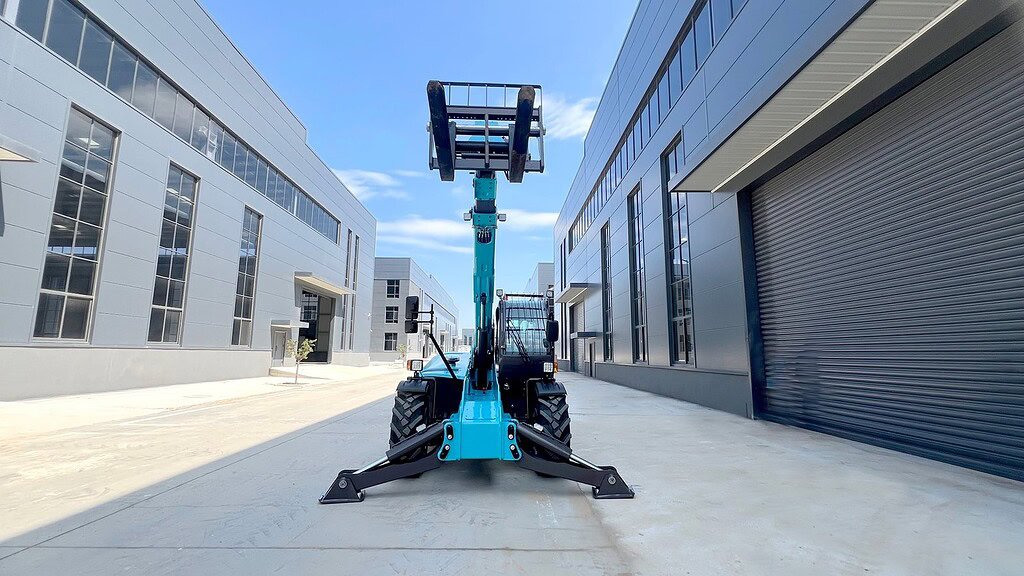
If a telehandler is like a crane-loader hybrid, a forklift is like a very strong, motorized wheelbarrow designed specifically for pallets. Its entire design is focused on one primary task: lifting a load from point A and moving it to point B on a flat surface.
Mast vs. Boom
The defining feature of a forklift is its vertical mast.
- Limited Height: The mast typically allows for a lift height of 3 to 6 meters. This is great for stacking pallets on racks in a warehouse but not for construction work.
- No Forward Reach: The forks have almost zero forward reach. The mast must be right against the shelf or truck to place a load. It cannot reach over obstacles.
This design makes it incredibly efficient for its intended environment. A forklift is compact, easy to maneuver in tight warehouse aisles, and perfect for loading and unloading trucks from a paved loading dock. However, take it off the pavement, and its limitations become very clear. It simply wasn’t built for the challenges of an uneven job site.
Telehandler vs. Forklift: Which One Should You Choose?
You have materials to lift, and you need a machine to do it. But buying the wrong one is a very costly mistake. Let’s compare them side-by-side to find your perfect match.
Choose a телескопический погрузчик for versatility, high reach, and rough terrain. Choose a standard forklift for repetitive, ground-level lifts on smooth surfaces, like in a warehouse. Your job site dictates the choice.
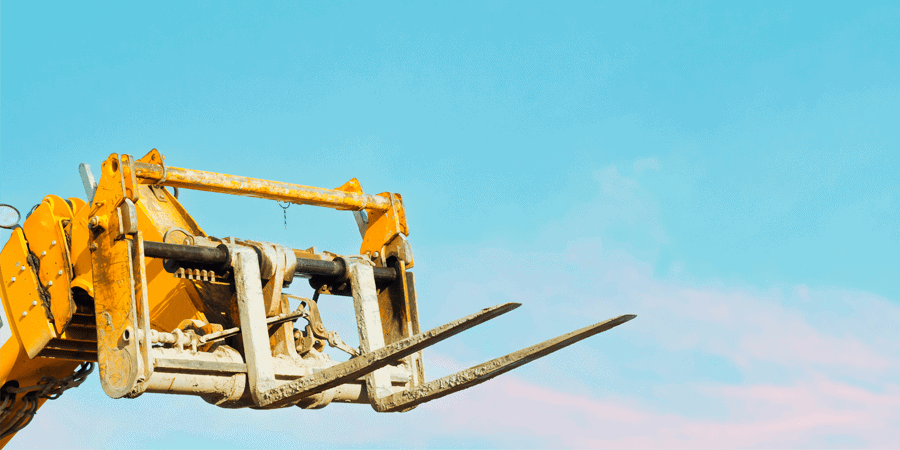
As a manufacturer, I talk to customers about this choice every day. The decision always comes down to three things: Reach, Terrain, and Versatility.
The Three Key Questions
- Do you need to lift high or reach forward? If you need to place materials on a second-story roof, reach over a trench, or get a load to the center of a wide truck bed, you need a telehandler. A forklift simply cannot do this. Its vertical mast only moves up and down. The telehandler’s boom is what gives it this incredible advantage.
- What is your ground surface like? If you work exclusively on smooth concrete floors, a forklift is efficient. But if your site has any dirt, gravel, mud, or uneven ground, you need a telehandler. Telehandlers are built with heavy-duty frames, large tires, and often 4-wheel drive to handle rough terrain. A forklift would get stuck.
- How many different jobs do you need to do? A forklift mostly just lifts pallets. A telehandler, with its ability to switch attachments, becomes a multi-tool. You can put forks on it to move pallets, a bucket to move dirt, or a work platform to lift workers. This means one machine can do the work of three, saving you money on equipment and labor.
How Do They Compare on Key Features?
You need a quick, clear comparison to make the right call. Getting lost in technical specifications can be confusing. Here is a simple table to help you decide at a glance.
This table breaks down the key differences between telehandlers and forklifts. Look at reach, height, terrain, and versatility to see which machine fits your needs better. It simplifies the choice.
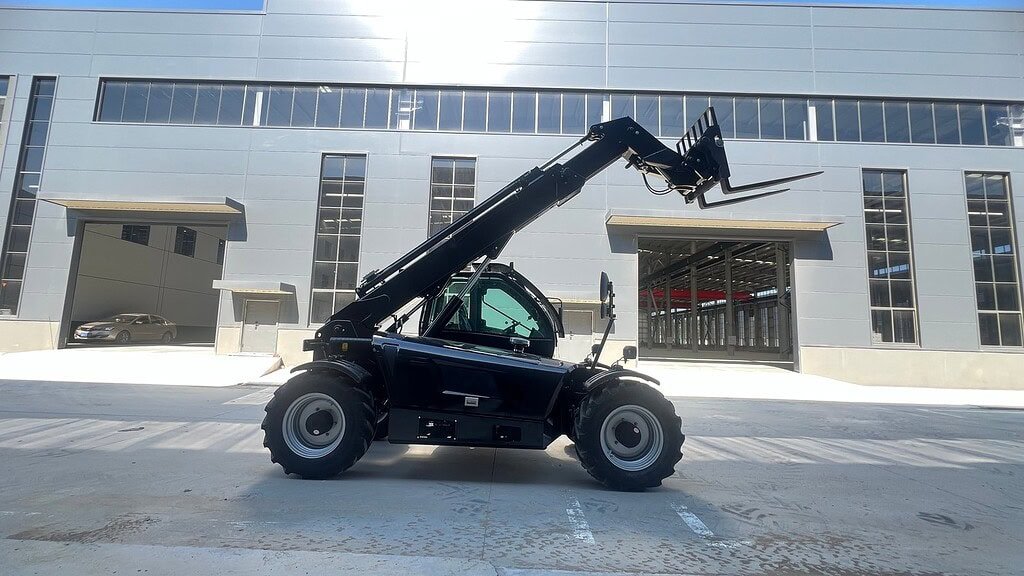
Sometimes seeing the facts laid out side-by-side makes the decision obvious. I created this table to help my customers quickly identify the right tool for their job.
Selection Guidelines Table
| Особенность | Телескопический погрузчик | Forklift |
|---|---|---|
| Lifting Mechanism | Telescopic Boom (lifts up and extends forward) | Vertical Mast (lifts straight up and down) |
| Maximum Lift Height | High (6m – 18m or more) | Low (3m – 6m) |
| Forward Reach | Excellent (several meters) | Minimal (almost none) |
| Terrain Capability | Excellent (designed for rough, uneven terrain) | Poor (requires flat, paved surfaces) |
| Универсальность | High (many attachments: forks, buckets, platforms) | Low (primarily used with forks) |
| Общие приложения | Construction, Agriculture, Ports, Large Outdoor Yards | Warehouses, Factories, Indoor Logistics |
| Cost Consideration | Higher initial cost, but can replace multiple machines, saving money overall | Lower initial cost, but limited to a single function and environment |
Looking at this table, you can see they are two very different machines designed for very different jobs. A telehandler’s higher price reflects its far greater capability. For many of my customers, buying one of our 4-ton, 10-meter telehandlers meant they didn’t have to buy a forklift and rent a crane, saving them a lot of money in the long run.
Why is Terrain Adaptability So Important for Construction Sites?
Construction sites are naturally messy and uneven. A machine that gets stuck in the mud is not just an inconvenience; it’s a major problem that costs you money and delays your project.
On construction sites, the ground is rarely flat or paved. A machine must handle mud, gravel, and slopes to be effective. Poor adaptability means delays, safety risks, and lost productivity.
Think about a typical construction site. It starts as dirt. After a little rain, it becomes mud. There are piles of gravel, debris, and slight slopes everywhere. This is the environment where a machine’s design is truly tested.
The Forklift Problem
A standard forklift is not designed for this. It has small, solid tires and low ground clearance. It would get stuck almost immediately. I remember visiting a potential customer whose project was at a complete standstill. Their brand-new forklift was useless because a morning shower had turned the site into a shallow mud pit. They couldn’t move materials from the delivery truck to the building foundation.
The Telehandler Solution
This is where a telehandler proves its worth. It’s built for these conditions.
- Large, Rugged Tires: These tires have deep treads for grip.
- High Ground Clearance: The body of the machine sits high off the ground to clear obstacles.
- Four-Wheel Drive: Power is sent to all four wheels, giving it the traction to move through mud and up slopes.
On that same site, we brought in one of our telehandlers for a demonstration. Within minutes, it was moving pallets of materials through the mud with no problem. The customer saw immediately that terrain adaptability wasn’t just a “nice-to-have” feature; it was essential for keeping the project moving.
What are the Real Benefits and Limitations of Telehandlers?
The telehandler sounds like the perfect do-it-all machine. But like any equipment, it has its specific pros and cons. Let’s be honest about where it excels and where it might not be the best fit.
The biggest benefits are versatility, reach, and rough-terrain ability. They can replace multiple machines. The main limitations are a higher initial cost and a larger physical size compared to a standard forklift.
Understanding both sides helps you make a balanced decision. As a manufacturer, I want my customers to be happy with their purchase for years to come, which means being transparent about the machine’s capabilities.
Преимущества
- Incredible Versatility: This is its number one advantage. With interchangeable attachments like forks, buckets, and work platforms, one machine can perform the tasks of a forklift, a loader, and a light crane. This reduces the number of machines you need on site.
- Superior Reach and Height: The telescopic boom allows you to place materials precisely where they are needed, high up or far away. This improves efficiency and safety.
- All-Terrain Master: It is designed from the ground up for rough, uneven job sites. It works where forklifts can’t even go.
- Long-Term Cost Savings: While the initial purchase price is higher, the ability to replace two or three other machines saves you money on equipment, fuel, maintenance, and operator costs.
Ограничения
- Higher Initial Cost: A telehandler is a more complex machine, and its purchase price is higher than a forklift. It’s an investment in capability.
- Larger Footprint: It’s a bigger, heavier machine. This means it has a larger turning radius and may not be suitable for very tight, confined indoor spaces like narrow warehouse aisles.
- Обучение операторов: Because it is more versatile and can lift loads to significant heights, proper operator training is critical for safe and efficient use.
What about the Benefits and Limitations of Forklifts?
The forklift is a classic for a good reason. It has its own clear advantages. But relying on it for the wrong job is a common and costly mistake. Here’s a clear look at when a forklift shines and when it doesn’t.
A forklift’s main benefits are its lower cost and compact size, making it perfect for indoor warehouse work. Its limitations are its inability to handle rough terrain and its minimal reach and height.
For the right application, a forklift is an unbeatable tool. It’s a specialist, and it’s important to respect its specialty.
Преимущества
- Lower Purchase Price: Forklifts are simpler machines and are less expensive to buy than telehandlers. For a business that only works on concrete, this is a major advantage.
- Excellent Maneuverability: Their compact size and tight turning radius make them perfect for navigating narrow warehouse aisles and other confined spaces.
- High Efficiency for a Specific Task: For repetitive tasks like loading and unloading trucks at a dock or moving pallets around a factory floor, a forklift is extremely fast and efficient.
- Simplicity: They are generally simpler to operate and maintain than a more complex telehandler.
Ограничения
- Terrain Dependent: This is its biggest weakness. It is completely restricted to smooth, hard, and level surfaces. It is not a machine for a construction site.
- Limited Reach and Height: The vertical mast cannot reach forward, and its height is limited. It cannot place a pallet on the far side of a truck bed or on an upper floor from the outside.
- One-Dimensional: It is designed almost exclusively for one task: lifting pallets vertically. It lacks the multi-purpose functionality of a telehandler.
Заключение
Choose a телескопический погрузчик for its unmatched versatility, reach, and all-terrain capability. Choose a forklift for its efficiency in warehouses and on paved surfaces. Assess your job site to invest wisely.
Следуйте за нами на:YouTube.