Struggling to choose the right telehandler for your project? Here’s a piece of advice you may not have considered: the weight of the telehandler. That’s right. You may not have even thought about it, but the weight of the telehandler is crucial. The wrong weight could cost you in both efficiency and safety. Intrigued? You should be. Your telehandler’s weight should be your first consideration.
When selecting a telehandler, understanding its weight is key. Telehandler weight directly impacts its lifting capacity, stability, fuel efficiency, and transportability. Heavier models offer better stability and load capacity, while lighter machines are easier to transport and better for tight spaces. This article explains why choosing the right weight is essential for optimizing your machine’s performance on-site.
Let’s dive deeper into how telehandler weight affects your machine’s performance, as well as which one is the right choice for you and your project.
What is Telehandler Weight?
What you need to know about a telehandler’s weight Indicated by how much the machine weighs, overall mass refers to the weight of the chassis, tires, and other components. Weight affects everything about how the machine operates, especially the lifting capacity, safety, and stability. The first thing to realize is a telehandler’s weight is not the same as how much it can lift. However, weight and lifting capacity are two very closely related machines.
Weight affects how the telehandler performs in various conditions. A heavier machine might have more lifting power and be more stable, while a lighter machine could be more maneuverable and work better for smaller projects and less-demanding jobs.
| Telehandler Model | Weight (kg) | Key Features | Ideal Use Case |
|---|---|---|---|
| JCB 520-50 | 8,300 | Compact, ideal for small projects | Light construction jobs |
| CAT TH3510 | 6,600 | Versatile for medium-duty tasks | Medium-sized construction tasks |
| Manitou MHT 10130 | 11,000 | Heavy-duty, capable of lifting 4.5 tons | Large-scale, heavy lifting |
| Merlo P40.17 | 9,000 | High reach, better for large loads | Large construction projects |
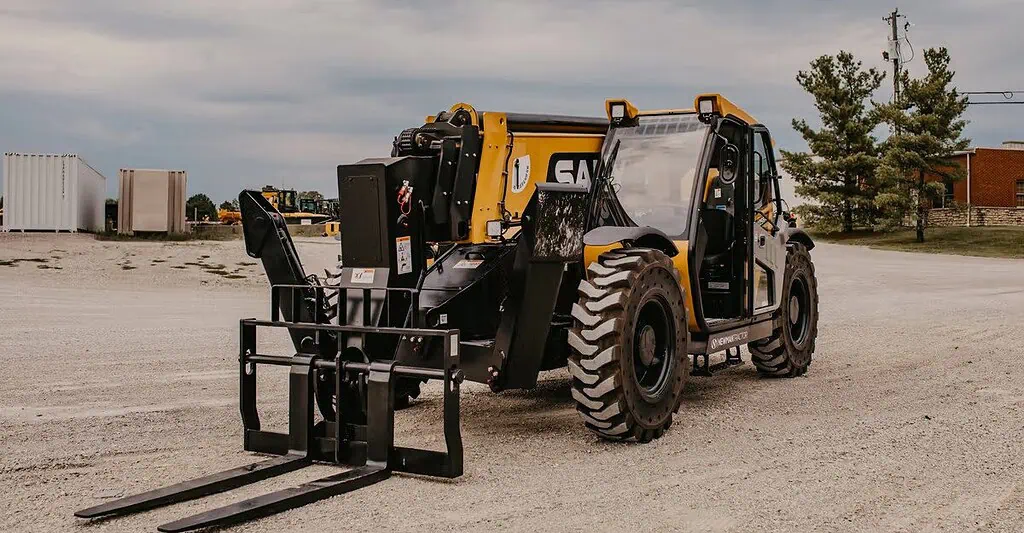
How Telehandler Weight Affects Lifting Capacity
The weight of the telehandler directly affects how much it can lift. A heavier telehandler is usually built with a more substantial frame so it can lift more. This is especially true when it comes to lifting heavy things because a heavier machine is more stable and doesn’t want to tip over forward as quickly when you lift something very heavy with it.
Conversely, a lighter telehandler is usually built for smaller lift capacities and isn’t made for anything heavy-duty. However, they can be perfect if you have to work in small, tight areas or tight job sites, or if you just need the lift capacity every now and then.
| Telehandler Model | Weight (kg) | Lifting Capacity (tons) | Lifting Height (m) | Use Case |
|---|---|---|---|---|
| JCB 520-50 | 8,300 | 2.5 | 5.0 | Small jobs in confined spaces |
| CAT TH3510 | 6,600 | 3 | 6.5 | Medium tasks with flexibility |
| Manitou MHT 10130 | 11,000 | 4.5 | 10.0 | Heavy lifting at large sites |
| Merlo P40.17 | 9,000 | 4 | 7.5 | High reach and large lifts |
The lift capacity is what the manufacturer recommends as the maximum safe weight the telehandler can lift. And even though it is referred to as lift capacity, as you can see here it is based on the weight of the machine. Use the Gross Vehicle Weight Rating (GVWR) to determine capacity. This table shows you the bigger the machine the more weight it can safely lift. The heavier machines like the Manitou MHT 10130 example described above are built for heavy lifting and are made for bigger jobs.
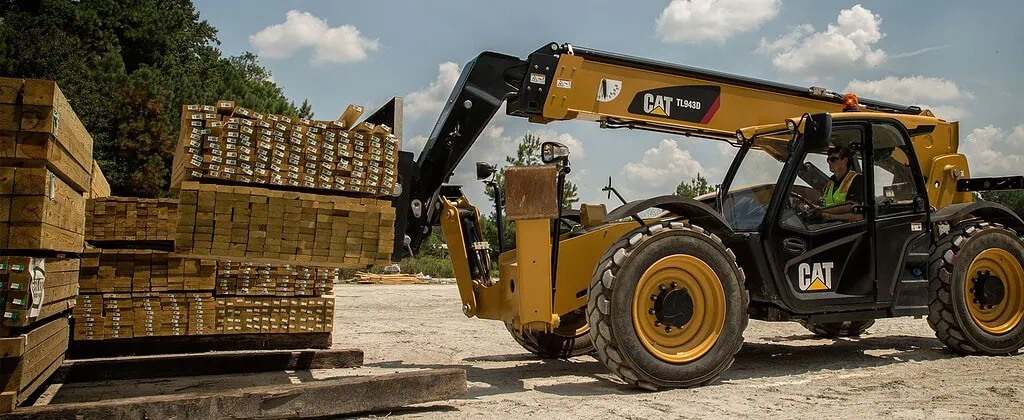
Telehandler Weight and Stability: Safety First
The weight of the telehandler is crucial in knowing how stable the machine will be as you get up in the air or carry a heavy load. A heavier machine has better weight distribution and is harder to tip over. This is especially important when you are operating on any uneven ground or when you have the telehandler’s load extended up in the air where it’s most unstable.
Telehandlers that lift more usually have larger tires or suspensions that are set up better where it doesn’t feel as tippy. This whole thing is about stability, so if you’re not careful when you’re point-loading an object from 20 feet in the air, you can set the machine up so it doesn’t feel tippy by having wider shoes, if you will, where the tires are sitting, or better suspension to keep everything on the ground when it should be.
| Stability Factor | Lighter Telehandlers | Heavier Telehandlers |
|---|---|---|
| Risk of Tipping | Higher | Lower |
| Ground Pressure | Lower | Higher |
| Recommended for Uneven Terrain | Less stable, not ideal | More stable, better suited |
| Maneuverability | Easier to maneuver in tight spaces | May require more space to maneuver |
The maximum weight capacity of any telehandler should never be exceeded. In other words, if the maximum weight capacity is 6,000 pounds, do not put 6,001 pounds on it, regardless of the radius of the load.
Telehandler Weight and Ground Pressure
Ground pressure is the force the machine puts on the ground. Again, if a machine weighs more, it exerts more ground pressure. An example is a truck compared to a bicycle. Which one would you rather have drive over your foot if you had to have one drive over your foot? Heavy machines can sink or get stuck in soft or wet ground. On the flip side, the lighter the machine, the more the weight is distributed so it’s more evenly loaded. Therefore, the lower the ground pressure, which is good for driving in soft, off-road conditions like sand or mud.
Now with all that said, your bigger machines oftentimes have bigger tires or they distribute the weight better over tracks, and the harder surface distributes the weight over a larger area which keeps you from doing a lot of damage on the job site.
| Telehandler Model | Weight (kg) | Ground Pressure (kg/cm²) | Performance on Soft Ground |
|---|---|---|---|
| JCB 520-50 | 8,300 | 0.55 | Less effective in soft ground |
| CAT TH3510 | 6,600 | 0.60 | Suitable for firm ground |
| Manitou MHT 10130 | 11,000 | 0.85 | More effective in soft ground |
| Merlo P40.17 | 9,000 | 0.75 | Effective with larger tires |
In general, the heavier the machine, the better it will perform in rougher terrain. Heavier units equipped with the right tires or tracks are the best-performing machines in rough terrain.
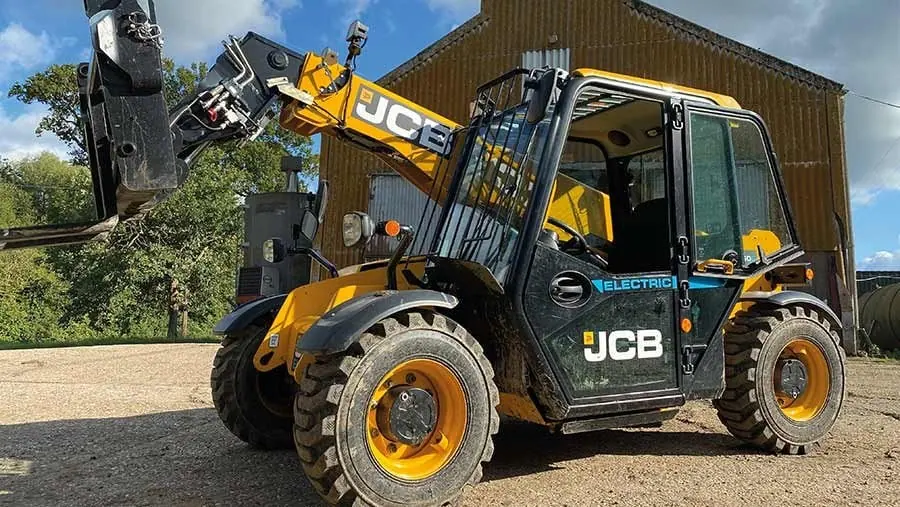
Telehandler Weight and Transportability
Moving a telehandler includes the cost of moving the machine over the road and how easy the machine is to load and unload.The weight of the machine matters directly to you when it comes to getting it from point A to point B. The lighter that puppy is, the easier it is for you to put it in a truck, to haul it, to move it when you get to the job site, to take it off the truck…you extremely reduce your transport bill. The reason is it’s extremely maneuverable because it’s so light, and it takes less equipment to move it.
It’s just like your shirt. The heavier the shirt is, the harder it is to haul. You’ve seen big trucks that haul people and cars. You’ve seen them on the highways hauling tractors and hauling other equipment. Heavier is more expensive to transport.
| Telehandler Model | Weight (kg) | Transport Vehicle Size | Transport Cost |
|---|---|---|---|
| JCB 520-50 | 8,300 | Small to medium trailer | Lower |
| CAT TH3510 | 6,600 | Small trailer | Lower |
| Manitou MHT 10130 | 11,000 | Large trailer | Higher |
| Merlo P40.17 | 9,000 | Medium trailer | Moderate |
Here’s a chart to illustrate how the weight of the machine affects what you need to transport it and the cost. A TH3510 (as an example) is lighter, easier to transport, and will cost you less to move than, say, an MHT 10130, which is going to cost you more to move.
Telehandler Weight and Fuel Efficiency
Fuel efficiency is another aspect of telehandler weight. Common sense says that a heavier telehandler consumes more fuel to do the same job. But it’s also designed to lift heavier loads and do more. Ultimately, that heavier machine does more work. More work is more cost effective and uses fuel at a lesser cost per ton or dollar of work than a lighter machine. And, I don’t care about fuel consumption if I have to replace that fragile little lightweight machine I’m using with a real machine three times the size to match the work of a machine the right size.
A lighter machine, at the end of the day, burns less fuel.Now, if you’re buying a lightweight machine, it’s designed for a lighter job, perhaps in a less labor intensive environment compared to heavier machines, and it normally operates for fewer hours. So you get in this funny little area where you could actually get by with a lighter machine and size it according to the work you’re doing. If you’re buying a lightweight machine to save fuel, you might get in trouble because the machine is so lightweight it can’t do the job.
| Telehandler Model | Weight (kg) | Fuel Efficiency (L/hr) | Use Case |
|---|---|---|---|
| JCB 520-50 | 8,300 | 6 | Light duty tasks |
| CAT TH3510 | 6,600 | 5 | Medium-duty operations |
| Manitou MHT 10130 | 11,000 | 8 | Heavy-duty lifting |
As demonstrated, the Manitou MHT 10130 requires more fuel, as compared to the smaller models, but its ability to carry 28,000 lbs is particularly beneficial to those considering a larger model for building those longer lifts, or to carry weightier loads.
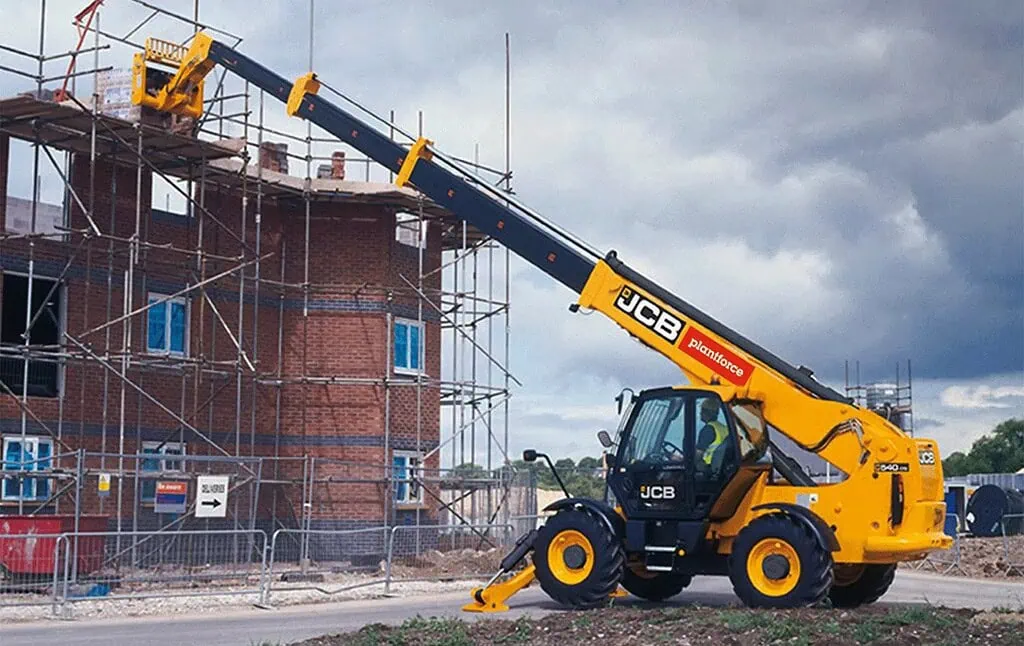
Choosing the Right Telehandler Weight for Your Project
When incorporating a telehandler weight into the decision, you must be mindful of your job size, the type of conditions the telehandler will be working in, if you are going to have to truck the machine around frequently or not. The heavier model may be necessary for the addition of feature for much heavier lifting and placing of materials than the smaller units. Again, operate within the job size requirements for a model that matches up with the work you anticipate. If you are working in a municipality where weight may be an issue, a smaller unit is more practical than a bigger unit that performs the same task.
| Factor | Lighter Models | Heavier Models |
|---|---|---|
| Project Scale | Best for small projects | Ideal for large, demanding tasks |
| Terrain Type | Best for firm ground | Better for uneven or soft ground |
| Transport Frequency | Easy to transport | Higher transport costs |
This chart gives you an idea of the consumption difference if you need a lighter model versus the heavier model based on your project needs.
Conclusion
In conclusion, telehandler weight is a big deal when you try to figure out which model you want. You must decide if you are going to do heavy work on a big job, or lighter work or lifting capabilities in tighter spaces. You need to understand the impact the weight has on how the machine will perform, how stable it will be to work from, and if it can get itself around. If you understand the weight compared to the lifting capability and how stable the machine is, plus fuel consumption, you can make a good decision which will save you in the end on your project.
Follow us on :YouTube.