Have you ever wondered how you’re supposed to know which excavator to buy? It’s a daunting decision, especially when you don’t understand these machines. The fact is, the excavator principle is the most important aspect of how well it can work for you. In fact, if you understand this principle, then you can get the right machine every time.
The excavator principle refers to the core mechanisms that power an excavator’s performance. By understanding its hydraulic system, engine functionality, and key components like the boom, arm, and bucket, you can ensure better operational efficiency and longer machine life. Whether for digging, lifting, or rotating, knowing how these components work together is crucial for choosing the right excavator for your needs. Understanding the excavator principle ensures that you make a more informed, cost-effective choice for any construction project.
But now you know what the excavator principle is, and what in the world happens inside that machine that makes it do what you want it to do.
What is the Excavator Principle?
The excavator principle is the actual way the excavator makes it work and makes the excavator accurate. The hydraulic system is the key. It uses the mechanical structure of the machine, as well as the electronic systems that go with it, to do all the things the machine needs to be able to do. That’s digging, lifting, spinning, and everything that an excavator does.
Basic Definition of the Excavator Principle
The excavator principle is why the excavator can do the jobs it does, by using a combination of hydraulics, mechanical parts, and engine.It is this principle that lets the operator operate the machine and understand what it can do so they can stretch it to do its best for them. Once they understand this principle and how it applies to the excavator, they can take that machine and let it do the work that they need to get done.
Key Components of Excavator Principle
| Component | Description | Role in Excavator Performance |
|---|---|---|
| Hydraulic System | Uses pressurized fluid to move parts of the excavator | Drives the arm, boom, bucket, and rotation mechanism |
| Engine | Powers the hydraulic pump and other components | Provides energy to operate the excavator’s functions |
| Mechanical Parts | Includes boom, arm, bucket, and undercarriage | Transfers hydraulic power into motion and stability |
| Electronics | Controls the hydraulic flow and engine power | Optimizes performance and efficiency |
Key Components of the Excavator Principle
The main components of an excavator that contribute to the overall performance of the machine. Everything on the machine works together based on the excavator principle.
Hydraulic System
The heart of the hydraulic system is the excavator’s principle.This system builds high-pressure fluid. This fluid moves the pistons to perform the lifting action that allows you to pick up the bucket, swing the boom, or tilt the arm. Because fluid is incompressible, the same fluid pushes the pistons back and lifts the bucket. The power of the hydraulic fluid transmits power so you can be precise and still move what you need to move.
Components of the Hydraulic System
| Component | Function | Impact on Performance |
|---|---|---|
| Hydraulic Pump | Generates high-pressure fluid | Provides the necessary force to move the arm, bucket, etc. |
| Hydraulic Cylinders | Translates fluid pressure into mechanical movement | Moves the boom, bucket, and arm with precision |
| Control Valves | Directs fluid flow to different parts of the machine | Controls the movement and power distribution |
| Hydraulic Fluid | Carries the hydraulic force throughout the system | Efficiently transmits power to all components |
Boom, Arm, and Bucket
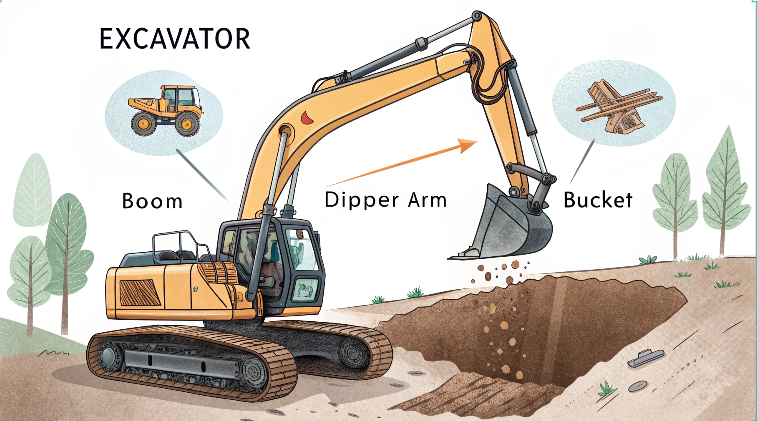
manipulator, arm, and bucket are important to the digging/loading elements. The excavator principle describes how hydraulic force is distributed equally by the fluid power so that high energy can be precisely applied.
- Boom: The long arm that extends outward to increase reach.
- Arm: Connected to the boom, it allows for precise lifting and manipulation of material.
- Bucket: The digging tool that scoops material and lifts it.
These parts are all coordinated through the hydraulic system to provide a wide range of movement.
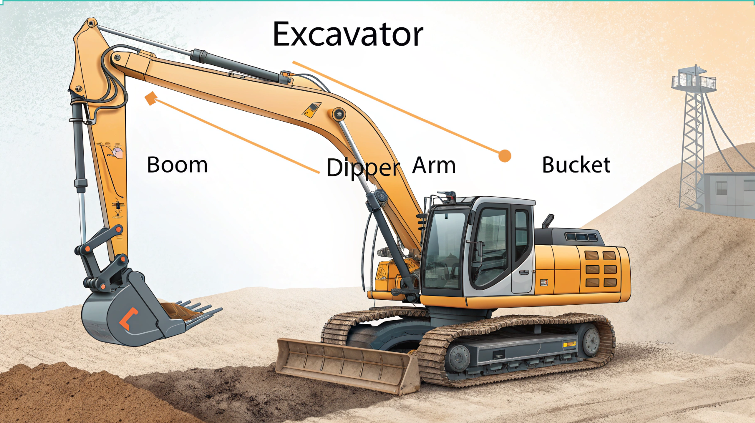
Movement of Boom, Arm, and Bucket
| Component | Function | Hydraulic Control | Effect on Task Performance |
|---|---|---|---|
| Boom | Extends reach and elevates load | Hydraulic cylinders push fluid into boom | Enhances lifting capacity for large-scale tasks |
| Arm | Moves material to or from the bucket | Arm connected to the boom and controlled by valves | Allows precise positioning of material |
| Bucket | Digs, scoops, and lifts material | Fluid moves bucket into soil, rock, or debris | Enables efficient digging and loading |
Rotation Mechanism
The rotation mechanism allows the excavator to rotate 360 degrees. The excavator principle states that the rotating portion of the excavator, its upper body, moves independently from the undercarriage and can work in many areas to accomplish many different tasks.
Rotation Mechanism Components
| Component | Function | Impact on Performance |
|---|---|---|
| Slew Motor | Drives the rotation of the upper structure | Enables 360-degree rotation for flexibility |
| Swing Bearing | Supports the rotating body | Provides stability during rotation |
| Rotation Speed | Determines how fast the upper structure can rotate | Allows for quick adjustments and multi-directional work |
Undercarriage and Stability
The excavator principle also includes the undercarriage. The undercarriage is necessary for the machine’s stability. The undercarriage consists of the tracks or wheels, which allow the weight
of the machine to be distributed evenly and ensure smoother movement and greater stability.
- Track System: Provides better ground contact for stability on uneven terrain.
- Counterweight: Balances the excavator, preventing tipping when lifting heavy loads.
Undercarriage Components and Their Role
| Component | Function | Effect on Stability and Performance |
|---|---|---|
| Track System | Distributes weight evenly across the surface | Enhances balance and mobility on uneven surfaces |
| Counterweight | Balances the excavator’s upper body | Prevents tipping and ensures stability during heavy lifting |
| Rollers & Idlers | Help move the tracks smoothly | Reduces friction, ensuring smooth movement |
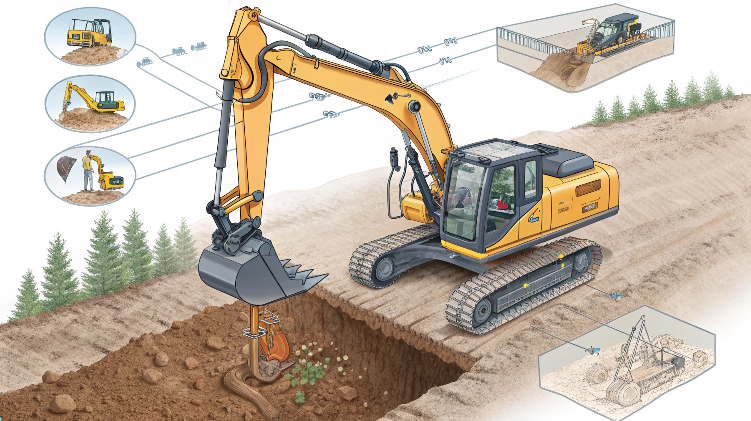
How the Excavator Principle Influences Performance
The excavator principle covers all aspects of the machine and directly affects its overall performance including efficiency, how power is delivered, and how adaptable it is to different projects.
Power and Efficiency
One of the benefits of the excavator principle is that it is possible to get the most power output while using the least amount of fuel. This is because the hydraulic system can deliver the horse power where you need it and can suck back up what you don’t want to consume so you can dig and lift very effectively with the least amount of fuel.
Excavator Efficiency Based on Excavator Principle
| Excavator Type | Fuel Efficiency | Maximum Power Output | Suitable Tasks |
|---|---|---|---|
| Mini Excavator | High | Low | Small-scale, tight spaces |
| Standard Excavator | Medium | Medium | General construction tasks |
| Large Excavator | Low | High | Heavy-duty excavation work |
Digging Depth and Reach
Understanding the excavator principle allows you to dig deep or reach out a long way using the excavator principle, the hydraulic system. This hydraulic system runs off the power of the engine and
gives you a way to use the boom, stick, and bucket to dig much deeper or reach out a greater distance with excellent accuracy while digging.
Maximum Digging Depth and Reach by Excavator Type
| Excavator Type | Maximum Digging Depth | Maximum Reach | Best For |
|---|---|---|---|
| Mini Excavator | 2-3 meters | 4-5 meters | Tight spaces and light-duty tasks |
| Standard Excavator | 5-7 meters | 6-8 meters | General construction and trenching |
| Large Excavator | 8+ meters | 9+ meters | Heavy excavation and deep digging |
Adaptability for Different Projects
Excavators are designed to work across all terrains, up hills and over rough ground. They can still use the excavator principle and use a better hydraulic system and tougher undercarriage to dig in hard
soils, smooth soils, fill in holes, or lift and carry heavy things.

How Excavator’s Engine and Hydraulic Systems Work Together
The excavator principle is marrying together the engine and the hydraulic system to get them to work together and do it with lots of horse power delivered for the least amount of fuel possible. The
engine powers the hydraulic pump. The pump pushes the hydraulic fluid through this neat hydraulic system, and as long as you keep that system tight and air free, you can do an awful lot of work. Every stone is turned, every ditch dug, and every hill climbed with this excavator principle working.
Engine and Hydraulic System Interaction
| Component | Function | Impact on Overall Performance |
|---|---|---|
| Engine | Powers the hydraulic pump and other components | Provides the required power for various functions |
| Hydraulic Pump | Circulates hydraulic fluid to different parts of the machine | Directly drives excavator’s main tasks (digging, lifting) |
| Hydraulic Cylinders | Converts hydraulic power into movement | Controls the movement of the arm, boom, and bucket |
Importance of the Excavator Principle in Excavator Selection
The excavator principle becomes crucial when you are trying to select the right excavator for what you are trying to do. You need to understand how the hydraulic system works and how well the engine
can deliver power to the pump and the pump can send fluid to the hydraulic motors and cylinders. Understand this principle and you won’t waste a penny buying the excavator, or any machine, you need.
Key Considerations When Selecting an Excavator
| Factor | Why it Matters | How It Relates to the Excavator Principle |
|---|---|---|
| Hydraulic System | Determines digging power and efficiency | A strong hydraulic system ensures optimal performance |
| Engine Power | Provides energy for all movements | A powerful engine allows for heavy-duty tasks |
| Size and Weight | Affects maneuverability and stability | Larger machines may be more stable but harder to maneuver in tight spaces |
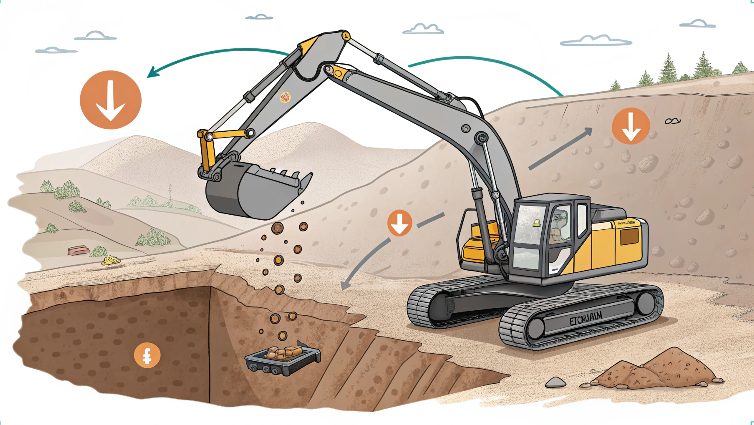
Conclusion
Understanding the excavator principle is the key to buying an excavator and getting it to work for you. Everything, from the hydraulic system to the way the rest of the machine is designed, to every part of an excavator, is built to make everything work so you have the power, precision, and performance you need to perform. When you buy your machine, do this same thing. Use the excavator
principle.Knowing the excavator principle helps you make the right decision about what you need to buy for your next project.
Whether you are working in a tight situation, picking up something heavy, or digging in the toughest dirt, use the excavator principle to pick the right machine every time. Understand how an excavator works and why an excavator works so well, and then make sure you have the right machine for every job. When you do that, you will work faster. You will work smarter. You will work more efficiently. And you
will have the best bid, performance, and operating cost on your projects every time.
Final Checklist for Excavator Selection Based on Excavator Principle
| Factor | Considerations for Choosing the Right Excavator | How it Relates to Excavator Principle |
|---|---|---|
| Hydraulic System | Look for machines with high-quality hydraulic systems for efficient power distribution | Ensures optimal performance for different tasks |
| Engine Power | Choose an excavator with the appropriate engine size for your worksite requirements | Powers the hydraulic system and supports heavy tasks |
| Size and Mobility | Consider machine size based on project space and terrain conditions | The excavator principle dictates optimal machine size for maneuverability |
| Durability and Reliability | Research the durability of different models, especially in harsh conditions | The excavator principle includes long-lasting components that reduce maintenance costs |
Follow us on :YouTube.