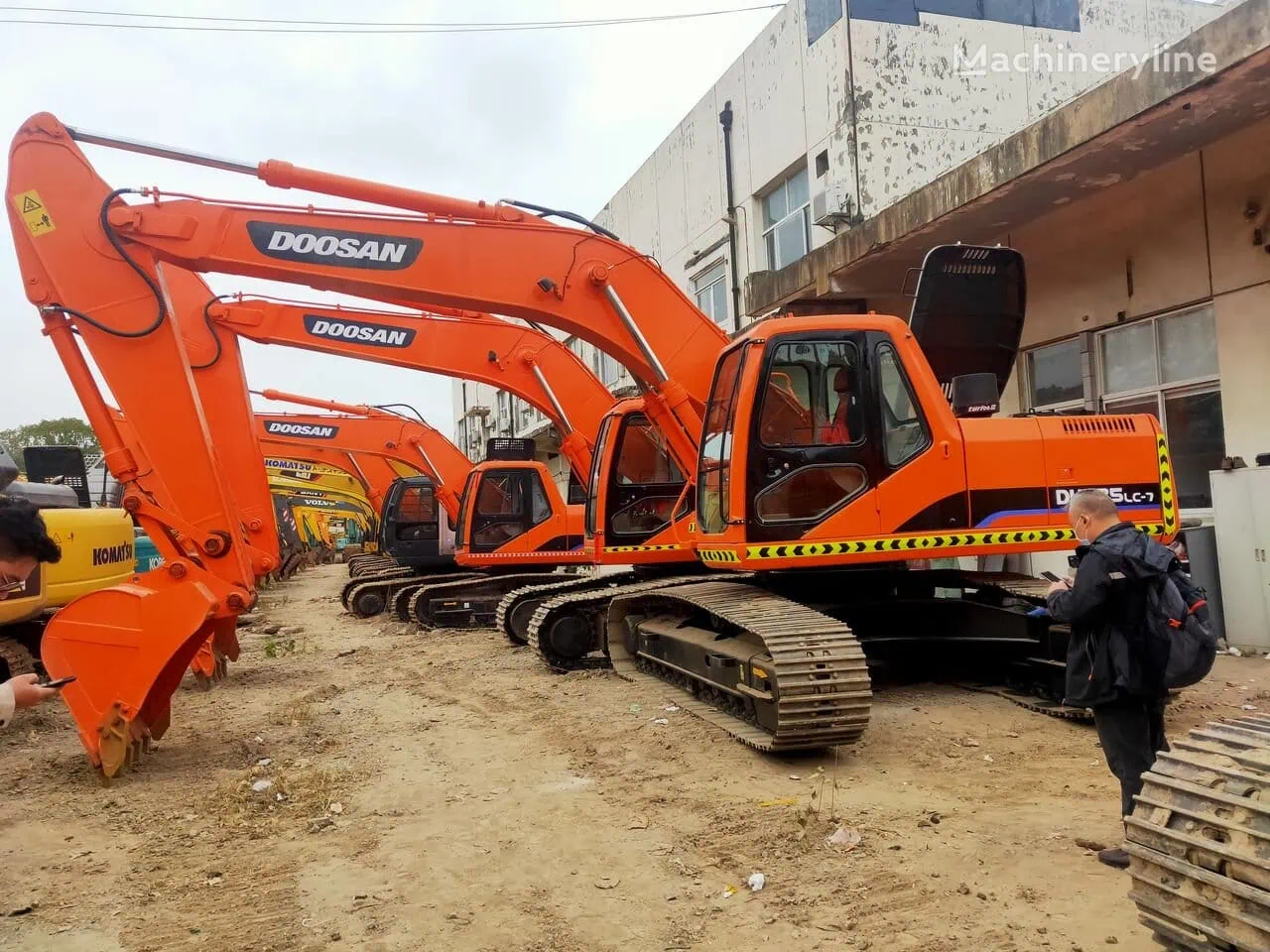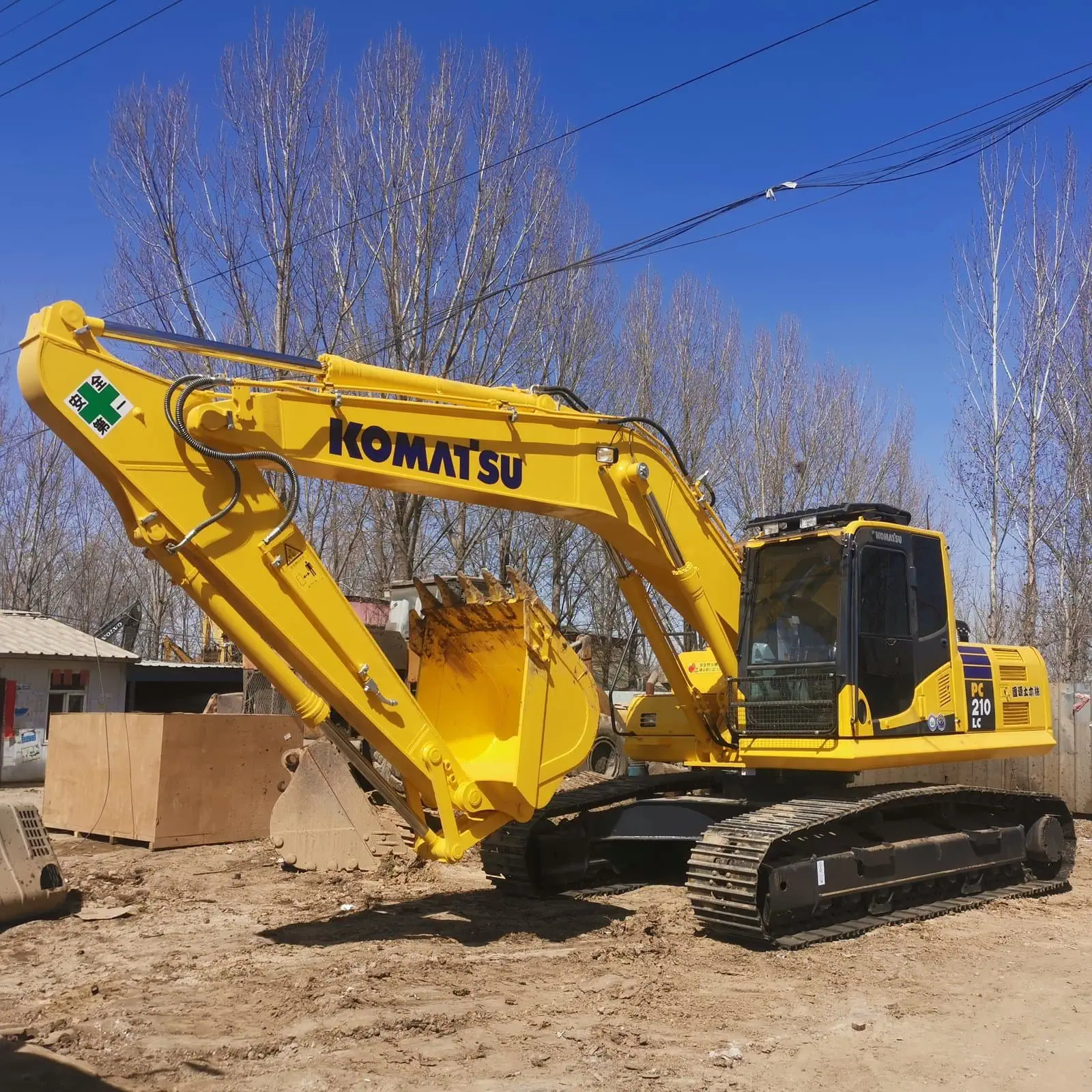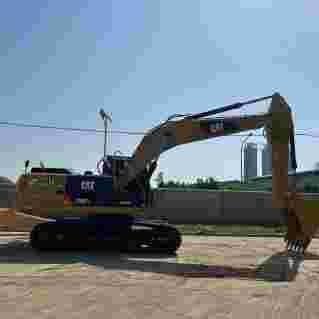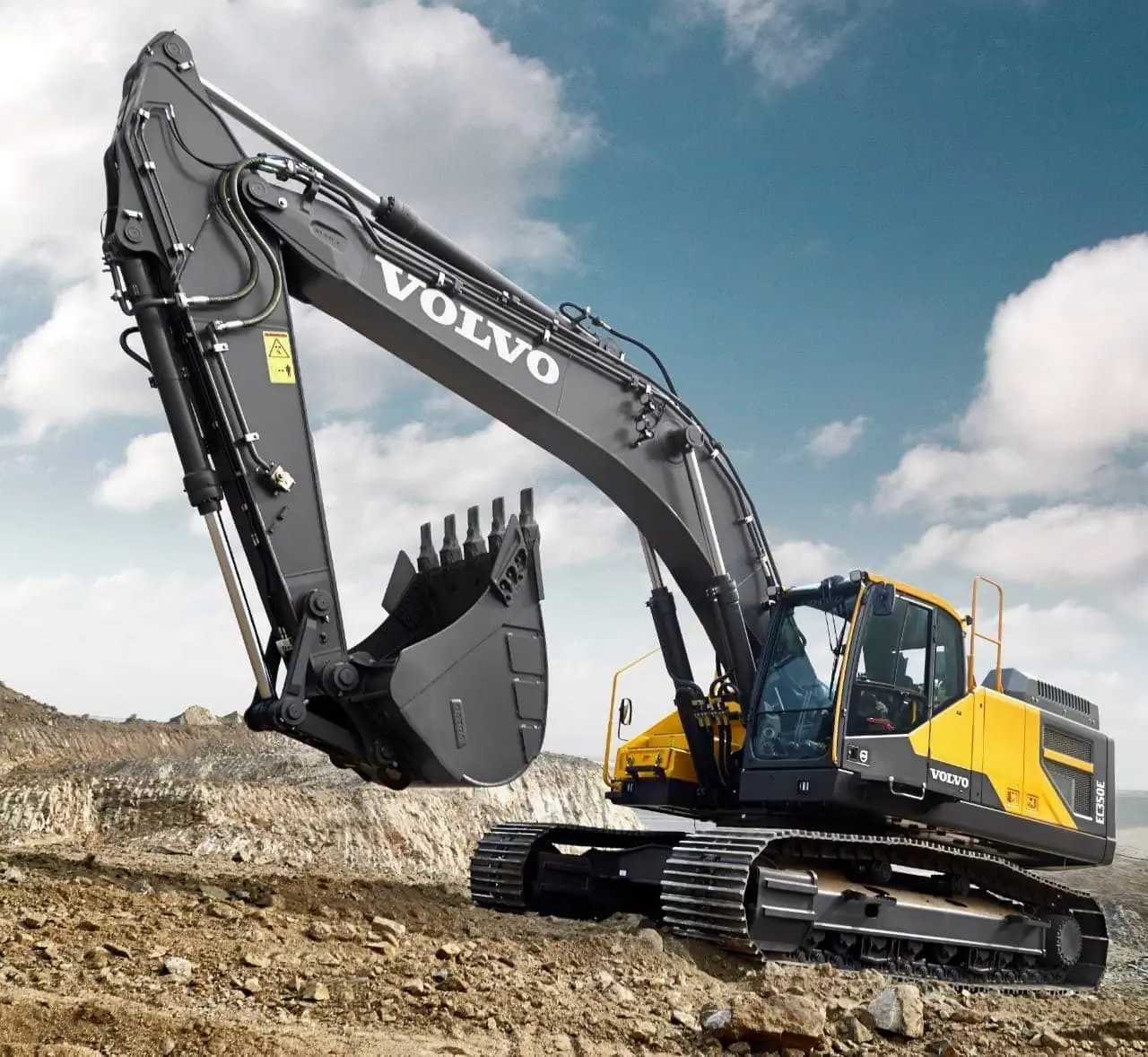
I didn’t realize how difficult shipping would be when I first purchased an excavator. Selecting the best heavy equipment shipping option is essential. A bad choice may result in equipment damage, unforeseen expenses, or delays. This is what I’ve discovered.
Shipping an excavator isn’t a simple task. Whether you’re purchasing locally or internationally, there are several options for Heavy Equipment Shipping. I’ll walk you through the best methods, factors that influence shipping costs, and how to ensure your excavator arrives safely. Whether you’re shipping from overseas or across the country, this guide will help you make an informed decision.
Let’s examine the most popular shipping options for your excavator now that you understand how crucial it is to select the best shipping option.
1. Understanding Heavy Equipment Shipping for Excavators
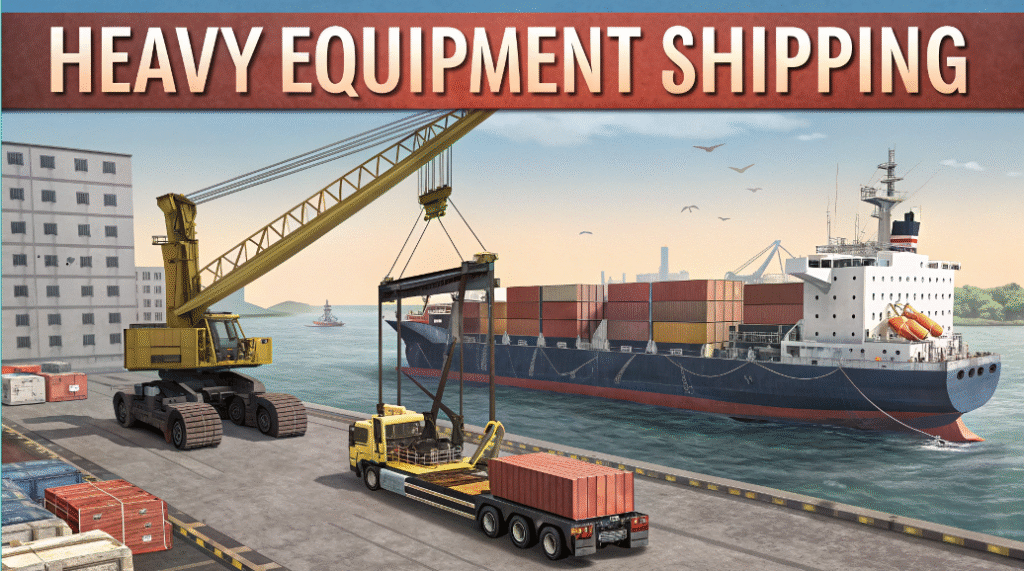
First, let’s talk about what Heavy Equipment Shipping really is. Shipping an excavator isn’t like sending a regular package. These machines are huge, heavy, and require special care to make sure they don’t get damaged in transit. When I bought my first excavator, I had to figure out how to ship it from China to my location. It took me a while to understand that there are different ways to ship heavy equipment, and each method comes with its own set of benefits and challenges.
2. The Most Common Methods of Heavy Equipment Shipping for Excavators
When it comes to shipping an excavator, you have a few options. Over time, I have found that each method works best in certain situations. Here are the four most common shipping methods:
A. Ocean Freight
Ocean Freight is the most popular choice when shipping excavators internationally. When I imported my first machine, I used ocean freight because it’s more affordable for long-distance shipments. Your excavator is placed in a shipping container or loaded onto a cargo ship, and it makes its way across the ocean.
| Pros | Cons |
|---|---|
| Cost-effective for long distances | Slower transit times (several weeks) |
| Ideal for large equipment like excavators | Possible delays due to weather |
| Available worldwide for international shipping | Requires careful packing and securing |
Ocean Freight is great for international shipments, especially if you’re importing from places like China. However, it can take weeks for the equipment to arrive, and there may be delays due to weather conditions.
B. Flatbed Trucking
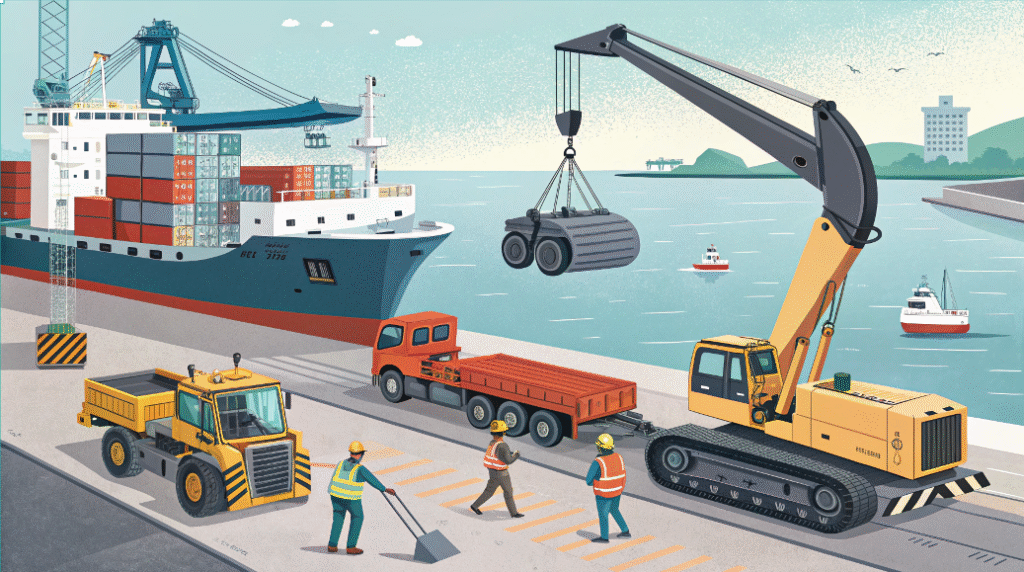
Flatbed trucking is what I used when I bought an excavator from a dealer in the same country. It’s a simple method where the excavator is loaded onto a flatbed truck, and driven to its destination. This works well for domestic or cross-border shipments.
| Pros | Cons |
|---|---|
| Faster than ocean freight for shorter distances | Can be expensive for long trips |
| Direct transport from seller to buyer | Weather and road conditions can affect the journey |
| Easy to track during transport | May need special permits for large machines |
Flatbed trucking is great for short trips, but it gets costly for longer distances. And, depending on the size of the excavator, you might need special permits or escort vehicles for the trip.
C. Roll-on/Roll-off (RoRo) Shipping
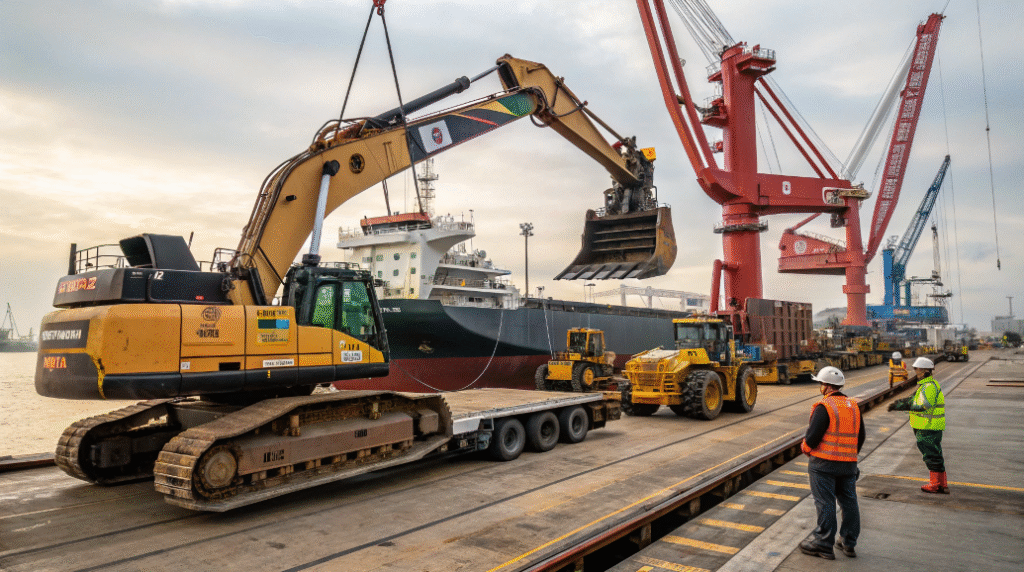
RoRo shipping was my preferred method for moving large equipment like excavators across the sea. RoRo means “Roll-on/Roll-off,” which basically means that the excavator is driven directly onto the ship and secured there. It’s a simple process, and the machine stays fully intact throughout the journey.
| Pros | Cons |
|---|---|
| Simple loading and unloading process | Limited availability in some regions |
| Safe and secure during transport | Needs to be fully assembled |
| Cost-effective for larger shipments | Not ideal for disassembled equipment |
If you’re shipping an excavator in one piece, RoRo is a solid choice. It’s secure and often cheaper than other methods. But it’s not an option if the machine needs to be disassembled for shipping.
D. Container Shipping
Container shipping is another option I considered when I needed to ship smaller or disassembled excavators. The machine is loaded into a container, which keeps it protected from the elements and any rough handling during transit.
| Pros | Cons |
|---|---|
| Extra protection from weather and damage | Can be more expensive than RoRo |
| Easy tracking through container numbers | Space inside the container is limited |
| Safe for smaller or disassembled machines | Loading and unloading can take time |
If you’re shipping smaller machines or disassembled parts, container shipping is a great choice. But if you’re shipping a large, assembled excavator, it might not be the best option.
3. Factors That Influence Heavy Equipment Shipping for Excavators
Shipping costs and methods depend on a few key factors. Over time, I’ve learned that understanding these factors helps you choose the right shipping method for your excavator.
A. Size and Weight of the Excavator
The size and weight of your excavator play a big role in determining which shipping method is best. I’ve shipped both smaller machines and larger ones, and the difference in cost and method is noticeable.
| Excavator Model | Weight (tons) | Shipping Method |
|---|---|---|
| CAT 320 | 20-22 | Ocean Freight / RoRo |
| Komatsu PC200 | 22-24 | Flatbed Trucking / RoRo |
| Hitachi ZX350 | 35-40 | RoRo / Ocean Freight |
For large machines, like the Hitachi ZX350, RoRo or Ocean Freight is often the most cost-effective choice. Smaller machines may work well with flatbed trucking or container shipping.
B. Distance and Location
The distance between the seller and buyer makes a huge difference. When I purchased an excavator from another country, the distance meant that I had to choose between slower ocean freight and faster—but more expensive—flatbed trucking.
| Region | Shipping Method |
|---|---|
| Domestic (within the same country) | Flatbed Trucking / Container |
| International (e.g., China to the US) | Ocean Freight / RoRo |
If you’re shipping within the same country, flatbed trucking is often the best choice. But for international shipments, ocean freight or RoRo shipping is usually more suitable.
C. Shipping Costs and Budgeting
The cost of shipping can vary widely. I learned this lesson the hard way! The more you know about shipping methods and their costs, the better you can budget for your purchase.
| Shipping Method | Cost Estimate (USD) | Best for |
|---|---|---|
| Ocean Freight | $1,000 – $5,000 | International shipments |
| Flatbed Trucking | $500 – $3,000 | Domestic / Cross-border |
| RoRo Shipping | $1,500 – $4,000 | Large, assembled equipment |
| Container Shipping | $2,000 – $6,000 | Smaller / Disassembled equipment |
The prices can vary based on the size, weight, and destination of your excavator. Always make sure to get a few quotes to find the best deal.
4. Ensuring the Safety of Your Excavator During Shipping
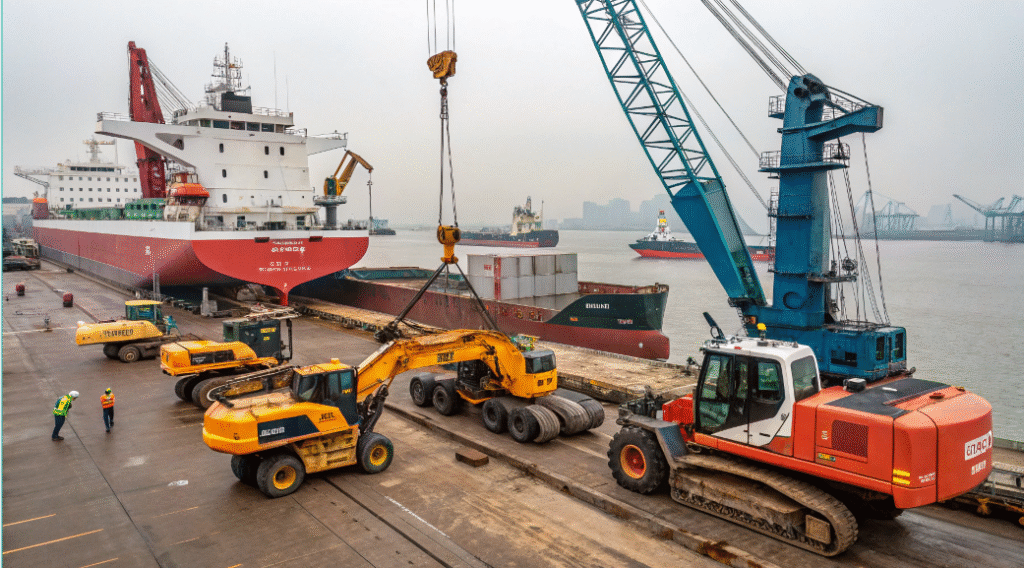
Protecting your excavator is a top priority when shipping. I’ve seen firsthand how things can go wrong if equipment isn’t properly secured or packed.
A. Packaging and Protection
You want to make sure your excavator is secured properly during transport. I recommend using tie-downs and covering the machine to protect it from bad weather or rough handling.
B. Insurance for Heavy Equipment Shipping
I always make sure my equipment is insured. There are different types of insurance, such as marine cargo insurance for international shipments, and transit insurance for domestic shipping. It’s essential to have coverage in case anything goes wrong.
5. How to Choose the Right Shipping Company for Your Excavator
Choosing the right shipping company is critical. I’ve learned that it’s not just about price—it’s about reliability and reputation.
| Criteria | What to Look For |
|---|---|
| Reputation and Experience | Look for a company with a good track record in shipping excavators. |
| Pricing and Transparency | Ensure the company gives clear, upfront quotes. |
| Customer Support | Choose a company that offers responsive support. |
| Insurance Options | Make sure the company offers insurance options for your equipment. |
Take your time to choose a reliable company, and don’t be afraid to ask questions about their process.
Conclusion: The Key to Efficient Heavy Equipment Shipping
Choosing the right Heavy Equipment Shipping method is crucial for making sure your excavator arrives safely and on time. From Ocean Freight to Flatbed Trucking, each shipping method has its pros and cons. Take the time to consider the size, weight, and distance of your shipment, and don’t forget to protect your equipment with proper packaging and insurance. By making the right choices, you can avoid costly mistakes and ensure your equipment gets where it needs to go.
Call to Action
If you need help with shipping your next excavator, contact us today. At HIXEN Machinery, we’re here to guide you through every step of the process. Reach out for a quote or more information on how we can help with your shipping needs.
Follow us on :YouTube.