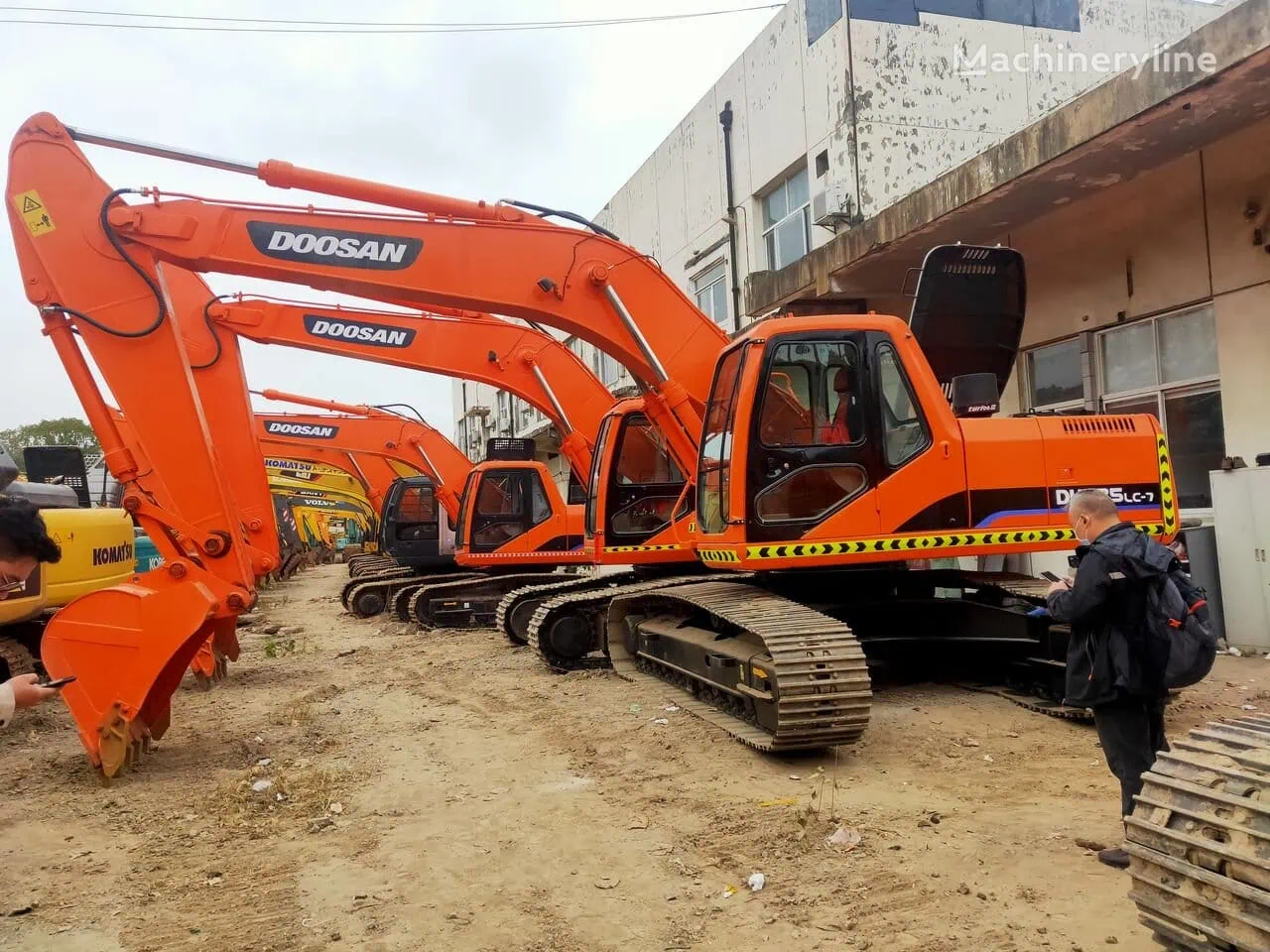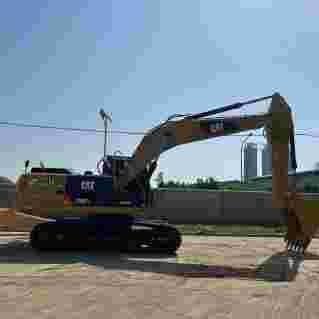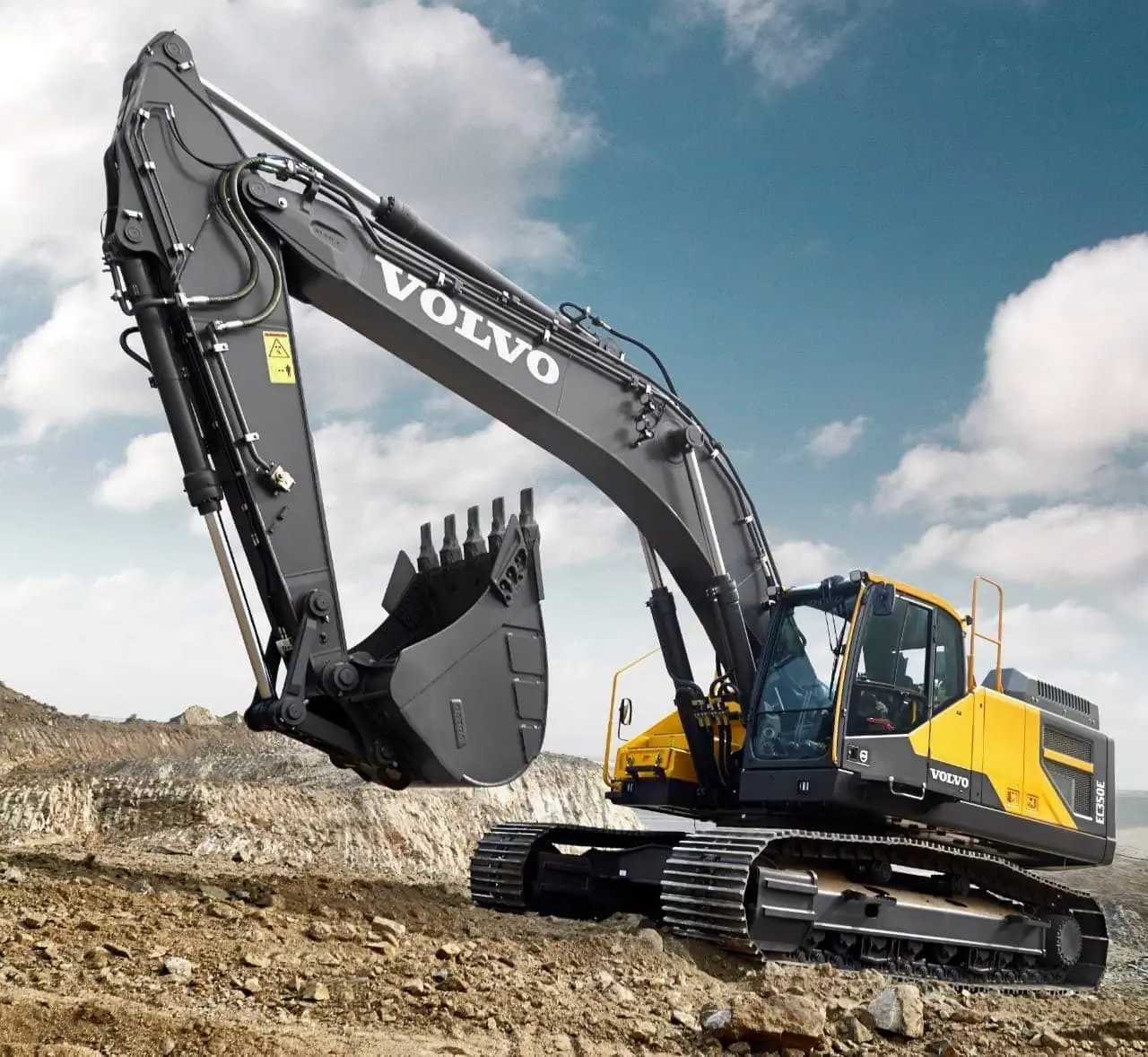
I often meet buyers who feel excited about a cheap used excavator. But after buying, problems start to appear. Repairs cost money and time. This usually happens because buyers ignore the common malfunctions of used excavators before purchase.
To avoid the common malfunctions of used excavators when buying, I always focus on four areas. I check the hydraulic system under load. I test the engine from a cold start. I inspect undercarriage wear carefully. I also review maintenance records if they exist. These steps help me find hidden wear, poor repairs, and future failure risks. When buyers follow this process, they greatly reduce unexpected repair costs and improve long-term machine reliability.
Now I will explain each inspection step in detail, based on my real experience with used excavators.
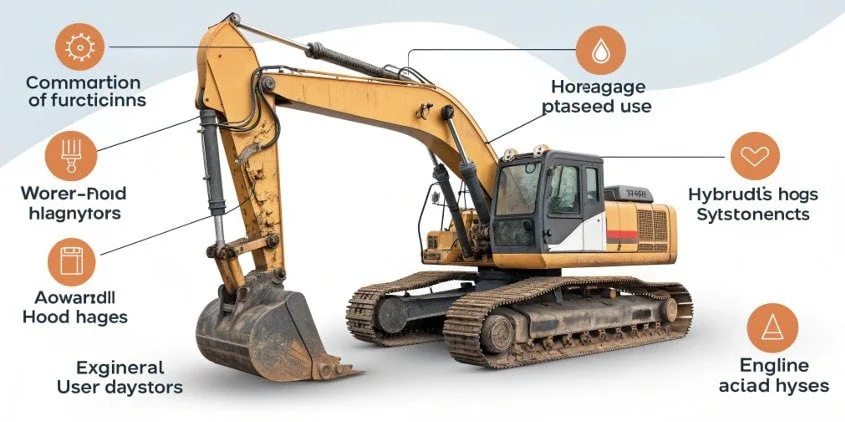
Why Buyers Must Pay Attention to the Common Malfunctions of Used Excavators
I remember a buyer who only cared about paint and price. The excavator looked clean. The engine started. Two weeks later, the hydraulic pump failed. The repair cost was very high. This case is common.
The common malfunctions of used excavators usually come from long-term wear. They do not appear in a short test. Buyers must understand this before they buy.
Main reasons buyers face hidden malfunctions
| Reason | What I often see |
|---|---|
| Long working hours | Machines worked more than the hour meter shows |
| Poor maintenance | Oil was changed late or not at all |
| Heavy job sites | Mining and demolition cause faster wear |
| Cosmetic repairs | Fresh paint hides oil leaks |
When buyers understand these reasons, they start to inspect machines in a different way. This helps them avoid many common malfunctions of used excavators.
What Are the Most Common Malfunctions of Used Excavators?
When I inspect a used excavator, I always follow the same order. Some systems fail more often than others. From my experience, the common malfunctions of used excavators are not random.
Systems with the highest failure rate
| System | Common problems | How often I see it |
|---|---|---|
| Hydraulic system | Pressure loss, leaks | Very often |
| Engine | Smoke, oil consumption | Often |
| Undercarriage | Track and roller wear | Very often |
| Electrical system | Sensor failure | Sometimes |
| Swing / travel motors | Weak movement | Sometimes |
Most buyers only focus on the engine. That is a mistake. In reality, the hydraulic system and undercarriage cause more common malfunctions of used excavators than engines do.
How to Inspect the Hydraulic System to Avoid Common Malfunctions of Used Excavators
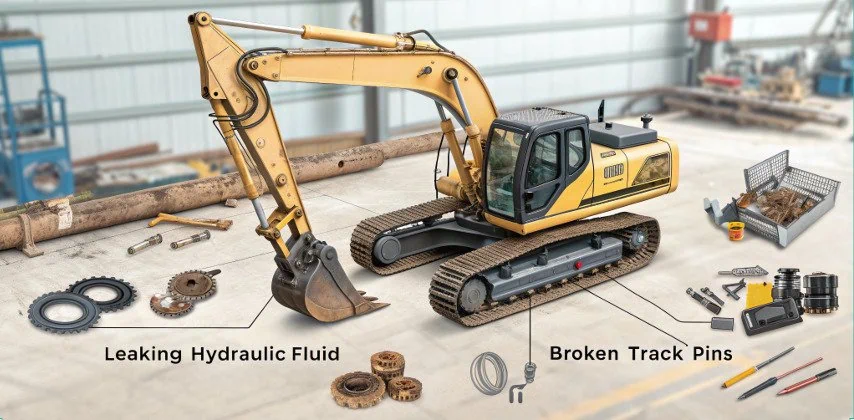
I always say this clearly. If the hydraulic system is bad, the excavator is bad. I have rejected many machines only because of hydraulic problems.
Why hydraulic systems fail in used excavators
| Cause | Explanation |
|---|---|
| High pressure | Excavators work under constant load |
| Dirty oil | Old oil damages pumps and valves |
| Seal aging | Rubber parts wear with time |
| Poor repairs | Cheap parts cause repeat failures |
These reasons explain why hydraulic issues are among the most common malfunctions of used excavators.
What I personally check during inspection
| Check item | What I do | What it tells me |
|---|---|---|
| Hose surface | I touch and bend it | Hard hoses mean aging |
| Cylinder rod | I look for oil lines | Oil means seal failure |
| Operation speed | I lift heavy load | Slow speed means pressure loss |
| Noise | I listen carefully | Noise means pump wear |
I always test hydraulics under load. Light movement means nothing. Many common malfunctions of used excavators only appear when pressure increases.
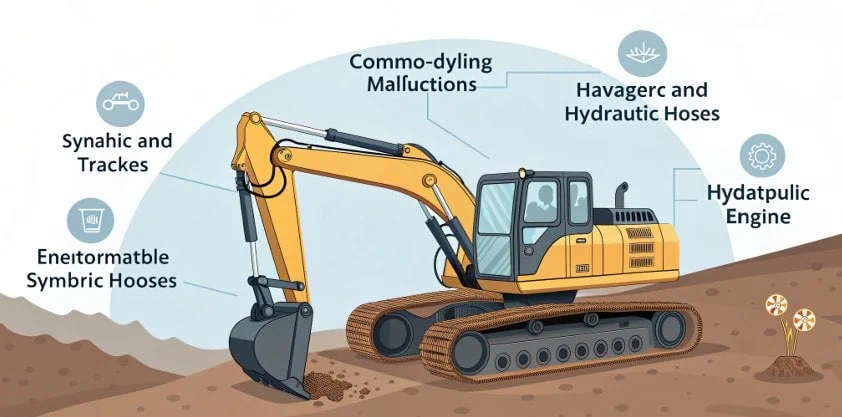
How Engine Condition Helps You Avoid the Common Malfunctions of Used Excavators
I always tell buyers this first. An excavator with a bad engine is never cheap. Even small engine repairs cost a lot. Big engine failures can cost more than the machine itself. Because of this, engine condition plays a big role in avoiding the common malfunctions of used excavators.
When I inspect a used excavator, I spend real time on the engine. I do not rush. The engine usually tells the truth if you know how to listen and look.
Why Engine Problems Are So Common in Used Excavators
Most used excavators have worked long hours. Many of them worked in dust, heat, or heavy load. Engines suffer from this kind of work.
| Reason | What I often see in the field |
|---|---|
| Long working hours | High internal wear |
| Poor oil quality | Sludge and carbon buildup |
| Late oil changes | Bearing and piston damage |
| Overheating history | Cracked head or gasket failure |
These reasons explain why engine-related issues are among the common malfunctions of used excavators.
Common Engine-Related Malfunctions I Encounter
I see the same engine problems again and again. Most of them appear during simple checks.
| Malfunction | How it shows up |
|---|---|
| Cold start difficulty | Long cranking or failure to start |
| Excessive smoke | Thick smoke after startup |
| Knocking sounds | Metal noise at idle |
| Oil leaks | Wet engine surfaces |
| Coolant leaks | White residue or low coolant |
Each of these signs points to a possible internal issue. Ignoring them often leads to serious common malfunctions of used excavators later.
Engine Fluid Checks I Never Skip
Fluids show engine health better than appearance.
| Fluid | How I check | Warning sign |
|---|---|---|
| Engine oil | Check color and smell | Metal or fuel smell |
| Coolant | Open cap when cold | Oil residue |
| Fuel system | Check filters | Metal particles |
When fluids look bad, I assume internal wear. This often leads to future common malfunctions of used excavators.
Simple Engine Tests Buyers Can Do On Site
Buyers do not need special tools for basic checks. I use simple actions.
| Test | Action | Purpose |
|---|---|---|
| Throttle response | Increase RPM slowly | Check fuel delivery |
| Load test | Move boom under load | Check power output |
| Temperature | Monitor gauge | Detect overheating |
These simple tests help buyers avoid engine-related common malfunctions of used excavators before money changes hands.
Checking Maintenance Records to Reduce the Risk of Common Malfunctions of Used Excavators
I trust documents more than words. Sellers can explain many things. Some explanations sound very good. But paper shows real behavior. Because of this, I always check maintenance records first. From my experience, poor records often lead to the common malfunctions of used excavators after purchase.
When records are clear, I feel safer. When records are missing, I slow down.
Why Maintenance Records Matter So Much to Me
An excavator works every day under load. Small care habits decide its future condition. Records show these habits.
| Record detail | What it tells me |
|---|---|
| Regular oil changes | Engine and pump protection |
| Filter replacement | Clean fuel and oil flow |
| Scheduled service | Professional maintenance |
| Repair notes | Past problems and solutions |
Machines with good records usually have fewer common malfunctions of used excavators later.
Maintenance Records I Always Ask For
I never ask for just one document. I want to see a full picture.
| Record type | What I check | Why it matters |
|---|---|---|
| Service log | Dates and intervals | Shows daily care level |
| Repair history | Same issue repeated or not | Shows hidden weak points |
| Parts invoices | Original or cheap parts | Shows repair quality |
| Hour records | Match with machine wear | Confirms real usage |
When sellers can show these records quickly, it builds trust. When they hesitate, I become cautious.
How I Judge the Quality of Maintenance Records
Not all records are equal. Some look complete but still hide problems.
| Record feature | My judgment |
|---|---|
| Handwritten notes | Acceptable but limited |
| Dealer stamps | High reliability |
| Digital records | Easy to verify |
| Gaps in dates | Possible neglect |
Gaps in records often mean skipped maintenance. This increases the chance of common malfunctions of used excavators.
What Missing Records Usually Mean in Real Cases
Missing documents are not random. They often point to behavior.
| Missing item | What I usually assume |
|---|---|
| No service log | Oil changes were irregular |
| No repair history | Problems were not documented |
| No parts invoices | Low-cost parts were used |
| No hour proof | Meter may be unreliable |
I once inspected a machine with low hours but no records. The undercarriage wear told a different story. That machine later showed serious common malfunctions of used excavators.
How I Use Records to Cross-Check the Machine
I never read records alone. I compare them with the machine itself.
| Record item | Physical check |
|---|---|
| Engine service | Oil color and smell |
| Hydraulic service | Hose condition |
| Hour record | Pedal and seat wear |
| Major repairs | Welding or repaint marks |
When records and machine condition do not match, I stop. Mismatch often leads to hidden common malfunctions of used excavators.
Undercarriage Inspection: A Key Step to Avoid Common Malfunctions of Used Excavators
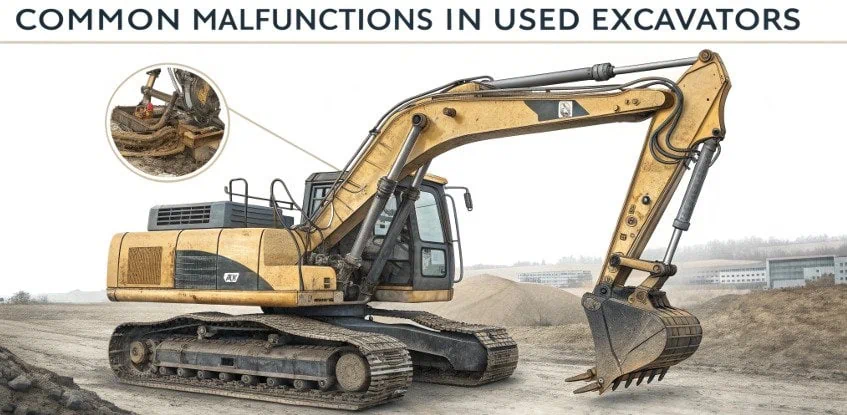
Many buyers ignore the undercarriage. I never do. It is expensive and wears fast.
Undercarriage parts I always inspect
| Part | What I check |
|---|---|
| Tracks | Stretch and cracks |
| Rollers | Smooth rotation |
| Sprockets | Tooth shape |
| Idlers | Oil leaks |
Why undercarriage wear matters
| Issue | Impact |
|---|---|
| Heavy wear | High replacement cost |
| Uneven wear | Alignment problems |
| Cracks | Safety risk |
Undercarriage problems are among the most expensive common malfunctions of used excavators. Buyers should never skip this step.
Electrical and Control System Issues in Used Excavators
Modern excavators use many sensors. These systems fail quietly.
Electrical issues I often find
| Issue | Symptom |
|---|---|
| Sensor failure | Warning lights |
| Wiring corrosion | Random shutdown |
| ECU errors | Limited power |
How I check electronics
| Step | Action |
|---|---|
| Dashboard | Read fault codes |
| Wiring | Look for corrosion |
| Operation | Test all functions |
Electrical issues may not stop the machine today. But they are still common malfunctions of used excavators that reduce reliability.
The Importance of Professional Inspection to Avoid Common Malfunctions of Used Excavators
Even with experience, I still use third-party inspections for high-value machines.
What professionals test deeply
| Test | Purpose |
|---|---|
| Oil analysis | Detect internal wear |
| Pressure test | Check pump health |
| Structure check | Find hidden cracks |
Cost vs risk
| Option | Risk level |
|---|---|
| No inspection | Very high |
| Professional check | Low |
Professional inspection helps buyers avoid serious common malfunctions of used excavators that normal checks miss.
Final Checklist: How Buyers Can Avoid Common Malfunctions of Used Excavators
Here’s a simplified checklist you can use before making a purchase:
| Step | Action |
|---|---|
| 1 | Inspect hydraulic system under load |
| 2 | Perform cold engine start |
| 3 | Review maintenance records |
| 4 | Check undercarriage wear |
| 5 | Scan for fault codes |
| 6 | Test swing and travel motors |
| 7 | Consider professional inspection |
This checklist alone can help buyers avoid most common malfunctions of used excavators encountered after purchase.
Conclusion: Smart Buying Starts with Avoiding the Common Malfunctions of Used Excavators
After years in this industry, I believe one thing. Most losses are avoidable. The common malfunctions of used excavators follow clear patterns. Buyers who inspect hydraulics, engines, records, and undercarriage make better decisions.
I always tell buyers this. Do not rush. Do not trust appearance. Trust inspection and data. That is how I avoid the common malfunctions of used excavators, and that is how you can do the same.
Follow us on :YouTube.