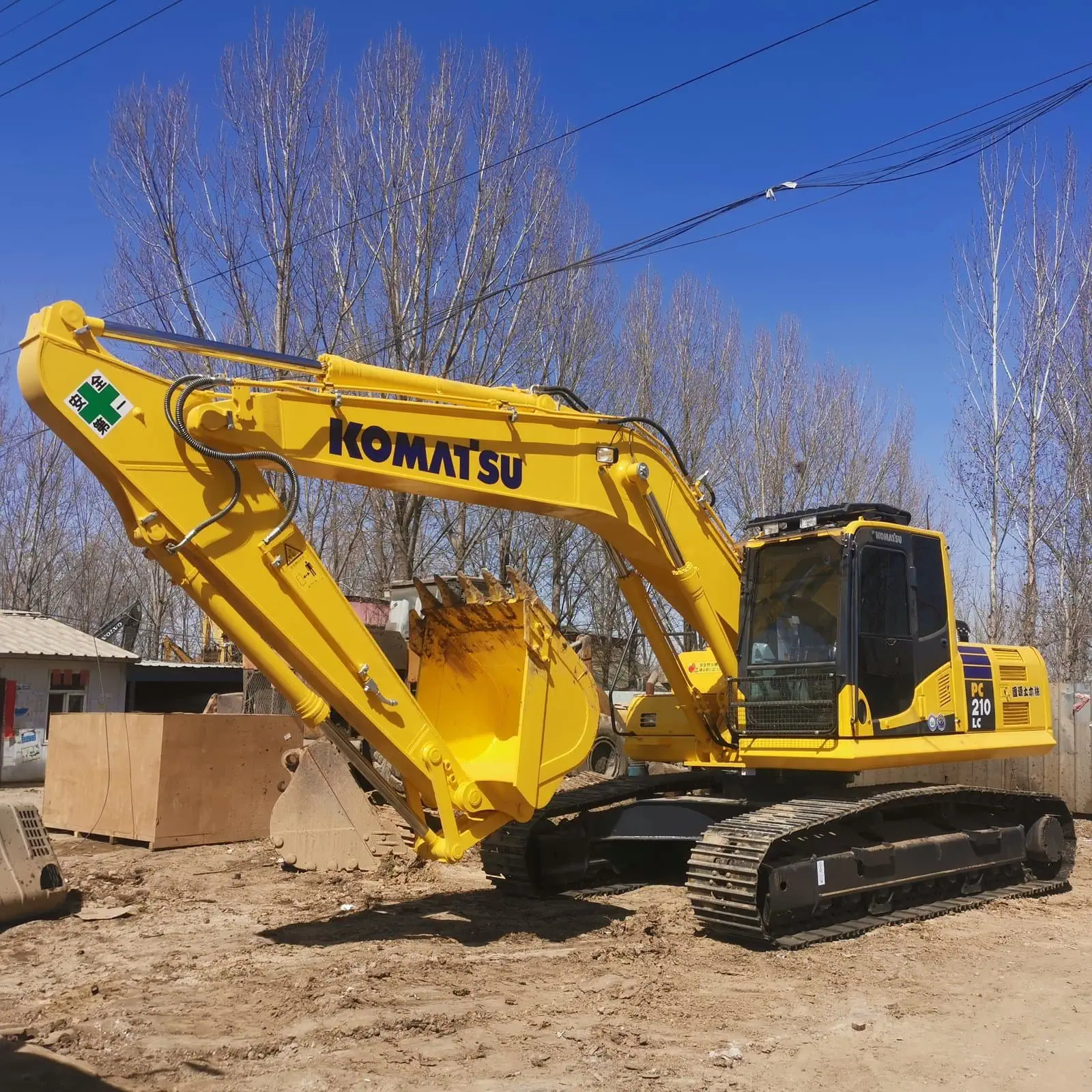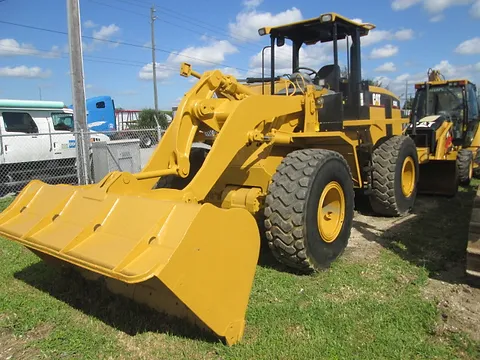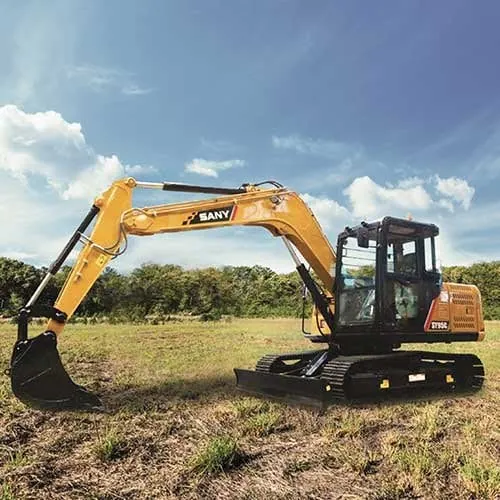
Buying a construction excavators can be exhausting. There are so many options. And you have to wonder, which one will give you the most productivity and profitability for your money? Let’s get into what to look for to make a smart, cost effective decision on your next project.
When purchasing a construction excavators, it’s essential to focus on the excavator size, engine power, and fuel efficiency to ensure it fits your specific project needs. Additionally, choosing between new or used models, evaluating brand reputation, and considering available attachments will help you select the best machine. Keep these factors in mind to get the most value and performance from your investment.
Now, let’s talk about the first major key—choosing the right size excavator for your project.
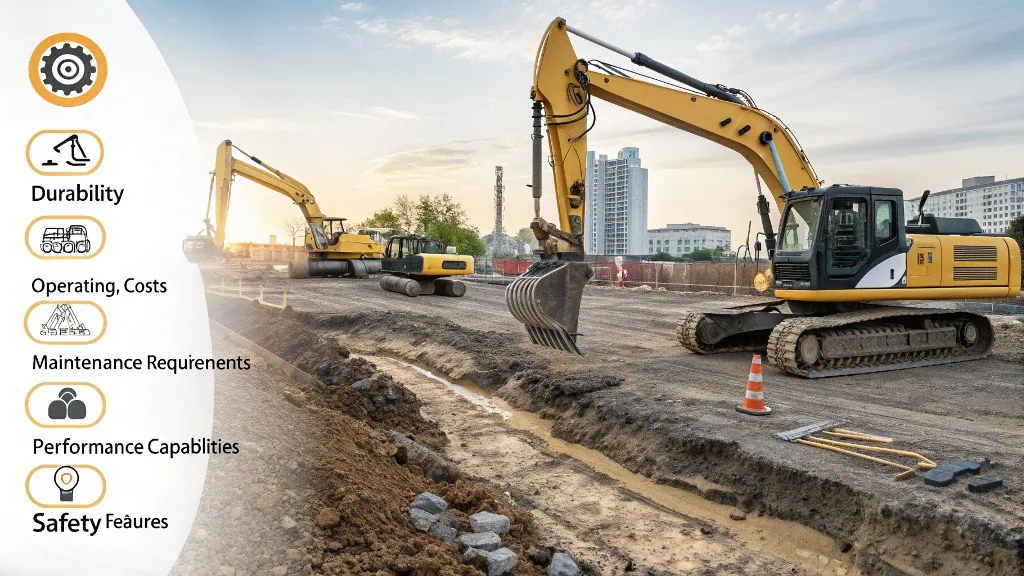
How to Choose the Right Excavator Size and Weight for Your Project?
Picking the right size excavator is one of the first and most important decisions you’ll make. The excavator’s weight of size should be matched to the requirements of your job, working conditions, and space limitations.
Here are some things to consider when choosing the best size excavator for your project:
Types of Excavators Based on Size and Weight
| Excavator Type | Machine Weight | Recommended Use | Typical Projects |
|---|---|---|---|
| Mini Excavators | 1-6 tons | Tight spaces, small to medium landscaping projects | Residential, small construction sites, utilities |
| Midi Excavators | 6-15 tons | Moderate site areas and medium-sized tasks | Road construction, utilities, general site prep |
| Full-Size Excavators | 15+ tons | Heavy-duty tasks requiring high digging power | Mining, demolition, large-scale excavation projects |
Key Considerations:
- Project Type: A mini excavator may be ideal for residential or light landscaping, whereas a full-size excavator is required for larger-scale digging or heavy lifting.
- Space Constraints: In areas with limited space, a mini excavator or midi excavator will be easier to maneuver.
- Transportability: Larger excavators are more difficult to transport; if you need mobility, consider a midi excavator.
Choosing Between New and Used Excavators
Deciding whether to purchase a new or used excavator is a crucial decision that impacts your project costs, performance, and long-term investment. Let’s dive into the details to help you decide which is the best choice for your needs.
New Excavators
Purchasing a new construction excavator offers numerous advantages, but it also comes with a higher price. That may be the best choice for various projects, however.
Warranty and Support
Warranty is a big one. New machines are typically warrantied to the hilt, so if anything goes wrong, the manufacturer has to fix it at no cost to the buyer. That can give you a lot of peace of mind. Therefore, you don’t have to worry about major, costly repairs for the first few years.
| Warranty Feature | New Excavators | Used Excavators |
|---|---|---|
| Warranty Period | 1-3 years | Varies, often none |
| Parts Coverage | Extensive | Limited, may depend on seller |
| Maintenance Support | Full support from manufacturer | Variable, may require third-party repair |
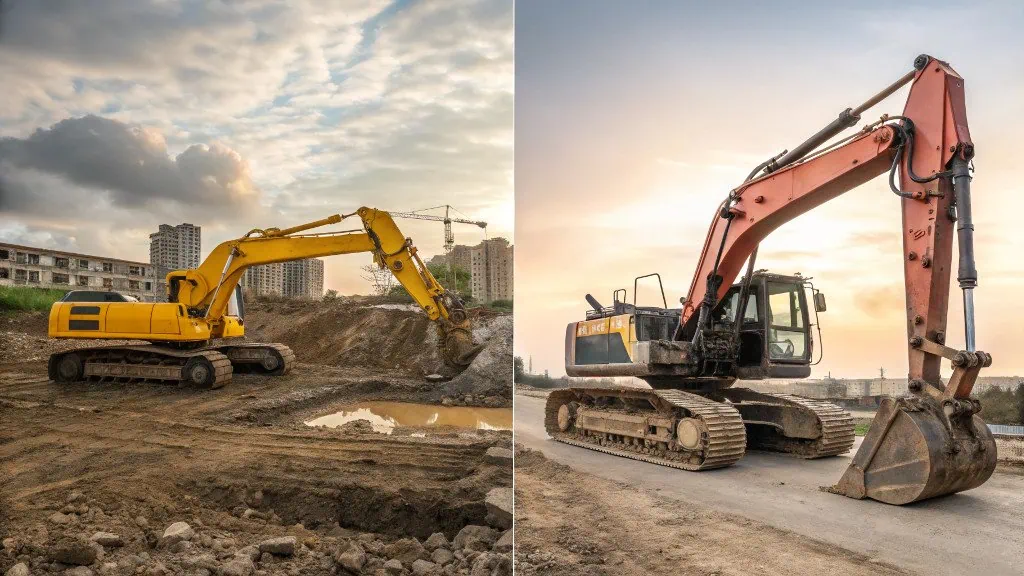
Advanced Technology and Fuel Efficiency
State of the art technology is another big advantage. New excavators have the latest fuel-efficient engines, GPS systems, advanced hydraulic technology, and other features that can save you money on fuel costs, improve your overall efficiency, and keep your operators comfortable and working longer.
- Fuel Efficiency: Modern models are designed to consume less fuel, reducing operating costs over time.
- Advanced Technology: New machines come with features like electronic control systems, automated tracking, and enhanced safety features.
| Technology Feature | New Excavators | Old Models |
|---|---|---|
| Fuel Efficiency | High, modern engines | Lower, older engines |
| Hydraulic System | Advanced, optimized | Basic or outdated |
| Operator Comfort | Ergonomically designed | Older, less comfortable |
Lower Maintenance Costs
You own them for a few years and you typically repair them a bunch of times. That doesn’t hold true for new machines. New machines should require almost zero maintenance the first few years. They’re less likely to have wear and tear problems, so you won’t have as many repair costs.
Used Excavators
Another choice is to purchase a used machine, which is less expensive, but there are some trade-offs. Let’s go through the pros and cons of buying a used excavator.
Lower Cost
Obviously, the number one reason is the price. Used machines are sold at a fraction of the purchase price of new machines, so the upfront cost is substantially less. For a lot of businesses that don’t have the cash or just need a machine for a short-term project, a used machine is the only option for them.
| Price Comparison | New Excavators | Used Excavators |
|---|---|---|
| Upfront Cost | High | Significantly lower |
| Depreciation | Rapid in first 2 years | Already depreciated |
| Return on Investment | Higher, but slower | Immediate ROI |
Depreciation
New machines lose value fast in the first couple of years, so if you buy a used machine, the worst of the depreciation is over. In other words, you’re not going to lose as much money from the purchase price to what it’s worth when you need to sell it, trade it in, or it gets stolen and you collect insurance on it.
Condition Matters
When buying a used excavator, it’s essential to inspect the machine carefully. Key factors to evaluate include:
- Operating Hours: The more hours the excavator has been in use, the more likely it is to require repairs.
- Maintenance History: A well-maintained machine with regular service is less likely to have hidden issues.
- Wear and Tear: Inspect the undercarriage, hydraulic systems, and engine for signs of wear.
| Condition Factors | New Excavators | Used Excavators |
|---|---|---|
| Operating Hours | Very low | High, more wear |
| Maintenance History | Well-documented | Varies, may not be available |
| Warranty | Full warranty | Often no warranty |
Brand Reputation and Reliability
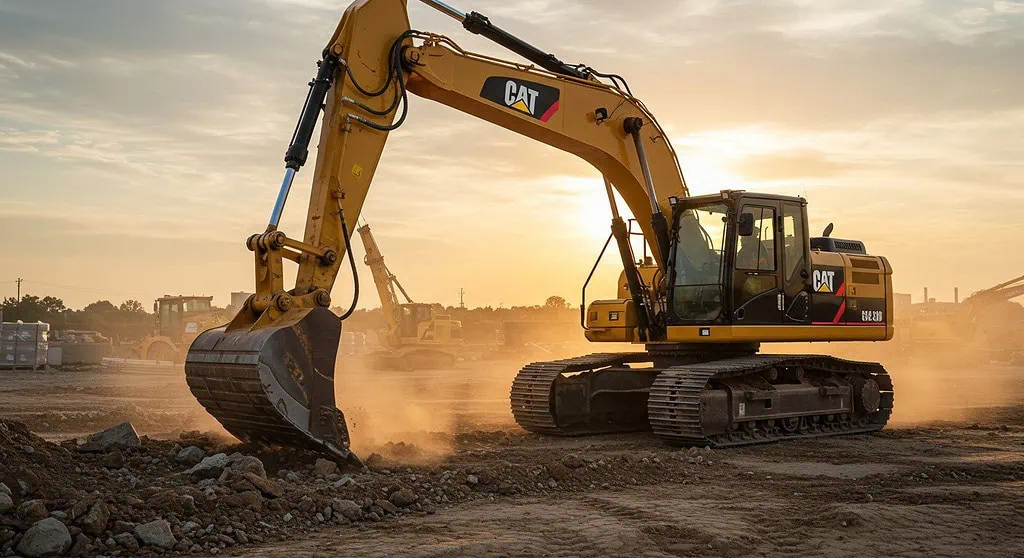
The brand is one of the most important decisions you will make when buying a construction excavator. If you buy from a recognized brand with a good reputation, odds are that it will be a good machine. You’ll have a piece
of gear that is going to perform well, last a long time, and be supported well after the sale.
Why Brand Matters:
Durability
Two examples of really durable, well-built machines are Caterpillar (CAT) and Komatsu. Why are they so good? They put millions of dollars into the engineering, design, and testing to make sure the machines hold up as advertised. That’s why you should buy from a reputable brand. You’re buying a machine that’s not only going to perform well, but it’s also going to last a long time, which saves money in repairs and downtime.
Performance
You’ll also find that with the well-known premium brands, you get better performance. If you’re working in more challenging conditions, whether it’s tough soil, heavy lifting, or deep digging, premium brand machines are going to outperform the other machines. That’s why people clamor for CAT 320Ds or Komatsu PC360s. They do whatever you ask of them and work efficiently, which is why they’re at work on some of the biggest construction projects all over the world.
After-Sales Support
Many top brands have a huge advantage in their after-sales service network. Caterpillar is known for their excellent customer service as are Komatsu and Hyundai. They are also known for supplying spare parts. This is a big deal because if your equipment goes down, you want the comfort of knowing you can get it repaired and get the parts quickly.
| Brand | Reputation | Popular Models | Warranty |
|---|---|---|---|
| Caterpillar (CAT) | Industry leader, highly durable | CAT 320D, CAT 336E | 1-3 years, extended options |
| Komatsu | Reliable, service-friendly | Komatsu PC200, Komatsu PC360 | 1-3 years, strong support |
| Hyundai | Cost-effective, reliable | Hyundai R210-9, Hyundai R220LC-9 | 1-2 years, flexible support |
Choosing a Brand Based on Your Needs
- Heavy-Duty Applications: If you’re working on large-scale construction projects or mining, opt for Caterpillar or Komatsu, which offer exceptional performance in demanding conditions.
- Cost-Effective Solutions: If your budget is a concern but you still need a reliable machine, Hyundai may be a good option. Their models like the Hyundai R210-9 offer excellent reliability at a more affordable price point.
- Resale Value: Brands like CAT and Komatsu tend to hold their value well, meaning that when it’s time to upgrade, you can sell your equipment at a good price.
Evaluating Engine Power and Fuel Efficiency
The two things that most affect an excavator’s performance and your costs are the engine power and fuel efficiency. You need to determine the best balance for your money regarding fuel efficiency versus raw power to achieve the best returns.
Engine Power
The next factor to think about is the engine and hydraulics. What horsepower do you need? The larger the horsepower, the larger the machine. However, larger machines can do things small machines can’t. A 45-hp tractor can’t load a dump truck, but a 90-hp can. It can run a bailer or plant a field. Be aware, though: More horsepower means more fuel consumption.
| Excavator Brand | Model | Engine Power (hp) | Recommended Use |
|---|---|---|---|
| Caterpillar | CAT 320D | 160 hp | Heavy lifting, digging |
| Komatsu | Komatsu PC200 | 150 hp | Medium-duty tasks |
| Hyundai | Hyundai R210-9 | 140 hp | Light construction |
High-Powered Excavators: Models like the CAT 320D (160 hp) are built for heavy-duty tasks and can handle more demanding workloads with ease. If your job requires deep digging or lifting heavy materials, you should opt for an excavator with a higher engine power.
Medium to Light-Duty Excavators: For smaller construction tasks, a Komatsu PC200 or Hyundai R210-9 with 150 hp and 140 hp will be more than sufficient, offering better fuel efficiency for tasks that don’t require high engine power.
Fuel Efficiency
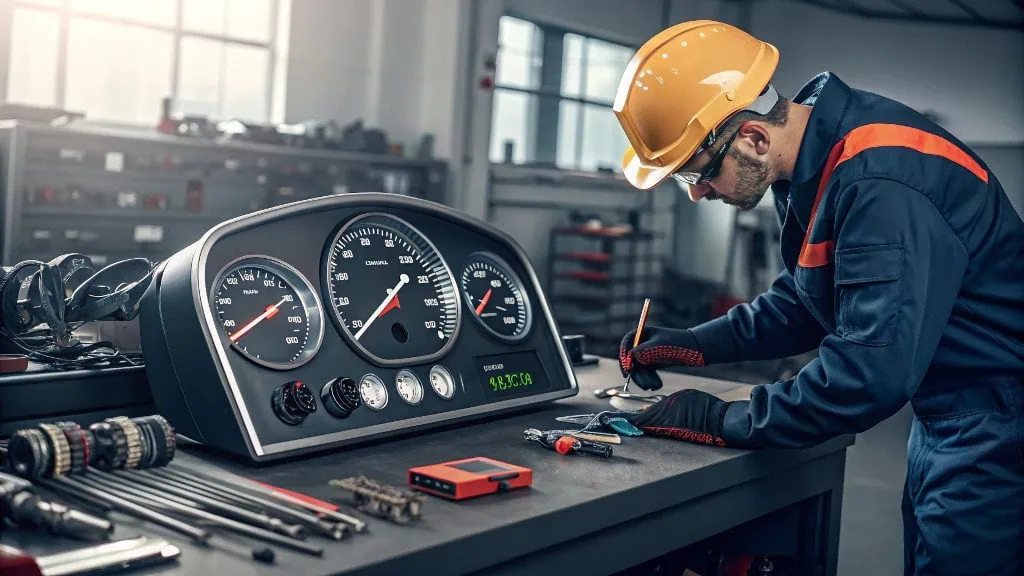
Two excavators can be identical in terms of price and initial capabilities, but differ dramatically in how much fuel they’ll each consume every day. A fuel-efficient excavator can dramatically reduce your overall operating expense as fuel costs add up faster than most would think – especially on a large project. Understanding fuel consumption is key to making a wise decision for operations.
| Excavator Brand | Model | Fuel Efficiency (liters/hour) | Estimated Fuel Cost per Hour |
|---|---|---|---|
| Caterpillar | CAT 320D | 15 liters | $30 per hour (at $2/liter) |
| Komatsu | Komatsu PC200 | 14 liters | $28 per hour |
| Hyundai | Hyundai R210-9 | 12 liters | $24 per hour |
High Fuel Consumption: Machines with higher engine power, like the CAT 320D, consume more fuel per hour. This is a trade-off you must consider if your project requires significant lifting and digging capacity.
Fuel-Efficient Models: Hyundai R210-9 (12 liters per hour) offers the best fuel economy, which is ideal for light tasks or projects with low to medium demand. If minimizing fuel costs is crucial for your operation, you may want to prioritize fuel efficiency over engine power.
Power vs. Efficiency: Key Considerations
- Heavy Lifting & Tough Tasks: Choose a more powerful engine, even if it means higher fuel costs.
- Light to Medium Tasks: Opt for a fuel-efficient machine to save on fuel costs while still meeting performance requirements.
Evaluating Engine Power and Fuel Efficiency
Engine horse power and fuel consumption have a direct correlation to the operational costs and performance of the machine. A bigger machine that consumes less fuel could make more sense than a smaller machine with a smaller engine that consumes more fuel.
Engine Power
| Excavator Brand | Model | Engine Power (hp) | Recommended Use |
|---|---|---|---|
| Caterpillar | CAT 320D | 160 hp | Heavy lifting, digging |
| Komatsu | Komatsu PC200 | 150 hp | Medium-duty tasks |
| Hyundai | Hyundai R210-9 | 140 hp | Light construction |
Fuel Efficiency
| Excavator Brand | Model | Fuel Efficiency (liters/hour) | Estimated Fuel Cost per Hour |
|---|---|---|---|
| Caterpillar | CAT 320D | 15 liters | $30 per hour (at $2/liter) |
| Komatsu | Komatsu PC200 | 14 liters | $28 per hour |
| Hyundai | Hyundai R210-9 | 12 liters | $24 per hour |
Key Considerations:
- Power vs. Efficiency: More power often comes at the cost of fuel consumption. For tasks requiring high lifting capacity or digging depth, prioritize engine power. However, for lighter tasks, you may want a fuel-efficient machine to reduce costs.
- Total Cost of Ownership: Assess not just the initial purchase price, but also long-term operational costs, including fuel.
Excavator Attachments and Customization Options
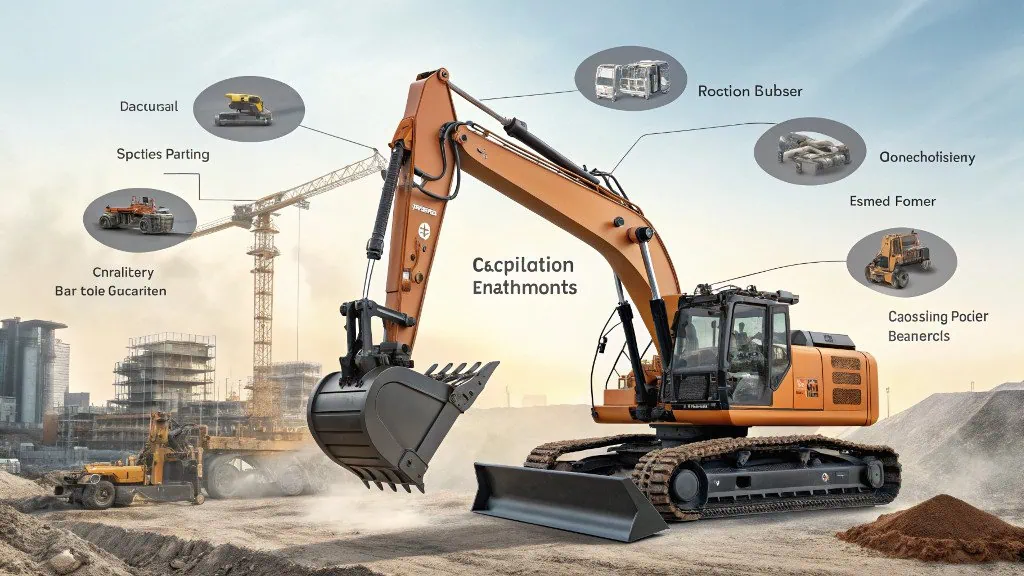
The great thing about construction excavators is you can adapt them to all kinds of different tasks through attachments. You can hang a hammer to break concrete, install a thumb to pick things up, or attach a bucket to dig. Whatever you need, the right attachment can allow your excavator to perform the service you need done; digging, demolishing, lifting, etc.
Types of Attachments
| Attachment Type | Recommended Use | Benefits | Compatible Excavator Size |
|---|---|---|---|
| Buckets | Digging, scooping materials | Versatile, easy to switch | Mini, Midi, Full-size |
| Hydraulic Hammers | Breaking concrete, rock | Ideal for demolition | Midi, Full-size |
| Grapples | Lifting and transporting | Essential for material handling | Midi, Full-size |
| Augers | Drilling holes for posts | Great for foundation work | Mini, Midi, Full-size |
Why Attachments Matter:
- Customization: The ability to use various attachments allows you to tailor the excavator to your specific project needs, improving overall productivity.
- Task Efficiency: Attachments like hydraulic hammers and grapples help you complete specialized tasks more efficiently, reducing the need for additional equipment.
Long-Term Maintenance and Spare Parts Availability
Maintenance and spare parts are the most significant consideration for the long-term operation of your equipment. Make sure parts are readily available to you. Manufacturers offer spare parts packages for their equipment. When you get the equipment, buy the parts package right then.
Have it set up so that when parts wear out, you’ll have another one in place at your location. Proper maintenance starts with observing the equipment in everyday operations or clearing out at the end of the day. Do a mini-inspection, looking at oil levels and hoses, for example. Sheets like this one are great to list and check off the things you need to look at.
| Brand | Spare Parts Availability | Maintenance Interval | Common Maintenance Tasks |
|---|---|---|---|
| Caterpillar | High, global availability | Every 250-500 operating hours | Oil changes, hydraulic checks |
| Komatsu | High, global network | Every 300-500 operating hours | Filter changes, wear checks |
| Hyundai | Moderate, regional support | Every 250-450 operating hours | Inspect undercarriage, change fluids |
Key Maintenance Tasks:
- Engine Oil & Filter Changes: This practice will keep your engine from wearing out and keep your equipment running smoother and longer.
- Undercarriage Inspection: The undercarriage is the most important part of the excavator, and if there’s a problem, it’s likely to cost a lot of money.
Conclusion
As you consider purchasing a construction excavator, look at the size of the excavator, the size of the engine, gallons per hour of fuel used, what attachments come with it, and overall brand reliability. Whether buying a new or used excavator, stay informed, and buy something you can live with to get the job done and not break the bank in operating costs over the long run. Remember, that machine has got to be right for this project and for what you’re going to do with it next.
Follow us on :YouTube.