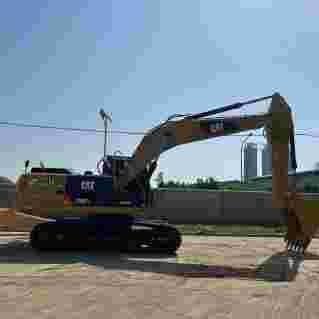
The right size and weight for an excavator are critical for getting maximum performance and use from it. Having trouble deciding between raw digging power and maneuverability? You need to understand how the size and weight of an excavator impact your use of it before you ever start that unit, or you will pay for it in lost time and cost on the project.
Excavator sizes and weights play a significant role in project efficiency. By understanding how these factors influence digging depth, fuel consumption, and performance, you can select the right excavator for your specific needs. Whether for small residential projects or large-scale construction, knowing the key differences will ensure better performance and cost-effectiveness.
Let’s now look at how different Baggergrößen and weights affect how well they work and how efficient they are in the real world.

Understanding Excavator Sizes and Weights
Definition and Classification
They are classified by size and weight, and that classification directly influences what they can do and how well they do it. If you understand these classifications, you can make an informed decision on which excavator is right for your job.
Excavators can be grouped into four main categories based on weight:
- Mini -Bagger: Typically these are the smallest and lightest. They’re designed for small projects and when you need a piece of equipment that can move reasonably well inside tight spaces.
- Kleine Bagger: These are slightly heavier and a bit bigger. Generally, they have a little more power than mini-excavators. They work well for urban and residential construction.
- Mittlere Bagger: These machines are designed for road work and larger construction projects where you need more power and a bit more mobility.
- Große Bagger: These are heavy duty pieces of equipment. They are used in mining and for larger scale demolition. They are also used in heavy duty applications where you need a lot of power and stability.
Each size category comes with specific features like engine power, reach, and operating depth, all of which contribute to the machine’s suitability for different tasks. Below is a table that breaks down these categories in detail:
| Excavator Category | Gewichtsbereich | Typische Anwendungen | Motorleistung | Reichweite (m) | Operating Depth (m) |
|---|---|---|---|---|---|
| Mini -Bagger | Up to 3 tons | Landscaping, digging in tight spaces | 15 – 30 kW | 3 – 4 | 2.5 – 3.0 |
| Kleine Bagger | 3 – 6 tons | Urban construction, residential work | 40 – 60 kW | 4 – 5 | 3.5 – 4.0 |
| Mittlere Bagger | 6 – 20 tons | Road construction, digging trenches | 70 – 150 kW | 5 – 7 | 5.5 – 6.0 |
| Große Bagger | 20+ Tonnen | Mining, large-scale demolition, heavy-duty | 150 – 350 kW | 8 – 10 | 6.5 – 8.0 |
Weight isn’t simply a measure of mass for an excavator; it impacts its stability, digging power, reach, and fuel efficiency. For example, mini excavators have less operating depth and less reach compared to larger models. However, their physical size makes them ideal for being able to dig in confined spaces. Conversely, large excavators are designed to dig deeper, lift more weight, but they aren’t nearly as versatile in a small area.
Factors That Influence Size Selection
When selecting an excavator size for your project, consider the following factors:
- Project Type and Scope: For small residential projects such as digging small trenches or backyard work or light landscaping, mini and small excavators are ideal. For major or large infrastructure projects or road work, you’re obviously going to need a large and medium excavator because of their reach and power.
- Ground Conditions: This goes back to the weight of the excavator. The weight of the machine is directly related to the ground pressure it exerts. The larger the machine, the more pressure it can exert on the ground. This weight allows larger machines to affect the ground in a way that could be harmful if you’re working on delicate or sensitive soils. If that’s the case, you’ll end up using mini or small excavators because they work well in fragile and soft soils without causing a lot of damage to the ground around the machine.
- Reach and Depth Requirements: If you need to dig deep or reach out far for lifting or digging, you’ll need to look for a larger machine because it will have the hydraulic systems needed to handle the extra weight and depth you’re working with.
Here is a comparative overview of the different excavator types in terms of their suitability for specific project types:
| Baggertyp | Ideal Project Types | Vorteile | Einschränkungen |
|---|---|---|---|
| Mini -Bagger | Landscaping, small residential projects, confined spaces | Excellent maneuverability, compact size | Limited digging depth and reach |
| Kleine Bagger | Urban construction, residential building, digging trenches | Higher lifting capacity than mini excavators | Less suitable for large-scale projects |
| Mittlere Bagger | Road construction, general construction, trenching | Good balance of power, reach, and stability | Limited in applications requiring extreme power |
| Große Bagger | Mining, large-scale demolition, heavy-duty work | Maximum power, deep digging, and lifting ability | Auf engstem Raum weniger manövrierfähig |

The Relationship Between Excavator Size and Performance
Hebekapazität und Stabilität
The weight of the excavator plays a major part in how stable it is. Bigger excavators will pull and lift more. In other words, larger excavators have more capacity when it comes to what they can move and how tough
the digging job they can handle. However, this comes with a downside— bigger machines have a more challenging time being as maneuverable as their smaller brethren. While a larger machine can lift more than a smaller machine, the smaller machine can be more stable due to its lighter weight, especially in tight spaces.
| Baggergröße | Hebekapazität (Tonnen) | Stabilitätsfaktor | Passende Aufgaben |
|---|---|---|---|
| Mini -Bagger | 0.5 – 1 | Hoch | Small landscaping projects, light lifting tasks |
| Small Excavator | 1 – 3 | Mäßig | Trenching, utility installation |
| Medium Excavator | 3 – 8 | Hoch | Heavy lifting, road construction, trenching |
| Large Excavator | 8+ | Sehr hoch | Mining, large-scale foundation work |
Tiefe graben und erreichen
Larger size excavators are designed to dig deeper and reach farther, so they are ideal for working with larger, more significant structures. However, mini and small excavators do better in a shallower application and confined spaces. When you’re deciding which excavator you should use onsite, the first thing you need to determine is what you are trying to accomplish.
| Baggergröße | Maximale Grabtiefe (m) | Max Reichweite (m) | Ideal für |
|---|---|---|---|
| Mini -Bagger | 2.5 | 3.5 | Landscaping, trenching, digging in tight spaces |
| Small Excavator | 4.0 | 5.0 | Utility installation, residential tasks |
| Medium Excavator | 6.0 | 7.5 | Roadwork, utility installation, medium excavation |
| Large Excavator | 8.0 | 10.0 | Large-scale excavation, mining, demolition |
To a new operator, the reach and digging depth are essential because if you are trying to dig a foundation or new utilities, you need to understand what you can do with the machine. A bigger machine with a longer reach may not be as maneuverable to get into a tight spot, but it will have a longer reach down when you do need to get down. If you are on a smaller machine, you may not get the depth that you need, but you can work in tight spots better and sometimes that’s a better fit too.
Excavator Sizes and Weights Affect Fuel Efficiency
Fuel Consumption by Excavator Size
Another factor to consider is how much you will pay out in fuel costs. Larger machines burn way more fuel because of their horsepower and weight. A mini-excavator, again, won’t have as much power as a big machine, but the little engine in the mini-excavator sips the diesel. When you’re paying for the fuel, the difference between the two types of machines can be significant on a smaller job.
| Baggergröße | Kraftstoffverbrauch (l/h) | Fuel Efficiency Considerations |
| Mini -Bagger | 3-5 | Very fuel-efficient, ideal for small projects |
| Small Excavator | 5-10 | Moderate fuel consumption, versatile use |
| Medium Excavator | 10-20 | Moderate to high fuel consumption, optimal for large tasks |
| Large Excavator | 20+ | High fuel consumption, best for heavy-duty work |
If you are running longer hours—where the production, speed, and power of a bigger excavator is necessary—then you want to make time and get the bigger excavator. But if you are doing smaller projects, and most work with an excavator is on smaller projects, fuel costs can pile up at the end of the day. So on a smaller job, that’s where you want a mini-excavator.
Operational Efficiency Based on Excavator Weight
Impact of Excavator Weight on Ground Conditions
The weight impacts the ground pressure in the footprint of the machine. The ground pressure tells you what kind of ground the machine can work on. A heavier machine can work on harder, more compacted surfaces. A lighter machine would be better for soft or uneven ground. The downside is that the lighter machine won’t be able to dig as hard, push as hard, or be able to handle as difficult jobs as the heavier machine.
| Baggergröße | Ground Pressure (kg/cm²) | Am besten für |
|---|---|---|
| Mini -Bagger | 0.25 – 0.5 | Urban sites, soft or marshy grounds |
| Small Excavator | 0.5 – 1.0 | Residential, medium-duty work |
| Medium Excavator | 1.0 – 2.5 | Heavy-duty work, hard or compact soil |
| Large Excavator | 2.5+ | Tough terrains, large-scale excavation |
Logistical Challenges: Transporting Excavators
A disadvantage of smaller excavators is that they may not have the same reach or digging capabilities as larger models. This can be a disadvantage on larger jobs. However, given the fact that many smaller excavators can be transported in a pickup truck, which makes it an easy and convenient piece of construction equipment to move around.
| Baggergröße | Transport Weight (tons) | Transport Challenges |
|---|---|---|
| Mini -Bagger | 1 – 3 | Easy to transport, lower transport costs |
| Small Excavator | 3 – 6 | Requires moderate transport effort |
| Medium Excavator | 6 – 20 | Needs specialized transport, higher cost |
| Large Excavator | 20+ | Expensive transport, permits required |
Excavator size can also affect procurement, maintenance, and training costs because larger excavators generally require more of everything. Transporting larger excavators, whether behind a truck or on a trailer, requires more time and planning, and the loads are subject to more variables and fluctuations that can increase the cost of transporting the excavator.
Popular Excavator Sizes for Specific Projects and Their Benefits
Choosing Excavators for Heavy-Duty Projects
If you need an excavator to do an extreme job, like mining or large-scale demolition work, you’ll probably need a bigger machine to handle the tasks and the daily abuse those tasks inflict on an excavator. These jobs often subject an excavator to extreme conditions—extreme heat, extreme cold, extreme dry, and extreme wet—that smaller excavators simply can’t handle.
| Baggergröße | Ideal Projects | Vorteile |
|---|---|---|
| Mini -Bagger | Landscaping, digging in confined spaces | Lightweight, highly maneuverable |
| Small Excavator | Trenching, utility installation | Moderate weight, good for residential work |
| Medium Excavator | Roadwork, pipeline excavation | Versatile, able to handle both medium and large jobs |
| Large Excavator | Mining, large demolition projects | High power, ideal for heavy-duty tasks |
Compact Excavators for Tight Spaces and Urban Construction
Mini excavators are the most common size, and the small excavator sizes are used most frequently in urban areas because these machines can navigate tight spaces and they provide excellent maneuverability for slight reductions in power.
| Baggergröße | Ideal Projects | Vorteile |
|---|---|---|
| Mini -Bagger | Urban landscaping, small construction projects | Highly maneuverable, compact design |
| Small Excavator | Residential projects, trenching | Easy to transport and suitable for urban sites |
Excavator Sizes and Weights in Relation to Environmental Impact
Minimizing Environmental Damage: Excavator Weight and Ground Pressure
Lower ground pressure is particularly important if you are working in a sensitive environment, such as a wetland or farmland, where soil compaction can cause irreparable damage. In many cases, these places are only accessible with a lighter machine that causes less disturbance to the environment.
| Baggergröße | Ground Pressure (kg/cm²) | Umweltauswirkungen |
|---|---|---|
| Mini -Bagger | 0.25 – 0.5 | Least environmental impact, ideal for sensitive areas |
| Small Excavator | 0.5 – 1.0 | Moderate environmental impact |
| Medium Excavator | 1.0 – 2.5 | More impactful on soft soil, ideal for larger projects |
| Large Excavator | 2.5+ | Highest impact, best for hard, compacted soils |
Picking the correct size excavator can reduce your environmental footprint while keeping production high.
Maintenance Costs and Durability Based on Excavator Size
Maintenance Frequency and Long-Term Costs
Excavator maintenance will also vary by size. Smaller machines, like mini excavators, are usually less complex. This means fewer work hours, fewer replacement parts, and less expensive repair costs. Bigger models, on the other hand, including the more complex hydraulic systems, require more frequent maintenance, more maintenance hours, and, in general, more complex tasks, which equals higher repair costs.
| Baggergröße | Wartungsfrequenz | Typical Repair Costs (USD) | Durability (Years) |
|---|---|---|---|
| Mini -Bagger | Niedrig | 200 – 500 $ | 5 – 7 |
| Small Excavator | Mäßig | 500 – 1.000 $ | 7 – 10 |
| Medium Excavator | Hoch | $ 1.000 - $ 3.000 | 10 – 12 |
| Large Excavator | Sehr hoch | $3,000+ | 12+ |
Larger machines typically last longer, but they typically have higher long-term costs than smaller machines. For certain jobs, particularly smaller ones, a mini or small excavator will offer lower maintenance costs overall.
Reducing Maintenance Costs
If you want to lower maintenance costs, inspect the machine regularly, use OEM parts, and operate the machine correctly. Those three things will increase the life of the excavator, keeping those unexpected repair costs to a minimum.

Choosing the Right Excavator Size for Your Project
Matching Excavator Size to Project Scope
Auswahl der right size of excavator is going to come down to making the job efficient and cost-effective. Larger excavators are for big, heavy work like in a quarry or doing mining for ore. A small machine, which will get over 90% of the work, will get used for residential construction, light-duty trenching, and small to medium construction projects. Use the chart below to determine the correct size for your operation.
| Projekttyp | Recommended Excavator Size | Key Advantages |
|---|---|---|
| Small Landscaping/Residential | Mini or Small Excavator | Compact size, fuel efficiency |
| Road Construction/Trenching | Medium Excavator | Power and maneuverability |
| Demolition and Heavy Lifting | Large Excavator | High lifting capacity, deep digging |
| Mining and Large-Scale Work | Very Large Excavator | Maximum power and stability |
Maximizing Cost-Effectiveness
Smaller machines are less expensive to buy and operate. They’re more fuel-efficient and cheaper to operate, but they may not have enough power to handle the big jobs. For large-scale operations, the larger machine, while more expensive to buy and operate, is far more efficient, even though it uses more fuel.
| Baggergröße | Kraftstoffeffizienz (l/h) | Best for Cost-Effective Use | Initial Cost vs. Long-Term Savings |
|---|---|---|---|
| Mini -Bagger | 3 – 5 | Small, light-duty projects | Low initial cost, good fuel efficiency |
| Small Excavator | 5 – 8 | Urban construction, trenching | Moderate cost, moderate fuel efficiency |
| Medium Excavator | 8 – 15 | Roadwork, medium-duty projects | Higher cost, decent efficiency |
| Large Excavator | 15+ | Hochleistungskonstruktion | High cost, but ideal for large projects |
This comparison shows how the machine size directly impacts how much it costs to operate.
Abschluss
Understanding the relationship between the size/weight of the machine is critical to getting the best efficiency and performance on your project. You want a machine that is big enough to do the work, but not so large that you’re wasting fuel carrying around excess weight or that you can’t get into the right place to work. Whether you’re working on a small residential job or a big mining operation, picking the right size of machine will save you both time and money.
Use these tables to compare the sizes and key specifications of Bagger you might be in the market for. Use this information to make a wise decision for your project.
Folgen Sie uns weiter:YouTube.