Tired of telehandlers that feel sluggish and imprecise? This frustration costs you time and money on the job site. The secret to unlocking a machine’s true potential lies in its hydraulic system.
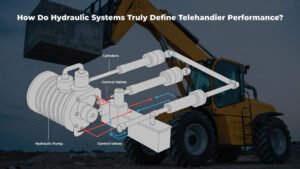
A telehandler’s hydraulic system is its lifeblood, directly controlling lifting power, speed, precision, and efficiency. The design of its pumps, valves, and circuits fundamentally determines the machine’s overall responsiveness and capability, making it the single most critical factor for high-level telehandler performance.
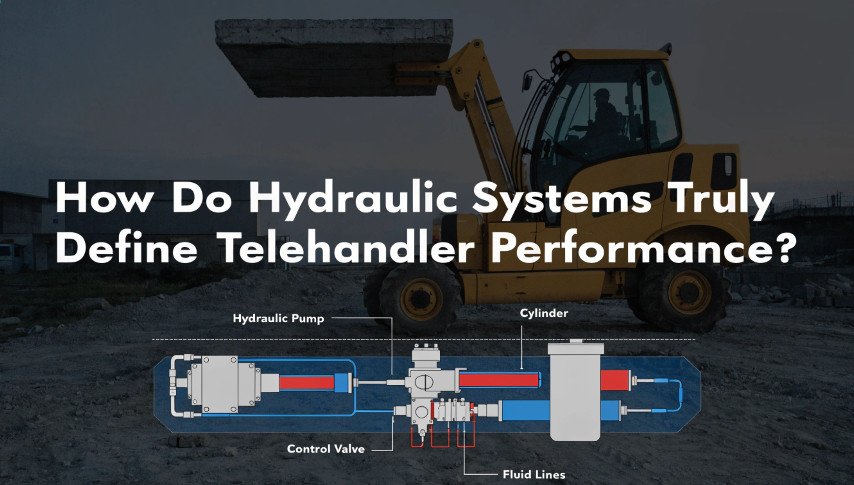
Let’s pull back the curtain and look at the engine’s silent partner. I’ve spent over 15 years manufacturing and exporting these powerful machines from our base in Shandong, China. I can tell you from experience, the hydraulics are where the magic happens. It’s the difference between a good machine and a great one. Understanding this complex system will change how you look at Teleskoplader performance forever. Let’s dig into the details.
How Does Hydraulic Pressure and Flow Dictate Lifting Capacity?
Ever wonder why some telehandlers lift heavy loads with ease while others struggle? This difference directly impacts your work capacity. It all comes down to the basic physics of hydraulic pressure and flow.
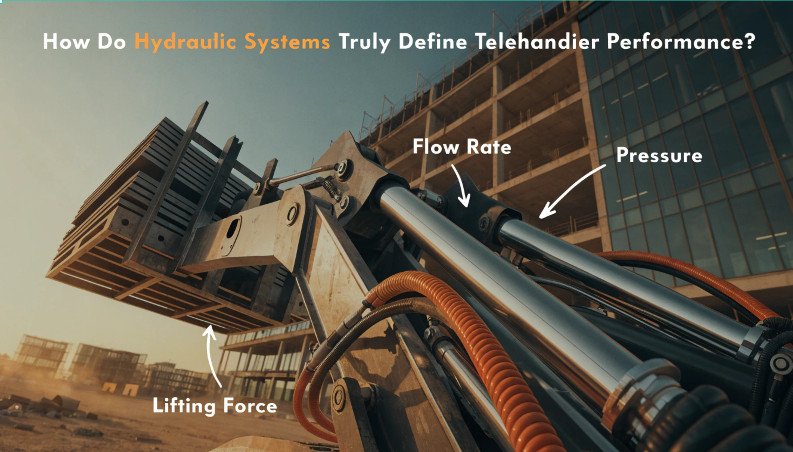
Hydraulic pressure, combined with the cylinder’s surface area, determines the maximum lifting force. Flow rate, set by the pump’s displacement, dictates how fast the boom lifts. Getting both right is crucial for superior telehandler performance and productivity on any job.
The Core Principles: Power and Speed
At its heart, a hydraulic system is a way to multiply force. Think of it in two simple parts:
- Pressure (The “Strength”): This is the force inside the system, usually measured in PSI (pounds per square inch) or Bar. The higher the pressure the system can safely generate, the more force it can exert. When we design a telehandler, the rated pressure is a critical parameter that influences the entire machine’s structural and component choices. Higher pressure allows for smaller cylinders to achieve the same lift, but it also puts more stress on hoses, seals, and fittings. Achieving reliable high pressure is a hallmark of quality engineering and is fundamental to good telehandler performance.
- Flow (The “Speed”): This is the volume of hydraulic fluid the pump moves, measured in GPM (gallons per minute) or LPM (liters per minute). Flow determines how fast the hydraulic cylinders can extend or retract. A machine with high flow will have fast cycle times—the boom goes up and down quickly, the carriage tilts rapidly. This speed is essential for tasks like loading trucks, where every second counts. Improving flow is a direct way to improve a machine’s cycle times and overall telehandler performance.
The relationship is simple: Lifting Force = Hydraulic Pressure × Cylinder Area. To lift more, you need more pressure or a bigger cylinder. To lift faster, you need more flow. As manufacturers, our job is to find the perfect balance. A 6-ton machine needs significantly more force than a 3-ton machine, which requires a carefully engineered combination of system pressure and cylinder dimensions to ensure safe and efficient telehandler performance.
Can Pump Design Seriously Boost Your Dynamic Telehandler Performance?
Is your machine slow to respond when you need speed? This lag can be a major safety and efficiency issue on a busy site. The problem often isn’t the engine, but the hydraulic pump’s design.
Yes, pump design is a game-changer. Features like dual-pump confluence for fast cycle times or variable-displacement pumps that adjust flow on demand significantly enhance dynamic telehandler performance. They provide speed when you need it and save fuel when you don’t.
Fixed vs. Variable: A Tale of Two Pumps
Not all hydraulic pumps are created equal. The type of pump at the heart of your telehandler has a massive impact on its responsiveness and efficiency.
- Fixed-Displacement Pumps (Gear Pumps): These are the simpler, more traditional option. They move a fixed amount of oil with every rotation. They are reliable and cost-effective, but they are not very efficient. The pump is always moving a large volume of oil, even when no functions are being used. This wasted energy turns into heat and burns extra fuel. While functional, they can limit the ceiling of a machine’s potential telehandler performance.
- Variable-Displacement Pumps (Piston Pumps): These are the brains of a modern hydraulic system. They can change their displacement—the amount of oil they move per rotation. This means the pump can supply a high flow when you need speed (like raising the boom quickly) and then reduce flow to nearly zero when the machine is idle, even with the engine running. This “on-demand” approach is incredibly efficient, saving fuel and reducing heat buildup. This efficiency gain directly contributes to better, more sustainable telehandler performance over a long workday.
The Power of “Confluence”
Another smart design we often use is a dual-pump system with flow confluence. Here, we might use two smaller pumps instead of one large one. For normal operations, one pump might handle steering and auxiliary functions while the other handles the boom. But when you need maximum speed for a single function, like a quick lift, a valve can direct the flow from both pumps to the lift cylinder. This “confluence” of flow can dramatically cut cycle times, giving the operator a huge boost in productivity. It’s a clever way to maximize dynamic telehandler performance without needing an oversized, inefficient single pump.
| Pump Technology | Schlüsselvorteil | Impact on Telehandler Performance |
|---|---|---|
| Fixed-Displacement | Lower initial cost, simple design | Basic performance; higher fuel use and heat generation. |
| Variable-Displacement | High efficiency, on-demand flow | Excellent fuel economy, cooler operation, superior control. |
| Dual-Pump Confluence | Very fast cycle speeds for specific functions | Boosts productivity for repetitive tasks like loading. |
Why is Proportional Control a Game-Changer for Precise Telehandler Performance?
Do you fight your controls to place a pallet gently on a high rack? Jerky, all-or-nothing movements are not just frustrating; they’re risky. You need the finesse of proportional control for a better experience.
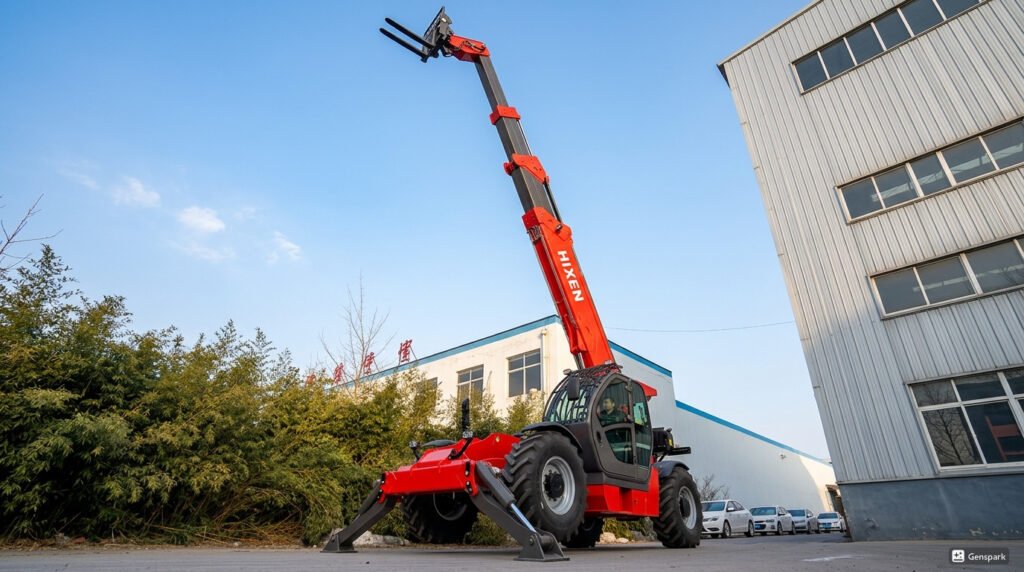
Proportional valves give you “feel” and precision. Unlike simple on/off valves, they allow you to meter flow precisely based on joystick input. This enables smooth, controlled movements essential for tasks like stacking materials or working near people, vastly improving fine-tuned telehandler performance.
Beyond On and Off
Imagine controlling your machine with a light switch—it’s either fully on or fully off. That’s how basic, old-style hydraulic valves work. They are called “bang-bang” valves for a reason. You move the lever, and the function slams into action at full speed. This makes precise placement nearly impossible and can be jarring for the operator.
Now, imagine using a dimmer switch. You can bring the lights up slowly, stop at any brightness, and fade them down smoothly. That’s proportional control. The electronic joysticks in our modern telehandler cabins send a variable signal to a proportional hydraulic valve. Move the joystick a little, and the valve opens just a crack, letting a small amount of oil through for a slow, precise movement. Push the joystick all the way, and the valve opens fully for maximum speed.
This level of control is what separates a crude tool from a precision instrument. It allows an operator to confidently telescope the boom while gently tilting a load, placing it perfectly without shocks or jerks. I remember a customer in Germany who exclusively works with fragile building materials. For him, the smooth control from proportional valves wasn’t a luxury; it was a necessity that defined the machine’s value and its day-to-day telehandler performance. This precision is a core component of excellent telehandler performance.
How Do Hydraulic Dampening Systems Improve Operator Comfort and Safety?
Do loads jolt when you stop lifting or lowering? These sudden shocks are hard on the operator, the load, and the machine itself. A well-designed hydraulic system should absorb these impacts smoothly.
Hydraulic dampening, achieved through counterbalance valves and soft-stop logic, prevents load shocks. These components control the descent of heavy loads and smooth out the start and end of movements. This enhances safety, reduces operator fatigue, and improves the machine’s long-term telehandler performance.
Taming the Force
Lifting a multi-ton load 10 meters in the air creates a huge amount of potential energy. Controlling that energy safely is a primary job of the hydraulic system.
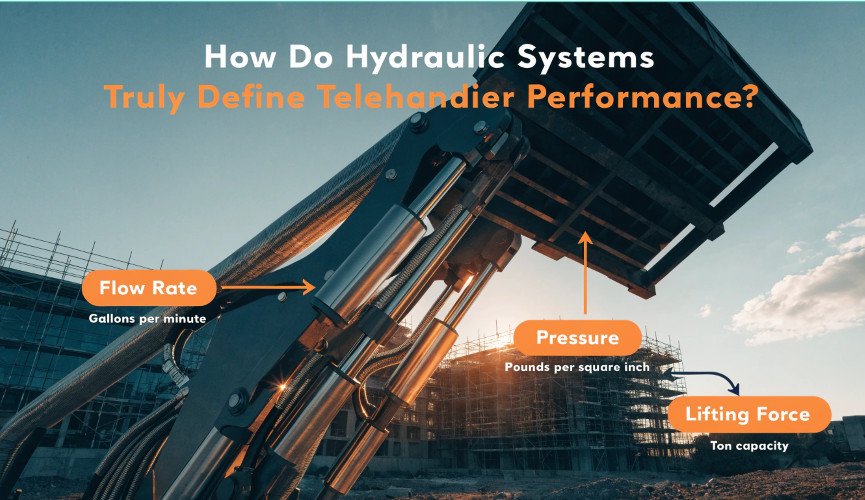
One of the most critical safety components is the counterbalance valve. This valve is installed directly on the lift and tilt cylinders. Its job is to act as a brake. It prevents the load from falling if a hydraulic hose were to burst. It also provides back-pressure when you lower the boom, forcing the movement to be smooth and controlled rather than letting gravity take over. Without a properly tuned counterbalance valve, lowering a heavy load would be a jerky, dangerous affair. It is a non-negotiable part of safe telehandler performance.
Furthermore, we design our systems with “soft-stop” or “cushioning” features. This can be done in two ways:
- Hydraulic Cylinder Cushioning: The cylinders themselves have a built-in mechanism that automatically slows the piston down just before it reaches the end of its stroke (either fully retracted or extended). This prevents a harsh “clunk” at the end of the movement.
- Electronic Ramping: With electro-hydraulic controls, we can program the controller to ramp the speed up and down smoothly, regardless of how quickly the operator moves the joystick. This electronic dampening provides an incredibly smooth operating experience.
These features all add up to a machine that feels stable, predictable, and safe. An operator who isn’t fighting against shocks and jolts is a more productive and less fatigued operator, which directly translates to better all-day telehandler performance.
What Causes “Hydraulic Lag” in Multi-Function Operations?
Have you ever tried to lift and extend the boom at the same time, only to have one function slow to a crawl? This “flow stealing” kills your productivity. The cause is an outdated hydraulic system design.
This lag, or “flow stealing,” is common in open-center hydraulic systems. When you perform multiple actions, the oil takes the path of least resistance, starving one function. This compromises multi-tasking and severely limits the machine’s real-world telehandler performance.
The Path of Least Resistance
Imagine a simple hydraulic system as a river. The pump is the source, and it’s always pushing water downstream. This is an “open-center” system—the oil is always flowing in a loop back to the tank. When you want to move the boom, you open a valve, which is like opening a gate to divert the river’s flow.
The problem arises when you open two gates at once, for example, to lift and telescope simultaneously. If the lift function requires less pressure than the telescope function, the oil (our river) will naturally take the easier path and flow mostly to the lift cylinder. The telescope function is “starved” of flow and will move very slowly, or not at all, until you stop lifting.
This is a fundamental limitation of simple open-center systems. While they are cheap and reliable for basic machines, they cannot deliver the sophisticated multi-function control needed for high-productivity work. An operator constantly has to perform actions one by one, which is slow and inefficient. For any professional user, this is a major drag on telehandler performance and a source of daily frustration. This deficiency in multi-function capability is a clear indicator of a lower-tier machine and has a negative effect on telehandler performance.
How Do Load-Sensing Systems Revolutionize Telehandler Performance?
Wish your machine could perfectly handle multiple movements at once, without any function slowing down? This seamless operation seems like magic. It’s actually the work of a modern load-sensing system.
Load-sensing (LS) systems revolutionize telehandler performance by delivering the exact pressure and flow each function demands, on demand. A signal line tells the pump precisely what’s needed, eliminating “flow stealing” and saving significant fuel.
The Smart Solution: Talk to the Pump
A load-sensing system is a massive leap forward from an open-center design. It creates a “closed-center” system where the pump only provides flow when a function is activated. More importantly, it adds a crucial element: communication.
Here’s how it works in simple terms:
- When you move a joystick, it opens a valve.
- The valve not only directs oil to the cylinder but also sends a small pressure signal back to the pump through a dedicated hose called the “load-sense line.”
- This signal tells the pump two things: “Hey, I need flow!” and “Here’s the pressure required to move this specific load.”
If you activate two functions at once, both send signals. The system is smart enough to identify the highest pressure requirement and tells the pump to produce just slightly more than that pressure. Special pressure-compensating valves at each function then ensure that each movement gets the flow it needs, regardless of its individual pressure requirement.
The result? You can lift a heavy load (high pressure, low flow) while simultaneously extending the boom quickly (low pressure, high flow), and both movements will be smooth and independent. There is no “flow stealing.” This is what we call true multi-function capability, and it is the absolute gold standard for modern telehandler performance.
| System Type | Multi-Function Capability | Effizienz | Operator Experience |
|---|---|---|---|
| Open-Center | Poor; functions interfere with each other. | Low; pump is always working, generating heat. | Frustrating; requires sequential operations. |
| Load-Sensing | Excellent; smooth, independent, simultaneous movements. | High; pump only works on demand, saving fuel. | Intuitive and productive; feels powerful and precise. |
This technology is a key reason our CE-certified machines are so popular in demanding markets. It delivers a superior operator experience and a quantifiable boost in productivity, directly enhancing the total telehandler performance.
Is Your Telehandler’s Hydraulic System Built for All-Day Work?
Has your Teleskoplader ever felt sluggish after a few hours of hard work? This performance drop is often due to overheating oil. The machine’s ability to stay cool is critical for consistent operation.
A system’s ability for continuous work depends on its thermal balance. The hydraulic tank size, radiator efficiency, and system design all contribute to managing heat. An undersized system will overheat, causing fluid breakdown and sluggish telehandler performance, especially in hot climates.
The Heat Problem
Every hydraulic system generates heat. Inefficient systems, like open-center designs, generate a lot of it because the oil is constantly being forced through the circuit. Even efficient load-sensing systems generate heat when working under heavy load. If this heat isn’t removed effectively, the hydraulic oil temperature will rise.
When oil gets too hot, its viscosity drops—it becomes thin and watery. This leads to several problems:
- Internal Leakage: The thin oil bypasses seals inside pumps, motors, and valves, leading to a loss of pressure and speed. The machine feels weak and slow.
- Component Damage: High temperatures accelerate wear on seals, hoses, and can even damage pumps.
- Fluid Breakdown: The oil itself degrades, losing its lubricating properties and requiring premature replacement.
To combat this, we focus on thermal management. This involves a three-pronged approach. First is the hydraulic reservoir (tank) size. A larger tank holds more oil, which takes longer to heat up and has more surface area to cool naturally. Second, and most important, is the hydraulic oil cooler, or radiator. We carefully size our coolers and fans to ensure they can dissipate more heat than the system generates, even when working hard on a hot day.
We’ve done extensive testing, like running a machine continuously for hours moving concrete blocks in the summer, just to verify that the oil temperature stays in a stable, safe range. This ensures consistent, reliable telehandler performance from the first hour to the last. Finally, using an efficient LS system in the first place is a huge advantage, as it produces less waste heat to begin with. This focus on thermal stability is crucial for maintaining peak telehandler performance all day long.
How Does Smart Hydraulic Design Reduce Downtime and Maintenance Costs?
Worried about troubleshooting hydraulic issues and the costly downtime they cause? A confusing, inaccessible system is a mechanic’s nightmare. Smart design makes maintenance simple and fast.
Smart hydraulic design drastically cuts downtime. Features like logically placed pressure test points, filter clog indicators, and modular valve blocks simplify diagnostics and repairs. Easy access to components means less time in the shop and more time working, directly boosting long-term telehandler performance.
Designing for the Real World
A machine’s value is not just in how it works, but also in how easy it is to keep it working. Downtime is the enemy of profitability. Over my 15 years in this business, I’ve learned that our customers—both end-users and distributors—value serviceability just as much as they value lifting capacity. A machine that is easy to diagnose and repair offers a lower total cost of ownership and better long-term telehandler performance.
Here are some of the design features we build in to make maintenance easier:
- Centralized Test Ports: Instead of having to disconnect hoses to check pressures (which is messy and dangerous), we install a bank of quick-connect test ports. A mechanic can plug in a set of gauges and see the pressure for every major circuit in minutes.
- Modular Valve Blocks: We use integrated valve blocks that combine multiple functions into one clean manifold. This drastically reduces the number of hoses and potential leak points. If there’s an issue with one valve slice, it can often be replaced as a single cartridge without disturbing the rest of the system.
- Filter Clogging Indicators: Our systems include sensors that alert the operator, either with a light on the dash or a visual pop-up indicator, when a hydraulic filter is getting clogged. This allows for proactive maintenance, preventing dirt from bypassing the filter and causing catastrophic damage to the pump.
- Smart Component Layout: We think about access. We ensure that pumps, filters, and main valves are located where they can be reached without having to first remove other major components.
A Quick Troubleshooting Guide
When a hydraulic problem occurs, a logical process can save hours. Here’s a simple flow to follow:
- Listen & Feel: Is there a new noise? A high-pitched whine could mean a cavitating pump. Is there excessive vibration?
- Check the Obvious: Is the hydraulic oil level correct? Is the oil milky (water contamination) or dark and smelly (overheated)?
- Check Functions: Is the problem in one function or all functions? If it’s just one, the issue is likely in its specific valve or cylinder. If all functions are weak or slow, the problem is likely at the pump or main relief valve.
- Check Temperature: Is the system running hotter than usual? This points to an efficiency problem or a cooling system issue.
- Check Pressures: With the proper gauges, use the test ports to check standby pressure, load-sense pressure, and main relief pressure against the machine’s specifications. This is the fastest way to pinpoint the fault.
This kind of built-in serviceability is a core part of a quality design philosophy. It respects the owner’s time and money and is essential for maximizing a machine’s lifetime telehandler performance.
Abschluss
The hydraulic system is the true heart of your machine. Understanding its design is key to choosing a telehandler that delivers power, precision, and reliability for superior Teleskoplader performance.
Folgen Sie uns weiter:YouTube.