Problem: You think telehandler stability is simple, just about not overloading. Agitation: But ignoring the real engineering truth can lead to costly accidents and serious injury. Solution: Understanding telehandler stability as a dynamic equation protects your operations.
Telehandler stability is a complex, dynamic equation, not a static limit. It changes constantly with load, boom position, and ground conditions. Understanding this dynamic interplay is essential for safe operation and preventing catastrophic tipping events, ensuring the machine’s center of gravity remains within its stability triangle.
I often hear people talk about a telehandler’s tipping point as if it is a fixed, unmoving boundary. This idea is a dangerous oversimplification. From my engineering perspective, telehandler stability is a constantly moving target. Let me explain why.
Is Telehandler Stability a Fixed Point or a Dynamic Equation?
Problem: Many people view telehandler stability as a simple, static capacity limit. Agitation: This misunderstanding risks serious accidents because true stability is always changing. Solution: Realize that telehandler stability is a dynamic equation, not a fixed point.
Chariot télescopique is fundamentally a dynamic equation. It means the safety margin is always changing based on factors like load weight, boom extension, and ground conditions. A fixed tipping point is only true under ideal, static test conditions, but real-world operation is far more complex.
I have seen many discussions where the concept of telehandler stability gets boiled down to just a number on a load chart. This approach misses the core engineering truth. I believe telehandler stability is a “dynamic equation.” It means the safe operating zone constantly shifts. The machine’s stability is not a single, solid “bedrock.” Instead, it is like a balance that changes every second.
Let me break down what I mean. Think about the load weight, the length of the boom, the lifting angle, the air pressure in the tires, and even the slope of the ground. These are five important variables. If even one of these changes a little bit, the “safety factor” in our stability equation can change a lot. My engineering view is clear: we are not just trying to stop the machine from tipping. We are actively managing where the center of gravity moves. This path is crucial for telehandler stability.
Let us look at how these factors interact:
| Facteur | Impact on Telehandler Stability | Engineering Consideration |
|---|---|---|
| Poids de chargement | Directly affects the total weight and the moment arm. | Increased weight means less margin for error. |
| Longueur de flèche | Extends the leverage, increasing the overturning moment. | Longer reach dramatically reduces telehandler stability. |
| Angle de levage | Changes horizontal distance of load from the pivot point. | High angles can increase stability initially, then decrease rapidly. |
| Pression des pneus | Impacts the base support area and how weight is distributed. | Uneven pressure or soft tires reduce effective support polygon. |
| Ground Slope | Shifts the machine’s own center of gravity, pre-stressing one side. | Even small slopes significantly reduce telehandler stability. |
When I analyze telehandler , I always consider these moving parts. It is never a static calculation.
How Does the Center of Gravity Impact Telehandler Stability?
Problem: Not understanding how the center of gravity shifts can lead to misjudging a telehandler’s limits. Agitation: Misplaced loads dangerously shift the center of gravity, making the machine unstable. Solution: Knowing where the center of gravity is prevents accidents and keeps your telehandler stable.
The machine’s center of gravity is the single most critical factor for telehandler stability. Its position relative to the machine’s support base determines whether the telehandler is stable or will tip. Any shift of the center of gravity outside the base can cause immediate instability.
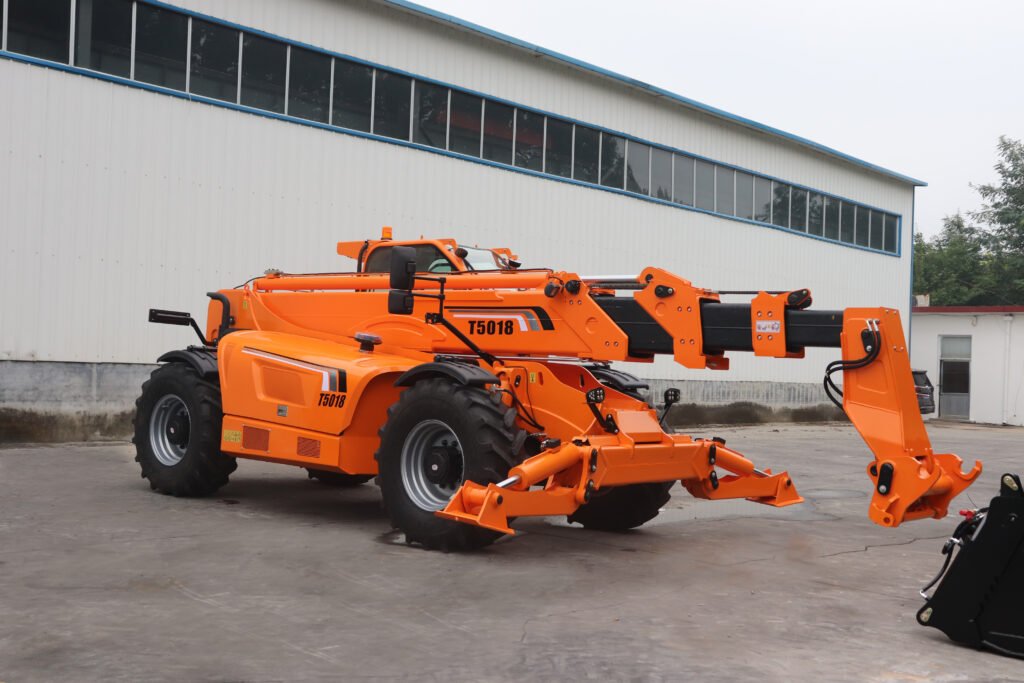
I often explain to people that the concept of the center of gravity is the heartbeat of telehandler stability. This is not just theoretical; it is a very real, physical point. The machine itself has a center of gravity. The load also has its own center of gravity. When you pick up a load, these two points combine to form a new, overall center of gravity for the entire machine-load system.
I always focus on where this combined center of gravity sits. If it stays within the “support polygon” created by the machine’s wheels or outriggers, the telehandler is stable. If it moves outside this polygon, even a little, the machine will tip. This is a fundamental rule of physics. When the boom extends, the load moves further away from the machine’s pivot point.
This action moves the combined center of gravity forward and often upwards. Because of this, the safe lifting capacity drops very quickly as the boom extends. Even small changes in the load’s position on the forks can move the center of gravity enough to cause an issue. I always recommend placing the load as close to the mast as possible for optimal telehandler stability. This reduces the overturning moment significantly. Understanding the center of gravity is the most direct way to grasp the mechanics of telehandler stability.
Here is a simple breakdown of the center of gravity’s role:
- Machine’s CoG (Center of Gravity): This is fixed when the machine is empty.
- Load’s CoG: This depends on the shape and density of the load.
- Combined CoG: This is the critical point. It shifts with every movement of the boom and load.
- Support Polygon: This is the area defined by the contact points of the wheels or outriggers with the ground.
When the combined center of gravity moves towards the edge of the support polygon, the telehandler stability margin shrinks rapidly.
Why Are Ground Conditions a Hidden Trap for Telehandler Stability?
Problem: You might think all ground is firm enough for telehandler operations. Agitation: Soft or uneven ground secretly undermines telehandler stability, often leading to unexpected tip-overs. Solution: Always assess ground conditions carefully to ensure a solid foundation for telehandler stability.
Soft ground conditions are a major hidden trap, causing over 80% of stability accidents in engineering practice. When tires or outriggers sink, even slightly, it unevenly shifts the machine’s support base. This creates a “butterfly effect,” significantly reducing telehandler stability and increasing the risk of tipping.
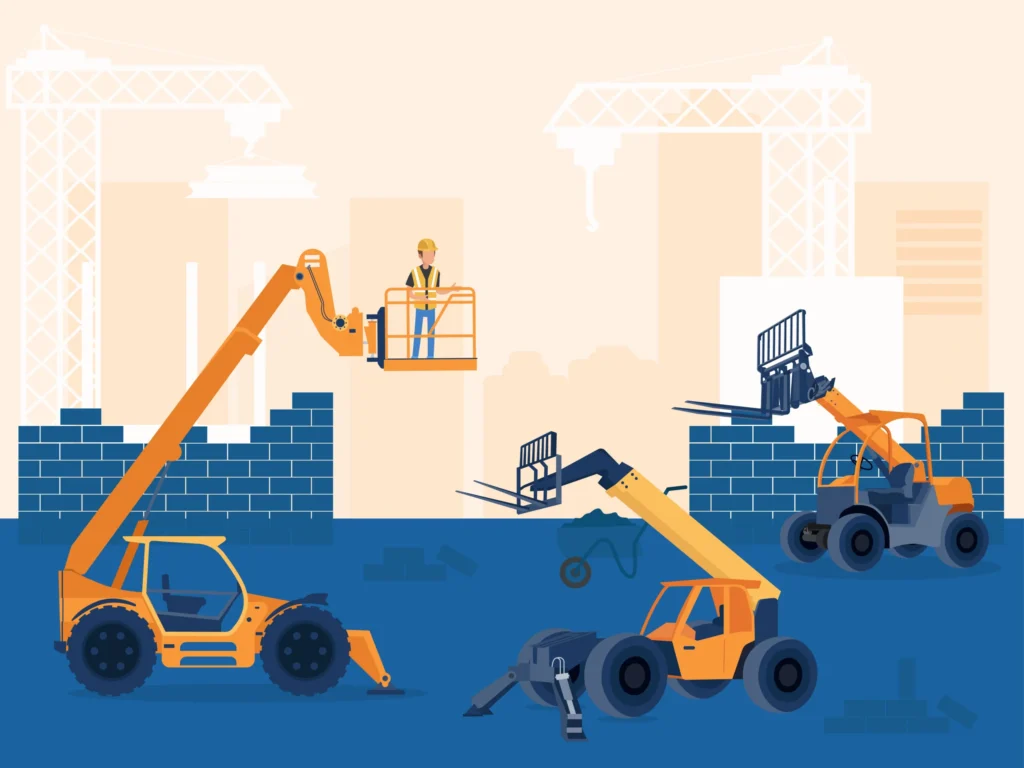
From my experience in the field, I can tell you something important. Many stability accidents are not due to operators lifting too much weight. Instead, they happen because the ground itself fails. This is the “soft ground trap.” I have seen this happen repeatedly. The ground cannot hold the machine’s weight, especially when the load is high. This issue is a crucial “second-order effect” in engineering.
Imagine this: a tire or an outrigger sinks just 10 centimeters into soft ground. That small sink can lead to a much larger problem at the end of the boom. The horizontal movement at the boom’s tip might increase to 50 centimeters or even more. This increased movement creates a lot of extra bending force on the machine.
This is not just a simple calculation of forces. It is a complex interaction between the machine’s weight, the soil’s strength, and the machine’s structure. This means the problem of telehandler stability moves from simple mechanical calculations to a combined analysis of geology and structure. We have to consider how the ground will react under pressure. This insight is critical for maintaining telehandler stability.
I always advise my clients to perform thorough ground assessments. You need to look beyond the surface.
Let me illustrate the effect:
- Initial State: Machine is level, support base is firm.
- Soft Ground Effect: One side’s outrigger or tire sinks.
- Support Polygon Distortion: The support base becomes uneven and effectively smaller.
- Boom Tip Amplification: A small sink at the base translates to a large displacement at the boom tip.
- Overturning Moment: This displacement dramatically increases the overturning moment, reducing telehandler stability.
This “butterfly effect” can turn a seemingly minor ground issue into a major telehandler stability hazard.
Does the Hydraulic System Really Affect Telehandler Stability?
Problem: You might overlook the hydraulic system’s role in a telehandler’s overall stability. Agitation: The “hidden elasticity” of hydraulic fluid can cause unexpected machine movements, compromising safety. Solution: Acknowledge the hydraulic system’s impact on telehandler stability for safer operations.
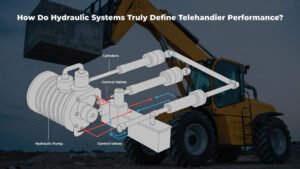
Yes, the hydraulic system significantly affects telehandler stability, often in subtle ways. The compressibility of hydraulic fluid introduces a “latent rigidity.” Under heavy loads, this fluid acts like a spring, allowing a slight, often unnoticeable, forward tilt of the boom. This small tilt can critically shift the load’s center of gravity, reducing telehandler stability.
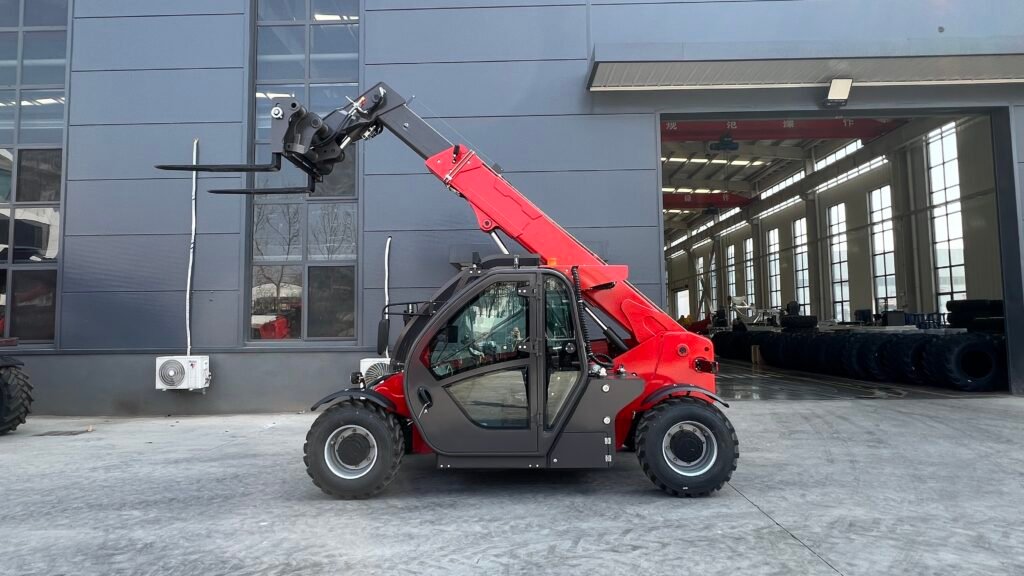
I find that many operators and even some engineers overlook the hydraulic system’s subtle but important impact on telehandler stability. When I look at stability from an engineering viewpoint, I must consider how compressible hydraulic fluid is. It is not perfectly stiff. When you lift a very heavy load high up, the hydraulic oil in the cylinders gets compressed. This compression causes an “elastic deformation.” It means the cylinder shortens a tiny bit, allowing the boom and mast to tilt forward by a very small angle.
This small angle, which might seem insignificant, can be enough to cause a big problem. Under dynamic loads, this tiny forward tilt can move the load’s center of gravity outside the machine’s support base. This is a “technical black box” that many end-users do not know about. They think the boom is fixed, but it has a small “give” due to the oil. This gives engineers a challenge because they must account for this “spring-like” behavior when designing for telehandler stability. It is why precise control and understanding of the hydraulic system are vital for safe operation and maintaining telehandler stability.
Let us consider the hydraulic system’s influence:
- Hydraulic Fluid: Not truly incompressible. It has a bulk modulus.
- Cylinder Compression: Under heavy load, the fluid volume slightly decreases.
- Elastic Deformation: This leads to a small, temporary shortening of the cylinder.
- Boom Tilt: The boom can then tilt forward by a small angle, even if valves hold pressure.
- Center of Gravity Shift: This small tilt moves the load’s center of gravity forward, reducing the effective telehandler stability margin.
Understanding this “hidden elasticity” is key to truly mastering telehandler stability.
What Role Do Load Charts Play in Ensuring Telehandler Stability?
Problem: Some operators treat load charts as mere guidelines, not strict safety documents. Agitation: Ignoring the precise limits on a load chart invites catastrophic failure and major safety risks. Solution: Always follow load charts meticulously to guarantee safe operations and maintain telehandler stability.
Load charts are indispensable for ensuring telehandler stability. They provide precise, engineering-calculated limits for safe lifting based on load weight, boom extension, and height. By following these charts strictly, operators can prevent exceeding the machine’s stability limits, thus maintaining critical telehandler stability.
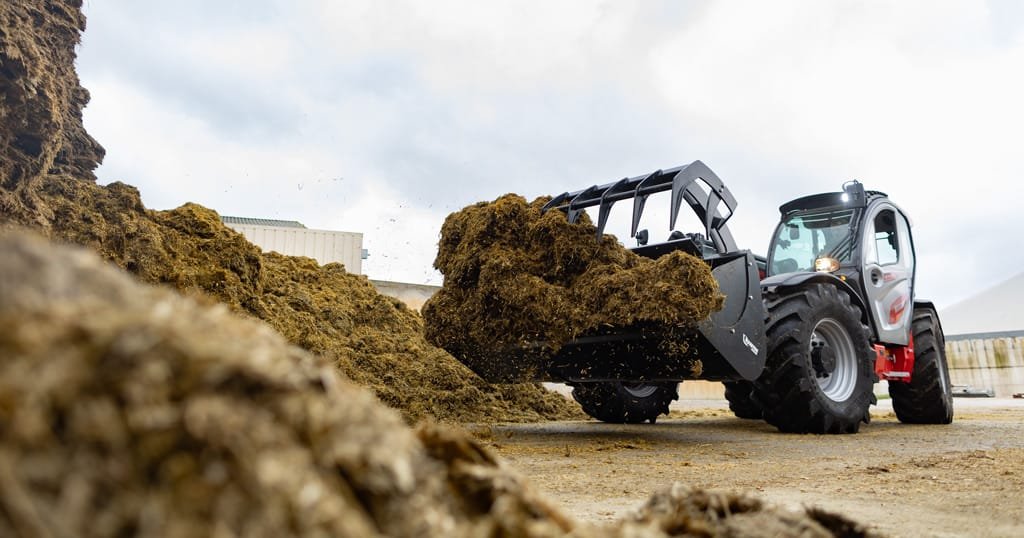
I always tell people that the load chart is not just a suggestion. It is a critical safety document. From an engineering standpoint, every number on that chart is the result of countless calculations and tests. The manufacturer has worked out the exact limits for telehandler stability under different conditions. These charts show the maximum weight you can lift at a certain boom height and reach. They are designed to keep the combined center of gravity of the machine and its load within the support polygon.
I often see operators try to estimate or “feel” if a load is too heavy. This is a very dangerous practice. The load chart already accounts for many variables that affect telehandler stability, such as the machine’s own weight, its counterweights, and the leverage created by the boom. When you operate a telehandler, you must always consult the load chart for the specific model you are using. You need to make sure the load you are lifting does not exceed the allowed weight for the boom’s current extension and angle. Ignoring these charts means you are guessing about telehandler stability, and guessing is never safe in heavy machinery operation.
Here is what a load chart typically considers:
- Load Weight: The actual weight of the material being lifted.
- Load Center: The horizontal distance from the front of the forks to the center of gravity of the load.
- Boom Height: The vertical distance from the ground to the boom’s pivot point.
- Boom Reach (Extension): The horizontal distance from the front of the tires to the load.
- Outrigger Position: Whether outriggers are deployed and fully extended.
Understanding and strictly adhering to the load chart is fundamental for maintaining telehandler stability.
How Do Tire Pressure and Outriggers Influence Telehandler Stability?
Problem: You might underestimate the impact of proper tire pressure and outrigger use on safety. Agitation: Incorrect tire pressure or neglected outriggers severely compromise a telehandler’s essential stability. Solution: Always ensure correct tire pressure and properly use outriggers to maximize telehandler stability.
Tire pressure and outrigger deployment are critical for telehandler stability. Correct tire pressure ensures a stable, even contact patch with the ground, maintaining the machine’s support base. Outriggers, when extended, significantly widen this base, dramatically increasing the machine’s resistance to tipping and enhancing overall telehandler stability.
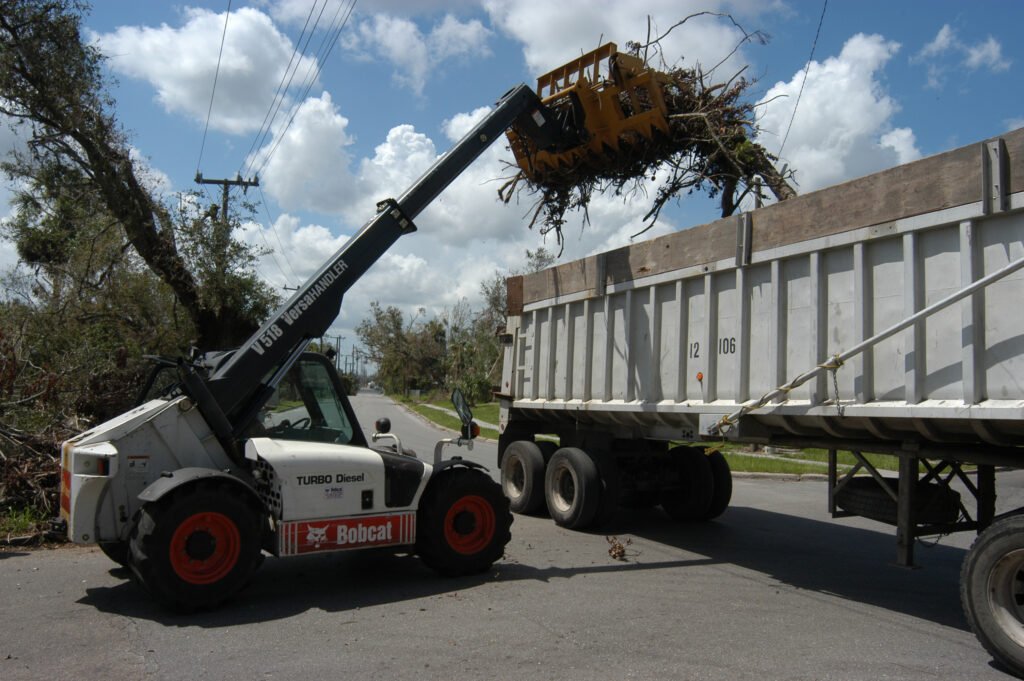
I often stress the importance of seemingly small details like tire pressure. From an engineering perspective, these are not small details at all; they are fundamental to telehandler stability. Tires provide the machine’s direct contact with the ground. If the tire pressure is wrong, especially if it is too low or uneven between tires, the machine’s support base becomes unstable. A soft tire on one side will compress more than the others. This makes the machine lean, effectively shifting its own center of gravity before you even pick up a load. This initial lean significantly reduces the margin for telehandler stability.
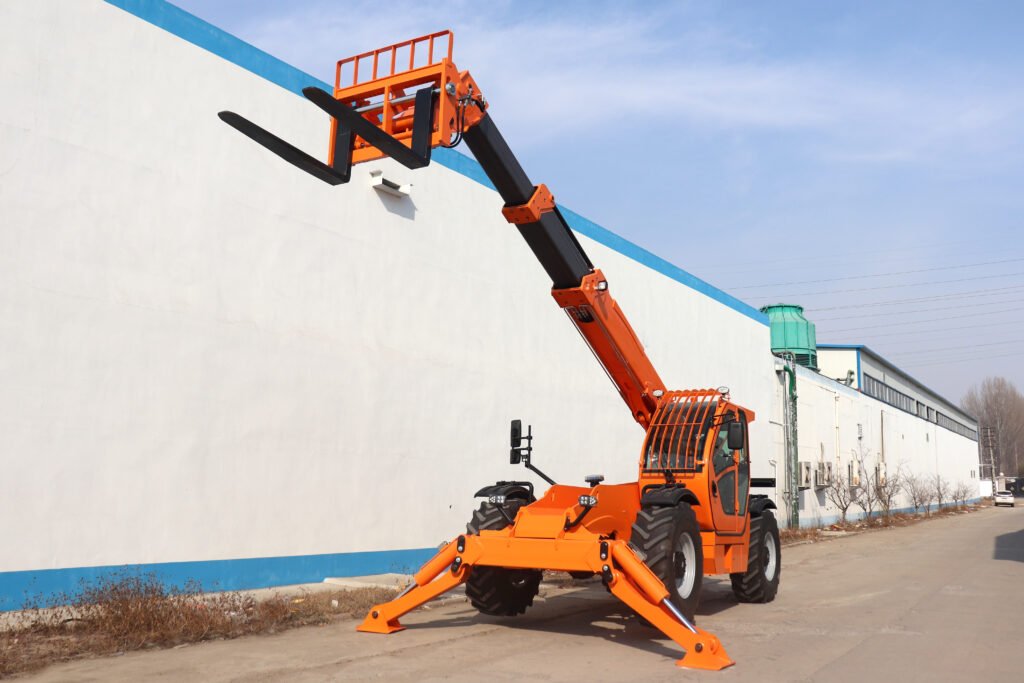
Outriggers are even more impactful. I see outriggers as extending the machine’s footprint. When they are fully deployed and properly supported, they create a much wider and more stable support polygon. This wider base gives the telehandler a much greater resistance to tipping, especially when lifting heavy loads to high reaches. Engineers design these outriggers to be a critical part of the telehandler stability system. Not using them when required, or not using them correctly, is like trying to balance on one leg instead of two. It compromises the fundamental design for telehandler stability.
Here is a summary of their roles:
- Correct Tire Pressure:
- Maintains the intended size and shape of the tire’s contact patch.
- Ensures even weight distribution across the base.
- Prevents an initial tilt or lean, which can reduce telehandler stability.
- Outriggers:
- Deployment: Extends the support polygon, increasing the machine’s base.
- Leveling: Help to level the machine on uneven ground, returning the machine’s center of gravity to a central position.
- Increased Stability: Dramatically increases overturning resistance, crucial for heavy lifts and extended reaches, improving telehandler stability.
Proper management of tire pressure and outriggers is non-negotiable for safe telehandler stability.
What Are the Dangers of Overlooking Telehandler Stability Limits?
Problem: People sometimes push telehandlers past their limits, thinking they can handle a little more. Agitation: Ignoring telehandler stability limits leads to severe accidents, injuries, and costly equipment damage. Solution: Respecting telehandler stability limits is crucial for safety and preventing catastrophic failures.
Overlooking chariot télescopique stability limits carries severe risks, including machine tip-overs, serious injuries, and even fatalities. Exceeding these limits, even slightly, means the machine’s center of gravity has moved outside its safe support base. This leads to an irreversible loss of telehandler stability and immediate danger.
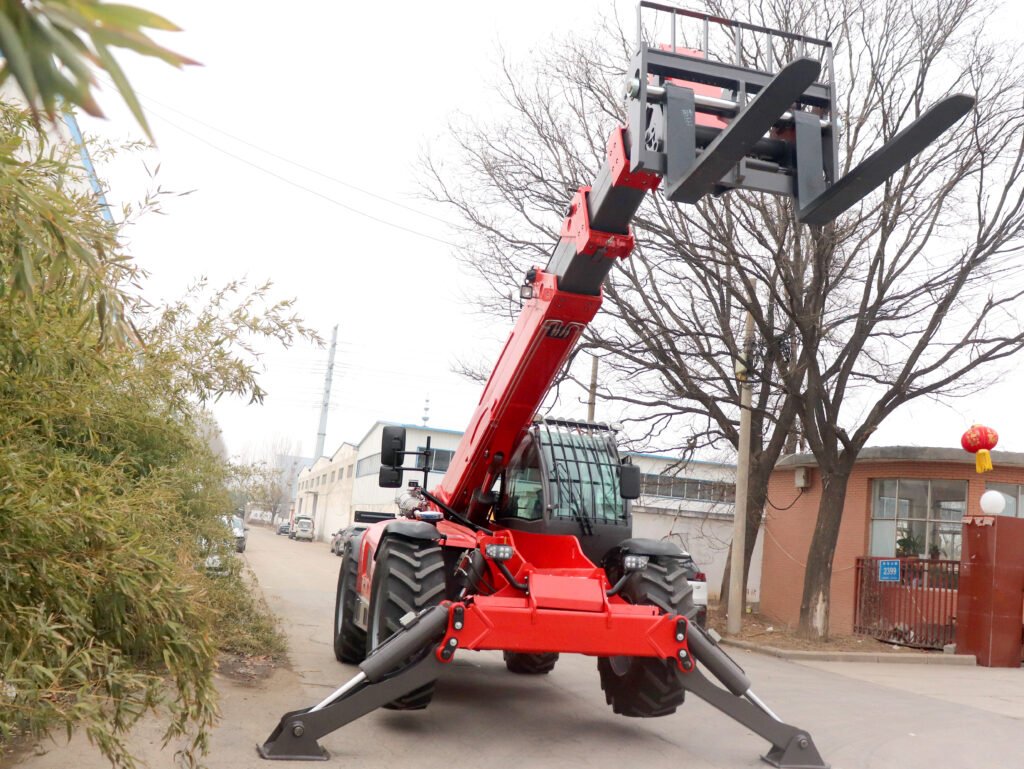
I have seen the devastating consequences of ignoring telehandler stability limits firsthand. It is not just about damaging a machine; it is about human lives. When an operator pushes a telehandler beyond its designed capacity or operates it in unsafe conditions, they are playing a very dangerous game. The machine is designed with specific telehandler stability limits for a reason. These limits are the result of rigorous engineering calculations and safety standards.
If you exceed the load capacity, extend the boom too far, or operate on a slope without proper leveling, you are putting the machine’s center of gravity in a precarious position. The moment that center of gravity moves outside the support polygon, the machine will tip. This happens quickly, often without warning. There is no going back once it starts. The results can be catastrophic: the machine tips over, the load falls, people get injured, or worse. From an engineering perspective, these limits are not arbitrary; they are the absolute boundaries of safe telehandler stability. Adhering to them is the most fundamental aspect of safe operation.
The dangers of ignoring telehandler stability limits include:
- Machine Tip-Over: The most common and direct result, leading to extensive damage.
- Load Spillage/Damage: Costly damage to materials or equipment being lifted.
- Operator Injury/Fatality: The operator can be crushed or severely injured during a tip-over.
- Damage to Property: Nearby structures, vehicles, or infrastructure can be hit by the falling machine or load.
- Legal and Financial Penalties: Accidents lead to investigations, fines, and increased insurance costs.
Every incident where telehandler stability is compromised results in significant negative outcomes.
How Can Technology Enhance Telehandler Stability Monitoring?
Problem: Relying solely on manual checks for telehandler stability can be prone to human error. Agitation: Manual monitoring may miss subtle shifts in stability, putting operations at risk. Solution: Advanced technology offers precise, real-time monitoring to enhance telehandler stability and safety.
Technology significantly enhances telehandler stability monitoring through real-time data. Modern systems use sensors to track boom angle, extension, load weight, and even ground slope. These systems provide instant feedback and warnings, allowing operators to make timely adjustments, thus proactively maintaining optimal telehandler stability and preventing accidents.
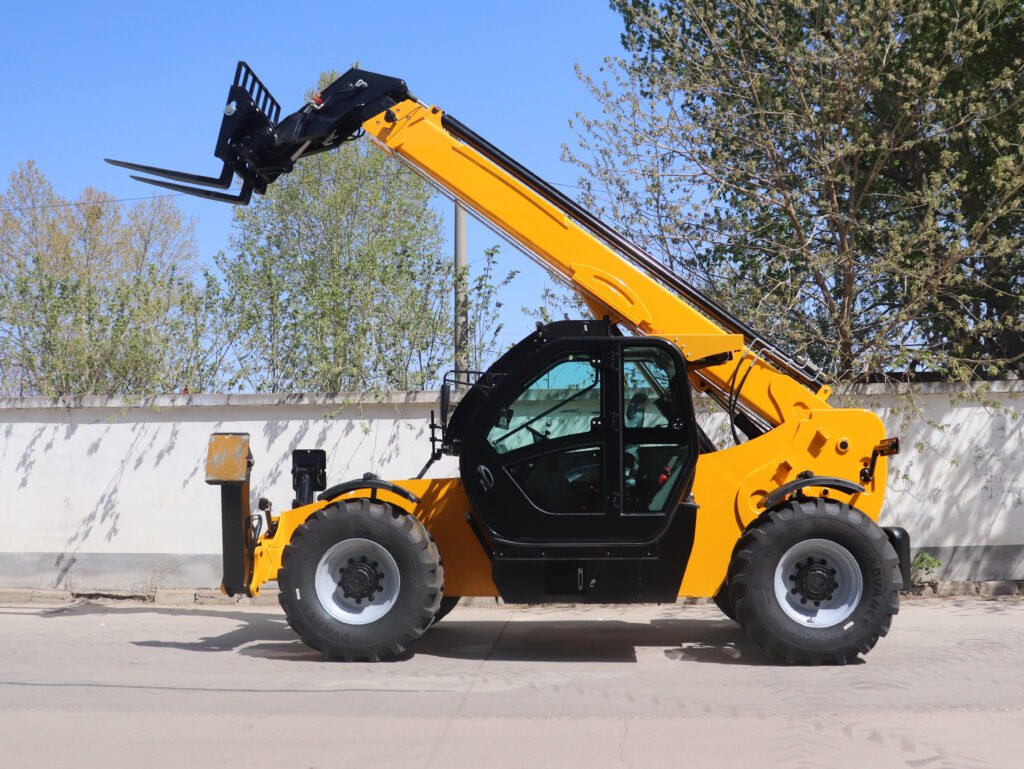
I believe that while operator skill is paramount, technology plays a huge supporting role in ensuring telehandler stability today. In my engineering analysis, relying solely on human judgment, especially in complex lifting scenarios, can be risky. Modern telehandlers come equipped with advanced systems that provide real-time data on the machine’s status. These systems include sensors that monitor boom angle, extension, and the actual weight of the load. Some even have sensors for ground slope and outrigger deployment.
These technological solutions offer an objective view of the machine’s telehandler stability. They can give audible and visual warnings when the machine approaches its stability limits. This immediate feedback helps operators make informed decisions, adjust their operations, and avoid dangerous situations. Some advanced systems can even limit machine functions, like preventing further boom extension or lifting if stability is compromised. This proactive approach, driven by technology, significantly reduces the chances of an accident and elevates the overall standard of telehandler stability.
Here are key technological advancements:
- Load Moment Indicators (LMIs): Display current load, boom position, and proximity to stability limits.
- Overload Protection Systems: Automatically prevent further operation if limits are exceeded.
- Tilt Sensors: Monitor the machine’s lean angle and warn if it is unsafe.
- Télématique : Remote monitoring of machine data, including stability parameters, for fleet management and preventative maintenance.
- Vision Systems/Cameras: Enhance operator awareness of the load and surroundings, indirectly aiding telehandler stability by preventing collisions or improper load placement.
Integrating these technologies makes telehandler stability management more robust and reliable.
How Does Maintenance Impact Telehandler Stability?
Problem: You might think maintenance mainly affects engine performance, not safety. Agitation: Poor maintenance directly degrades critical components, secretly eroding telehandler stability over time. Solution: Regular, thorough maintenance is essential to preserve component integrity and ensure telehandler stability.
Regular maintenance is absolutely critical for preserving telehandler stability. Worn components like tires, hydraulic cylinders, and structural elements can compromise the machine’s foundational integrity. Proper maintenance ensures all systems operate as designed, preventing unexpected failures that could lead to a sudden loss of telehandler stability.
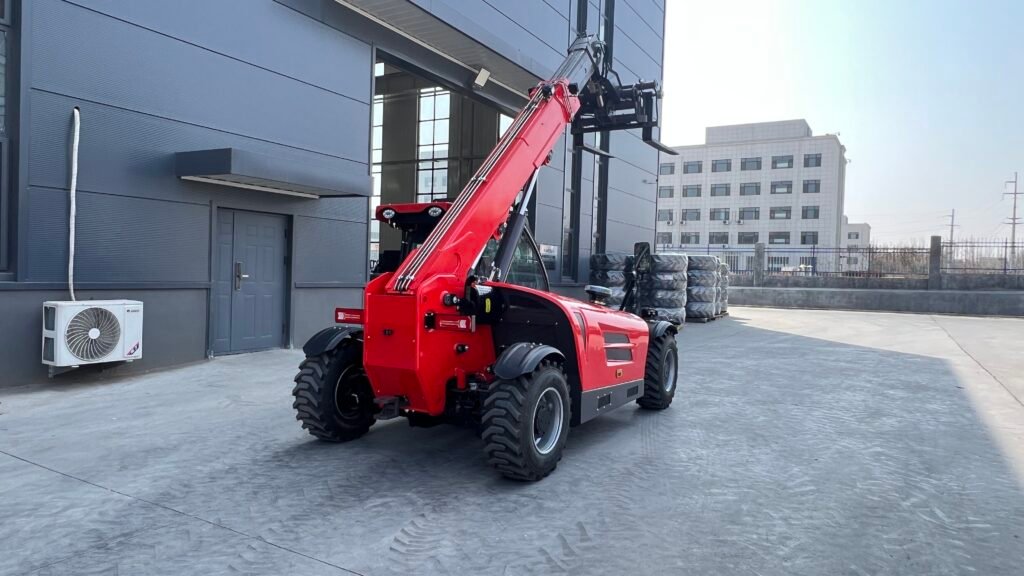
I cannot overstate the importance of proper maintenance when it comes to telehandler stability. From an engineering standpoint, every component on a telehandler plays a role in its overall stability. If parts are worn out or not working correctly, it can directly affect how stable the machine is. Think about the tires. If they are worn unevenly or have damage, they cannot provide a stable, level base. This directly impacts telehandler stability.
Then there are the hydraulic cylinders and hoses. If there are leaks or if the cylinders themselves are worn, they might not hold pressure correctly. This can lead to unexpected movements or settling of the boom, which again reduces the margin for telehandler stability. Even structural components like the boom sections or the chassis can develop cracks or fatigue over time if not inspected and maintained. These weaknesses can lead to catastrophic failure, especially under load. Regular inspections, lubrication, and replacement of worn parts are not just about keeping the machine running; they are about preserving its core telehandler stability and safety.
Key maintenance aspects impacting telehandler stability:
- Tire Inspection: Check for wear, damage, and correct inflation pressure.
- Hydraulic System Checks: Look for leaks, proper fluid levels, and cylinder function. Ensure no “drift” in boom position.
- Structural Integrity: Inspect boom, chassis, and outrigger supports for cracks, deformation, or corrosion.
- Freins: Ensure proper function for controlled stops, especially on slopes, which impacts dynamic telehandler stability.
- Load Chart Visibility: Make sure the load chart is clean, legible, and present on the machine.
- Sensor Calibration: Ensure all stability-related sensors (LMI, tilt) are accurately calibrated.
Neglecting any of these points can have a direct and negative impact on telehandler stability.
Conclusion
I have clearly explained that chariot télescopique stability is a dynamic, complex engineering challenge, not a static number. Understanding its dynamic nature, soft ground risks, hydraulic system effects, and the role of technology and maintenance is crucial for safe operation.
Suivez-nous sur:Youtube.