Struggling to decide between a telehandler vs. boom lift for material handling on rough terrain? The wrong choice could slow down your project, increase costs, or even risk safety. In this guide, I’ll help you identify which equipment suits your needs best and avoid common pitfalls.
Choosing the right machine for material handling on rough terrain is crucial. Telehandlers are ideal for heavy lifting, offering both vertical and horizontal reach, along with superior stability on uneven ground. Boom lifts, however, are better suited for high-reach tasks but struggle on rough surfaces. This guide compares both machines based on their capabilities, helping you make an informed choice to save time and costs on your next project.
Let’s dive into the details of both machines to see which one is the right fit for your worksite.
What is a Telehandler?
So, let’s start with telehandlers. I remember the first time I used one. I was tasked with lifting some heavy building materials on a construction site, and the ground was uneven with some large rocks. I was a bit nervous, but I soon saw how amazing these machines are on rough terrain.
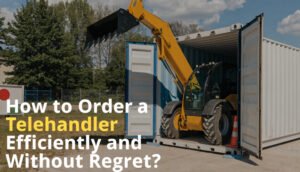
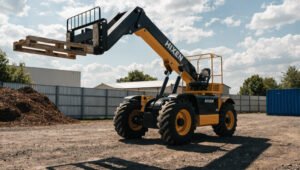
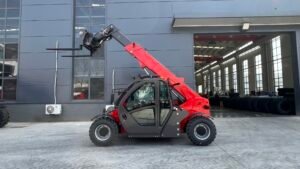
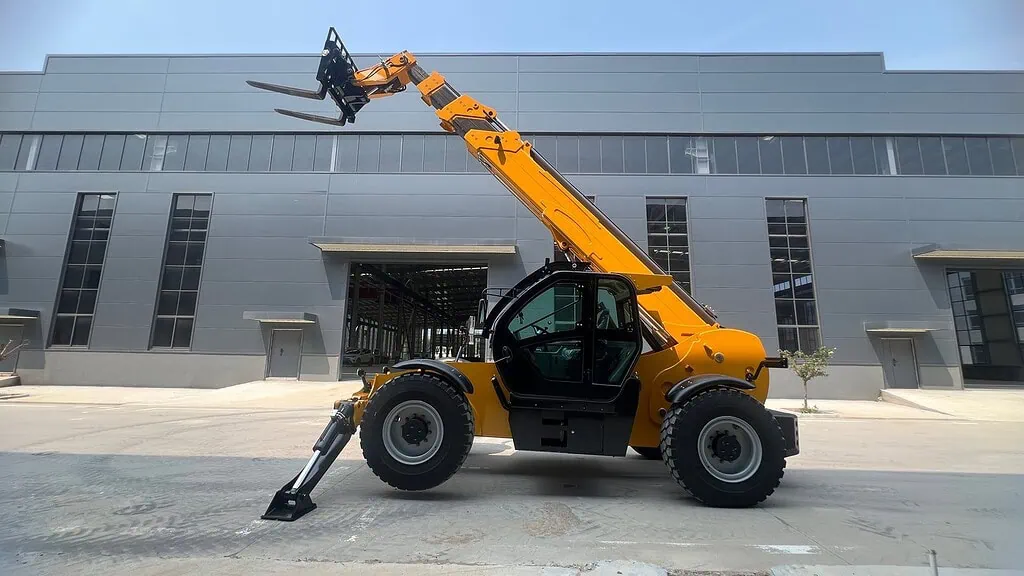
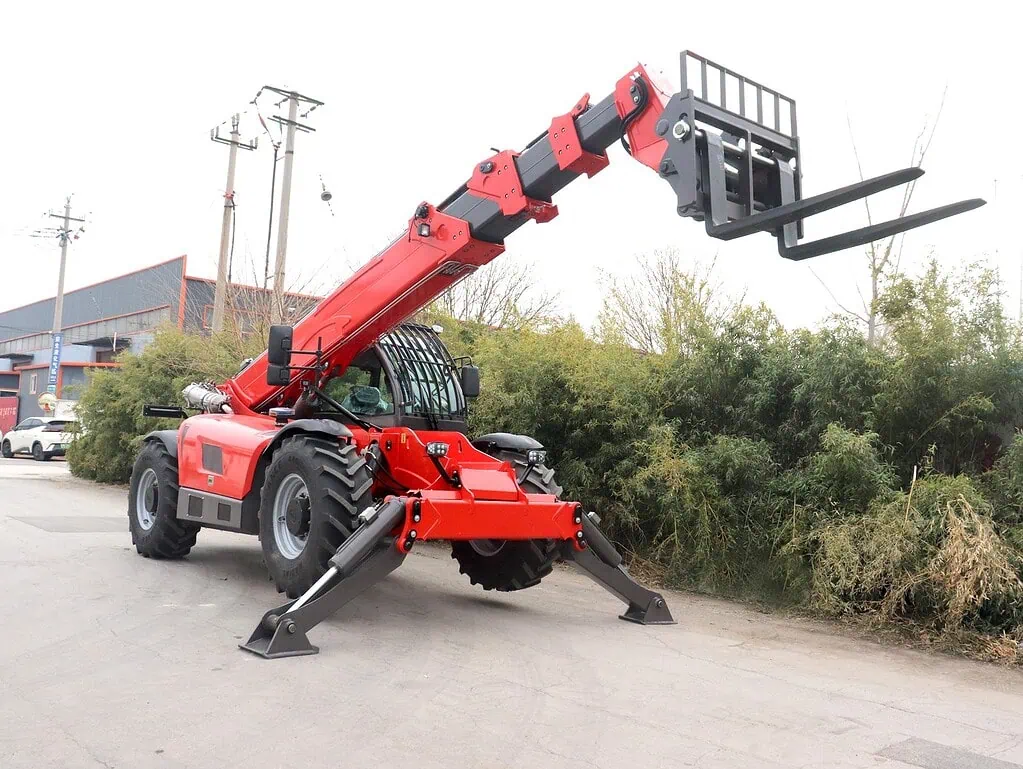
A telehandler (or telescopic handler) is a machine that can reach out horizontally and vertically. Its extendable boom gives it an edge over many other machines. You can use it to lift, carry, and place materials in places where other machines struggle. It’s pretty much the go-to for rough terrain.
Key Features of a Telehandler:
- 4WD and high ground clearance: The 4WD system lets it power through rough, uneven ground. The high ground clearance makes sure that rocks, mud, or other obstacles don’t stop it.
- Telescoping boom: This extendable arm allows the telehandler to reach both vertically and horizontally, which gives you more flexibility to get to hard-to-reach spots.
- Attachments: You can fit different attachments like forks, buckets, and lifting platforms, which makes the telehandler super versatile.
Here’s a quick table that highlights its features:
| Feature | Telehandler |
|---|---|
| Drive System | 4WD |
| Ground Clearance | High |
| Lifting Range | Vertical and horizontal reach |
| Attachments | Forks, buckets, lifting platforms |
| Common Use Cases | Construction, farming, heavy material handling |
What is a Boom Lift?
On the other hand, a boom lift is something I use when I need to work at height. It’s not as versatile as a telehandler, but it does a fantastic job when I need to lift people or materials to a high spot.
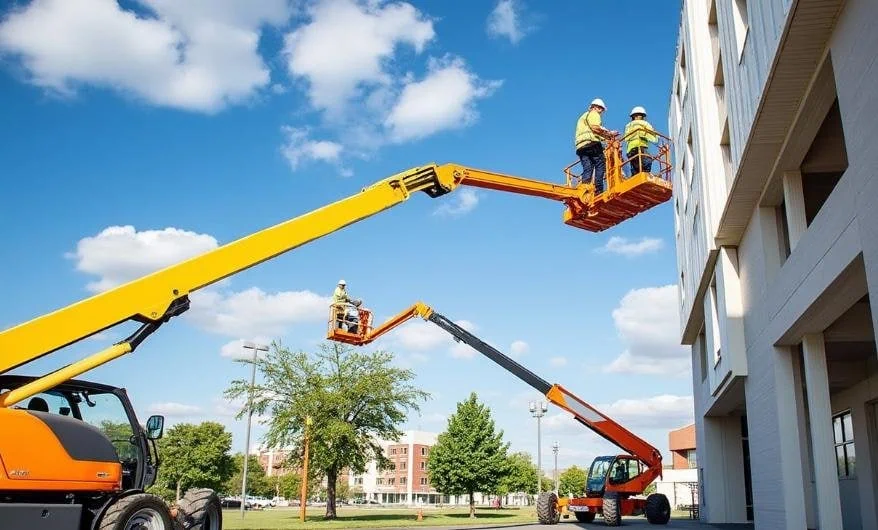
The boom lift is usually used for aerial work. It has an extendable arm that holds a platform or bucket, which makes it ideal for tasks like window cleaning, maintenance work, or getting to hard-to-reach areas at height. However, when I tried using one on rough terrain, I quickly realized it’s not made for rocky, muddy, or uneven ground.
Key Features of a Boom Lift:
- Articulating or telescoping arm: The arm can extend and reach over obstacles. Some models even let the platform swing out to the side.
- Stability on flat surfaces: Boom lifts are made for smooth, level ground. They’re less effective on rough, uneven terrain.
- Limited load capacity: Boom lifts are great for lifting small materials or people but can’t handle heavy loads like a telehandler.
Here’s a simple breakdown:
| Feature | Boom Lift |
|---|---|
| Drive System | 2WD or 4WD (limited use on rough terrain) |
| Ground Clearance | Low |
| Lifting Range | Mostly vertical |
| Attachments | Platform or bucket for personnel |
| Common Use Cases | Aerial work, high-reach tasks |
Telehandlers vs. Boom Lifts: Key Differences
The difference between a telehandler vs. boom lift is a question I get a lot, and honestly, it boils down to a few simple points. Let’s compare them based on the most important factors for working on rough terrain.
I remember a job where we needed to move a large amount of concrete to a high platform. The telehandler came in handy because it could lift the heavy load, and I could move it horizontally over rough ground without any issues. But if I needed to work at height, I would have reached for the boom lift.
Let’s look at a simple comparison:
| Feature | Telehandler | Boom Lift |
|---|---|---|
| Terrain Adaptability | Best for rough, uneven ground with 4WD and high clearance | Best for flat, smooth surfaces; struggles on rough terrain |
| Load Capacity | Can handle heavy loads (up to 10,000 lbs) | Limited capacity, usually under 2,000 lbs |
| Reach | Both vertical and horizontal reach | Primarily vertical reach |
| Maneuverability | Highly maneuverable, even on rough terrain | Less maneuverable, limited by ground conditions |
| Versatility | Can use multiple attachments for various tasks | Mostly used for high-reach work |
Material Handling on Rough Terrain: Why It Matters
I’ve been on jobs where the ground was uneven, and I had to move heavy equipment or materials. In these cases, material handling on rough terrain becomes a lot more difficult. Rocks, mud, and uneven surfaces can cause problems, making it crucial to choose the right equipment. If you’re not careful, it can be dangerous for both the workers and the equipment.
Rough terrain can cause a machine to tip over, or it might get stuck. That’s why I prefer telehandlers in such environments. Their 4WD and high clearance make them much safer and more reliable on uneven surfaces.
Here’s why it matters:
| Factor | Importance | How It Affects Choice |
|---|---|---|
| Ground Condition | Rough, uneven terrain increases risk | A telehandler is safer with 4WD and high clearance |
| Load Size | Large, heavy materials are harder to move | Telehandlers can lift heavier loads, making them a better choice for large materials |
| Maneuverability | Tight spaces or rocky ground require better control | Telehandlers are more maneuverable in difficult spaces |
Telehandlers on Rough Terrain: Advantages and Limitations
I’ve had some unforgettable experiences using telehandlers on rough terrain. Whether it was lifting a heavy beam or reaching over an obstacle, these machines are built for such tasks. However, there are still things to keep in mind.
Advantages of Telehandlers:
- 4WD and high ground clearance: These features allow the telehandler to move across rocks, mud, and other obstacles without getting stuck.
- Heavy load handling: I can carry and lift heavy materials with ease, and the telehandler never seems to struggle under weight.
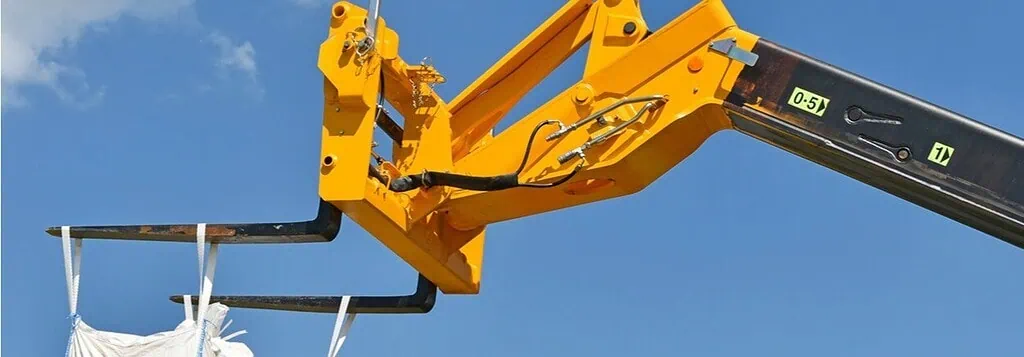
- Versatility: The ability to use different attachments is a game-changer. I’ve used forks to move pallets and a bucket to clear debris.
However, there are some limitations:
- Turning radius: The telehandler is more maneuverable than many machines, but its larger turning radius can be tricky in tight spots.
- Vertical reach: While the telehandler can lift vertically, it can’t quite match the height a boom lift can reach.
Boom Lifts on Rough Terrain: Advantages and Limitations
I’ve also used boom lifts, but only when the terrain was smooth enough. They are fantastic for reaching high places, especially when you need to work on tall buildings, electrical poles, or bridges. I remember one time when we had to install signage on a multi-story building. The boom lift made it so much easier to get the crew up to those hard-to-reach areas. The arm’s extendability and the bucket’s stability made working at height feel much safer and more efficient.
Advantages of Boom Lifts:
- High reach: If you need to work at height, the boom lift is perfect for getting into high, hard-to-reach areas.
- Articulating boom: Some models have an articulating boom, which allows you to reach over obstacles, a huge advantage on a more controlled site.
Limitations:
- Not good on rough terrain: As I found out, boom lifts don’t do well on uneven or muddy ground. Their low clearance and limited 4WD capabilities make them unstable on rocky or sloped surfaces.
- Load capacity: I had to use a telehandler when I needed to move heavy equipment, as the boom lift doesn’t handle heavy loads.
How to Decide: Telehandler VS Boom Lift for Material Handling on Rough Terrain?
When I need to decide between a telehandler vs. boom lift for material handling on rough terrain, I always think about the task ahead. Here’s how I make my decision:
If I’m lifting something heavy or moving materials over a large distance on rough ground, I know the telehandler is the best choice. It’s reliable, has a great load capacity, and can get the job done without getting stuck.
But if I need to reach high up, say to repair something on a tall building, the boom lift is the clear choice. It’s perfect for aerial work, but I always make sure the terrain is smooth and stable.
| Scenario | Best Option |
|---|---|
| Rough, uneven ground | Telehandler (4WD, high clearance) |
| Heavy load handling | Telehandler (up to 10,000 lbs) |
| Need for high reach | Boom Lift (great vertical reach) |
Conclusion
Choosing between a telehandler vs. boom lift depends on the task you have at hand. If you need to handle materials on rough terrain, the telehandler is the way to go. It’s built for that type of environment, with the ability to move heavy loads across uneven ground. But if you need to reach a high spot, a boom lift will do the job, as long as the ground is smooth.
I’ve used both machines, and the right choice always depends on what I need to do. Hopefully, this guide helps you decide which equipment is best for your next project.
Follow us on :YouTube.