Choosing a right forklift is not just picking a machine with right load capacity. Many customers and operators feel diff cult to understand forklift weight, this may cause significant issues in transportation, warehouse operations and safety. Misunderstanding a forklift’s weight may lead to difficulties when loading trucks, increased shipping costs or even accidents on the job. In this guide, we will break down the average weight of forklifts by type and capacity and provide practical tips on selecting the right forklift for your needs.
A forklift’s weight varies widely depends on forklift type, load capacity and intended use, ranging from 1 ton to over 50 tons. This will guide explain typical forklift weight and how to choose the most suitable forklift for safe and efficient operations.
Let’s explore forklift types, their weights and how to choose the right one.

Electric Forklifts: Average Weight and Capacity
Electric forklifts are mainly used for indoors situation such as warehouse, retail store or factory. Electric forklifts are much lighter than internal combustion forklifts. The forklift’s weight varies a lot based on battery size, chassis design and attachments.
Most electric forklifts weigh between 1,000 kg and 5,000 kg. Just so you know, the battery costs around 20%–30% of the total weight because the batteries in smaller forklifts make up the major share of a forklift’s weight.
For example, a 2 tons electric forklift with a standard lead-acid battery can weigh about 3 tons. However, if we upgrade it to a lithium-ion battery, this may increase the weight by 300–500 kgs. Lighter forklifts will drive down aisles easier than heavy ones, reducing the chance of collision or racking damage. Heavier forklifts will offer better stability when lifting higher loads. Most warehouse managers like electric forklifts because they are quieter, no emissions and lower maintenance needs. However, forklift weight can be a hurdle for transport and floor load limits.
Typical Electric Forklift Weight Table:
| Model | Rated Capacity | Approx. Weight | Best Use Case |
| Toyota 8FBE10 | 1 ton | 2.5 tons | Indoor warehouse, tight aisles |
| Jungheinrich EFG 216 | 1.6 tons | 3.2 tons | Factory and retail operations |
| Yale ERC050 | 2.5 tons | 3.8 tons | Distribution centers, pallet handling |
| Hyster J30XNT | 3 tons | 4.2 tons | Medium indoor warehouses |
Operational Tip: Remember that forklifts running on an electric battery will add battery weight to the specification. Make sure that the structure can handle not only the forklift weight but can handle a charging battery as well. Remember, that the new electric forklifts are lightweight and easily maneuverable, as well. I had a similar version of this in our article on how to choose a forklift by battery type. It is a good tip, especially for electric forklifts with higher batteries.
Internal Combustion Forklifts: Diesel and Gasoline
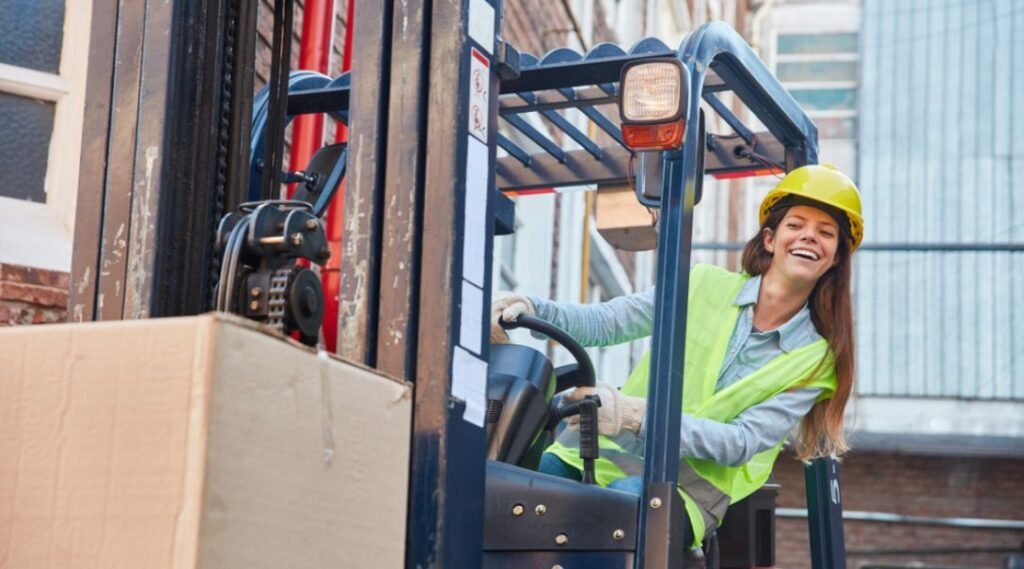
Internal combustion forklifts, powered by diesel or gasoline, special designed for outdoor use and heavy-duty operations. They offer stronger performance, longer operation and more robust than electric forklifts.
These forklifts typically weigh between 3 and 10 tons, depending on engine size, fuel type and chassis reinforcement. Diesel models is heavier due to larger engines and fuel tanks.
Generally, a 5 ton diesel forklift weighs about 6.5 tons while a 5 ton gas forklift with the same capacity is slightly lighter. Diesel powered forklifts are better for use on construction sites, lumber yards and open storage where the ground is uneven and the outdoor conditions are a little rough because they weigh more. The greater weight of the forklift helps hold the load still while lifting bulky items. Users must consider if floors or shipping vehicles can be safe when using these heavier forklifts. Fuel storage and engine maintenance are also issues that must be addressed with heavier internal combustion forklifts.
Internal Combustion Forklift Weight Table:
| Model | Rated Capacity | Forklift Weight | Best Use Case |
| Caterpillar DP30N | 3 tons | 5.5 tons | Outdoor warehouses, rough surfaces |
| Komatsu FD50 | 5 tons | 7.5 tons | Construction and loading yards |
| Hyster H80FT | 8 tons | 9.5 tons | Heavy-duty industrial lifting |
| Toyota 7FGU50 | 5 tons | 6.8 tons | General outdoor material handling |
Operational Tip: Must check terrain and floor load capacity; diesel forklifts are heavier and require strong, stable ground. Internal combustion forklifts are heavier and ideal for outdoor, demanding workloads.
Three-Wheel vs Four-Wheel Forklifts
The choice between three-wheel and four-wheel forklifts is mainly depending on operating environment. Three-wheel forklifts are mainly used in navigating tight spaces while four-wheel forklifts are better for carrying heavier loads with better stability.
Three-wheel forklifts generally weigh 10% or 20% less than four-wheel forklifts of the same capacity in terms of weight, so they are lighter. However, they are easier to steer for better maneuverability, carry, lift and can be safer when there are turning radius or floor surface risks. For example, a three-wheel electric forklift that weighs 2,500 kg probably can pick its way delicately through the warehouse, lifting loads in the 2.5-ton range. A four-wheel version will turn north of 3,000 kg or more, but it will pick the load up and not flip it over on the high rack or break through the floor.
Warehouse managers must balance choices about flexibility with stability when deciding between a three-wheel and four-whell (sic) what to buy. Safety, training, turning radius and floor strength are just some of the other factors to consider. Knowing this type forklift weight helps you not overload the floor and gives you a good heads up about whether it will be faster.
Operational Tip: Three wheel forklifts are fantastic for tight indoors, while the four-wheel forklift is better for heavier things or an outdoor environment. You need to balance agility and stability when you are figuring out if the three wheel or four-wheel forklift is better for you.
Heavy-Duty Forklifts: Handling Over 10 Tons
Heavy-duty forklifts are used in heavy lifting environments like shipyards, large warehouses, and industrial yards. Heavy-duty forklifts are capable of carrying and lifting some incredibly large loads over 10 tons. The forklift weight on these machines is tremendous because they can pick up such huge heavies.
Heavy-duty forklift weight may vary a lot depending on the load capacity, attachments and counterweights. For a rough idea, a 25-ton forklift working in a port would weigh about 30 tons with the forks and counterweights. To transport such a forklift requires a reinforced trailer, an area in the dock to park it, and an experienced operator. They are a bear to operate, with that much weight affecting the turning radius, how long it takes to stop, and what you can or can’t pick up reliably.
Brands such as Kalmar, Hyster and Caterpillar are known for making forklifts that to safety pick up containers and other heavy stuff.
Heavy-Duty Forklifts Weight Table:
| Model | Rated Capacity | Forklift Weight | Best Use Case |
| Kalmar DCF100-45 | 10 tons | 22 tons | Port container handling |
| Hyster H25XM | 25 tons | 30 tons | Heavy industrial sites |
| Caterpillar DP70 | 20 tons | 28 tons | Outdoor material yards |
Operational Tip: Ensure proper trailer selection and operator training due to extreme weight. Heavy-duty forklifts require careful planning and skilled operation because of their enormous weight.

Factors Affecting Forklift Weight
Even forklifts with the same rated load capacity can differ significantly in weight for different design, materials, and attachments.
Battery type, chassis material, lift attachments, and counterweights all contribute to variations in forklift weight, sometimes by several hundred kilograms or more.
Replacing standard steel forks with reinforced versions increases total weight. Adding side shifters, clamps, or extended masts further affects overall weight. Electric forklifts show the most variation due to battery types, while internal combustion forklifts vary with engine size and fuel system. Operators must consider these differences for transportation, floor load capacity, and safety procedures. Reviewing supplier data sheets for exact weight specifications is highly recommended.
Operational Tip: Small differences in weight can affect floor strength requirements and lifting stability. Attachments, battery type, and materials can significantly influence forklift weight.
How to Choose the Right Forklift Weight
Picking the correct forklift weight is as complicated as deciding what the maximum weight is. You need to look at where the forklifts are going to work, how they will get there, and what the job is that they will do. If you start at the warehouse space and floor load, you can move to the frequency of lifting and how far they have to go when they pick up the load.
Floor strength, aisle size, and layout. If the forklifts will work in wide-open areas, then weight is your friend. If the forklifts will work mostly indoors or in tight spaces, the weight will work against you and the floor. The battery weight need to be considered, as do attachments and what kind of loads the forklifts are lifting. Electric forklifts will be lighter plus the battery, which makes them the lightest of the bunch at a given weight.
The battery in the electric pays a role as well, but lighter is better most of the time. Light ones fit in tight spots, and heavy ones are safer to lift with. Check with providers and see if they have case studies, white papers, or expert guides to help you. Picking the right weight will help you be safe, make money, not break your floor, and save you fuel.
Operational Tip: If you are going to ship these lifts, make sure the weight can be safely shipped. Everything works well and efficiently.
Conclusion
Understanding forklift weight is critical to safety, efficient materials handling, and truck transportation planning. Knowing the average weights of forklifts by type, determining the impact of attachments, and evaluating what you need operationally will add to your safety, improve productivity and control your costs.
Always check the manufacturer’s specifications and consider the environment your forklift will be operating in as well as the weight of battery pack or attachment. Balancing the weight of the forklift with the three stability factors, truck design, loads, and operational factors will help you match the right forklift to the demand. With planning, how to choose a forklift by weight is simple enough and it improves safety and efficiency wherever forklifts are at work.
Follow us on :YouTube.