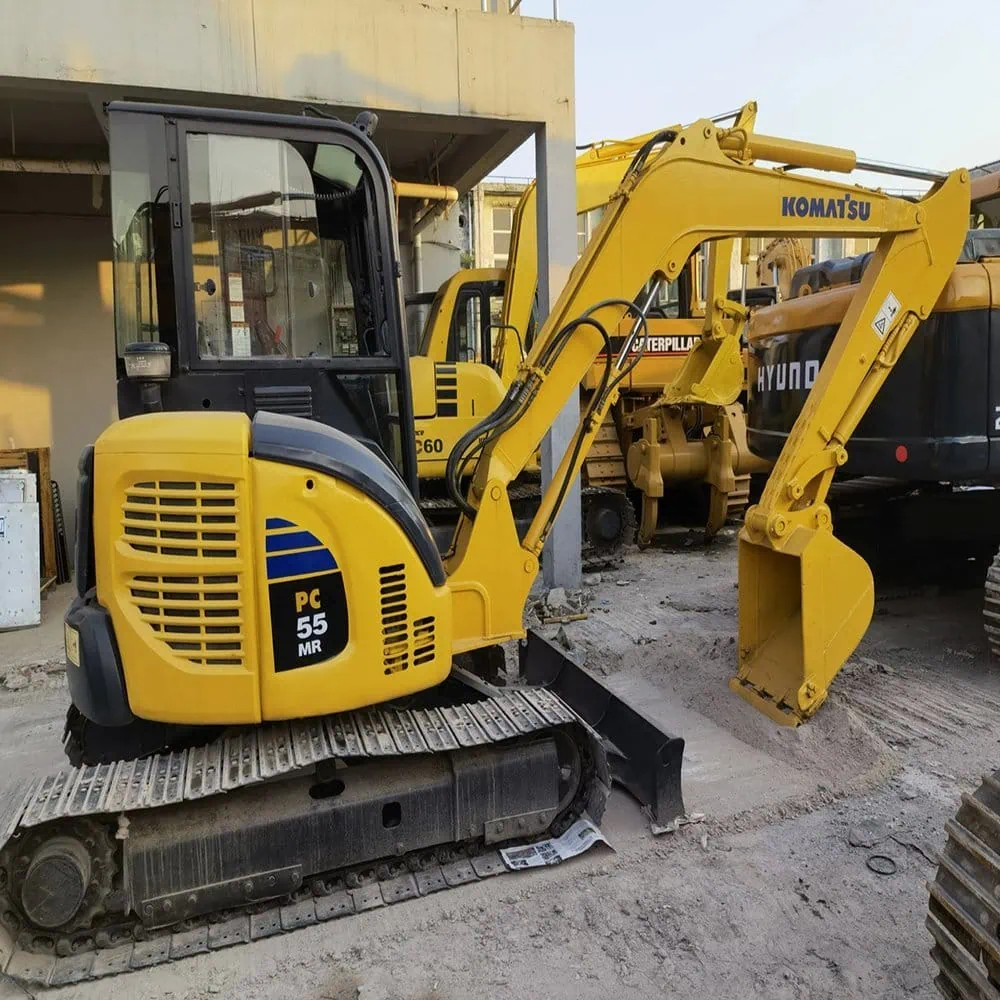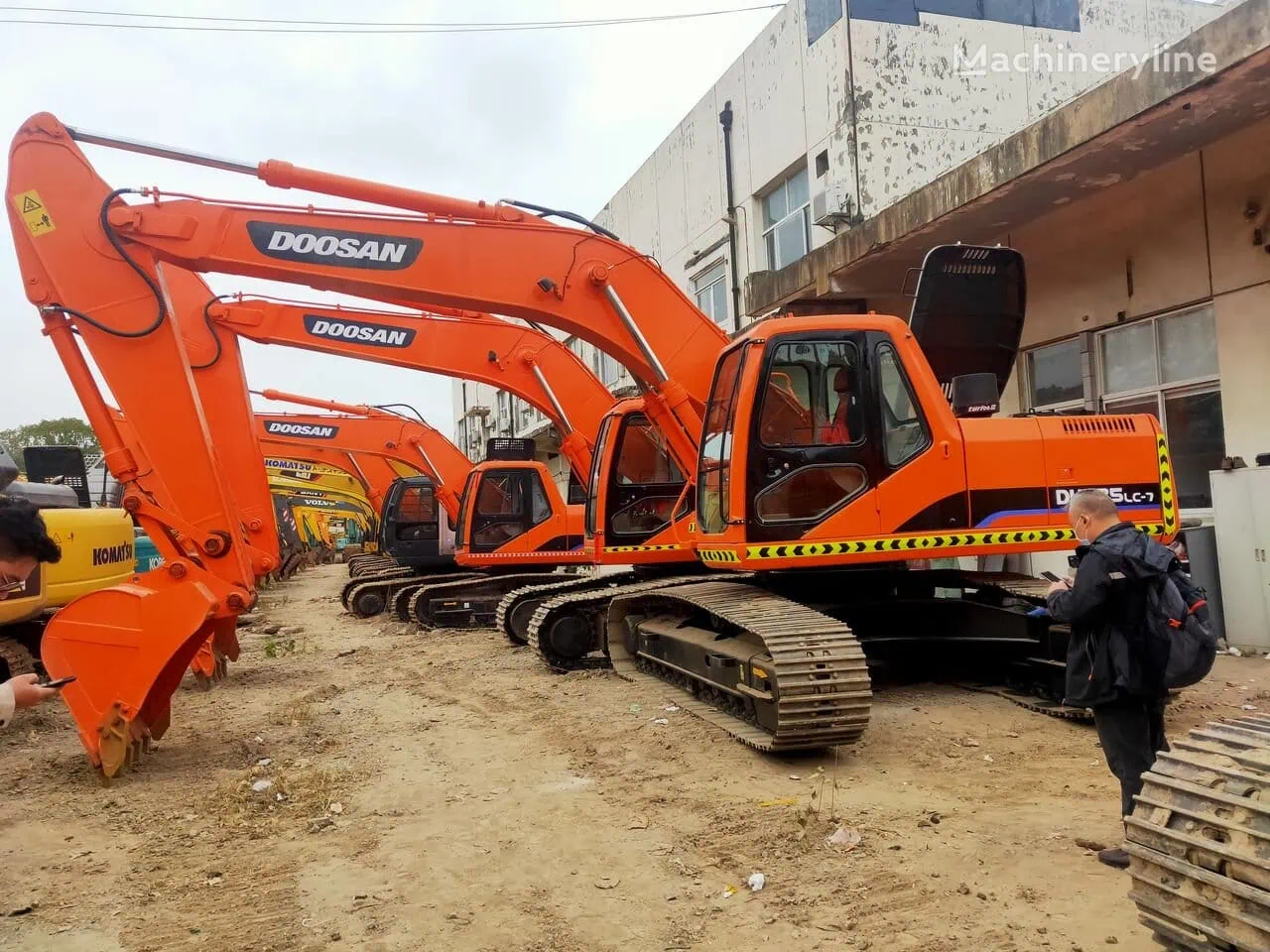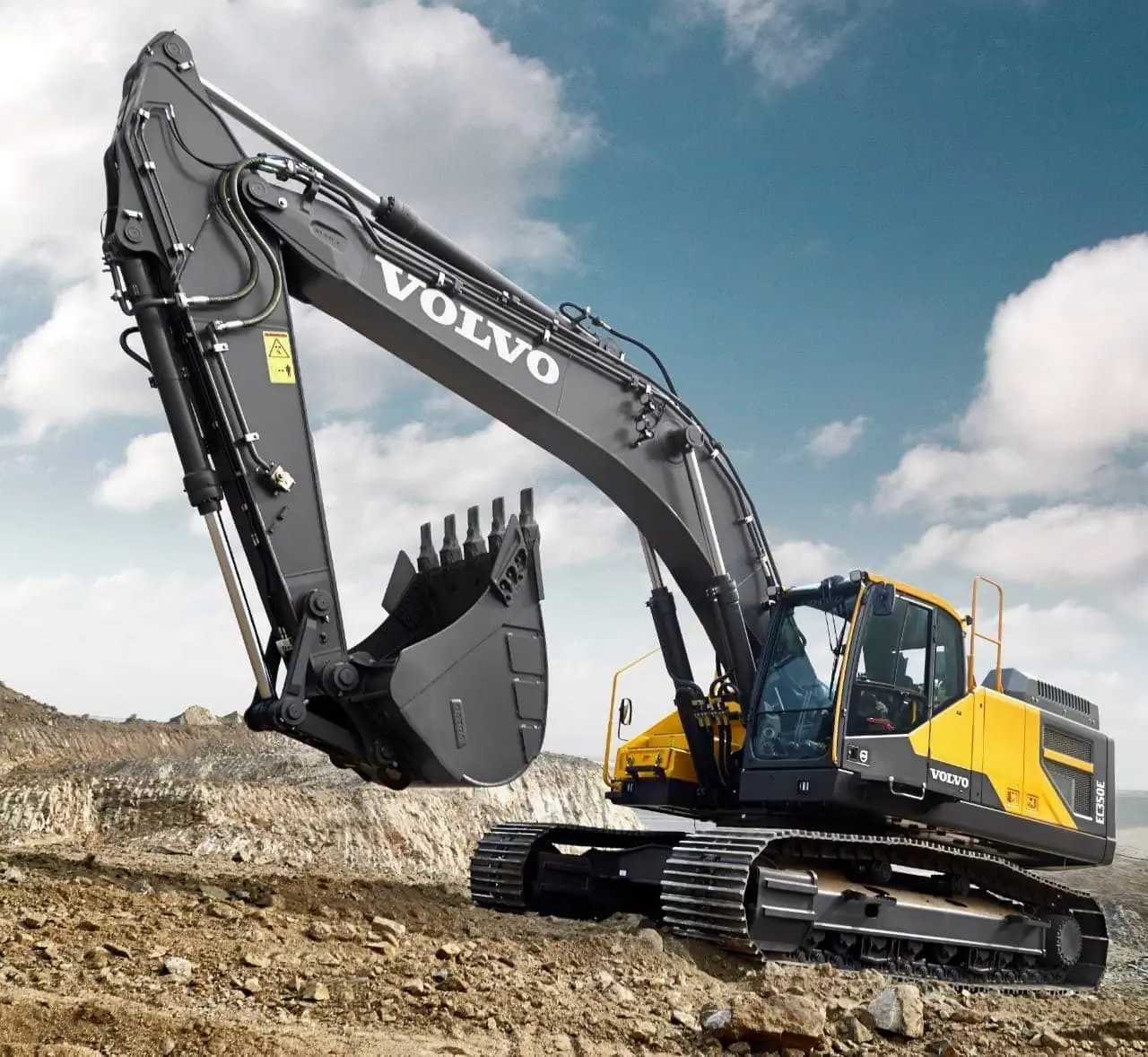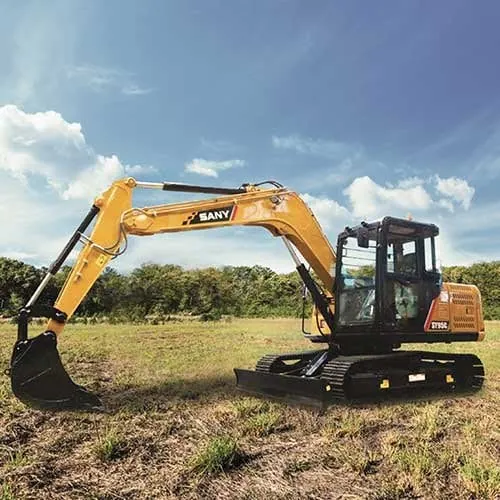
Hydraulic problems on a used excavator can be a big expense to fix if they are not caught before the purchase. Can you imagine buying a machine and it looks perfect, only to find out in the next few weeks or months that you have massive hydraulic issues? If you have the right knowledge and follow the inspection procedure I’m about to teach you, you can avoid these problems and make a sound purchase.
Hydraulic issues are among the most common and expensive problems found in used excavators. Identifying these issues before making a purchase is crucial for ensuring long-term machine efficiency. This guide will help you spot potential hydraulic issues, understand repair costs, and learn preventative maintenance tips to avoid costly surprises down the line.
Without going into great detail, let’s talk about some things specifically with a used excavator with hydraulic issues.
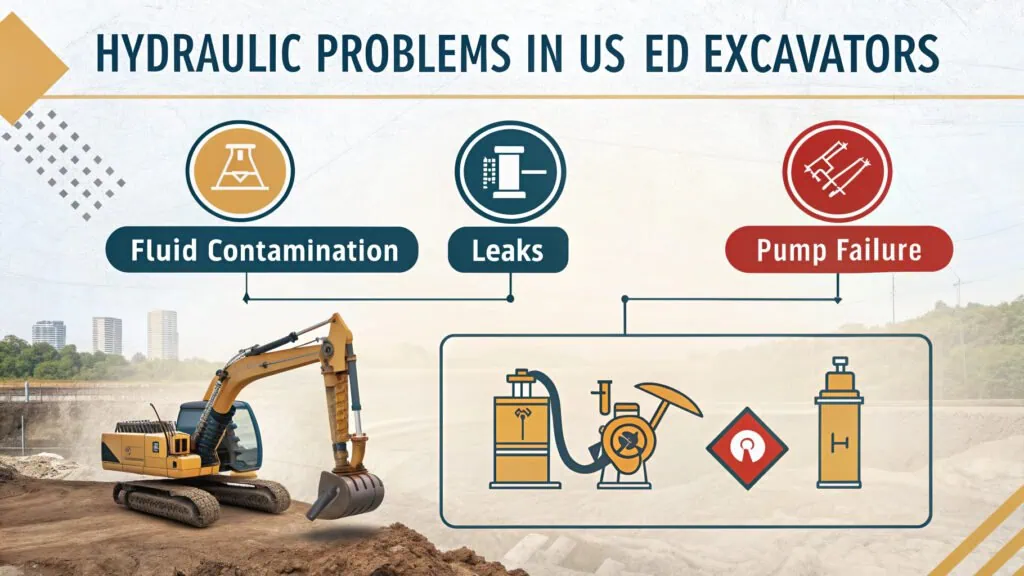
What Hydraulic Problems Should You Watch Out for When Buying a Used Excavator?
Hydraulic Oil Leaks
Oil leaks are one of the easiest hydraulic problems in used excavators to spot — and the most common. If you see oil, see if it is leaking from hydraulic lines, cylinders, or the swing motor area. Oil around connections means the seal on a fitting might be bad, or a hose or line is cracked. An oil leak from around a cylinder or motor usually means the seals are bad. Small leaks lead to big problems. Over time, a small leak will draw in dirt and air, both of which will destroy a hydraulic system.
Leak Types and Their Severity
| Leak Location | Possible Cause | Urgency to Repair |
|---|---|---|
| Cylinder rod seal | Worn seal, pitted chrome | High |
| Hose connection | Loose fitting | Medium |
| Under the swing motor | Main seal failure | High |
| Filter housing | Cracked housing, old O-ring | Medium |
Weak Hydraulic Pressure
This issue typically shows up during load testing, when the boom won’t lift heavy weight or the digging slows down. That means you have an issue with your main hydraulic pump or worn-out valve internals. That is what is
typically wrong with used machines, but people often don’t test it because they don’t want to take the time to do a proper test.
Pressure Diagnosis Table
| Test Result | Likely Issue | Repair Needed |
|---|---|---|
| Low pressure (all functions) | Pump wear or leakage | Pump rebuild or replace |
| Uneven pressure (some functions only) | Valve spool issue | Valve service/replacement |
| Intermittent pressure loss | Air in system or failing seals | Bleeding or seal inspection |
Noisy Hydraulic Pump
If you hear a pump making noise, such as a whine or a knock, you have a problem. That is usually caused by cavitation. What that means in simple terms is that the pump is low on oil, so it is sucking air. When the air hits the pressure side of the pump, it implodes, taking pieces of the metal around it with it. Keep running the machine with a cavitating pump, and what happens is you destroy the pump. But worse than that is you contaminate the entire hydraulic system.
Common Pump Noises and Meanings
| Noise Type | Possible Cause | Suggested Action |
|---|---|---|
| High-pitched whine | Air in suction line | Check for leaks, bleed air |
| Grinding | Internal pump damage | Replace pump |
| Knocking | Low fluid level or contaminated oil | Flush system, inspect pump |
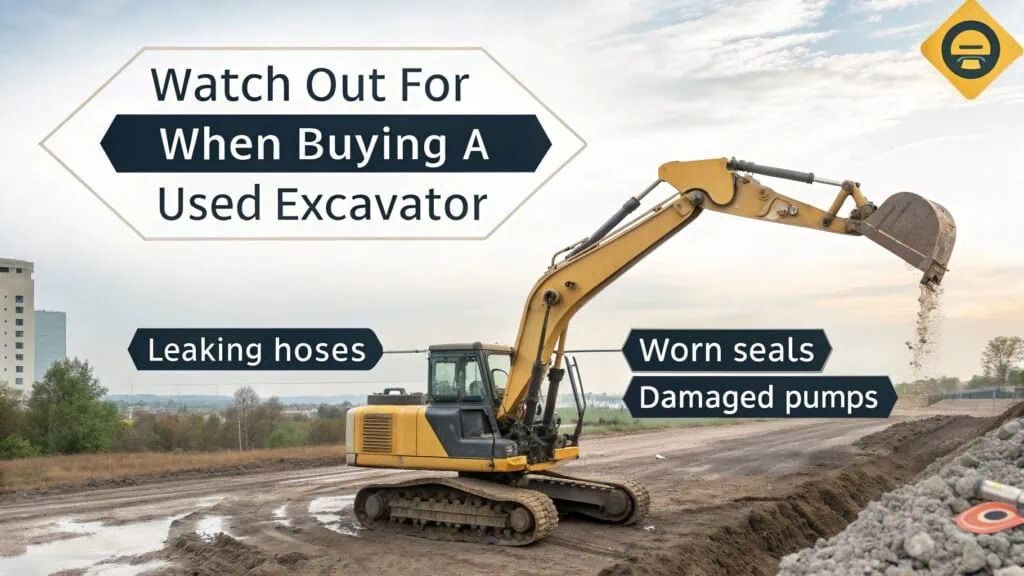
Jerky or Slow Boom/Arm Movement
You need smooth movement to accurately use the machine. Notchy movement up or down in the boom or arm means the timing of the valve is off. Or oil is being restricted somewhere. Oil being restricted many times is because the seals are worn, the oil is dirty, or there is internal scoring inside the hydraulic cylinder which is grabbing the rod, causing the whole thing to stick.
Movement Troubleshooting Table
| Symptom | Cause | Fix Recommendation |
|---|---|---|
| Boom jerks when lifting | Valve spool wear or sticking | Valve overhaul |
| Arm moves slowly | Low flow or pressure loss | Check pump, hoses |
| Delayed response | Dirty oil or clogged filters | Replace fluid and filters |
Contaminated Hydraulic Fluid
Contaminated oil is a big cause of long-term hydraulic problems in used excavators. If the oil is dirty looking, milky, or has metal flaking in it, you have problems. Dirty, milky oil means you have component wear. Metal in the reservoir means something is falling apart. That metal is getting ground up into the system. If you have water in the oil, the water and oil are mixing. The water will corrode the hell out of everything it comes in contact with, and it will degrade the seals.
Fluid Condition Chart
| Oil Appearance | Contamination Type | System Risk | Next Step |
|---|---|---|---|
| Clear amber/red | Normal | Low | No action needed |
| Milky/cloudy | Water contamination | High – causes corrosion | Flush and replace fluid |
| Dark brown/black | Burnt or old oil | Medium – poor lubrication | Replace oil & check temp |
| Metallic sheen | Internal wear | High – major component issue | Full system inspection |
Overheating Hydraulic System
Heat is the number one cause of destruction to the hydraulic system on an excavator. What makes heat? It’s friction. Friction makes heat. When you make heat, you thin the oil out. Thinning your oil out and then trying to
move it through a tiny space is as frustrating as trying to run with no oxygen.
Overheat Causes & Prevention
| Overheating Cause | Effect on System | How to Prevent |
|---|---|---|
| Blocked return filter | Pressure build-up | Replace filters regularly |
| High ambient temperatures | Fluid thins too quickly | Use high-viscosity oil |
| Faulty cooling fan | Oil temp exceeds limit | Inspect and replace fan motor |
Air in Hydraulic Lines
If air is present, the brakes will still work but your brake controls will feel spongy, your travel will be unpredictable, your lift force will be down a bit, and if the air gets bad enough your brakes will quit. Air
usually enters the system through bad seals, being low on fluid, or being serviced. You can usually hear the air hissing or bubbling.
Air Contamination Quick Guide
| Cause of Air Entry | System Behavior | Recommended Action |
|---|---|---|
| Loose hose connections | Jerky operation | Re-tighten and test |
| Repaired pump not bled | Spongy feel in controls | Bleed system thoroughly |
| Low oil in reservoir | Bubbling sound during movement | Refill fluid, inspect for leaks |
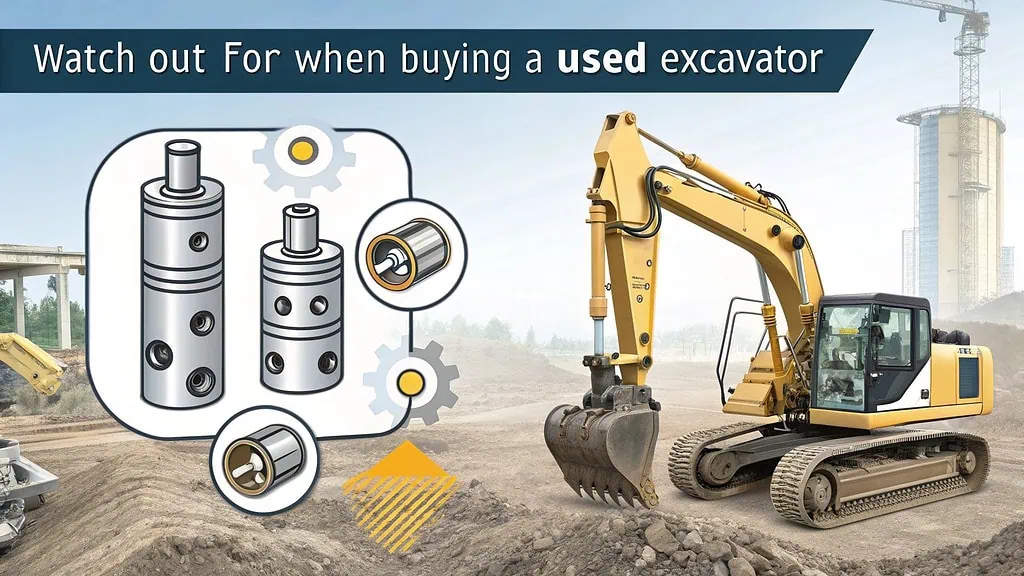
How Can You Identify Hydraulic Issues During Excavator Inspection?
When you’re checking out a used machine, catching hydraulic issues early can save you thousands of dollars in repairs. Even if you can’t repair it yourself, you may be able to walk away from a risky deal with the opportunity to avoid a problem buy and save a bunch of money in the process.
🔍 Field Inspection Checklist for Buyers
| Inspection Point | What to Check | Warning Signs | Repair Cost Estimate |
|---|---|---|---|
| Hydraulic hoses & seals | Look for cracks, leaks, or oil stains | Wet or oily areas, cracked rubber, soft spots | $100 – $400 per hose |
| Boom and arm movement | Test for smooth and quick response | Jerky motion, uneven arm movement | $1,000 – $3,000 for repairs |
| Hydraulic fluid condition | Check oil level and color | Low level, dark or milky oil | $500 – $900 for fluid replacement |
| Control lever performance | Feel the resistance and feedback | Spongy or delayed responses | $200 – $500 for repairs |
| Engine noise during operation | Listen under full hydraulic load | High-pitched whining, knocking sounds | $1,500 – $3,000 for pump repairs |
If you can, ask to operate the machine with a full bucket load. This is the easiest and best way to test the hydraulics under pressure and to make sure there are no hidden problems.
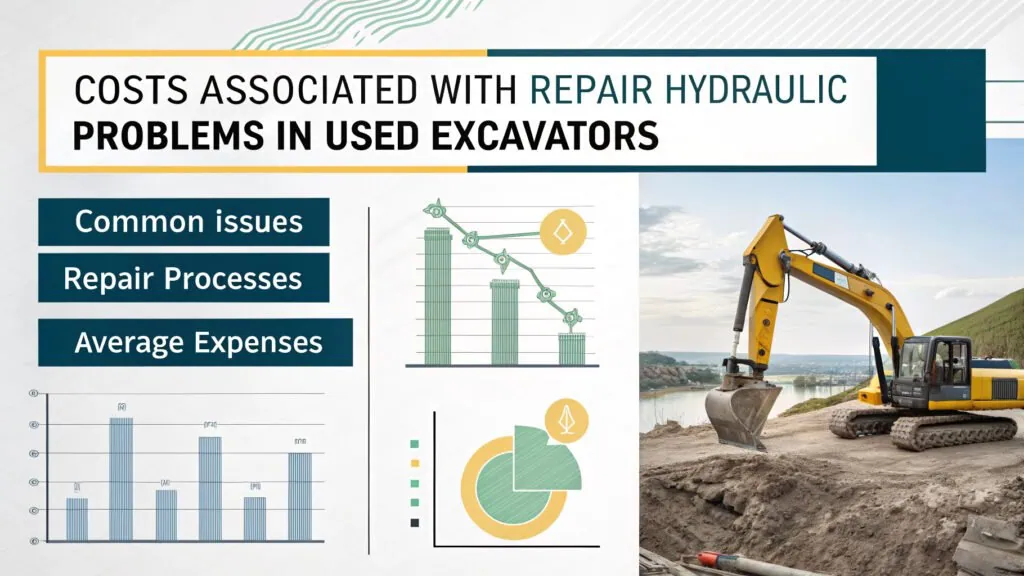
How Much Does It Cost to Repair Hydraulic Problems in Used Excavators?
On an excavator, the single most expensive repair is hydraulic. Overall repair costs depend on what went wrong with the hydraulics. If you buy a used machine and have to replace a hydraulic pump, the cost to install the pump becomes the most expensive single repair of a hydraulic issue. With repaired hydraulics, the cost depends on whether you use all new or rebuilt components, as well as the price of the parts. Here are the most common hydraulic problems in order of least to most expensive to fix:
💰 Typical Hydraulic Repair Cost Breakdown
| Hydraulic Issue | Estimated Cost (USD) | Details | Repair Time |
|---|---|---|---|
| Hydraulic pump replacement | $2,000 – $5,000 | Rebuilt pumps are more affordable than new ones | 4–6 hours |
| Cylinder resealing | $300 – $800 per cylinder | Resurfacing worn cylinders prevents leaks | 2–3 hours per cylinder |
| Hose replacement | $100 – $400 per hose | Depending on the hose length and type | 1–2 hours |
| Valve block overhaul | $800 – $1,500 | Necessary if a block is clogged or damaged | 3–5 hours |
| Full system fluid flush | $500 – $900 | Includes draining old fluid and replacing filters | 2–4 hours |
A quality used machine likely has new engine oil, hydraulic oil, and fuel. The equipment was also operating in the prior owner’s yard or business, so you can see for yourself if the machine smokes, knocks, or has major hydraulic leaks. However, understand sellers will see the same virtues in their equipment as disadvantages in another party’s.
Which Brands Have the Most Reliable Hydraulic Systems?
My family hated to pay dealer price for hydraulic filters, so we frequently bought them from independent sources that specialized in hydraulic filters. Understand that every dollar you spend is basically another dollar lost. As a used-equipment dealer, I’m as guilty as anyone about being “penny wise and pound foolish.” However, when the machine only has a week of work left in it before a tender turns it into a beer can, you don’t want to lose even a penny!
🏆 Brand Hydraulic Reliability Comparison
| Brand | Reliability Rating (1–10) | Strengths | Weaknesses |
|---|---|---|---|
| CAT | 9 | Durable pumps, efficient diagnostics | Expensive original parts |
| Komatsu | 8 | Long-life seals, responsive systems | Slightly more complex layout |
| Hitachi | 8 | Excellent oil flow management | Parts availability may be limited |
| Volvo | 7 | Easy access to components | Sensitive to oil quality |
| Doosan | 6 | Cost-effective parts | Shorter lifespan under heavy loads |
If reliability is your top concern, prioritize CAT or Komatsu when selecting a machine.
Are Certain Excavator Models More Prone to Hydraulic Problems?
The older the age, the more hours, and the rougher the life, the more hydraulic problems you’ll face. Regular maintenance extends the life of the hydraulic system. Always check a machine’s maintenance history before
purchasing it. Few people sell a machine when everything’s perfect and they’ve occasionally bathed and hugged it. They’re offloading the machine, so the guy can tear the thing up while they invest in something new. If they
designed it, manufactured it, or even just worked on it, they know every wart.
⚠️ Hydraulic Vulnerability by Machine Type
| Model Category | Hydraulic Risk Level | Explanation | Common Issues |
|---|---|---|---|
| Mini excavators | Medium | Compact design often overheats under heavy use | Reduced hydraulic efficiency, pump strain |
| Mid-size excavators | Low | Balanced design reduces hydraulic stress | Low risk of hydraulic failure |
| Old models (10+ years) | High | Older seals and hoses lead to frequent leaks | Worn cylinders, leaking seals |
| High-hour units (10,000+ hrs) | Very High | High wear on hydraulic components | Failed pumps, blocked valves |
Always ask for the machine’s total operating hours before finalizing a deal.
What Questions Should You Ask the Seller About the Hydraulic System?
Then when you’re about to buy it, you better have some questions about the hydraulics. Ask lots of questions about how the hydraulics were maintained. Anybody good to buy from will tell you how the machine was used and maintained, and how the owner fixed it when it wasn’t working correctly.
🗣️ Top Questions to Ask Before Buying
| Question | Why It’s Important | Expected Answer |
|---|---|---|
| Has the hydraulic pump been replaced or rebuilt? | Indicates the health of the pump | Look for a clear maintenance history |
| Have cylinders been resealed recently? | Ensures long-term seal integrity | Expect a history of recent resealing if it’s older |
| What type of hydraulic fluid is used? | Incorrect oil can damage the system | Ask for the exact type of fluid used and its condition |
| Was there ever contamination in the system? | Potentially serious damage to the entire system | Sellers should mention any history of contamination |
| Can I test the excavator under load? | Ensures hydraulic system operates as intended | Always try operating the machine before buying |
Check out the hydraulics or whatever is in question. If you’re getting a vague answer or the seller is trying to change the subject, that should be concerning to you.

How Can You Prevent Hydraulic Problems After Purchase?
Once you own the excavator, ultimately the prevention of hydraulic failures is all about your maintenance. It’s all about taking care of the machine, and by doing very simple things you can make your system last a long time and prevent down time.
🛡️ Post-Purchase Maintenance Guide
| Maintenance Task | Recommended Frequency | Benefit | Estimated Cost |
|---|---|---|---|
| Check oil level & cleanliness | Daily | Prevents cavitation and overheating | $50 – $100 per service |
| Change fluid & filters | Every 500–1000 hours | Prevents contaminants from damaging the system | $500 – $900 per service |
| Inspect hoses and fittings | Weekly | Early detection of leaks and cracks | $100 – $300 per inspection |
| Test hydraulic pressure | Every 6 months | Identifies wear in pumps, valves, and hoses | $300 – $500 for testing |
| Store machine properly | During off-season | Prevents rust, corrosion, and moisture buildup | Free with proper storage |
Use a digital calendar as a log book. Ultimately, digital is better because it provides reminders. You can schedule your hydraulic fluid tests and oil checks and be prompted when they’re due. If you’re not committed enough to put those maintenance items in your phone and set a reminder, then you’re not serious about owning a machine.
Summary
When buying a used excavator, try to identify possible hydraulic problems early since they can greatly erode your profits if not found. Whether it’s a hose leak or a complete pump failure, the loss of it on your jobsite hurts big time. Identify it early. Ask the right questions. Compare different brands. Follow strict hydraulic maintenance. Whatever you can do to stop buying someone else’s problems, or minimize those problems, helps you make better purchase decisions and protects your bottom line.
✔ Invest time in inspection.
✔ Ask the tough questions.
✔ Choose reliable brands.
✔ Maintain regularly.
Follow us on :YouTube.