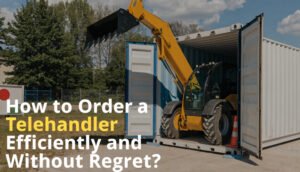
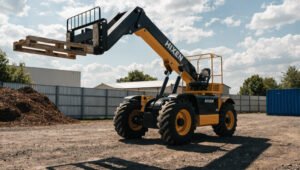
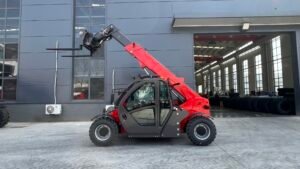
Struggling to choose the right telehandler? A bad decision can waste thousands on a machine that doesn’t fit your needs. This guide will help you pick the perfect one.
To select the right China telehandler, you must first define your primary application. Key factors to evaluate are lift capacity, maximum lift height, and, most importantly, horizontal reach. For non-construction tasks like logistics, features like attachment-switching speed become critical for maximizing efficiency and ROI.
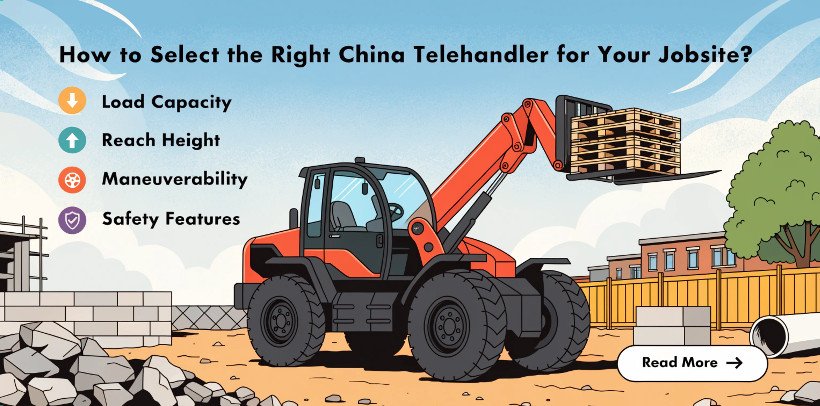
Finding the perfect machine can feel overwhelming. There are so many brands, models, and specifications. But it doesn’t have to be complicated. In my 15 years of exporting these machines, I’ve learned that the secret is to match the machine’s strengths to your job’s unique demands. Let’s walk through the exact steps to find a China telehandler that works as hard as you do, saving you time and making you money.
What Core Specs Truly Matter for a Telehandler?
Choosing a telehandler feels complex with all the spec sheets. You see dozens of numbers, but which ones really impact your daily work and profitability? Focusing on the wrong ones leads to regret.
The three most critical specs are rated lift capacity, maximum lift height, and maximum forward reach. Understanding the relationship between these three numbers, especially how capacity decreases at full reach, is essential for safe and efficient operation. These core specs define the machine’s work envelope.
Let’s dive deeper into these core numbers. People often get fixated on the maximum lift capacity—that big number like “3 tons” or “5 tons.” But that’s only part of the story. That capacity is usually rated when the load is close to the machine. The real magic, and the place where mistakes are made, is in the load chart. A load chart is your machine’s bible.
It tells you exactly how much weight you can safely lift at different heights and reaches. A machine might lift 4 tons right in front of it, but at its maximum forward reach of 10 meters, that capacity could drop to less than 1 ton. Ignoring this is not just inefficient; it’s dangerous. When I consult with buyers, the first thing we review is their most common lifting scenario. This helps us find a China telehandler whose load chart matches their reality, not just a flashy brochure number. A good China telehandler is one that performs safely and effectively within its entire working range.
How Do Non-Construction Jobs Change Your Telehandler Needs?
Think a telehandler is just for construction sites? That’s a common mistake. This thinking leads you to buy a machine that’s poorly suited for warehouse, farm, or recycling yard work.
For non-construction jobs like logistics or agriculture, efficiency is paramount. This shifts the focus from raw lifting height to speed and versatility. Key needs become rapid attachment changes, long horizontal reach for loading trucks from one side, and nimble maneuverability in tight spaces.
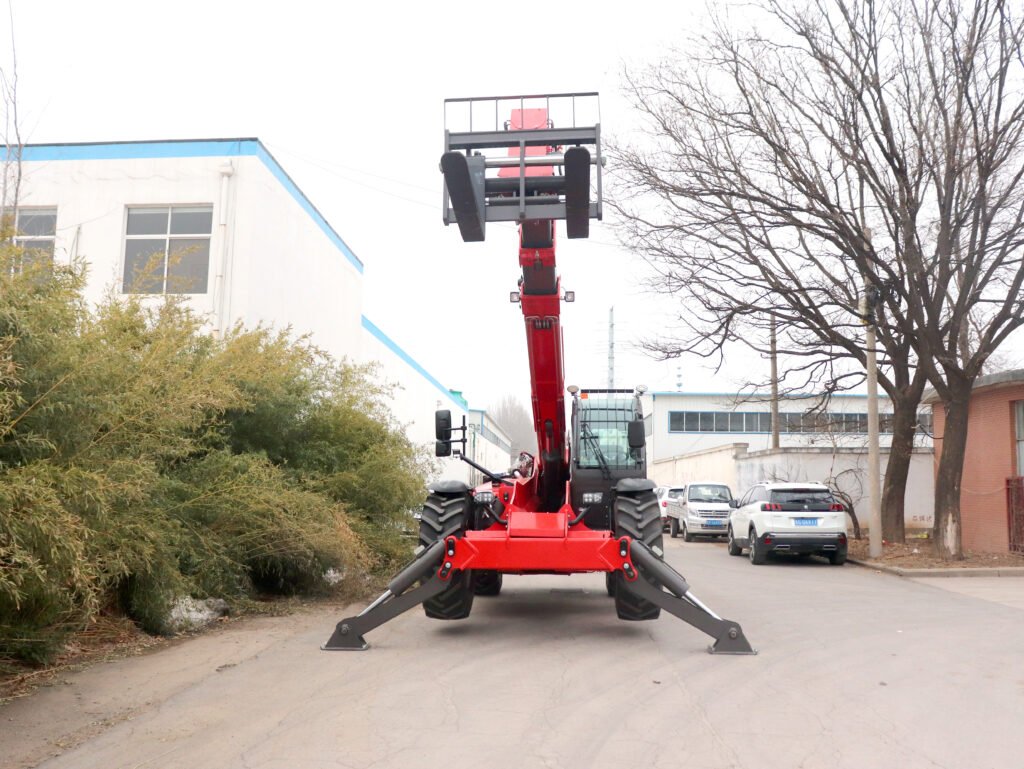
When you move a telehandler from a wide-open construction site into a cluttered warehouse or a fast-paced scrap yard, the rules change completely. On a building site, you might lift a pallet of bricks to the third floor once or twice a day. In a grain depot, you might be loading trucks with a bucket attachment, then switching to forks to move pallets, then back again, dozens of times a day. Here, speed is everything.
The time it takes to switch attachments isn’t a minor inconvenience; it’s a direct hit to your productivity and profit. Similarly, lifting high is less important than reaching far. Imagine loading a long trailer from only one side because the other is blocked. You need horizontal reach, not just height. This is a critical distinction that many buyers miss when looking for their first China telehandler. They buy a “construction” model for a “logistics” job, and wonder why it feels inefficient. The best China telehandler for your job is the one designed for your workflow.
Why Is Attachment-Switching Speed So Critical?
You found a telehandler with the perfect lift and reach. But you’re swapping between forks, a bucket, and a grapple all day. A slow attachment change feels like a small delay, but is it?
Slow attachment changes destroy productivity. A 5-minute swap done 10 times a day is nearly an hour of lost work. A hydraulic quick-coupler system that changes attachments in under a minute can reclaim this time, directly boosting daily throughput and profitability.
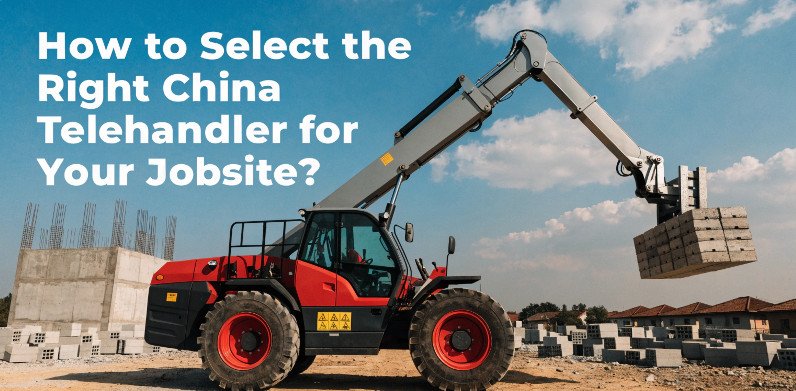
In high-volume operations, every second counts. Let’s break down the impact of attachment switching. During my industry research, I analyzed the difference between standard manual couplers and advanced hydraulic quick-couplers. The difference was stunning. Most machines require the operator to get out, pull pins, and manually connect hydraulic lines. This process takes, on average, 2 to 5 minutes. But some innovative manufacturers have solved this problem. For instance, my research uncovered a brand, HIXEN, that developed a patented hydraulic quick-coupler. Their system allows an operator to change from forks to a bucket from inside the cab in about 30 seconds.
Let’s put that into perspective for a bulk handling job:
| Recurso | Standard Coupler | Advanced Hydraulic Coupler |
|---|---|---|
| Time per Change | ~2 minutes | ~30 seconds |
| Changes per Day | 30 | 30 |
| Total Time Lost Daily | 60 minutes | 15 minutes |
| Time Saved Daily | – | 45 minutes |
That’s 45 minutes of extra working time every single day. In a scrap yard or grain operation, that can mean several extra truckloads processed, translating to a throughput increase of nearly 10%. When you are selecting a China telehandler for a multi-tasking role, the efficiency of its attachment system is not a luxury; it’s a core performance metric. A superior China telehandler should make your workflow faster, not slower.
Is Lifting Higher Always Better Than Reaching Further?
Everyone wants to talk about lifting height. “How high can it go?” is the first question I always get. But this obsession with height can blind you to a more important metric.
No, lifting higher is not always better. For many applications like loading ships, clearing grain from wide sheds, or reaching across obstacles, horizontal reach is far more critical. A machine with exceptional reach can complete jobs that a taller but shorter-reaching machine simply cannot.
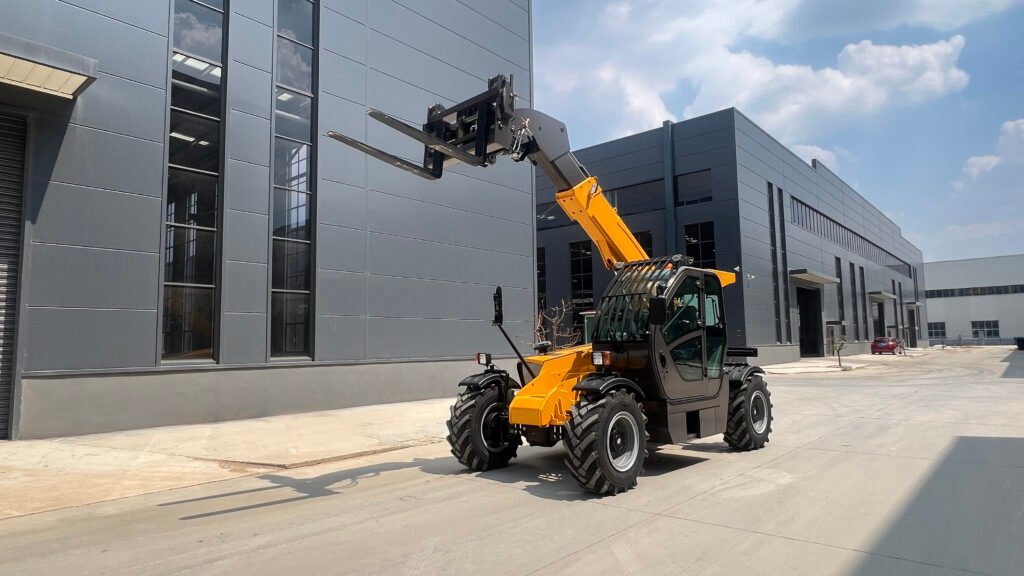
Let’s reframe the conversation from “lift height” to “work envelope.” Your machine’s effectiveness is defined by the entire area it can reach, not just the peak. I’ve seen customers buy a 17-meter telehandler only to find it can’t reach the middle of a wide truck bed because its horizontal reach is poor. They bought height, but they needed reach.
This is a common and costly mistake. In response to this specific pain point, some forward-thinking China telehandler manufacturers have developed “reach-first” models. Instead of just bolting a longer boom onto a standard chassis, they redesign the machine’s balance and structure to maximize forward reach while maintaining safety. A great example I found in my market analysis was a model from HIXEN, the HXT-1040.
Here’s a comparison to illustrate the point:
| Especificação | Typical “Lift-Focused” 14m Model | HIXEN “Reach-First” 14m Model |
|---|---|---|
| Max Lift Height | 14 meters | 13.8 meters |
| Max Horizontal Reach | 9.5 meters | 12.5 meters |
| Application Fit | Tall buildings, vertical stacking | Wide warehouses, truck loading, scrap piles |
As you can see, for a tiny sacrifice in vertical height, you gain 3 meters of crucial horizontal reach. That’s the difference between loading a truck from one side or having to drive around to the other. Before you buy any China telehandler, ask yourself: do my daily tasks require me to lift up or reach out? The answer will guide you to a much smarter purchase. A versatile China telehandler often prioritizes a balanced work envelope.
What Makes a China Telehandler Manufacturer Stand Out?
The market is full of manufacturers. They all promise quality and low prices. So how do you tell the good from the great? It’s easy to get lost in a sea of similar-looking machines.
A standout China telehandler manufacturer distinguishes itself through proven export experience, robust quality certifications like CE, and a willingness to customize machines for specific applications. They act as a partner, not just a seller, offering strong after-sales support and parts availability.
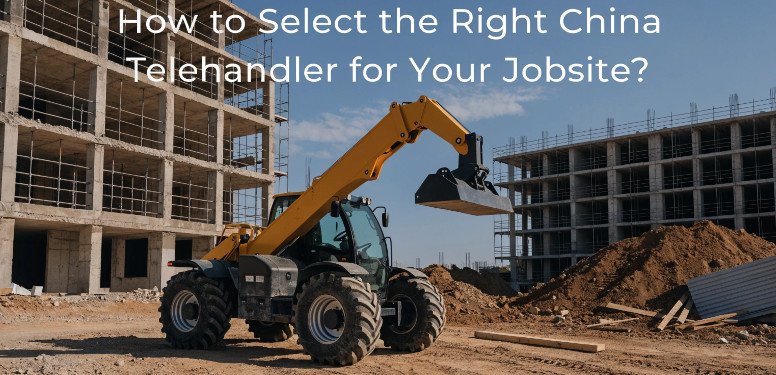
After 15 years in this business, I can tell you that the machine itself is only half of the equation. The other half is the company that stands behind it. When I evaluate potential suppliers, I look for a few non-negotiable things. First, experience. A company with over a decade of export experience, like the one I represent, understands international standards, shipping logistics, and customer communication. Second, certifications. A CE mark isn’t just a sticker; it’s proof that the machine meets rigorous European safety and quality standards.
It shows a commitment to building a world-class product. Third, and perhaps most important, is the willingness to listen and adapt. The best manufacturers don’t just sell you what’s on the production line. They ask about your jobsite, your challenges, and your goals. They offer customization—maybe you need special tires for rough terrain, a specific attachment, or a “reach-first” configuration like we discussed. This partnership approach is the true sign of a quality China telehandler provider. They aren’t just moving metal; they are providing solutions.
Can a Single China Telehandler Really Replace Multiple Machines?
Your yard is crowded. You have a forklift for pallets, a wheel loader for bulk materials, and maybe even a small crane for odd jobs. This means multiple operators, more fuel, and higher maintenance costs.
Yes, absolutely. The right China telehandler, equipped with a hydraulic quick-coupler and the correct attachments, can perform the work of two or three other machines. This consolidation saves immense operational costs in fuel, maintenance, and especially labor, streamlining your entire workflow.
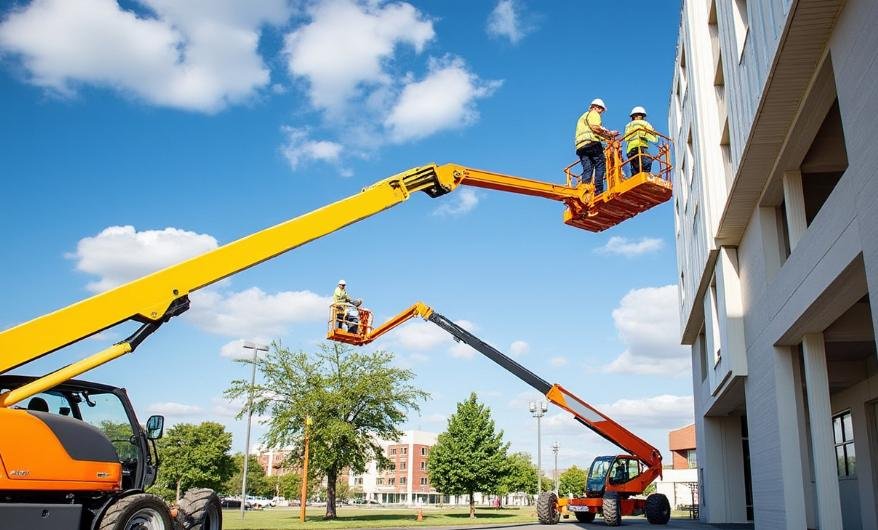
This isn’t just a theory; I’ve seen it happen time and time again. The key is versatility. Let me share a real-world case study I encountered during a site visit in Shandong province. A large grain depot was using a 3-machine process to load and sort materials. They used a forklift for pallets, a small wheel loader with a bucket for loose grain, and a small mobile crane for lifting large bags.
The workflow was slow and required three operators. They decided to invest in a single, well-chosen China telehandler. They opted for a HIXEN HXT-1040, a 4-ton, 10-meter machine known for its robust build and efficient hydraulic quick-coupler. They equipped it with forks, a large grain bucket, and a lifting hook. The result was transformative.
| Metric | Before (3 Machines) | After (1 China Telehandler) |
|---|---|---|
| Machines Used | Forklift, Loader, Crane | 1 Telehandler |
| Operators Required | 3 | 1 |
| Annual Labor Cost | ~$42,000 | ~$14,000 |
| Annual Savings | – | ~$28,000 |
The single telehandler, operated by one skilled person, did the job of all three previous machines, but faster. The annual labor savings alone were around $28,000, paying for the new machine in a very short time. This is the true power of choosing the right, versatile China telehandler. It doesn’t just add a machine to your fleet; it revolutionizes your entire operation and boosts your bottom line.
How Do You Calculate the True Cost of Owning a China Telehandler?
Many buyers only look at the sticker price. They choose the cheapest option available, thinking they got a great deal. This is often the most expensive mistake they can make.
The true cost of a China telehandler is its Total Cost of Ownership (TCO). This includes the initial purchase price plus all costs for fuel, maintenance, repairs, and labor, minus any savings from increased productivity or replacing other machines. A slightly more expensive but more efficient machine often has a much lower TCO.
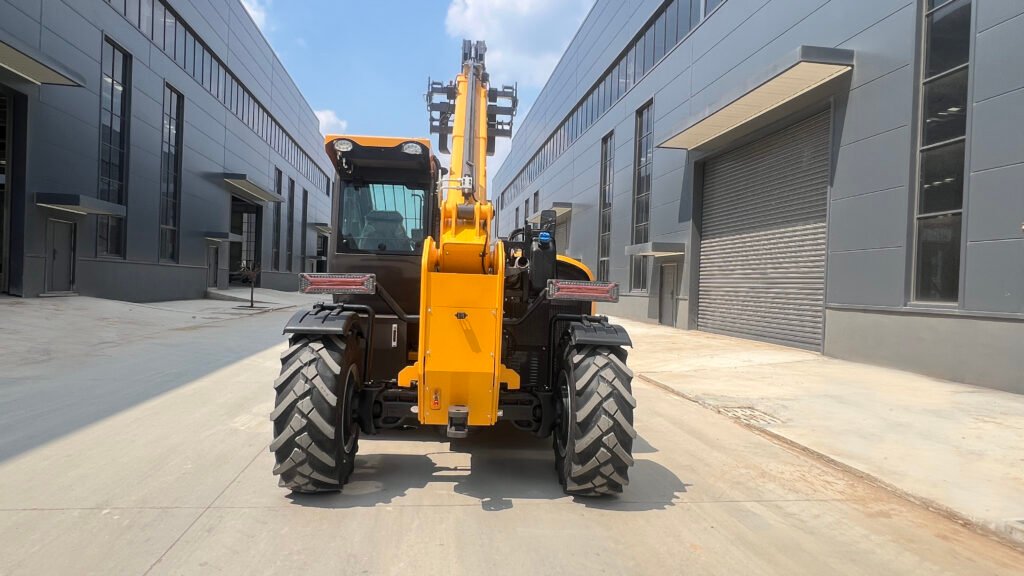
Focusing only on the purchase price is like judging a book by its cover. A cheap machine might save you money today but cost you a fortune tomorrow in breakdowns, poor fuel efficiency, and slow performance. To make a smart investment, you need to think in terms of TCO. Let’s create a simple framework to help you calculate it. When you get quotes for a China telehandler, don’t just compare the upfront cost. Use a table like this to project your costs over five years.
| Cost Component (5-Year Projection) | Machine A (Cheaper) | Machine B (More Efficient) |
|---|---|---|
| A. Initial Purchase Price | US $ 45.000 | US $ 55.000 |
| B. Estimated Fuel Costs | US $ 25.000 | US$ 20.000 |
| C. Estimated Maintenance & Parts | US$ 15.000 | US$ 8.000 |
| D. Labor Savings (vs. old method) | -$10,000 | -$50,000 |
| Total Cost of Ownership (A+B+C+D) | US$ 75.000 | $33,000 |
In this example, the “cheaper” Machine A actually ends up costing more than double over its life. Machine B, while costing $10,000 more upfront, saves so much on fuel, maintenance, and labor that it becomes the far superior financial choice. When you evaluate your next China telehandler, insist on getting information about fuel consumption and recommended maintenance schedules. A good supplier will be transparent about these figures.
What Questions Should You Ask a Supplier Before Buying?
You’ve done your research and narrowed down your options. Now it’s time to talk to suppliers. How do you ensure you get all the information you need to make a final, confident decision?
Before buying, ask the supplier detailed questions about warranty terms, parts availability and shipping times, customization capabilities, and production lead time. Their answers will reveal their level of professionalism and commitment to long-term customer support.
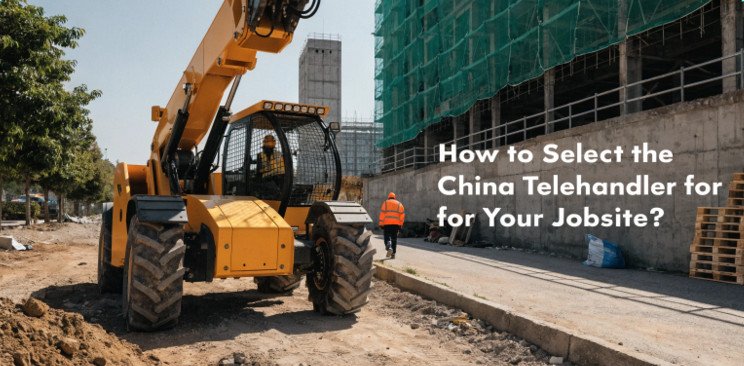
This final conversation is your last chance to avoid potential headaches. Don’t be shy. A professional supplier will welcome your questions. Over the years, I’ve compiled a checklist of essential questions that every serious buyer should ask. Having clear answers to these points is crucial for a smooth purchase and ownership experience.
Here is your pre-purchase checklist:
Essential Questions for Your China Telehandler Supplier
| Categoria | Pergunta | Por que é importante |
|---|---|---|
| Warranty & Support | What are the exact terms of the warranty? Who covers shipping for warranty parts? | Vague warranty terms can lead to unexpected costs. |
| Disponibilidade de peças | Where are spare parts stocked? What is the typical lead time for critical parts (e.g., filters, hydraulic hoses) to my location? | A down machine waiting for parts is losing you money every hour. |
| Personalização | Can you install specific attachments, tires, or a custom paint job before shipping? | This ensures the machine arrives ready to work, saving you time and hassle. |
| Production & Shipping | What is your current production lead time from order confirmation to shipping? | This helps you plan your projects and manage expectations. |
| Technical Docs | Will I receive a full set of manuals in English (Operator, Parts, Service)? | Proper documentation is critical for safe operation and maintenance. |
Asking these questions directly will tell you a lot about the company you’re about to do business with. Clear, confident answers are a sign of an experienced and reliable partner. Vague or evasive responses are a major red flag. Remember, you’re not just buying a piece of equipment; you’re entering into a long-term relationship with the supplier. Choose your partner wisely.
Conclusão
To pick the right China telehandler, look beyond the main specs. Focus on your specific job, especially reach vs. height, and choose a manufacturer that offers versatile, efficient solutions.
Siga -nos em:YouTube.