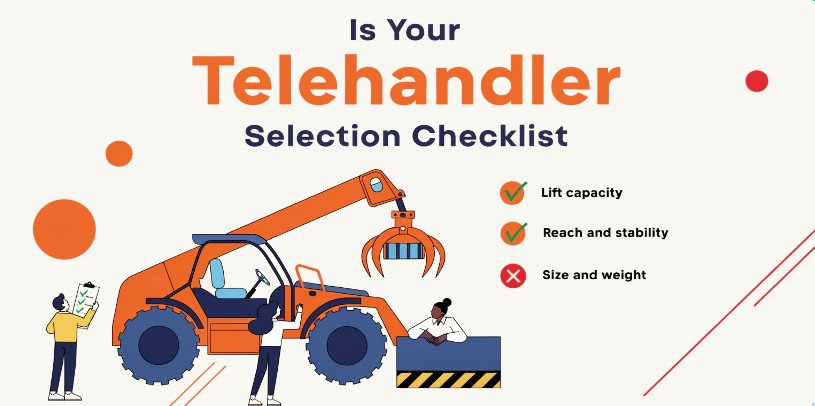
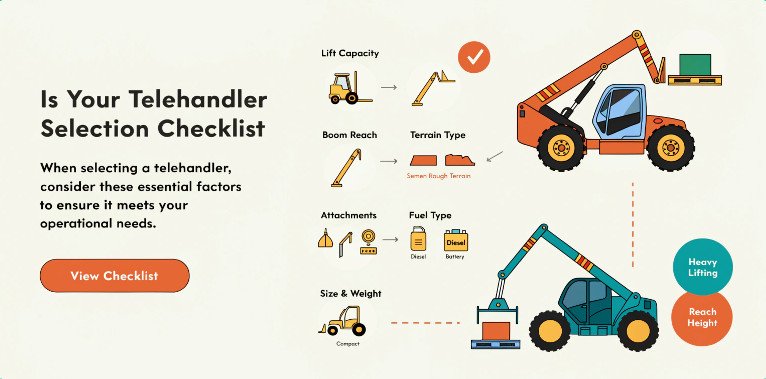
Relying on a standard checklist to buy a telehandler feels safe. But this simple list can hide serious risks, leading to costly mistakes and dangerous situations on your job site.
A basic manipulador telescópico Selection Checklist is a good starting point, but it often misses dynamic risks, complex attachment effects, and real-world performance drops. This guide will show you how to move beyond a simple list to make a truly safe and efficient choice for your next machine.
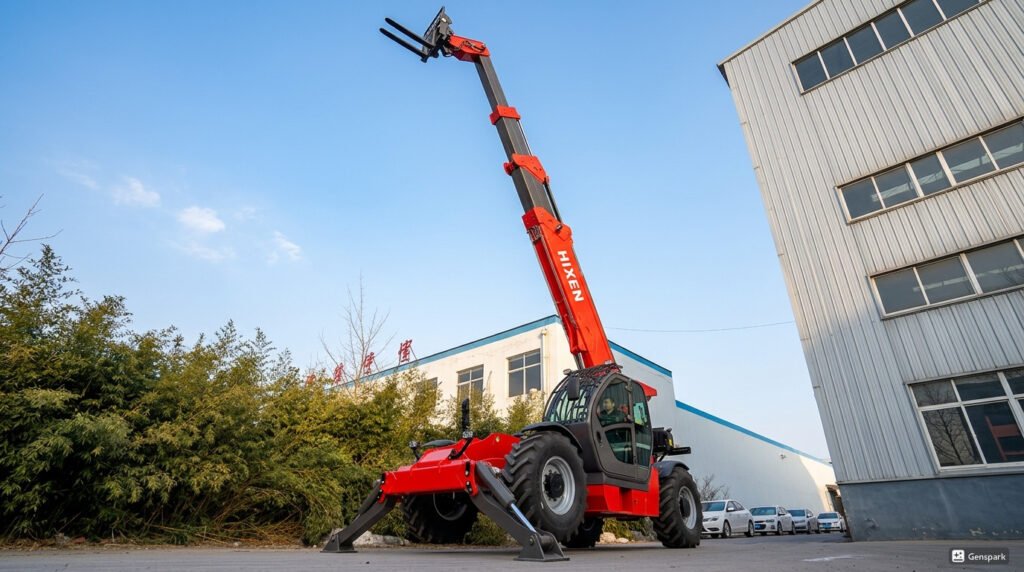
I’ve been in the business of manufacturing telehandlers for over 15 years. From our factory in Shandong, China, we’ve shipped thousands of machines all over the world. In that time, I’ve seen customers make great decisions, and I’ve seen some make choices that looked good on paper but ended up costing them dearly. The most common mistake I see comes from relying too heavily on a simple Telehandler Selection Checklist. It gives a false sense of security. The truth is, the real world is messy, and your checklist needs to be ready for it. This guide is designed to help you build a smarter Telehandler Selection Checklist.
Are You Overlooking the Dangers of Static Numbers on Your Telehandler Selection Checklist?
Your checklist has boxes for capacity and height, right? But these numbers assume a perfect world. Real job sites are never perfect, which makes those static numbers dangerously misleading.
A standard manipulador telescópico Selection Checklist asks for “Max Lifting Capacity” and “Max Lift Height.” You see “4 tons” and “14 meters” and think it’s the perfect fit. But this capacity is only true under perfect, lab-like conditions—something you will never find on an actual construction site.
Dive Deeper Paragraph:
The numbers on a specification sheet are just starting points. They represent the machine’s capability on perfectly flat, solid ground with no wind and a perfectly centered load. I once visited a customer in Europe who was frustrated with his new telehandler. He told me, “I bought a 4-ton machine, but it struggles to lift 2.5 tons to the second floor!” I went to his site and immediately saw the problem. His worksite was on a slight, but consistent, 5-degree slope.
That small slope, combined with a bit of wind that day, was enough to drastically reduce the machine’s safe operating capacity. Your basic Telehandler Selection Checklist doesn’t have a box for “ground slope” or “average wind speed,” but these dynamic forces have a greater impact on safety and stability than the maximum capacity number. Real stability isn’t a single number; it’s a dynamic calculation that changes every second.
Here’s a simple table to show what I mean.
| Fator | On Your Telehandler Selection Checklist | Real-World Impact |
|---|---|---|
| Rated Capacity | A single number, e.g., 4000 kg. | Decreases with every degree of boom extension, every bit of ground slope, and every gust of wind. |
| Max Lift Height | A single number, e.g., 14 meters. | Only achievable with a light load on perfectly level, firm ground. |
| Ground Surface | Often not mentioned. | Soft, uneven, or sloped ground can shrink the machine’s stable footprint, risking a tip-over. |
| Wind | Almost never on a checklist. | A strong crosswind acts like a huge hand pushing on the side of the load and machine, a major tipping force. |
How Can You Test a Telehandler’s True Dynamic Stability?
You feel stuck when the spec sheet doesn’t match reality. You need a way to know how the machine will really perform on your site, not in a factory.
The solution is to demand more than just static numbers. Ask for dynamic information. A truly useful Telehandler Selection Checklist should include questions about performance in non-ideal conditions. Don’t just ask what it can lift; ask how it lifts in specific scenarios.
Dive Deeper Paragraph:
This is what we call “scenario stress testing.” Before you buy, define your most common and your worst-case operating scenarios. For example: “I need to lift a 2-ton pallet to a height of 10 meters, at a reach of 5 meters, on a 3-degree side slope, with potential 15 mph winds.” Present this scenario to the supplier.
Instead of asking, “Is your machine 4 tons?”, ask, “Can you show me the load chart for my specific scenario?” A good manufacturer, like us, will be able to provide detailed load charts that account for these variables. We have charts for our 3-ton, 4-ton, and 5-ton models that show exactly how capacity changes with boom angle and extension. Your upgraded Telehandler Selection Checklist should have a section dedicated to these real-world questions. It’s not about finding a machine that passes, it’s about understanding how it performs.
Your checklist questions should evolve:
- Instead of: “What’s the max capacity?”
- Ask: “Can I see the load chart that shows capacity at full reach?”
- Instead of: “Does it meet my height requirement?”
- Ask: “What is the safe capacity at my required height and on a slight slope?”
This shift in questioning turns your Telehandler Selection Checklist from a simple form into a powerful risk assessment tool.
Does Your Telehandler Selection Checklist Consider the Attachment Trap?
Your checklist probably has a line item for “quick-hitch.” But this convenience can introduce new dangers if you don’t think about how each different attachment changes the entire machine.
You check the box for a quick-change system, thinking you’re getting versatility. But then your operators struggle. A bucket handles differently from a truss boom. A grapple changes the visibility. This is the attachment trap: focusing on the ease of change, not the change in dynamics.
Dive Deeper Paragraph:
Every time you change the attachment on a telehandler, you are essentially creating a new machine. A simple Telehandler Selection Checklist completely misses this fact. Think about it: a standard set of pallet forks weighs around 200 kg and its center of gravity is close to the machine. Now, you switch to a large general-purpose bucket. It might weigh 500 kg and its center of gravity is much further out. This extra weight and leverage instantly change the machine’s tipping point.
The original load chart in the cab is now dangerously inaccurate. What about a man basket? The safety parameters for lifting people are completely different. Your checklist needs to account for this. It’s not just about mechanical compatibility; it’s about operational compatibility. You must ensure the hydraulics can power the attachment, the operator can see around it, and most importantly, that there is a specific, correct load chart for that exact machine-attachment combination.
What Is the ‘Attachment-Machine-Operator’ Triangle Your Checklist Needs?
You’re worried about using different attachments safely. You need a simple framework to ensure every combination is evaluated properly, not just assumed to be okay.
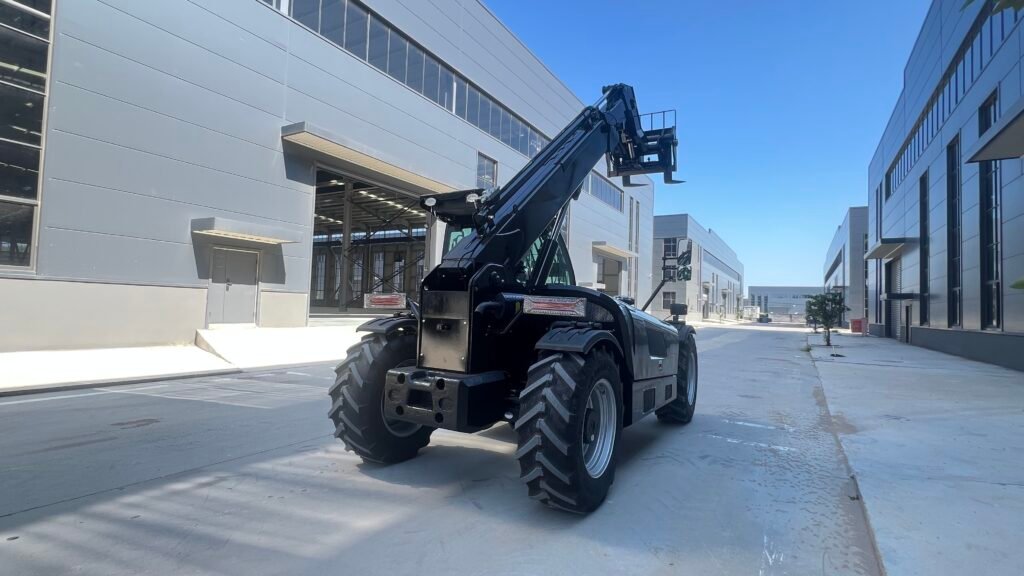
Think of it as a three-legged stool: Attachment, Machine, and Operator. If any one of these is not fully considered and integrated with the others, the whole system becomes unstable and unsafe. This is a critical addition to your Telehandler Selection Checklist.
Dive Deeper Paragraph:
To escape the attachment trap, I advise my clients to use the “Attachment-Machine-Operator” (AMO) Triangle assessment for every non-standard attachment. Your Telehandler Selection Checklist should have a sub-section for this.
- Attachment: What is its exact weight? Where is its center of gravity? Is it an approved attachment from the telehandler manufacturer or a certified third party? Unapproved attachments can void warranties and introduce unknown risks.
- Machine: Does the manufacturer provide a specific load chart for use with this attachment? Can the machine’s hydraulic system provide the required flow and pressure to operate the attachment correctly?
- Operator: Has the operator been specifically trained on the handling characteristics of this combination? Do they know the new blind spots? Do they know where to find and how to read the correct load chart for this specific attachment?
Here’s how to put it into a table for your own advanced Telehandler Selection Checklist:
| AMO Assessment Point | Question for your Telehandler Selection Checklist | Why It’s Critical |
|---|---|---|
| Anexo | Is this attachment officially approved for this model, and what is its weight and center of gravity? | Unauthorized attachments create unknown performance and safety profiles. |
| Máquina | Can the supplier provide a dedicated load chart and confirm hydraulic compatibility for this attachment? | The standard load chart is invalid; using it with a different attachment is a guess. |
| Operador | Is specific training on this attachment-machine combination included in the purchase or planned? | Operator error is a leading cause of accidents. Unfamiliarity with a new setup is a major risk. |
Is Your Telehandler Selection Checklist Ignoring Real-World Derating?
You think a 4-ton telehandler can always lift 4 tons. But in the real world, when you have to lift high e reach far e work on a slope, that capacity can vanish.
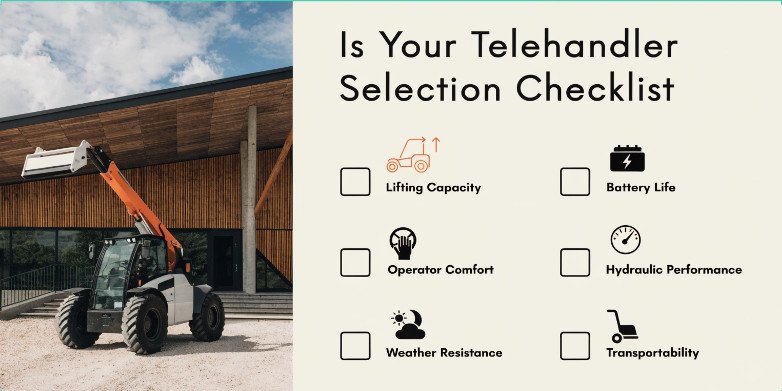
This is called derating. It’s the reduction in capacity caused by combining multiple operational demands. Your simple manipulador telescópico Selection Checklist doesn’t calculate this, leaving you to discover the machine’s true limits when it’s already too late.
Dive Deeper Paragraph:
Derating is one of the most misunderstood concepts in telehandler operation. People tend to think about limits one at a time. They know they can’t lift too much weight. They know they can’t reach too far. What they often forget is that these limits combine to create a much more restrictive environment. It’s like carrying groceries. You can easily carry four heavy bags from your car to your front door.
But can you carry those same four bags while sprinting up three flights of stairs? Of course not. The combination of tasks (carrying, speed, climbing) drastically reduces your “capacity.” It’s the same for a telehandler. Lifting 3 tons straight up is one task. Extending the boom 7 meters out is another. Doing both at the same time on a windy day is a completely different, and much more demanding, task. The machine’s capacity must be derated for each additional factor. A proper Telehandler Selection Checklist must force you to consider these combinations.
How Do You Create a ‘Non-Ideal Condition’ Scorecard for Your Telehandler?
You’re dealing with complex, overlapping risks. You need a simple tool to quantify these risks so you can compare different machines on a more realistic basis.
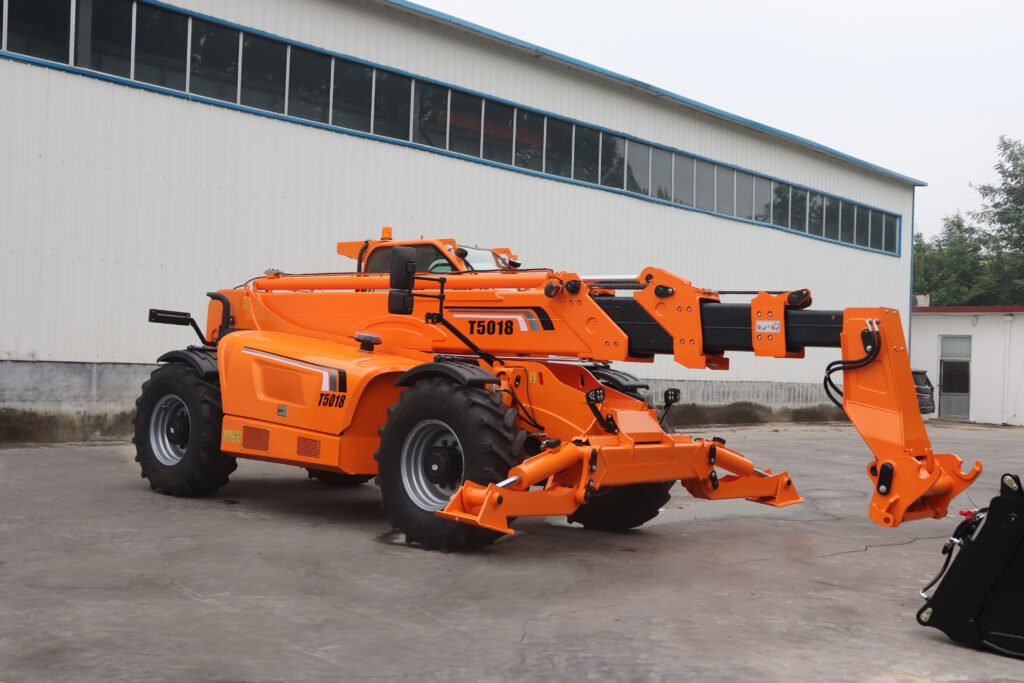
Create a “Non-Ideal Condition Scorecard.” This simple tool helps you assign a numerical value to your site’s specific challenges. This turns your Telehandler Selection Checklist from a passive document into an active analytical tool.
Dive Deeper Paragraph:
A scorecard helps you move beyond “yes/no” questions. It forces you to think in terms of “how much?” and “how often?” This is a crucial step in building a truly robust Telehandler Selection Checklist. Let’s build a simple example. For each factor, rate the severity on your site (1=Low, 2=Medium, 3=High) and how important that factor is to your operation (Weight, 1-3).
Non-Ideal Condition Scorecard Example:
| Operational Factor | Your Site’s Condition | Severity (1-3) | Importance (1-3) | Weighted Score (Severity x Importance) |
|---|---|---|---|---|
| Ground Slope | Some areas up to 5 degrees | 2 | 3 | 6 |
| Condição do solo | Mostly unpaved, gets muddy | 3 | 2 | 6 |
| Typical Wind | Often breezy, gusts to 20mph | 2 | 2 | 4 |
| Combined Actions | Often need to lift while extending | 3 | 3 | 9 |
| Tight Spaces | Maneuvering is often restricted | 2 | 1 | 2 |
| Total Site Risk Score | 27 |
A low score (e.g., under 15) means a standard machine that meets your basic specs might be fine. A high score (like our example of 27) tells you something important: you need to prioritize features like chassis-leveling, better tires, advanced stability control systems, or simply a machine with a much higher base capacity than you think you need. This scorecard should be a core part of your Telehandler Selection Checklist.
What Questions Should Be on Your Upgraded Telehandler Selection Checklist?
You know the old questions are not enough. You’re ready to build a smarter checklist but need to know exactly what to ask.
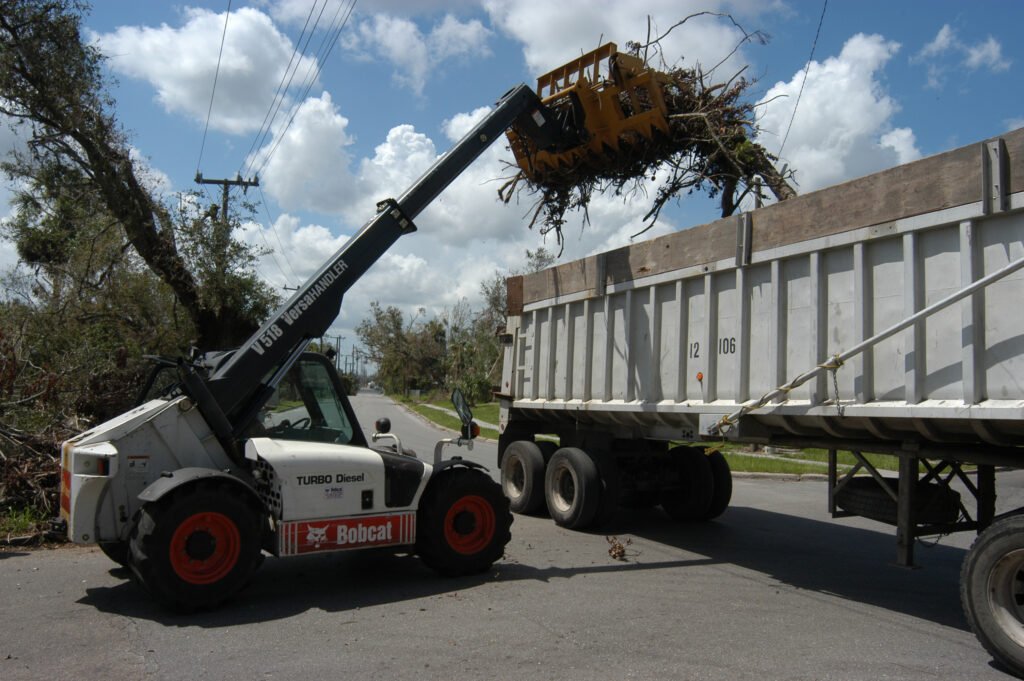
Your new checklist should be based on scenarios, not just specs. It should ask “how” and “what if” instead of just “what is.” It’s about starting a conversation about performance, not just comparing numbers.
Dive Deeper Paragraph:
Let’s transform your old, basic Telehandler Selection Checklist into a powerful procurement tool. The goal is to uncover the true capabilities and limitations of the machine you’re considering. It’s about building a comprehensive profile.
Old Checklist Question:
- Max Capacity: __
New Checklist Questions:
- Please provide the full load chart book for this model.
- What is the rated capacity at the maximum forward reach?
- What is the rated capacity at the maximum lift height?
- Can you provide a derated chart for a 5-degree side slope?
Old Checklist Question:
- Quick-hitch included? (Y/N)
New Checklist Questions:
- For each attachment I plan to use (bucket, grapple, jib):
- Is this an OEM-approved attachment?
- What is the dedicated load chart for this specific machine-attachment combo?
- What are the hydraulic flow requirements, and does the machine meet them?
- What operator training is recommended for this combination?
This detailed approach makes your Telehandler Selection Checklist a document that ensures safety and efficiency for years to come.
How Can a Good Supplier Help You Build a Better Telehandler Selection Checklist?
You feel like this is a lot to manage on your own. A good supplier shouldn’t just sell you a machine; they should be a partner in your safety and operational planning.
A trustworthy manufacturer or dealer wants you to ask these tough questions. It shows you’re a serious buyer, and it helps them provide the right machine, preventing problems down the line. They are your best resource for creating an effective Telehandler Selection Checklist.
Dive Deeper Paragraph:
As a manufacturer, I can tell you that we love informed customers. When a potential client comes to us with a detailed scenario instead of a simple spec list, we know we can have a productive conversation. It allows us to be true consultants. We can look at your “Non-Ideal Condition Scorecard” and say, “Because your site has soft soil and slopes, we recommend our 4-ton model with wider tires and chassis leveling, even though your loads are only 2.5 tons.
It provides the stability margin you need.” A good supplier will have all this information—the detailed load charts, the attachment specs, the training resources. They should be a key partner in filling out your advanced Telehandler Selection Checklist. If a supplier seems annoyed by your detailed questions or can’t provide the data, that is a huge red flag. It tells you they are more interested in a quick sale than in your long-term success and safety. Our 15 years of export experience and CE certifications are not just stamps on a paper; they represent a commitment to understanding and meeting the complex demands of job sites worldwide.
Conclusão
Your manipulador telescópico Selection Checklist is not just a form to be filled. It is your first and most important safety tool. Use it to ask hard questions and demand real-world answers.
Siga -nos em:YouTube.