You need a digger, but buying new is too expensive. Yet, many used machines break down soon after purchase. Don’t risk your money—this guide shows you exactly how to evaluate a used digger for reliable performance and long-term savings.
To buy a reliable used digger for construction, inspect five key areas: machine condition, hydraulic system, engine performance, service history, and seller credibility. Always request recent maintenance records, conduct an on-site inspection, and test core functions like lifting and rotation. Choose trusted brands like CAT, Komatsu, or Hitachi, and buy from experienced, verified exporters. This checklist ensures you avoid low-quality units and make a smart investment.
Let’s break down each factor one by one, so you know what to look for. Let’s get started finding the right used digger for you!
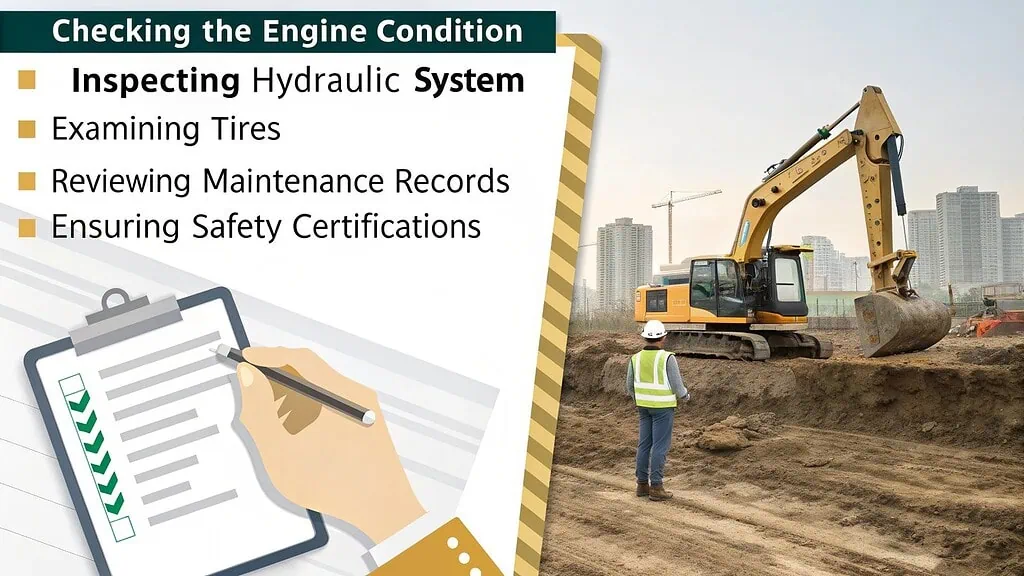
Know Your Construction Needs Before You Buy Used Digger
Before you buy a used Digger for your application or if you have an impact digger or plow, you need to specifically define your project. The work you do—residential, commercial, infrastructure—affects exactly
what you need your trencher to do.
Here are some guiding questions:
- Do you need to work in tight places, like urban housing? Then look toward a compact or mini excavator.
- Do you need a heavy lifting machine or digging force for heavy materials or very deep trenching? Then look at a standard 20- or 30-ton digger.
- Do you know the machine will be operating in rough terrain? Then you need something with a stronger undercarriage.
Also think about attachments for the machine like breakers, augers, different buckets, or tilt buckets. Make sure the used digger you buy will operate all those.
📊 Project Type vs Recommended Machine Size
| Project Type | Digger Weight | Bucket Size | Ideal Brands | Recommended Attachment |
|---|---|---|---|---|
| House Foundation | 10 – 20 tons | 0.5 – 0.8 m³ | CAT, Komatsu | Standard digging bucket |
| Road Construction | 20 – 30 tons | 0.8 – 1.2 m³ | Volvo, Hitachi | Grading blade, Tilt bucket |
| Pipeline Installation | 8 – 15 tons | 0.4 – 0.6 m³ | Doosan, Kobelco | Long arm, trenching bucket |
| Demolition Work | 30+ tons | 1.2 – 2.0 m³ | Hyundai, Sany | Hydraulic breaker |
| Landscaping Projects | 5 – 10 tons | 0.2 – 0.4 m³ | Kubota, Yanmar | Auger, thumb |
| Mining or Quarry Work | 35+ tons | 1.5 – 2.5 m³ | Komatsu, CAT | Rock bucket, ripper |
Exterior Inspection: How to Visually Evaluate a Used Digger
Your first defense against future repair expenses is your visual inspection. That’s right! Before you consider buying a used digger for whatever type of construction you’re doing, make sure you take the time to put your feet eyes on every visible part of that machine. Bring a flashlight with you. If you’re looking at it on a job site, get your gloves on and crawl all over it.
Look for the following:
- Structural cracks on the boom, arms, and undercarriage—these are red flags.
- Welding marks—especially inconsistent welds—may suggest accident repairs.
- Chassis alignment—a twisted body frame means possible rollover history.
- Paint job uniformity—too fresh might be covering something.
Don’t forget to look at what’s consumable on these mini diggers, like the tracks, the sprockets, teeth on the bucket, and things of that nature. If all these items are shot, you may be immediately hit with a bill for thousands of dollars and a lot of time off job site to get wear items replaced.
🧾 Used Digger Exterior Condition Checklist
| Component | What to Check | OK Condition | Warning Sign |
|---|---|---|---|
| Boom & Arm | Weld marks, cracks | Original with mild scratches | Visible welds, deep cracks |
| Bucket | Edge wear, dents | Minor wear | Sharp dents, missing teeth |
| Track Shoes & Chains | Tension, wear pattern | Even wear | One side more worn |
| Rollers & Idlers | Rotation and balance | Spins freely | Stuck or grinding |
| Counterweight Area | Dents, replacements | Minor scuffs | Major dents, paint mismatch |
| Hydraulic Hose Fittings | Leaks, swelling | Dry and clean | Wet spots or bubbling |
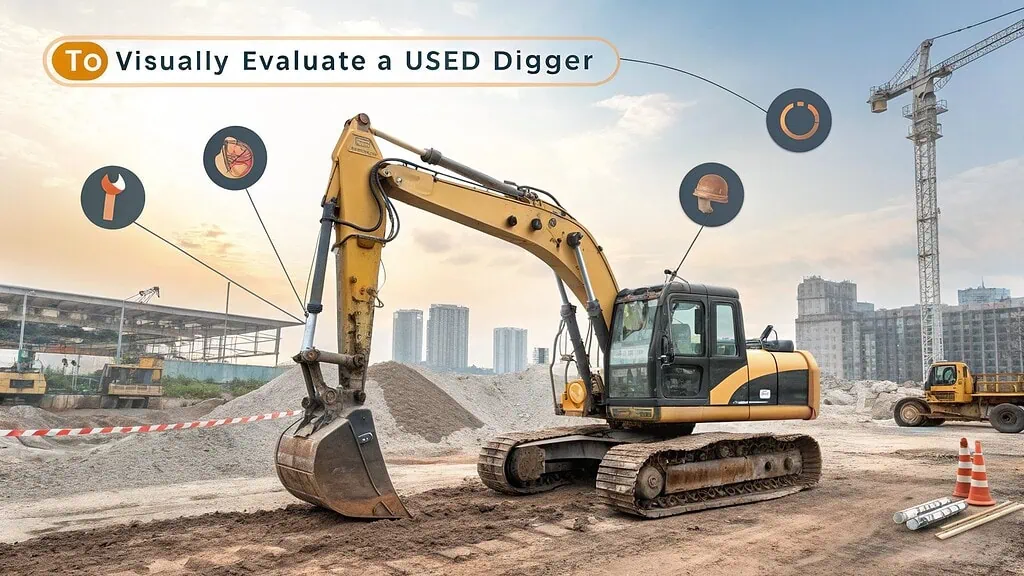
System Inspection: Engine, Hydraulics & Controls
When it comes time to buy your used digger for construction purposes, don’t judge a book by its cover. Remember, some people clean a machine up to sell it, but it’s still a dog and ready to go to the dogs. After you’ve assessed it visually, you must look at the whole mechanical system. You need to look at the engine, hydraulic systems, and all the other control functions. Why? Because you don’t want to spend a dime extra on this thing when you drive off the job site.
Engine Inspection:
- Start the engine cold, not warmed up beforehand. This reveals compression strength and injector condition.
- Check for excess smoke (black = fuel issue, white = coolant, blue = oil).
- Listen for unusual knocking or ticking noises.
- Observe idle stability and how the engine responds to throttle input.
Hydraulic System Inspection:
- Operate boom, stick, and bucket—they should move smoothly, without jerks or delay.
- Check for oil leaks near cylinders and connections.
- Feel for hydraulic pressure loss during operation.
Cabin & Control Function:
- Test all joystick levers, foot pedals, and electrical buttons.
- Verify instrument panel readings are accurate.
- Ensure backup alarm, horn, lights, and gauges function properly.
🔍 Enhanced Mechanical System Inspection Checklist
| Component | Inspection Focus | ✅ Good Sign | ❌ Warning Sign |
|---|---|---|---|
| Engine | Cold start, smoke, idle, throttle | Instant start, clean idle | Long crank, black/blue smoke |
| Hydraulic Pump | Smoothness, sound, fluid flow | Quiet, strong pressure | Jerky movement, whining noise |
| Boom & Arm Cylinders | Smooth extension/retraction | No delay, silent action | Jerking, oil leakage |
| Swing Motor | Swing left/right smoothly | Consistent speed, no backlash | Noisy swing, delayed stop |
| Control Levers | Joystick/pedal responsiveness | Immediate, predictable | Stiff, unresponsive |
| Instrument Panel | Gauge accuracy, warning lights | Everything works | Missing functions or dead screen |
Hour Meter & Service History: Check the True Life of the Digger
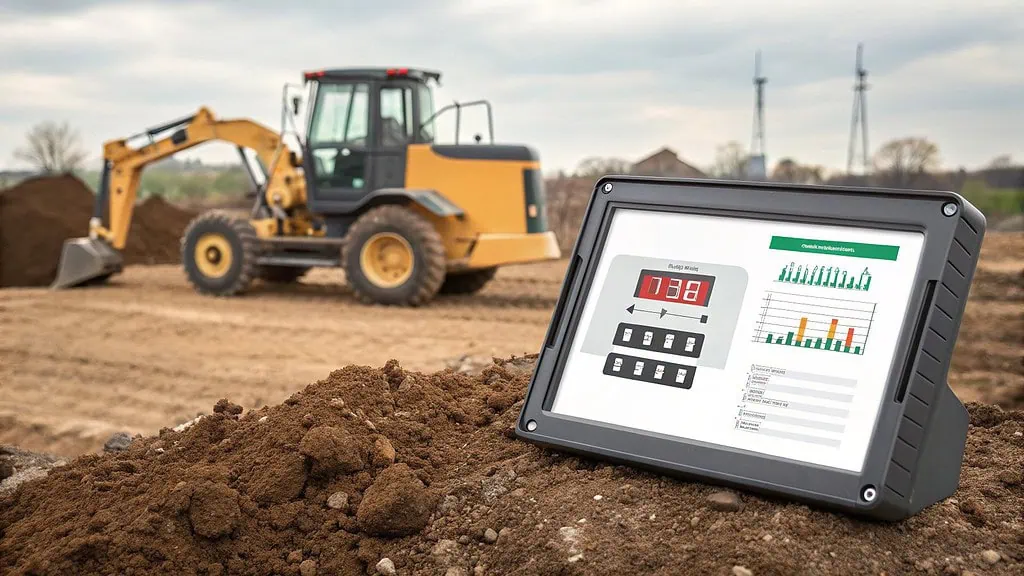
The heart of the used digger for construction is the hour meter. The hour meter is its mileage indicator. Well, before you buy one of these dogs, you need to understand what those hours really mean. Just like a car with 300,000 miles on it, you can go buy a car like that, and as long as they have maintained it well, it’ll last you for another 200,000 miles. Conversely, a Ferrari or high-end BMW with 50,000 miles could be a total waste of time and money.
How to Interpret Hour Meters:
- < 4,000 hours: Usually low-use and ideal for buyers seeking long service life.
- 4,000–8,000 hours: Normal wear. Check for component replacements.
- 8,000+ hours: Higher risk unless rebuilt or fully serviced.
But hours alone are not enough. Always ask for service and repair records. Maintenance history helps you know:
- When was the last engine oil or hydraulic fluid change?
- Were major parts like tracks, pumps, or cylinders replaced?
- Did the seller use original parts or aftermarket alternatives?
📘 Hour Range vs Reliability & Purchase Strategy
| Working Hours | Typical Condition | Recommended Action |
|---|---|---|
| < 4,000 hrs | Excellent, lightly used | ✅ Buy with confidence |
| 4,000 – 6,000 hrs | Good, moderate use | 🔍 Check hydraulics and engine |
| 6,000 – 8,000 hrs | High-use, parts may wear | 🧾 Ask for recent major repairs |
| 8,000 – 10,000 hrs | Aging, components near limits | 💸 Price should reflect repair budget |
| > 10,000 hrs | Very worn or rebuilt | ⚠️ Only buy with full inspection or reconditioning plan |
🧾 Sample Maintenance Log Snapshot
| Service Item | Recommended Interval | Last Recorded Date | Remarks |
|---|---|---|---|
| Engine Oil Change | Every 250 hours | 2025-03-15 | ✅ On time |
| Hydraulic Fluid Service | Every 1000 hours | 2024-12-10 | ⚠️ Slight delay |
| Track Replacement | As needed | 2023-11-22 | ✅ Recently changed |
| Final Drive Service | Every 1500 hours | Unknown | ❌ Missing info |
| Swing Motor Repair | If noisy or leaking | 2022-09-05 | ✅ Seals replaced |
Avoid Common Mistakes When You Buy Used Digger
Don’t get burned when buy used digger. Mistakes could cost you thousands—or worse, delay your whole project. Countless buyers from other countries get fixated on cheap prices. But, they end up stuck with faulty or misrepresented machines. To buy used digger for construction without getting burned, don’t make the mistakes that trap less experienced buyers.
Typical Mistakes Include:
- Believing a low price means a great deal
- Failing to check for fake hour meters
- Overlooking signs of refurbishment meant to hide damage
- Purchasing from unverified or non-specialized sellers
- Not confirming logistics and after-sales support
🚨 Top 5 Buyer Mistakes vs Prevention Strategy
| Common Mistake | Prevention Strategy |
|---|---|
| Buying based on photos only | Request full machine walk-around + operational test video |
| Ignoring service records | Ask for last 3 service reports, receipts, or technician notes |
| Believing fake hour meter claims | Cross-check wear on foot pedals, seat, bucket pins |
| Not verifying exporter’s legitimacy | Look for certifications, trade history, and real contact info |
| Accepting “repainted = refurbished” | Check weld lines, cylinder welds, and irregular paint textures |
Which Used Digger Brands Perform Best in Construction?
Choosing the right brand can make or break your long-term investment, Some brands emphasize longerdurability, easier parts availability, and stronger resale value. That’s not always the case. But if you’re planningto buy used digger for construction, spending a little extra to buy one name over another might easily pay foritself when you go to sell it, lf you’re overseas, the first thing you want to do is buy a machine from a brandknown worldwide and supported by a worldwide network.
The correct brand can make or break your long-term investment. Some brands may last much longer, offer easier parts availability, and maintain a strong resale value if you decide to sell it. So, if you’re planning to buy used digger for construction, it’s vital to focus on brands that have a worldwide reputation and a massive support network.
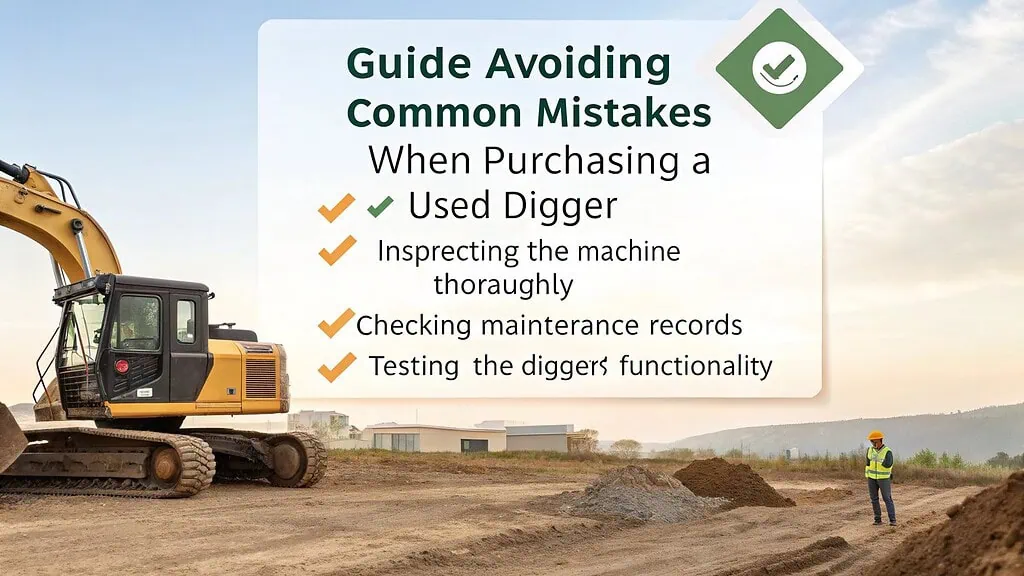
Criteria for Choosing the Right Brand:
- Reliability under heavy duty operation
- Easy access to spare parts in your country
- Well-documented repair and maintenance records
- Models that are popular in your region (e.g., CAT320D in South America)
📊 Brand Performance Comparison
| Brand | Durability | Ease of Repair | Global Parts Availability | Resale Value | Best Models |
|---|---|---|---|---|---|
| CAT | ★★★★★ | ★★★★★ | ★★★★★ | ★★★★★ | CAT320D, CAT330C |
| Komatsu | ★★★★☆ | ★★★★☆ | ★★★★☆ | ★★★★☆ | PC200-8, PC300 |
| Volvo | ★★★★☆ | ★★★☆☆ | ★★★☆☆ | ★★★★☆ | EC210B, EC360 |
| Hitachi | ★★★★☆ | ★★★★☆ | ★★★★☆ | ★★★★☆ | ZX200, ZX240 |
| Doosan | ★★★☆☆ | ★★★☆☆ | ★★★☆☆ | ★★★☆☆ | DX225LC, DX300 |
| Hyundai | ★★★☆☆ | ★★★☆☆ | ★★★☆☆ | ★★★☆☆ | R220LC, R300LC-9 |
Where to Buy Used Digger for International Projects?
The worst case scenario is buying from an unscrupulous dealer who has no real interest in digging you out ofyour hole. lf you are an international buyer, especially from the bottom of South America, in Africa, or the MiddleEast, the best thing for you to do is to find a trusted used digger supplier who provides you with inspectionvideos,quality assurance,and logistics support.
3 Main Channels to Buy Used Digger:
- Local Dealers – Easy to inspect, but prices are higher.
- Brokers/Agents – Can assist, but often hide real machine sources.
- Exporters from China – Lower cost, more models, requires verification.
🌍 Channel Comparison: Local vs Brokers vs China Exporters
| Channel | Advantages | Disadvantages |
|---|---|---|
| Local Dealers | Fast delivery, physical inspection available | High markup, limited stock |
| Brokers/Agents | Market knowledge, help with negotiation | Adds cost, low transparency |
| China Exporters | Wide range of models, competitive price, direct deal | Language barrier, inspection needed, longer delivery |
💡 Why China?
With our huge inventory turnover, HlXEN has every benefit of scale and then some. We probably offer 20+brands of diggers. 80% of what we sell is the top OEM diggers like CAT, Komatsu, Hitachi, and Volvo. Unlike ourcompetition, we’ve tested it, filmed it, and we’l ship it to you. We ship it in a 20-foot container; we ship it in a 40foot container. Then we go to bat for you when they try to get your money on those ends. We have deliveredinto over 30 countries using door-to-port or door-to-door logistics
🧭 Exporting from China: Checklist
| Checklist Item | What to Confirm |
|---|---|
| Exporter’s Business License | Must be a legal registered trading company |
| Machine Inspection Report | Request photos + operation video + test summary |
| Logistics Solution | Confirm they offer CIF/DDU to your nearest port |
| Payment Options | Secure terms like 30% deposit + balance before shipment |
| Shipping Lead Time | Ideal: ≤15 days for major ports like Valparaíso or Lagos |
Conclusion: Buy Used Digger Smart- Get Quality, Not Just Cheap
Buying used diggers and construction machines can be your smartest business move – if you do it right. Focus onthe real condition of the machine, not just the price. Use a detailed checklist, buy from someone who knows whatthey are doing, and always get the inspection video, no exceptions.
👉 HIXEN, with 15 years of global export experience, helps buyers like you avoid risks and get the right machines.
📞 Contact HIXEN today for a full inspection video, price quote, and shipping support.
Follow us on :YouTube.