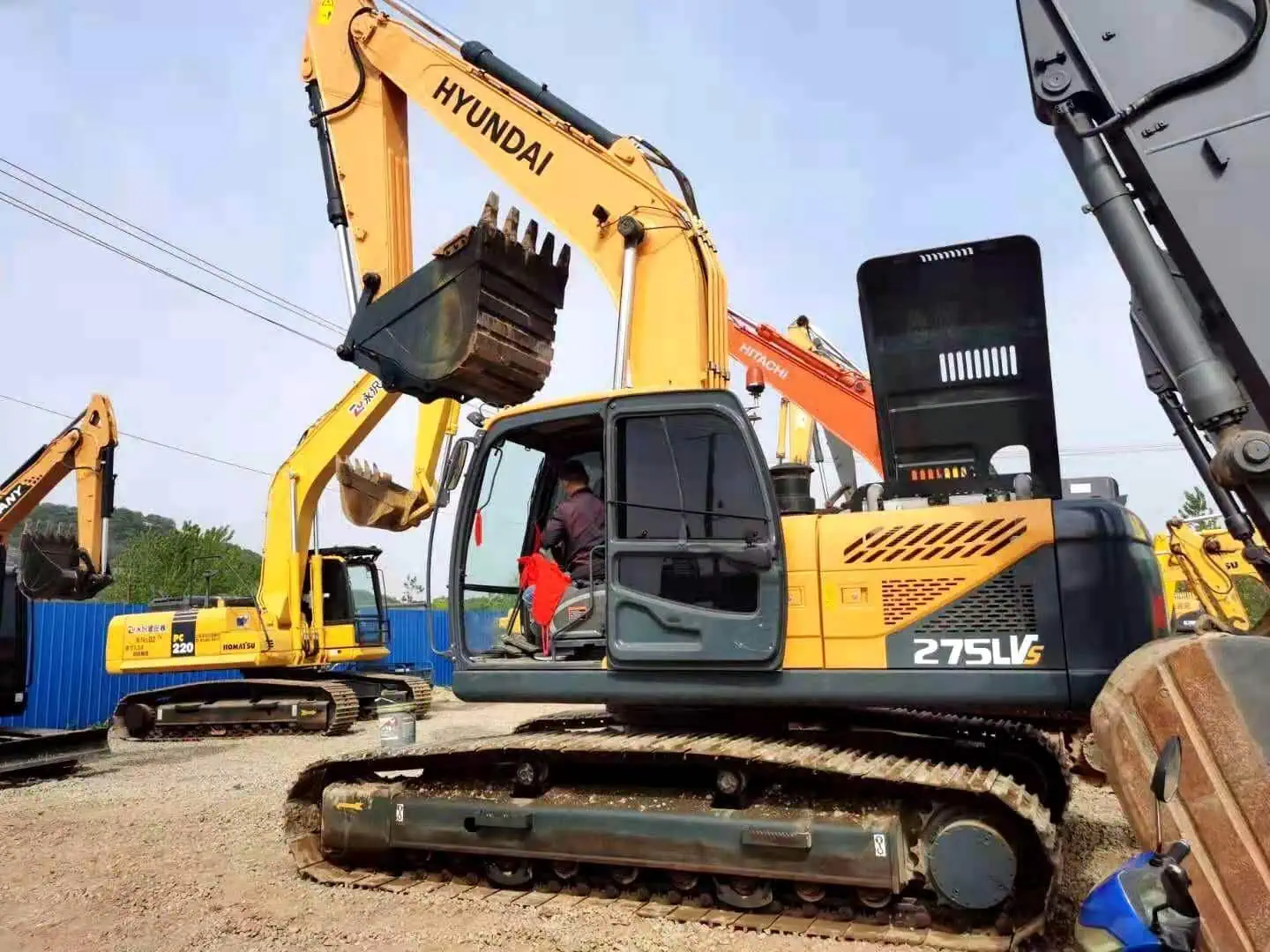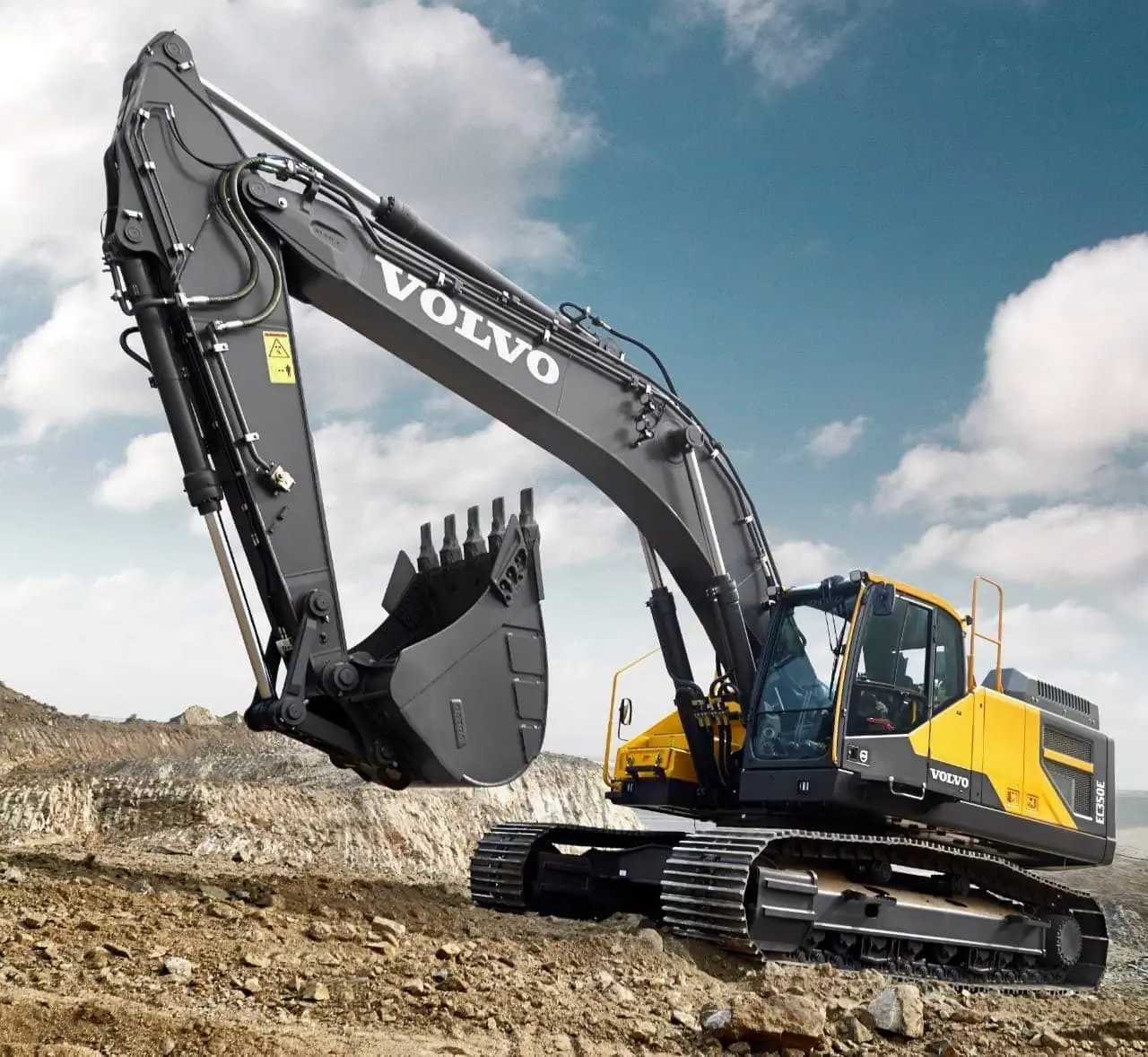
When I initially started looking for an excavator, I only took size and cost into account. I soon discovered, however, that knowing the fundamentals of hydraulic excavators is equally crucial. A machine that isn’t suitable for your needs may result from your ignorance of the hydraulic system.
The hydraulic excavator working principle affects how the machine performs, how much fuel it uses, and how often it needs repairs. By understanding the system, you can make smarter decisions. Choosing the right hydraulic system will give you better digging force, more fuel savings, and fewer repairs. Whether you need a powerful machine for heavy work or a cost-efficient option for general digging, understanding the system helps you choose the right excavator for the job.
Now that you know why understanding the hydraulic system is important, let’s dive deeper into how it impacts performance.
What is the Hydraulic Excavator Working Principle?
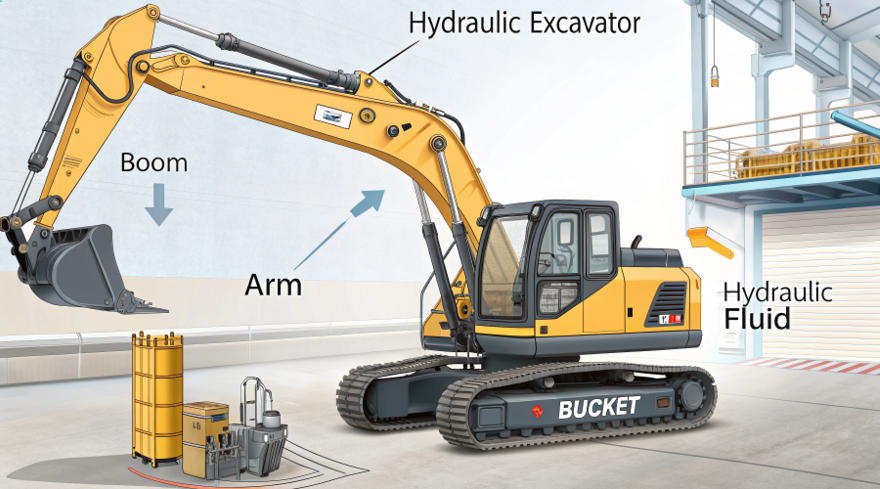
A hydraulic excavator works because of a powerful system that uses pressurized fluid. This system drives key parts like the boom, arm, bucket, and tracks. It’s what makes the machine strong enough to lift, dig, and do other tough tasks.
Here’s a breakdown of how it works:
- Hydraulic Pump: Turns mechanical energy into fluid power.
- Hydraulic Cylinders: Move the boom, arm, and bucket to dig and lift.
- Control Valves: Direct the flow of hydraulic fluid to the right parts.
- Hydraulic Fluid: Transports energy through the system, usually oil under pressure.
Understanding how all these parts work together lets you see why the hydraulic excavator working principle is so important. It gives the machine its strength and precision.
| Component | Function | Impact on Performance |
|---|---|---|
| Hydraulic Pump | Converts mechanical energy into hydraulic power. | Affects efficiency and power of the system. |
| Hydraulic Cylinders | Moves the boom, arm, and bucket. | Impacts lifting capacity and precision in digging. |
| Control Valves | Regulates fluid flow to the cylinders. | Allows smooth control and precision. |
| Hydraulic Fluid | Transfers energy throughout the system. | Influences the efficiency and strength of the system. |
How Hydraulic Systems Influence Excavator Performance
When I first understood the hydraulic excavator working principle, I realized how much it affects performance. The hydraulic system controls key things like digging force, lifting capacity, and precision. These determine how well the machine performs, whether it’s digging a trench or lifting a heavy load.
The better the hydraulic system, the better the performance. Machines with load-sensing and closed-center systems are faster, more powerful, and more fuel-efficient than those with older open-center systems.
| Excavator Model | Hydraulic System Type | Digging Force | Lifting Capacity | Fuel Efficiency |
|---|---|---|---|---|
| CAT 320 | Closed-center | 20,000 kg | 14,000 kg | High |
| Komatsu PC210 | Open-center | 18,500 kg | 13,000 kg | Moderate |
| XCMG XE700C | Load-sensing | 21,000 kg | 15,500 kg | Very High |
The table clearly shows how better hydraulic systems boost digging force and fuel efficiency. If you’re handling big jobs, you’ll want to pay attention to these details.

Why the Hydraulic Excavator Working Principle Affects Fuel Efficiency and Maintenance
One of the things I didn’t realize at first is how much the hydraulic system affects fuel efficiency and maintenance costs. A good system makes the machine more efficient. This means you use less fuel for the same amount of work. It also helps reduce wear and tear, lowering your repair costs.
A poor hydraulic system, on the other hand, can increase fuel use and create maintenance headaches. By choosing a machine with a better system, you can save money over time.
| Hydraulic System Type | Fuel Efficiency | Maintenance Frequency | Average Repair Cost | System Durability |
|---|---|---|---|---|
| Closed-center | High | Low | $2,000/year | Very High |
| Open-center | Moderate | Medium | $3,000/year | Moderate |
| Load-sensing | Very High | Very Low | $1,500/year | Very High |
Machines with advanced systems like load-sensing and closed-center have higher fuel efficiency and lower maintenance costs. This saves you money in the long run.
Hydraulic Excavator Working Principle and Different Excavator Models
Different excavator models have different hydraulic systems. Some systems are made for heavy-duty jobs, while others are better for smaller, lighter work.
| Excavator Model | Hydraulic System | Best Use | Key Advantage | Price Range |
|---|---|---|---|---|
| CAT 330 | Load-sensing | Heavy lifting, large excavation | Fuel efficiency, precision | $150,000 – $200,000 |
| Komatsu PC210 | Open-center | General digging and lifting | Cost-effective, versatile | $100,000 – $130,000 |
| SANY SY365 | Closed-center | Large construction sites | High durability | $130,000 – $160,000 |
Choosing the right system is important. For bigger projects, a load-sensing system like the one in the CAT 330 is perfect. It gives you better control and fuel savings. For more general work, the Komatsu PC210 with an open-center system is a good, cost-effective option.
Hydraulic Excavator Working Principle and Operator Comfort
Operator comfort is another factor. Machines with smoother hydraulic systems make the job easier for operators. It reduces fatigue and helps them work more efficiently.
| Excavator Model | Operator Comfort | Hydraulic Control System | Ergonomics | Cabin Features |
|---|---|---|---|---|
| CAT 330 | High | Advanced load-sensing control | Adjustable controls | Climate control, air suspension seat |
| Komatsu PC210 | Moderate | Basic open-center system | Standard seat and controls | Air-conditioning |
| SANY SY365 | High | Closed-center control system | Comfortable cabin design | Large touchscreen display, adjustable seat |
The CAT 330 and SANY SY365 are great examples of machines designed for operator comfort. With features like adjustable seats, climate control, and easy-to-use controls, these machines make long hours on the job more manageable for operators.
Common Problems Linked to Hydraulic Excavator Systems and How Understanding the Principle Helps Avoid Them
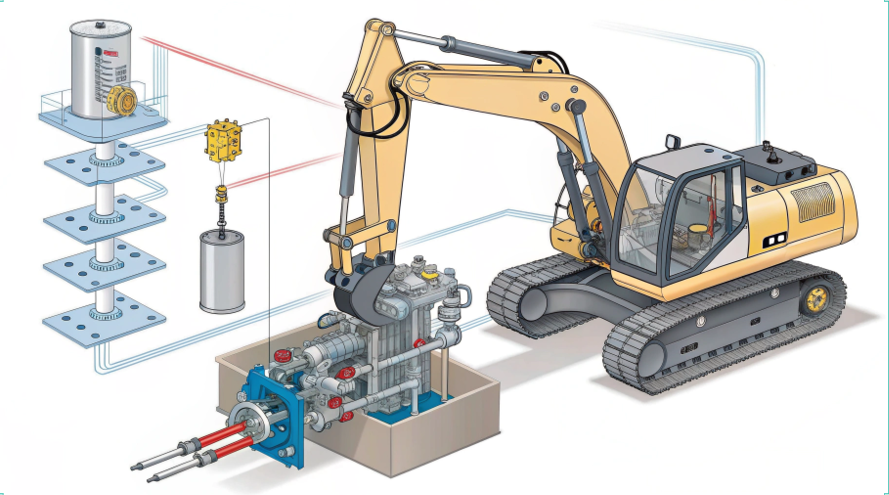
Even the best hydraulic systems can have problems. Some of the common issues include hydraulic leaks, pressure loss, and overheating. These can happen from wear and tear or poor maintenance.
By understanding how the hydraulic system works, you can avoid these issues and keep your machine running smoothly. Regular maintenance is key.
| Common Problem | Cause | Preventive Measure | Repair Cost | Repair Frequency |
|---|---|---|---|---|
| Hydraulic Leak | Seal wear, contamination | Regular inspection, fluid change | $500 – $2,000 | Every 1-2 years |
| Pressure Loss | Valve failure, wear | Periodic maintenance, cleaning | $1,000 – $3,000 | Every 2-3 years |
| System Overheating | Fluid degradation | Proper fluid maintenance | $1,000 – $4,000 | Every 3-4 years |
If you keep an eye on these problems and maintain the hydraulic system, you can avoid expensive repairs and extend the life of your excavator.
Conclusion
In the end, understanding the hydraulic excavator working principle is essential for making a smart purchase. It affects everything from the machine’s performance to its fuel efficiency and maintenance costs. By learning about how the hydraulic system works, you’ll be able to choose the right machine for your needs.
When you’re looking at excavators, consider the hydraulic system carefully. It’s one of the most important factors in determining how well the machine will work and how much it will cost to maintain. Make sure you choose a system that fits your projects and will give you the best value over time.
Follow us on :YouTube.