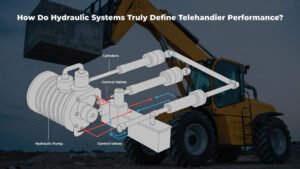
A stuck telehandler boom stops your entire job. You’re losing time and money while mechanics scratch their heads, blaming the usual suspects. But the real problem is often hidden.
A sticking telehandler boom is most often caused by mechanical issues like worn wear pads or poor lubrication, not a hydraulic failure. Start by inspecting the boom’s physical structure and grease points before you even think about checking hydraulic pressures. This approach saves time and targets the real problem.
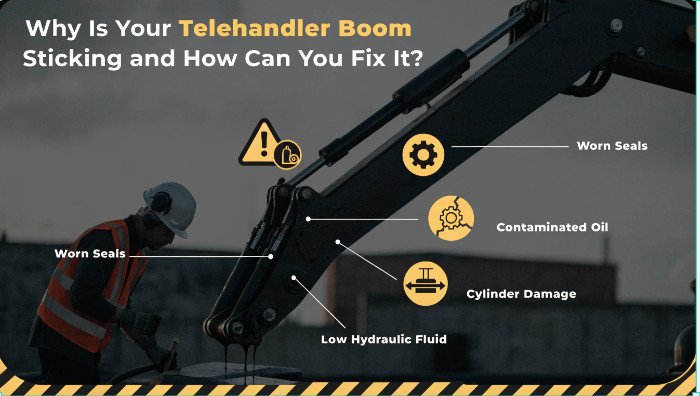
Everyone’s first instinct is to blame the hydraulics. I’ve been on countless sites where the first thing people do is pull out the pressure gauges. But after 15 years of manufacturing telehandlers, I can tell you that’s usually the last place you should look. A sticking telehandler boom is a symptom, and the disease is often mechanical, not hydraulic. To really understand and fix your sticking telehandler boom, you need to think like an engineer, not just a parts-swapper. Let’s break down the real reasons your boom is giving you trouble and how to fix it for good. This insight is what separates a quick fix from a long-term solution and ensures your equipment stays productive.
Is It Really a Hydraulic Problem with Your Telehandler Boom?
Your boom is slow and jerky. Your mechanic says it’s a weak pump or a bad cylinder. But what if they’re looking in the completely wrong place and wasting your time?
Most sticking issues on a telehandler boom are mechanical, not hydraulic. Think of the steel boom as the skeleton and hydraulics as the muscle. If the skeleton is misaligned or the joints are grinding, no amount of muscle will create smooth movement. Check the mechanics first.
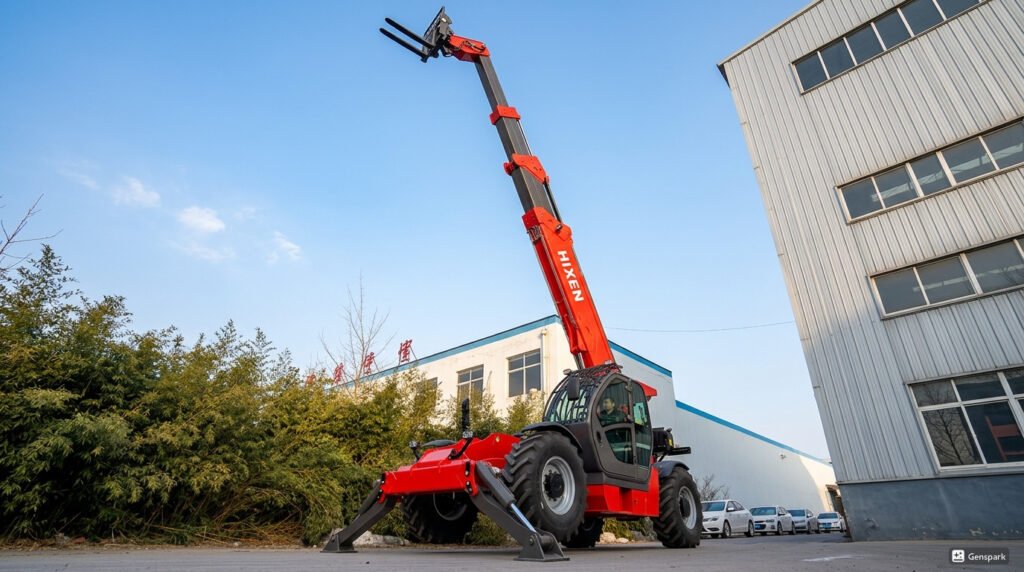
I like to use an analogy. The steel sections of your telehandler boom are the skeleton, and the hydraulic system is the muscle. You can have the strongest muscles in the world, but if your bones are out of joint or your cartilage is gone, your movements will be jerky, painful, and weak. It’s the same with your machine.
Mechanics often jump to testing hydraulic pressures and flows because it’s what they know. But a weak hydraulic system usually presents as a lack of power or speed across all functions, not just a boom that sticks at a certain point. A sticking issue is often about friction. That’s why I always teach my team the “Sequential Check Rule.” It saves time and gets to the root cause fast. You must check in this order:
- Mechanical Structure: Look for cracks, bends, or damage.
- Wear Surfaces: Inspect the wear pads for damage or excessive wear.
- Hydraulic System: Only then should you test pressures and check for leaks.
This reverse order is counterintuitive for many, but it’s the most logical way to diagnose a sticking telehandler boom.
Mechanical vs. Hydraulic Failure Symptoms
| أعراض | Likely Mechanical Cause | Likely Hydraulic Cause |
|---|---|---|
| Jerky / Shuddering Motion | Worn wear pads, poor lubrication | Air in the hydraulic system |
| Sticking at a Specific Point | Deformed boom section, broken wear pad | Scored cylinder bore (less common) |
| Grinding/Scraping Noises | Metal-on-metal contact, no lubrication | Contaminated fluid (less common) |
| Slow, Weak Movement Overall | (Unlikely) | Low pump pressure/flow, internal leak |
| Boom Drifts Down | (Not a cause) | Leaking cylinder seals or holding valve |
How Do Worn Wear Pads Affect Your Telehandler Boom’s Performance?
Tiny plastic or bronze blocks are inside your boom. They seem insignificant, but when they wear out, they can bring your multi-ton machine to a grinding halt and cause serious damage.
Worn wear pads are a top cause of a sticking telehandler boom. They eliminate the smooth, low-friction surface between boom sections, causing metal-on-metal contact. This results in shuddering, sticking, and eventually, expensive damage to the boom itself.

The sections of your telescopic boom don’t just float inside one another. They ride on small, durable blocks called wear pads. In our factory, we typically use high-density nylon or sometimes bronze pads, depending on the load requirements. Their job is simple: to provide a low-friction, replaceable surface that keeps the steel boom sections perfectly aligned and separated. When these pads wear down, the clearance between the sections changes. The boom can start to sag, and the steel sections begin to touch.
This is where your problem starts. The friction skyrockets, and the hydraulic system has to overcome this massive resistance. The movement becomes jerky and then starts to stick. I’ve seen operators try to force a sticking telehandler boom, which only makes it worse. The metal-on-metal grinding can score the steel, requiring a massive and expensive repair. Replacing wear pads is a routine maintenance job and is incredibly cheap compared to rebuilding a damaged telehandler boom. Regular inspection is critical. If you see excessive plastic shavings or if the boom feels loose, it’s time to get them checked immediately.
Are You Using the Right Grease for Your Telehandler Boom?
You grease your مناولة boom regularly, but it’s still causing problems. The issue might not be how often you grease, but what kind of grease you’re using on your machine.
Using the wrong grease is like putting sand in your engine. For a heavy-duty telehandler boom, you need a high-pressure lubricant that won’t squeeze out or break down under load. The right grease is the difference between a smooth operation and a costly repair.
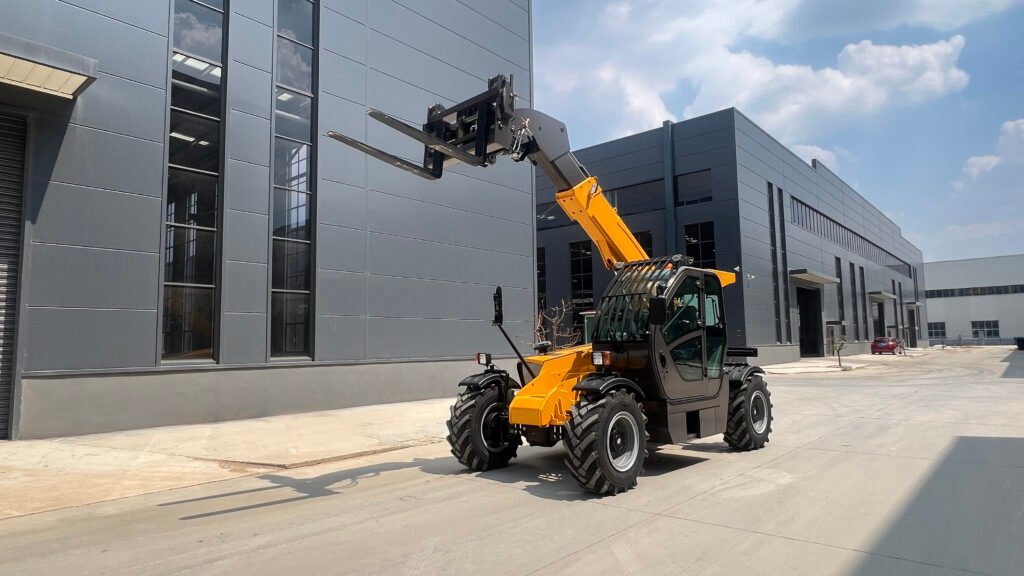
Lubrication is the lifeblood of your telehandler boom, but not all grease is created equal. I’ve seen customers use a general-purpose grease on their booms, and within months they are complaining about sticking. The problem is that the immense pressure between the boom sections and wear pads literally squeezes normal grease out of the way, leaving the surfaces to run dry. For this application, you need a grease with Extreme Pressure (EP) additives. We recommend a high-quality EP Lithium grease for most conditions. For extreme load or high-temperature environments, a grease containing Molybdenum Disulfide (“moly”) is even better, as it provides a dry film of lubrication even if the grease base breaks down.
Furthermore, you must match your lubrication strategy to your work environment. I call this “Work Condition Matching.” A telehandler boom working in a dusty quarry has different needs than one on a clean construction site. Dust mixes with grease to create an abrasive grinding paste. In these conditions, you must lubricate more frequently not just to add grease, but to purge the old, contaminated grease. And always, always wipe the grease nipple clean before you attach the grease gun. Forcing dirt into your boom’s wear surfaces is a fast track to failure.
Recommended Lubrication Frequency by Environment
| Environment | Dust Level | تكرار | Key Action |
|---|---|---|---|
| Construction Site | Low to Medium | Every 50 Hours | Use standard EP grease |
| زراعة | واسطة | Every 25-30 Hours | Purge old grease fully |
| Quarry/Cement Plant | عالي | Every 8-10 Hours | Clean nipples before greasing |
| Rental Fleet | Variable | Weekly Inspection | Educate renters on greasing |
Why Is My Telehandler Boom Drifting or Creeping?
You extend the boom and turn your back, only to see it has slowly lowered on its own. This isn’t sticking; it’s drifting, and it points to a completely different problem.
A drifting or creeping telehandler boom is caused by internal hydraulic leaks, usually from worn cylinder piston seals or a faulty holding valve. Unlike sticking, which involves friction, drifting is a sign that hydraulic fluid is bypassing where it should be held.

It’s a common point of confusion, so let’s be very clear. “Sticking” is when the boom struggles to move because of friction. “Drifting” is when the boom moves on its own when it’s supposed to be stationary. If your telehandler boom is drifting down, the problem is almost certainly hydraulic. The two main culprits are the piston seals inside the hydraulic cylinder or the counterbalance/holding valve. Inside the extension or lift cylinder, there’s a piston with seals. If these seals are worn, hydraulic fluid can slowly leak from one side of the piston to the other, allowing the boom to creep.
The other possibility is the holding valve. This valve is a safety feature designed to lock the cylinder in place if a hydraulic hose bursts. If the valve seat is damaged or has dirt in it, it won’t seal perfectly, and fluid can leak past it, causing the boom to drift. Diagnosing this requires proper hydraulic testing, but it’s important for you as an operator to report the symptom correctly. Don’t say the telehandler boom is “sticking” when you mean it’s “drifting.” It sends the mechanic down a completely different diagnostic path.
How Can You Predict Telehandler Boom Failure Before It Happens?
What if you could know your telehandler boom was developing a problem weeks before it actually failed? A simple test with a stopwatch is all you need to get an early warning.
Perform a “Speed Test.” Time how long it takes to fully extend your telehandler boom at a set engine RPM. Compare this to the manufacturer’s spec or your own baseline. If it’s 15-20% slower, you have a developing issue like increased friction or an internal leak.
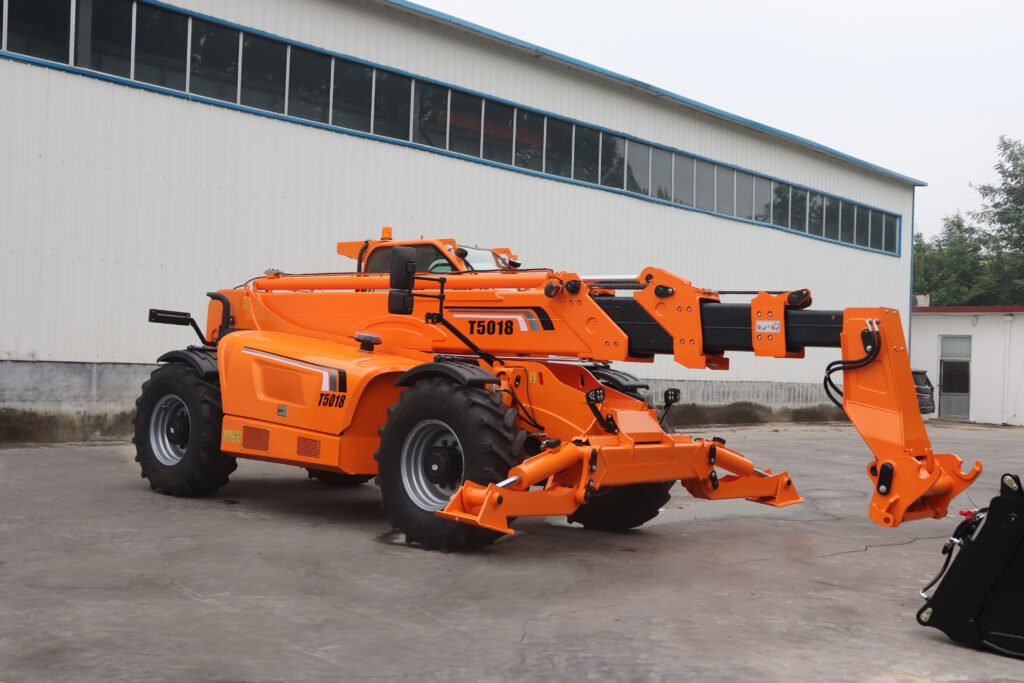
This is one of the most valuable pieces of advice I can give any telehandler owner. Move from reactive repair to proactive monitoring. When your machine is new or in good working order, perform a “Speed Test.” Here’s how:
- Warm the machine up to normal operating temperature.
- Park on level ground with the boom fully retracted and lowered.
- Set the engine to a specific RPM, like 2000 RPM. Always use the same RPM for every test.
- Using a stopwatch, time how long it takes to extend the telehandler boom from fully retracted to fully extended.
- Write this time down. This is your baseline.
Do this test once a month. Over time, as components wear, this time will slowly increase. If you notice the extension time has increased by 15-20% from your baseline, it’s a clear signal that something is wrong. It means the system is losing efficiency. The cause could be increased mechanical friction from worn wear pads or failing hydraulic efficiency from a worn pump or internal cylinder leak. It doesn’t tell you exactly what the problem is, but it tells you it’s time to investigate, long before the telehandler boom starts sticking violently or fails completely. This simple, free test can save you thousands in downtime and repairs.
What Are Those Strange Noises from Your Telehandler Boom Telling You?
Your machine is trying to talk to you. That new squeal, groan, or shudder from your telehandler boom isn’t random noise; it’s a specific message about a developing failure.
Learning to interpret the sounds of your telehandler boom is a powerful diagnostic tool. A sharp whistle often points to a hydraulic flow issue, a dull thud suggests mechanical impact or a broken part, and a shuddering indicates air in the system or failing seals.

A good operator knows their machine by feel and by sound. When a new noise appears, it’s an early warning sign. Don’t just turn up the radio. As a manufacturer, we spend a lot of time listening to machines on our test stands. Those sounds tell a story. A healthy telehandler boom should operate with a consistent, smooth hydraulic hum. When that changes, pay attention. I call this the “Art of Acoustic Diagnosis.” It’s about connecting a specific sound to a potential problem.
For instance, a high-pitched whine or whistle that changes with engine speed often points to a hydraulic issue, like fluid being forced through a small opening or a relief valve chattering. In contrast, a deep, “clunk” or “thud” sound, especially when starting or stopping the boom movement, is usually mechanical. It could be a broken wear pad shifting or a loose component. A “shuddering” or “groaning” sound accompanied by jerky movement is a classic symptom of air in the hydraulic system or worn cylinder seals that are allowing the piston to vibrate.
The Art of Acoustic Diagnosis for Your Telehandler Boom
| صوت | وصف | السبب المحتمل | الإجراء الموصى به |
|---|---|---|---|
| Sharp Whistle/Squeal | A high-pitched noise, changes with RPM. | Hydraulic fluid forced through a restriction, or a faulty relief valve. | Check hydraulic fluid level and for kinked hoses. Have pressures checked. |
| Dull Thud/Clunk | A single, heavy knock, often at start/stop of movement. | Broken wear pad, loose pin, or boom section shifting. | Immediately stop and inspect wear pads and pivot points. |
| Shuddering/Groaning | A vibration you can feel and hear during movement. | Air in the hydraulic system; worn cylinder seals. | Bleed the hydraulic system. If it persists, have cylinder seals inspected. |
| Grinding/Scraping | A harsh metal-on-metal noise. | Severe lack of lubrication, collapsed wear pad. | STOP IMMEDIATELY. Forcing it will cause catastrophic damage to the telehandler boom. |
Could a Damaged Telehandler Boom Structure Be the Real Issue?
You’ve checked everything—grease, pads, hydraulics—but the boom still binds. It’s time to look closer at the steel itself. A past impact or overload could have caused damage you can’t easily see.
A bent or cracked telehandler boom structure is a serious and often overlooked cause of sticking. Even a slight deformation, invisible to the naked eye, can create immense binding force between sections, making smooth extension and retraction impossible.
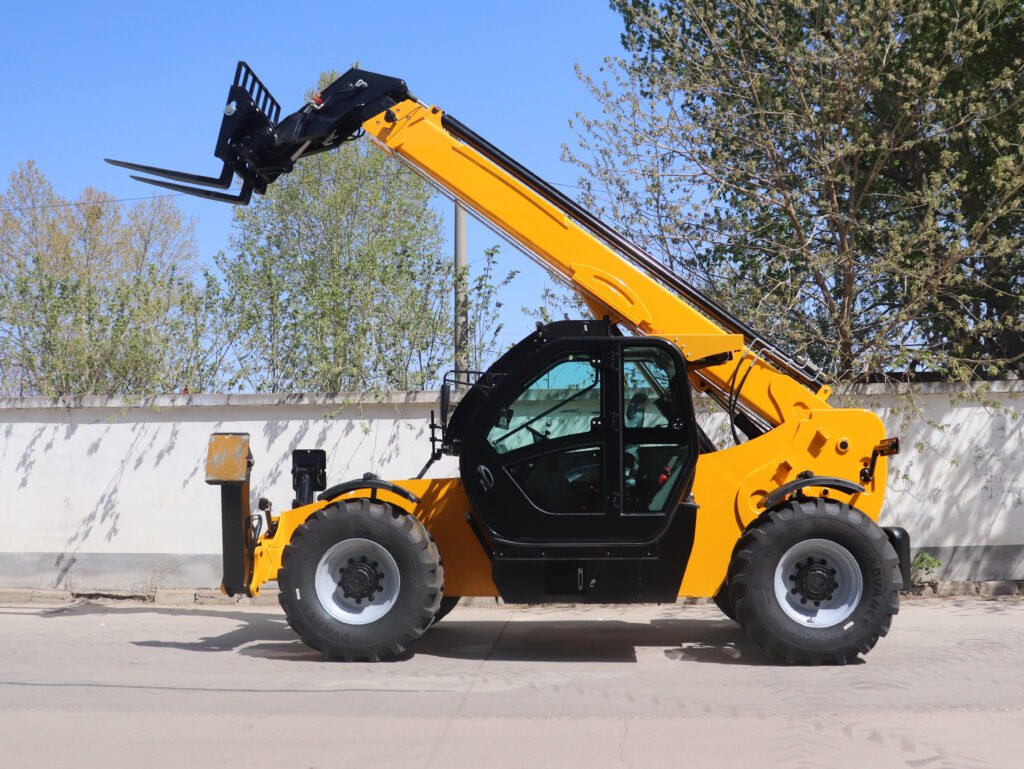
This brings us back to the first step of my “Sequential Check Rule”—the structure. The boom of a telehandler is a precision-engineered piece of equipment. The tolerances between the nesting sections are very tight. An event like overloading the machine, hitting an overhead obstacle, or even a sharp, hard shock from driving over a curb with a load raised can be enough to slightly bend or twist a boom section. You might not even be able to see the bend with your naked eye, but it’s there. As you try to extend the boom, this slight bend creates enormous pressure points.
The wear pads get crushed, and the steel sections start to bind. The force required to overcome this friction can be huge, leading to the sticking and jerking you’re experiencing. Always perform a thorough visual inspection of your telehandler boom after any potential impact. Look closely at the weld lines, especially around the base and ends of each section, for any signs of hairline cracks in the paint. Run your hand along the flat surfaces to feel for any subtle dents or ripples. A damaged boom structure is a safety-critical failure and needs to be assessed by a professional immediately.
What Makes a High-Quality Telehandler Boom Resistant to Sticking?
Some telehandlers seem to run forever with few issues, while others are constant trouble. The difference starts long before the machine ever reaches your job site, in the design and manufacturing.
A reliable telehandler boom is the result of superior design, high-grade materials, and precision manufacturing. Using high-strength steel, robotic welding for consistency, and quality components like durable wear pads and seals directly prevents the common causes of sticking.

After 15 years of exporting telehandlers from our facility in China to countries all over the world, I can tell you that a trouble-free telehandler boom is not an accident. It is the result of deliberate choices we make every day in our factory. It starts with the material. We use high-tensile strength steel that resists bending and fatigue. Then, it’s about precision. Our boom sections are cut and formed by computer-controlled machines, and the welding is done by robots to ensure every weld is perfect and consistent. This precision ensures the boom sections fit together perfectly, reducing stress on the wear pads and the hydraulic system.
We also don’t cut corners on the small parts. We use high-quality, durable wear pads and hydraulic seals from reputable suppliers, the very parts that are the first line of defense against sticking and drifting. We manufacture a wide range of machines, from 3-ton to 6-ton models with boom lengths from 7 meters all the way to 18 meters. Every single telehandler boom we build, regardless of its size, is made with this philosophy. This commitment to quality, backed by our EU CE certification, is why our customers, from distributors to end-users, trust our machines to perform reliably. Choosing a well-made machine from the start is the best way to prevent problems with your telehandler boom.
خاتمة
A sticking مناولة boom is often a mechanical problem, not hydraulic. Always check the physical structure and wear pads first, use the correct high-pressure grease, and proactively monitor your boom’s performance.
تابعنا في:يوتيوب.