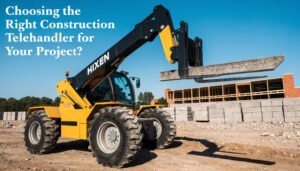
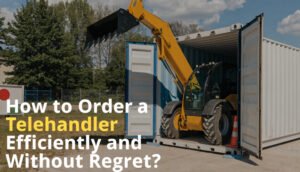
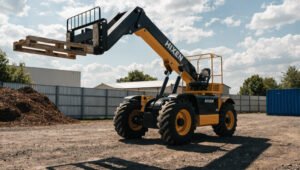
Are you struggling with inefficient material handling on your construction site, where traditional forklifts just can’t reach or adapt to uneven terrain? Many construction managers face the problem of getting materials to elevated positions or across obstacles, slowing down project timelines and increasing labor costs. This is precisely where the versatility and power of a dedicated construction telehandler can transform your operations.
Selecting the ideal construction telehandler involves evaluating lift height, load capacity, site conditions, and required attachments to optimize efficiency and safety for diverse construction tasks, from urban renovations to high-rise projects. Our comprehensive ranges are designed to meet these varied demands.
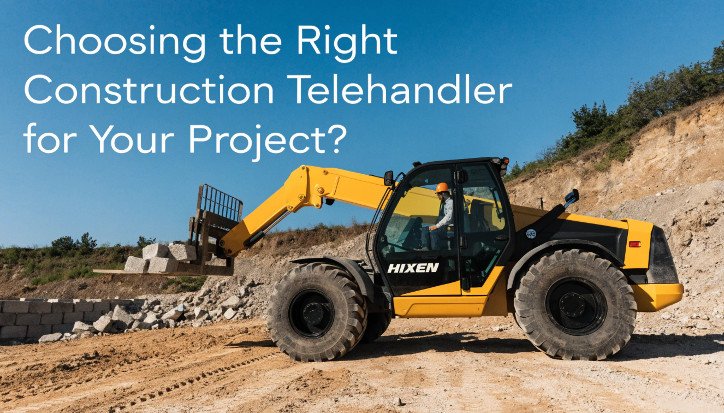
Understanding the right equipment can make all the difference between project delays and seamless execution. Let’s dive deeper into why these robust machines are indispensable, explore the different categories available, and help you pinpoint the perfect construction telehandler to elevate your site’s productivity.
Why is a Specialized Construction Telehandler Essential for Modern Sites?
Do you find your conventional equipment falling short on complex construction sites, leading to multiple machines being used for tasks that one could handle? Traditional solutions often struggle with the varied demands of a dynamic construction environment, causing project bottlenecks. The problem isn’t just about lifting; it’s about intelligent, adaptive material placement.
A specialized construction telehandler is essential because it offers unparalleled versatility, combining the functions of a forklift, crane, and work platform in a single, all-terrain machine. Its telescopic boom allows for precise material placement at height and outreach, significantly enhancing efficiency and safety on diverse job sites.
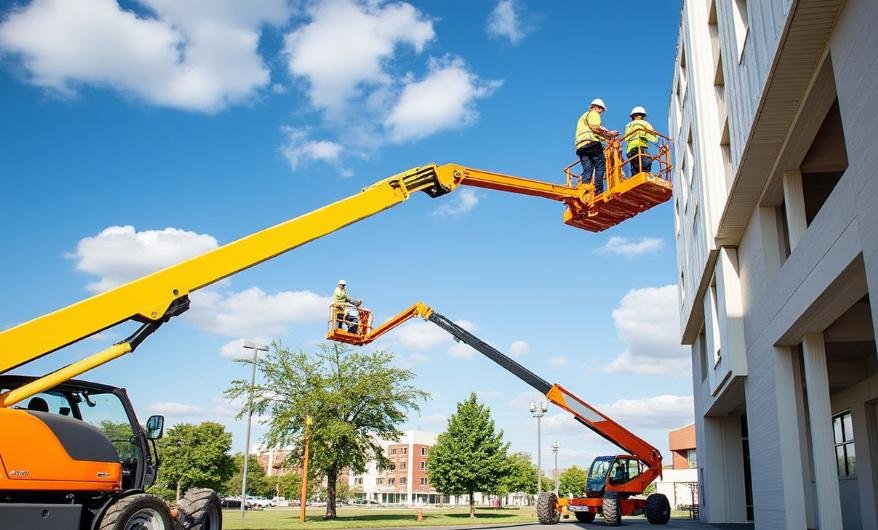
Dive Deeper: Beyond the Traditional Forklift
On a modern construction site, material handling is rarely a simple “lift and place” operation. You might need to place a pallet of bricks on the third floor of a building, carefully position steel beams over an excavation, or transport scaffolding across uneven, muddy ground. This is where the limitations of traditional equipment become glaringly obvious.
Traditional Forklifts vs. Construction Telehandlers
Traditional forklifts are fantastic for warehouse environments or paved, flat surfaces. They excel at horizontal movement and modest vertical lifts. However, introduce uneven terrain, steep inclines, or the need to reach over an obstacle, and they quickly become ineffective, or worse, unsafe. Their limited lift height and inability to project loads forward mean that for many construction tasks, they simply cannot perform.
A construction telehandler, on the other hand, is engineered specifically for these challenging environments. Its robust chassis, typically equipped with large, pneumatic tires, and often features like four-wheel drive and a leveling device, allows it to traverse rough, unpaved surfaces with ease. This all-terrain capability ensures that work doesn’t stop because of a little mud or debris.
The Power of the Telescopic Boom
The defining feature of any construction telehandler is its telescopic boom. This extendable arm is what gives the machine its incredible flexibility. Unlike a standard forklift mast that only lifts vertically, the telescopic boom can extend upwards and outwards, reaching heights and distances that are impossible for other equipment. Imagine needing to place roofing materials directly onto a building’s roof from the ground, or extending a pallet of drywall through an upper-story window. A construction telehandler can do this with precision.
- Vertical Reach: Allows materials to be lifted to multiple stories.
- Horizontal Outreach: Enables loads to be placed over trenches, fences, or other obstructions without needing to reposition the entire machine.
- Precise Positioning: The boom’s articulation, combined with fine controls, means operators can accurately place materials exactly where they are needed, reducing manual labor and the risk of damage.
Multi-Functionality for Cost-Effectiveness
One of the greatest benefits of investing in a construction telehandler is its ability to perform the roles of several machines. By simply switching out attachments – from forks to buckets, winches, or work platforms – a single construction telehandler can:
- Act as a Forklift: Handling palletized materials, just like a traditional forklift.
- Function as a Crane: Using a jib or winch attachment to lift and suspend loads.
- Serve as a Loader: With a bucket attachment, it can move loose materials like sand or gravel.
- Become a Work Platform: Providing a safe, elevated area for workers, replacing the need for scaffolding or scissor lifts in some scenarios.
This multi-functionality translates directly into significant cost savings for your project. Instead of purchasing, maintaining, and transporting multiple pieces of specialized equipment, a single construction telehandler can cover a vast array of tasks, streamlining your fleet and optimizing your budget. This versatility makes a construction telehandler an indispensable asset for any project aiming for efficiency and safety.
What Compact Construction Telehandler Models Suit Urban Projects?
Are you managing construction in a bustling city, facing tight spaces, height restrictions, and the constant need for nimble equipment? Urban projects present unique challenges where bulky machinery is simply not an option, leading to difficulties in material movement and overall site efficiency. You need powerful lifting capabilities without the large footprint.
Compact construction telehandler models, typically with a 7-meter lift height and a tight turning radius, are perfectly suited for urban projects due to their ability to navigate confined spaces, enter low-clearance areas, and operate efficiently on smaller sites. Our HX3007, HX3507, and HX4007 exemplify this agile, powerful design.
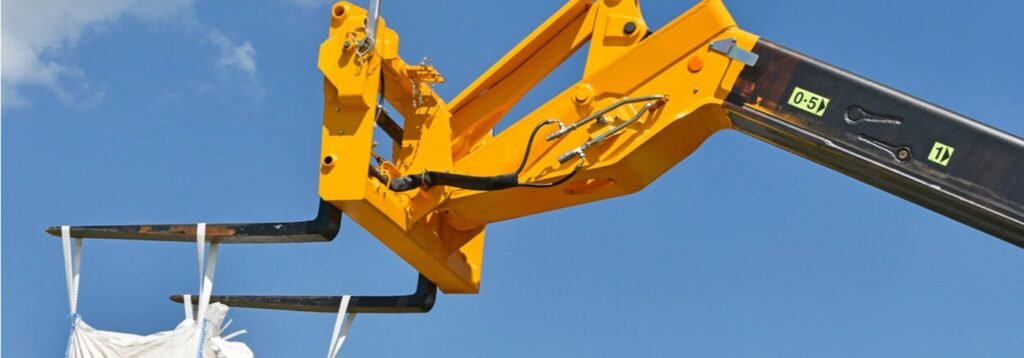
Dive Deeper: The Agile “Site All-Rounder”
When working on urban regeneration, residential developments with limited access, or even indoor construction, the size of your equipment is paramount. A full-sized construction telehandler, while powerful, might be too large to maneuver through narrow streets, enter existing buildings, or operate effectively in a densely packed site. This is where compact construction telehandlers shine as the “site all-rounder.”
Designed for Agility and Access
Our 7-meter class construction telehandlers, including the HX3007, HX3507, and HX4007, are specifically engineered with a compact chassis. This design philosophy ensures they can pass through tight gateways, navigate congested pathways, and operate effectively where space is at a premium.
- Narrow Width: Many models in this range are designed to be narrower than their larger counterparts, allowing them to fit through standard double-door openings or between closely spaced structures.
- Low Height: With lower overall heights, they can access areas with overhead obstructions, such as multi-story car parks, existing building interiors, or under low bridges.
- Excellent Maneuverability: Equipped with advanced steering modes (e.g., two-wheel, four-wheel, and crab steer), these compact construction telehandlers can execute tight turns and precisely position themselves in constrained environments. Their ability to “crab walk” allows for sideways movement, which is incredibly useful for parallel parking or moving alongside a wall.
Ideal Applications for Compact Construction Telehandlers
These machines are not just small; they are intelligently designed to tackle specific types of work:
- City Renovations: Lifting materials for facade repairs, interior fit-outs, or rooftop work in bustling urban centers.
- Residential Construction: Moving building materials on smaller housing developments where space for traditional cranes or large forklifts is limited.
- Landscaping Projects: Transporting and positioning trees, rocks, or large landscaping elements in gardens or public parks with restricted access.
- Indoor Operations: Many compact construction telehandlers are suitable for working inside large industrial buildings, warehouses, or exhibition halls, especially with non-marking tires.
- Event Setup: Efficiently handling equipment, staging, and structural elements for events in urban settings.
Key Features of Our Compact Construction Telehandlers
Despite their smaller size, our HX3007, HX3507, and HX4007 models do not compromise on power or safety. They typically offer:
- 7-Meter Lift Height: Sufficient for reaching up to two or three stories, perfect for most low-to-mid rise urban construction.
- Impressive Load Capacity: Ranging from 3,000kg (HX3007) to 4,000kg (HX4007), allowing them to lift substantial loads of bricks, timber, or pallets.
- Standard Leveling Device: All our models, including the compact range, feature a leveling device. This critical component ensures stability by allowing the operator to adjust the machine’s frame to compensate for uneven ground, guaranteeing safe and precise operations even on challenging urban surfaces.
- Robust Build: Designed to withstand the rigors of construction work, ensuring durability and reliability.
- Transportability: Their compact dimensions and lighter weight (approximately 7,600-8,100 kg) make them easier and more cost-effective to transport between job sites.
Investing in a compact construction telehandler means you gain powerful lifting and reaching capabilities without sacrificing the agility needed to thrive in the demanding, space-constrained environments of urban construction. They are truly the flexible backbone for city-based projects.
Which Mid-Range Construction Telehandler Dominates General Site Work?
Are you seeking a versatile workhorse that can handle the majority of material handling tasks on a typical construction site, without being overly specialized or excessively large? Many project managers struggle to find the sweet spot between lift height, load capacity, and maneuverability for their diverse, day-to-day operations.
The mid-range construction telehandler, exemplified by our 10-meter class models like the HX3510, HX4010, and HX5010, dominates general site work because it offers an optimal balance of lift height and load capacity suitable for most building structures, combined with excellent versatility for various industrial and agricultural applications.
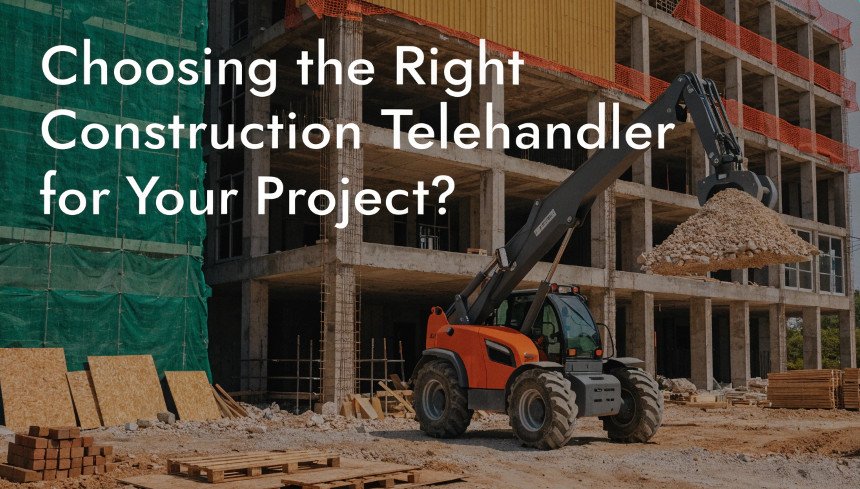
Dive Deeper: The “Golden Standard” for Versatility
For the vast majority of construction projects, from multi-story residential buildings to light industrial facilities, a 10-meter class construction telehandler is often considered the “golden standard.” These machines strike an ideal balance, offering substantial reach and lifting power without the bulk that might hinder maneuverability on moderately sized sites. They are the true workhorses, capable of handling a broad spectrum of tasks efficiently and safely.
Why 10 Meters is the Sweet Spot
A 10-meter lift height is incredibly versatile. It covers:
- Most Mid-Rise Structures: Easily reaching the third or fourth floor of typical buildings, making it ideal for bricklaying, timber framing, and concrete pouring support.
- Roofing Applications: Lifting shingles, trusses, and other roofing materials directly to the roof level.
- Scaffolding and Formwork: Efficiently moving and positioning heavy scaffolding components and concrete formwork.
- General Site Logistics: Handling everything from delivery pallets to waste removal skips around the site.
Our Mid-Range Construction Telehandler Lineup
Our HX3510, HX4010, and HX5010 models embody this sweet spot, each offering slightly different capacities to match your specific needs:
| Modell | Max. Lift Height | Max. Load Capacity | Max. Forward Reach | Typical Weight | Application Focus |
|---|---|---|---|---|---|
| HX3510 | 10 Meter | 3,500 kg | 6.1 meters | 9,500 kg | Residential, light commercial, general use |
| HX4010 | 10 Meter | 4,000 kg | 6.1 meters | 10,000 kg | Commercial, industrial, heavier loads |
| HX5010 | 10 Meter | 5.000 kg | 6.1 meters | 11.000 kg | Demanding industrial, large-scale projects |
Note: All models come standard with a robust leveling device for enhanced stability on uneven terrain.
Beyond Construction: Industrial and Agricultural Prowess
While primarily designed for construction, the versatility of these mid-range construction telehandlers extends well beyond the typical building site:
- Industrial Material Handling: In factories, warehouses, and logistics centers, they can move heavy machinery, large crates, or bulk materials across varied surfaces. Their ability to reach into trucks or stack high makes them invaluable.
- Agricultural Applications: Farmers use these construction telehandlers for tasks like stacking hay bales, loading grain into silos, cleaning barns, and handling large feed bags. Their all-terrain capability is particularly beneficial on fields and uneven farmyards.
- Abfallmanagement: Moving and stacking large bins, loading shredders, or managing recycling materials.
Key Advantages of Our 10-Meter Construction Telehandler Range
- Optimized Performance: Carefully engineered to deliver maximum power and efficiency for the most common lifting and placement tasks.
- Robust Build Quality: Constructed with high-strength steel and durable components to withstand continuous heavy-duty use.
- Verbesserter Bedienerkomfort: Ergonomic cabins with excellent visibility and intuitive controls reduce operator fatigue and increase productivity over long shifts.
- Safety Features: Standard safety features, including load charts and stability systems, ensure secure operation, particularly when working at height or with extended loads. Every construction telehandler in our range is designed with safety as a priority.
- Attachment Versatility: Fully compatible with a wide array of attachments, from standard forks and buckets to specialized jibs, grabs, and work platforms, further expanding their application scope. This makes a single construction telehandler an incredibly flexible asset.
When you need a reliable, powerful, and adaptable machine that can confidently tackle the core challenges of almost any project, our 10-meter construction telehandler models are the undisputed champions for general site work. They represent a smart investment that will pay dividends in efficiency and productivity.
How Do High-Reach Construction Telehandlers Tackle Towering Challenges?
Are you consistently facing projects that demand lifting materials to extreme heights, like high-rise buildings or expansive industrial facilities, and conventional equipment just can’t reach? The challenge of elevated construction requires not only immense vertical reach but also robust stability and precision to ensure safety and efficiency.
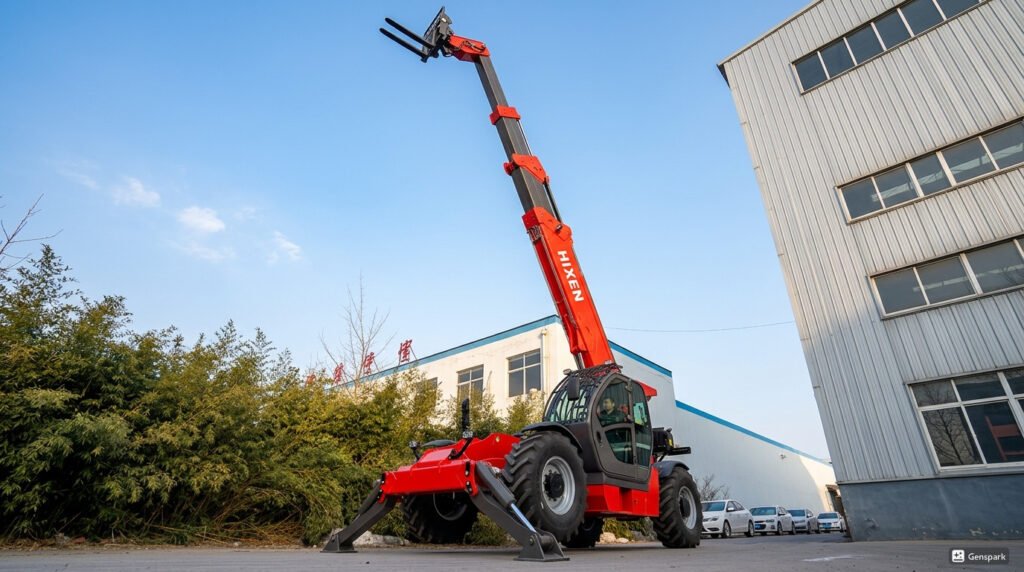
High-reach construction telehandlers, spanning 14-18 meters in lift height with models like the HX4014 to HX7018, tackle towering challenges by providing the extreme vertical reach and substantial load capacity necessary for high-rise steel erection, precast component installation, and large-span factory construction, all while ensuring stability with integrated outriggers.
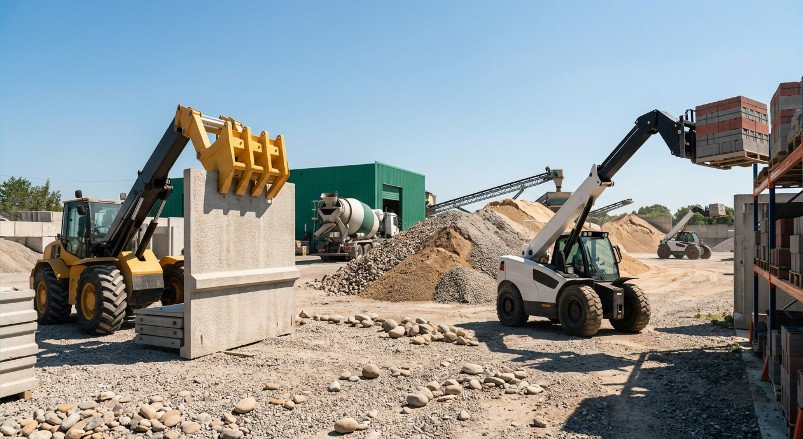
Dive Deeper: Conquering the Skyline
For ambitious projects that aim for the sky, a standard construction telehandler simply won’t suffice. High-rise construction, the assembly of large steel structures, or the installation of massive precast concrete elements demand equipment that can not only reach incredible heights but also handle significant loads with unwavering stability. Our 14-18 meter class construction telehandlers are engineered precisely for these “high-flying” tasks, turning seemingly impossible lifts into routine operations.
The Engineering Behind Extreme Reach
These machines are not just bigger; they incorporate specialized engineering to ensure safe and efficient operation at elevated extremes:
- Multi-Section Telescopic Booms: Designed with multiple hydraulic sections that extend smoothly, providing exceptional reach while maintaining structural integrity.
- Robust Chassis and Counterweighting: Heavier, more robust frames and precisely calculated counterweights ensure overall stability, especially when the boom is fully extended and loaded.
- Integrated Stabilizer Outriggers: A critical feature for high-reach models. These hydraulic outriggers extend from the chassis, providing a broader and more stable base of support, essential for maintaining balance and preventing tipping when lifting heavy loads to maximum height or outreach. The deployment of these outriggers is often interlocked with the boom’s operation, ensuring they are correctly positioned before high lifts can occur.
Our High-Reach Construction Telehandler Range: Masters of Elevation
Our HX4014, HX4018, HX5018, HX6018, and HX7018 models are designed to cover the most demanding height requirements:
| Modell | Max. Lift Height | Max. Load Capacity | Max. Forward Reach | Typical Weight | Application Focus |
|---|---|---|---|---|---|
| HX4014 | 14 meters | 4,000 kg | 9,5 Meter | 12.000 kg | Mid-to-high-rise construction, steel erection |
| HX4018 | 18 Meter | 4,000 kg | 13.5 meters | 13,500 kg | High-rise residential/commercial, precast panels |
| HX5018 | 18 Meter | 5.000 kg | 13.5 meters | 14,000 kg | Heavy-duty high-rise, industrial construction |
| HX6018 | 18 Meter | 6.000 kg | 13.5 meters | 15.000 kg | Large-scale industrial, heavy component lifting |
| HX7018 | 18 Meter | 7.000 kg | 13.5 meters | 16,000 kg | Heaviest precast, structural steel, specialized |
Note: All models in this high-reach range are equipped with stabilizer outriggers for maximum safety during elevated operations.
Applications Where High-Reach Construction Telehandlers Excel:
- High-Rise Building Construction: Lifting structural steel, concrete precast elements, glazing, and roofing materials for multi-story buildings.
- Bridge and Infrastructure Projects: Positioning bridge components, working on elevated sections, or assisting with large-scale formwork.
- Industrial Plant Construction: Installing heavy machinery, ducting, and structural components in large factories or power plants.
- Wind Turbine Assembly: Assisting with the ground-level assembly and positioning of turbine components before crane lifts.
- Facade Installation: Precisely placing large curtain wall panels or stone facades on tall buildings.
The “0.5m” detail often seen on diagrams for these machines highlights their precision. Even at 18 meters, operators can make minute adjustments, ensuring materials are placed exactly where they need to be, minimizing errors and re-work. The 18-meter class, in particular, is often seen as another “golden specification” for high-rise work, as it covers the vast majority of demands for tall structures. Investing in a high-reach construction telehandler means equipping your project with the power to overcome the most challenging vertical logistics, ensuring your construction literally reaches new heights with safety and efficiency.
What Shared Technologies Define Our Construction Telehandler Range?
Are you wondering if there’s a common thread of quality and innovation across our diverse range of construction telehandlers, ensuring consistent performance regardless of size? It’s crucial for project managers to rely on a fleet that shares foundational strengths, rather than dealing with wildly different operational characteristics for each machine.
Our entire construction telehandler range is defined by shared core technologies, including all-terrain adaptive capabilities with a leveling device, robust safety systems like load charts, and multi-functional attachment compatibility. These common strengths ensure consistent performance, reliability, and versatility across all models, from compact to high-reach.
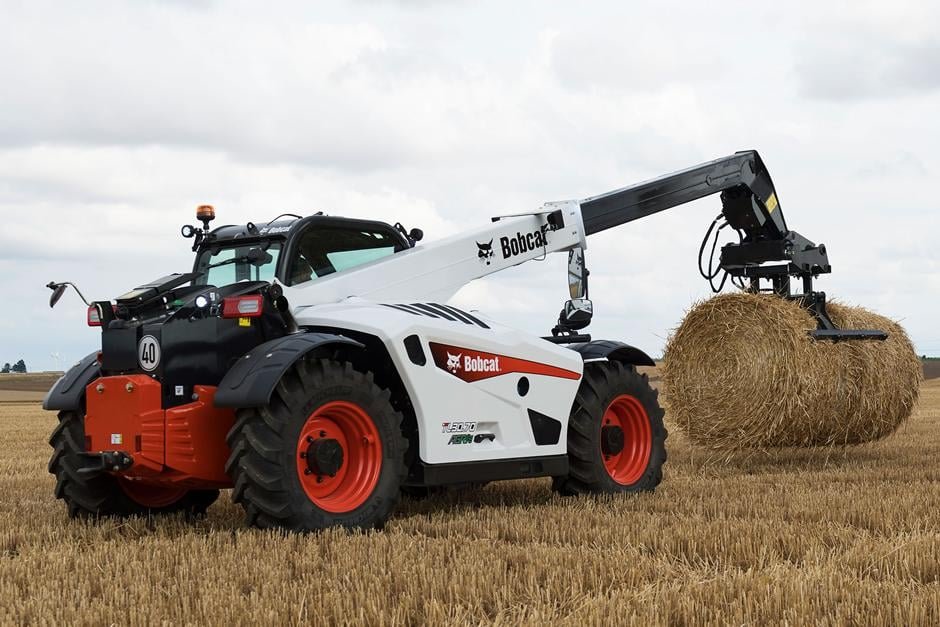
Dive Deeper: The Pillars of Our Design Philosophy
When we design our construction telehandlers, we don’t just scale up or down; we integrate a set of core technologies and design principles that ensure every machine, regardless of its size or lift capacity, delivers exceptional performance, safety, and durability. These shared characteristics are the backbone of our reputation for quality and reliability, ensuring that whether you choose a compact HX3007 or a heavy-duty HX7018, you’re investing in a consistently high-performing construction telehandler.
1. Unrivaled All-Terrain Adaptability
Construction sites are rarely flat, paved surfaces. Mud, gravel, inclines, and uneven ground are common obstacles. Our construction telehandlers are built to conquer these challenges:
- Four-Wheel Drive (4WD): Standard across the range, 4WD provides superior traction, allowing the machines to navigate slippery or soft terrain without getting bogged down. This is critical for maintaining productivity in adverse weather conditions.
- Large, Aggressive Tires: Designed for off-road performance, these tires offer excellent grip and stability on varied surfaces, absorbing shocks and contributing to a smoother ride.
- Leveling Device (Machine on tyres with forks – with levelling device Metric): This is a universal feature across our entire range, as explicitly stated in our product descriptions. This hydraulic system allows the operator to mechanically level the machine’s chassis by up to several degrees, compensating for sloped or uneven ground. This capability is paramount for:
- Verbesserte Stabilität: A level machine has a much greater stability envelope, significantly reducing the risk of tipping, especially when operating the boom at height or with heavy loads.
- Precise Load Placement: A level machine ensures that loads are lifted and placed vertically, preventing unwanted swinging or off-center placement.
- Increased Safety: By ensuring a stable platform, the leveling device directly contributes to safer working conditions for the operator and those around the machine.
- Multiple Steering Modes: To maximize maneuverability in diverse environments, our construction telehandlers offer:
- Zweiradlenkung: Standard automotive steering for road travel and basic maneuvers.
- Allradlenkung: Tightens the turning radius significantly, ideal for confined spaces.
- Krabbenochse: Allows the machine to move diagonally, perfect for parallel movement against a wall or extracting from tight corners.
2. Comprehensive Safety Design
Safety is non-negotiable in construction. Our construction telehandlers integrate a suite of features designed to protect operators and ground personnel:
- Load Management Systems: Every construction telehandler comes with a detailed load chart (or load management system). This critical tool graphically displays the maximum safe load capacity at various boom heights and reaches. Operators are trained to understand and adhere to these charts, which are often integrated into the machine’s control system, providing warnings if limits are approached.
- Overload Protection: Sensors and hydraulic cut-offs prevent operators from exceeding the machine’s safe operating limits, automatically restricting movements that could lead to instability.
- Stabilizer Outriggers (High-Reach Models): As discussed, these are crucial for our larger, high-reach construction telehandlers, ensuring a wide, stable footprint during elevated operations.
- Excellent Visibility: Cabins are designed with large glass areas and strategically placed mirrors to provide operators with an unobstructed view of the work area, boom, and surroundings, minimizing blind spots.
- ROPS/FOPS Compliant Cabins: Rollover Protective Structures and Falling Object Protective Structures are standard, safeguarding the operator in the event of an incident.
3. Unmatched Multi-Functional Expandability
The ability to adapt to different tasks is a hallmark of a valuable construction telehandler. Our machines achieve this through broad attachment compatibility:
- Quick-Attach Systems: Standardized hydraulic quick-attach mechanisms allow operators to rapidly switch between various attachments, maximizing machine uptime and versatility.
- Wide Range of Attachments:
- Standard Forks: For palletized materials.
- Eimer: For loose materials like gravel, sand, or snow.
- Jibs/Winch Attachments: To function as a mini-crane for suspended loads.
- Arbeitsplattformen: For safe personnel elevation.
- Bale Clamps/Grapples: For agricultural or recycling applications.
- Sweepers, Concrete Mixers, Tire Handlers: Specialized attachments further expand their utility.
This shared foundation of robust design, advanced safety, and versatile functionality ensures that every construction telehandler we produce is a reliable, high-performance asset ready to tackle the varied demands of your construction site with confidence.
How Does All-Terrain Capability Benefit Every Construction Telehandler?
Do you frequently encounter job sites with unpredictable ground conditions, from muddy patches to steep gradients, making conventional material handling difficult or unsafe? Relying on equipment that can only operate on flat, paved surfaces severely limits your operational flexibility and project timelines.
All-terrain capability benefits every construction telehandler by enabling seamless operation across diverse, challenging ground conditions, including uneven, muddy, or sloped surfaces. Features like four-wheel drive, robust tires, and integrated leveling devices ensure stability, traction, and continuous productivity, regardless of the site’s environment, making the construction telehandler a true all-rounder.
Dive Deeper: Unlocking Unrestricted Site Access
The very nature of construction work dictates that sites are rarely pristine. From the initial groundbreaking to the final landscaping, you’re likely to encounter a constantly changing landscape: freshly graded earth, muddy pits after rain, gravel pathways, and sloped embankments. This unpredictability is precisely why all-terrain capability is not just a desirable feature but an essential one for any effective construction telehandler. It unlocks unrestricted site access, ensuring that materials can be delivered and positioned exactly where and when they are needed, irrespective of ground conditions.
Components of True All-Terrain Performance
Several integrated features work in synergy to give our construction telehandlers their exceptional off-road prowess:
- Powerful Four-Wheel Drive (4WD) Systems: At the heart of our telehandlers’ mobility is a robust 4WD system. Unlike two-wheel drive machines that can easily lose traction on loose or slippery surfaces, 4WD distributes power to all four wheels, maximizing grip and preventing slippage. This means:
- Improved Traction: Essential for climbing inclines, traversing muddy areas, or operating on sandy or gravelly ground.
- Verbesserte Stabilität: A machine that maintains traction is less likely to slide or become unstable.
- Increased Worksite Accessibility: You can operate in areas inaccessible to standard forklifts, significantly expanding your operational footprint.
- Heavy-Duty Off-Road Tires: Our construction telehandlers are fitted with large, deep-tread pneumatic tires specifically designed for rugged environments. These tires provide:
- Superior Grip: Aggressive tread patterns dig into soft ground, providing the necessary traction.
- Cushioning: The pneumatic nature absorbs shocks and vibrations from uneven terrain, contributing to operator comfort and reducing wear and tear on the machine.
- Durability: Constructed with tough compounds, they resist punctures and damage from debris common on construction sites.
- High Ground Clearance: The chassis design of our construction telehandlers provides ample ground clearance, allowing them to pass over obstacles like rocks, rubble, or uneven earth without snagging the undercarriage. This prevents damage and keeps the machine moving freely.
- Integrated Leveling Device: As highlighted previously, our “Machine on tyres with forks – with levelling device Metric” description confirms this critical feature across all our models. The leveling device allows the operator to tilt the chassis to compensate for slopes of several degrees. This is invaluable because:
- Maintains Stability on Slopes: A perfectly level chassis dramatically increases the machine’s stability, even when parked on an incline, which is vital for safe lifting, especially at height.
- Ensures Vertical Lift: When the machine itself is level, the boom lifts and extends precisely vertically and horizontally, preventing off-center loads or accidental tilting of materials, which is crucial for accuracy and safety.
- Expands Operable Area: It allows the construction telehandler to safely operate on parts of the site that would otherwise be too uneven or sloped for standard equipment.
The Impact on Productivity and Safety
The cumulative effect of these all-terrain features is a construction telehandler that offers unmatched productivity and safety:
- Reduced Downtime: Machines don’t get stuck, work continues even after rain, and operations are less impacted by challenging ground.
- Faster Material Flow: Materials can be moved directly to the point of use, even if it’s off-road, reducing reliance on secondary transport or manual handling.
- Enhanced Safety: A stable, well-tractioned machine reduces the risk of accidents related to tipping, slipping, or losing control, protecting both the operator and other personnel on site.
Ultimately, the all-terrain capability ensures that your construction telehandler is not just a lifting machine, but a truly flexible asset that can go anywhere and do anything required on a dynamic construction site, maximizing your investment and accelerating project completion.
What Versatile Attachments Enhance a Construction Telehandler’s Functionality?
Are you under the impression that a construction Teleskoplader is primarily just a glorified forklift, missing out on its potential to replace multiple pieces of equipment on your site? Limiting your telehandler to just forks means you’re not fully leveraging its inherent adaptability, leading to redundant machinery and higher operational costs.
Versatile attachments significantly enhance a construction telehandler’s functionality, transforming it into a multi-purpose machine capable of performing tasks typically requiring dedicated forklifts, cranes, loaders, or access platforms. By quickly swapping forks for buckets, jibs, or work platforms, a single construction telehandler can streamline operations and reduce fleet complexity.
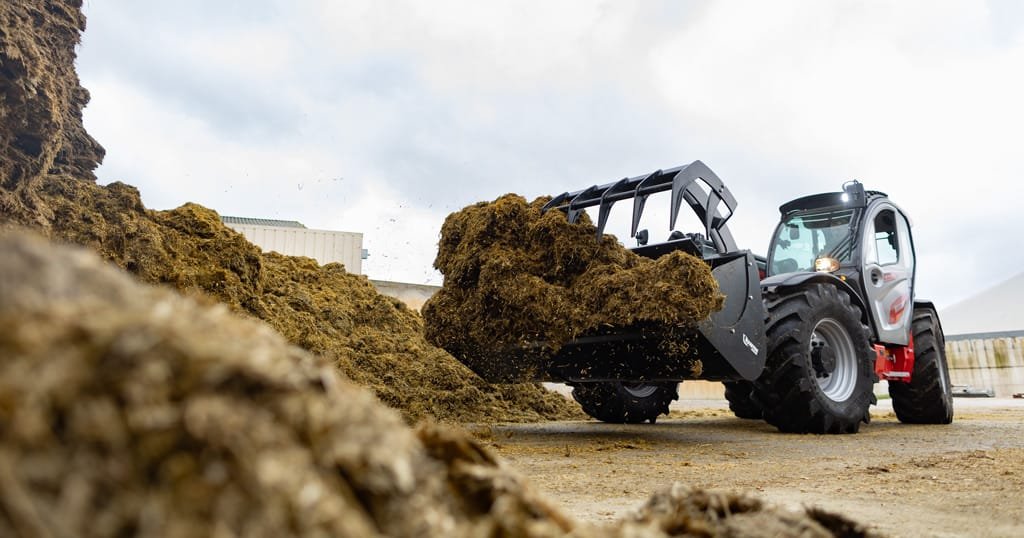
Dive Deeper: The Multi-Tool of the Construction Site
The true genius of a construction telehandler lies not just in its telescopic boom and all-terrain capabilities, but in its extraordinary versatility, which is amplified by a wide array of interchangeable attachments. Think of the construction telehandler as the ultimate multi-tool for your job site. By equipping it with the right attachment, you can dramatically expand its functionality, turning one machine into a fleet of solutions. This capability is key to optimizing equipment investment, reducing operational costs, and boosting overall site efficiency.
The Power of the Quick-Attach System
A fundamental aspect of attachment versatility is the quick-attach system. Most modern construction telehandlers, including all of ours, feature hydraulic quick-couplers that allow operators to rapidly and safely swap attachments in just a few minutes, often without leaving the cab. This minimizes downtime between tasks and encourages operators to use the most appropriate tool for the job.
Common and Specialized Attachments that Revolutionize Tasks:
- Standard Pallet Forks:
- Funktion: The most common attachment, used for lifting, moving, and placing palletized materials like bricks, cement bags, timber, and drywall.
- Benefit: Transforms the telehandler into a heavy-duty forklift, but with superior reach and all-terrain capability.
- Buckets (General Purpose, Light Material, Grapple Buckets):
- Funktion: Turns the construction telehandler into a capable front-end loader. Used for scooping, transporting, and loading loose materials such as sand, gravel, soil, snow, or even demolition debris. Grapple buckets add the ability to grip irregular items.
- Benefit: Eliminates the need for a separate wheel loader for many tasks, especially for clearing and moving bulk materials around the site.
- Jibs and Winches:
- Funktion: Attachments that convert the construction telehandler into a compact crane. Jibs provide an extension point for lifting suspended loads, while winch attachments add precise vertical lifting capability for awkward or heavy items that can’t be put on forks.
- Benefit: Ideal for positioning steel beams, roof trusses, small modular units, or even engines, significantly reducing reliance on larger, more expensive mobile cranes for smaller lifts.
- Work Platforms / Personnel Baskets:
- Funktion: Provides a safe, elevated platform for workers to perform tasks at height, such as facade installation, painting, electrical work, or inspection. They often come with controls inside the basket.
- Benefit: Replaces the need for scaffolding, scissor lifts, or boom lifts in many scenarios, offering greater reach, mobility, and setup speed. Safety features often include auto-leveling and safety gates.
- Tyre Handlers:
- Funktion: Specialized clamp attachments designed for safely gripping and manipulating large, heavy tires, common in mining, heavy equipment maintenance, or industrial applications.
- Benefit: Provides a safe and efficient way to handle oversized tires, protecting workers from injury and preventing damage to expensive components.
- Sweepers:
- Funktion: Brush attachments that turn the telehandler into a powerful site cleaner, effectively sweeping away dust, debris, and light snow from roads, yards, and large indoor spaces.
- Benefit: Maintains a clean and safe working environment, which is crucial for operational efficiency and accident prevention.
- Concrete Mixers:
- Funktion: A drum attachment that allows the telehandler to mix and transport concrete directly to the pour site, even in hard-to-reach areas.
- Benefit: Increases efficiency for small to medium concrete pours, reducing reliance on larger concrete trucks or manual mixing.
Strategic Benefits of Attachment Versatility:
- Reduced Fleet Size: A single construction telehandler with various attachments can replace several specialized machines, streamlining your equipment inventory and maintenance.
- Lower Operating Costs: Fewer machines mean less fuel consumption, fewer operators, and reduced maintenance overheads.
- Increased Adaptability: Respond quickly to changing site demands without waiting for different equipment to arrive.
- Maximized ROI: Get more utility out of a single investment, ensuring your construction telehandler is always busy and productive.
By understanding and utilizing the full range of attachments available, you can unlock the true potential of your construction telehandler, transforming it into the most indispensable and cost-effective machine on your job site.
How Do You Select the Perfect Construction Telehandler for Your Specific Needs?
Are you feeling overwhelmed by the variety of construction telehandler models, unsure how to choose the one that truly fits your project’s unique demands? Making the wrong selection can lead to inefficiencies, safety risks, or unnecessary costs, leaving you with equipment that doesn’t quite measure up.
Selecting the perfect construction telehandler requires a systematic evaluation of your maximum lift height, typical load weight, site conditions, and required forward reach. Matching these operational demands with the telehandler’s specifications, particularly its load chart, ensures optimal safety, efficiency, and return on investment for your specific project needs.
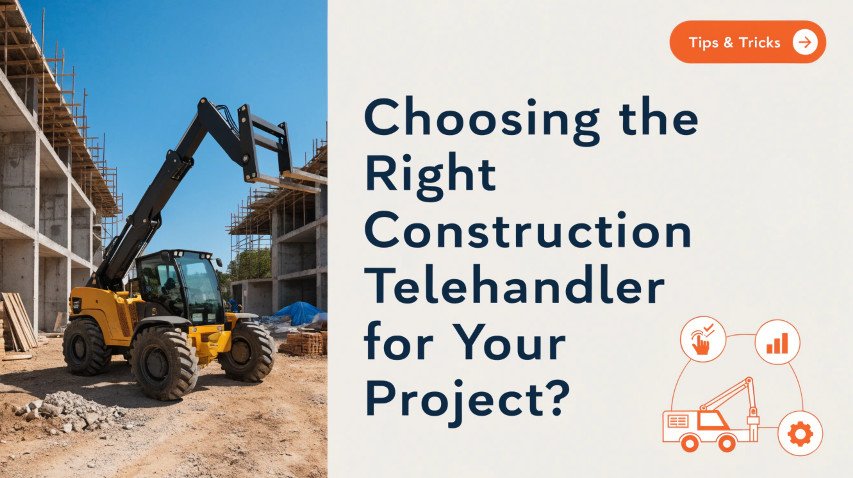
Dive Deeper: A Strategic Decision Framework
Choosing the right construction telehandler is a strategic decision that directly impacts your project’s success, safety, and budget. It’s not just about picking the biggest or cheapest machine; it’s about finding the optimal match for your specific operational profile. I’ve developed a decision framework to guide you through this process, ensuring you select a construction telehandler that truly meets your needs.
1. Define Your Maximum Lift Height Requirement:
- Question: What is the highest point materials need to be lifted to on your typical projects?
- Guidance:
- 7 meters or less: Consider our compact construction telehandler range (HX3007, HX3507, HX4007). Ideal for urban, residential, and low-rise work.
- 7 to 10 meters: Der mid-range construction telehandler models (HX3510, HX4010, HX5010) are your golden standard, covering most commercial and industrial projects.
- 10 meters or more (up to 18 meters): Our high-reach construction telehandler series (HX4014, HX4018, HX5018, HX6018, HX7018) is designed for multi-story buildings and specialized high-level tasks.
2. Determine Your Regular Load Weight:
- Question: What is the maximum weight of the materials you will typically be lifting?
- Guidance:
- 3,000 kg to 3,500 kg: HX3007, HX3507, HX3510. Suitable for general palletized goods, small structural elements.
- 4,000 kg: HX4007, HX4010, HX4014, HX4018. Handles heavier pallets, medium steel beams, precast components.
- 5,000 kg to 7,000 kg: HX5010, HX5018, HX6018, HX7018. For the heaviest precast concrete, large structural steel, specialized industrial components.
3. Assess Your Site Conditions and Space Constraints:
- Question: How much space do you have to maneuver? Is the terrain rough or flat? Are there overhead obstacles?
- Guidance:
- Very narrow/congested urban sites, low doorways: Prioritize compact construction telehandler models with minimal width and height, and excellent maneuverability (e.g., HX3007).
- Open, moderately challenging sites: Mid-range models offer a good balance of power and agility. All our construction telehandlers have all-terrain capabilities, but smaller models are naturally more nimble.
- Extremely rough, uneven terrain: Ensure the selected model has robust 4WD, high ground clearance, and critically, our standard leveling device for stability.
4. Evaluate Required Forward Reach (Outreach):
- Question: Do you need to place materials over obstacles (e.g., trenches, fences, existing structures) or through windows?
- Guidance:
- If significant forward outreach is needed without repositioning the machine, examine the “Max. Forward Reach” specification for each model. For example, our HX4010 offers 6.1 meters of forward reach, which is excellent for reaching across excavations or into buildings. High-reach models like the HX4018 can extend up to 13.5 meters forward.
- Crucial Point: Always refer to the Load Chart. The safe load capacity decreases significantly as the boom extends both upwards and forwards. A construction telehandler might be rated for 4,000 kg at maximum height (vertically), but only 500 kg at maximum forward reach. Understanding this chart is paramount for safe operation.
5. Consider Attachment Needs:
- Question: What auxiliary tasks will your construction telehandler need to perform (loading, craning, personnel lifting)?
- Guidance: Ensure the model you choose is compatible with the necessary attachments (buckets, jibs, work platforms, etc.) that will maximize its utility and potentially replace other machines on your site. All our construction telehandlers are designed for broad attachment compatibility.
Example Scenario:
You’re building a 3-story apartment block in a suburban area with moderate space, and you need to lift pallets of bricks, timber, and occasional steel beams (up to 3.5 tonnes). You also have some earthmoving to do.
- Height: 3 stories, ~9-10 meters.
- Weight: Max 3.5 tonnes.
- Site: Moderate space, some uneven ground.
- Reach: Need to place materials over a small retaining wall occasionally.
- Anhänge: Forks, bucket.
Based on this, a HX3510 mid-range construction telehandler would likely be the perfect fit. It offers 10m lift height, 3.5 tonnes capacity, excellent reach (6.1m), and can easily attach a bucket. It’s an ideal construction telehandler for this common scenario.
By systematically addressing these factors, you can confidently navigate our ranges and select the construction telehandler that will deliver maximum efficiency, safety, and productivity for your unique projects. Don’t hesitate to consult with our experts for personalized advice.
Häufig gestellte Fragen
What is the primary difference between a construction telehandler and a forklift?
A construction telehandler features a telescopic boom that extends both upward and forward, offering significantly greater reach and versatility on uneven terrain. In contrast, a standard forklift has a vertical mast, limiting its lifting to vertical movement on flat surfaces. This makes the construction telehandler ideal for dynamic construction sites.
Can a construction telehandler replace multiple machines on a job site?
Yes, absolutely! With its interchangeable attachments like forks, buckets, jibs, and work platforms, a single construction telehandler can effectively perform the functions of a forklift, a small crane, a loader, and a personnel lift. This multi-functionality can significantly reduce equipment fleet size and operational costs.
Are your construction telehandlers suitable for rough terrain?
Our entire range of construction telehandlers is specifically designed for all-terrain performance. They feature robust four-wheel drive, high-traction tires, and a standard leveling device to ensure exceptional stability and maneuverability on uneven, muddy, or sloped ground, maintaining productivity in challenging conditions.
How important is the load chart for a construction telehandler?
The load chart is critically important. It’s a safety diagram that shows the maximum safe load capacity at various boom heights and reaches. Operators must strictly adhere to the load chart to prevent tipping, overloading, and accidents. Understanding and following the load chart is essential for safe operation of any construction telehandler.
Abschluss
Navigating the complexities of modern construction demands equipment that is not just powerful, but intelligent, versatile, and safe. Our comprehensive ranges of construction telehandlers, from the agile compact models to the towering high-reach giants, are engineered to meet these precise needs. We’ve seen how a specialized construction telehandler can transform site logistics, tackling everything from tight urban spaces to extreme high-rise challenges with unparalleled efficiency. The shared technologies, robust safety features, and incredible attachment versatility across our entire lineup ensure consistent, reliable performance for every construction telehandler we offer.
Choosing the right construction Teleskoplader is a critical decision, directly impacting your project’s timeline and budget. By carefully considering your maximum lift height, load capacity, site conditions, and attachment requirements, you can pinpoint the perfect machine to elevate your operations. For personalized guidance and to explore how our cutting-edge solutions can enhance your projects, I invite you to reach out to our team of experts today. Let us help you find the ideal construction telehandler to build your success.
Folgen Sie uns weiter:YouTube.