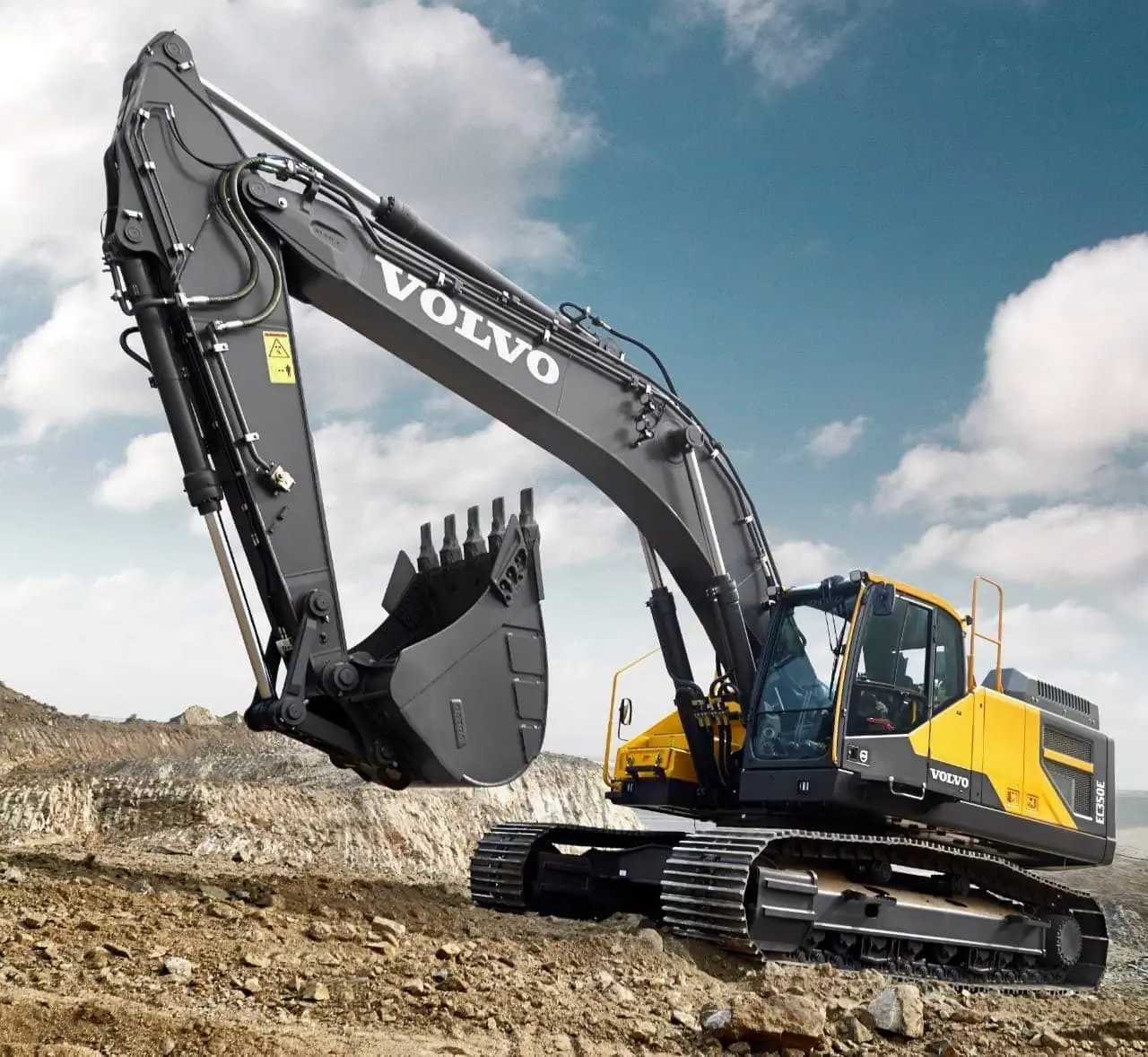
Confused by all the telehandler types? Choosing the wrong one costs time and money. I can help you pick the right machine for your job.
Choosing the right type of telehandler boom means matching its design—like fixed, rotating, or compact—to your specific job’s needs for reach, capacity, and maneuverability. This guide breaks down each type so you can make a smart, cost-effective decision.
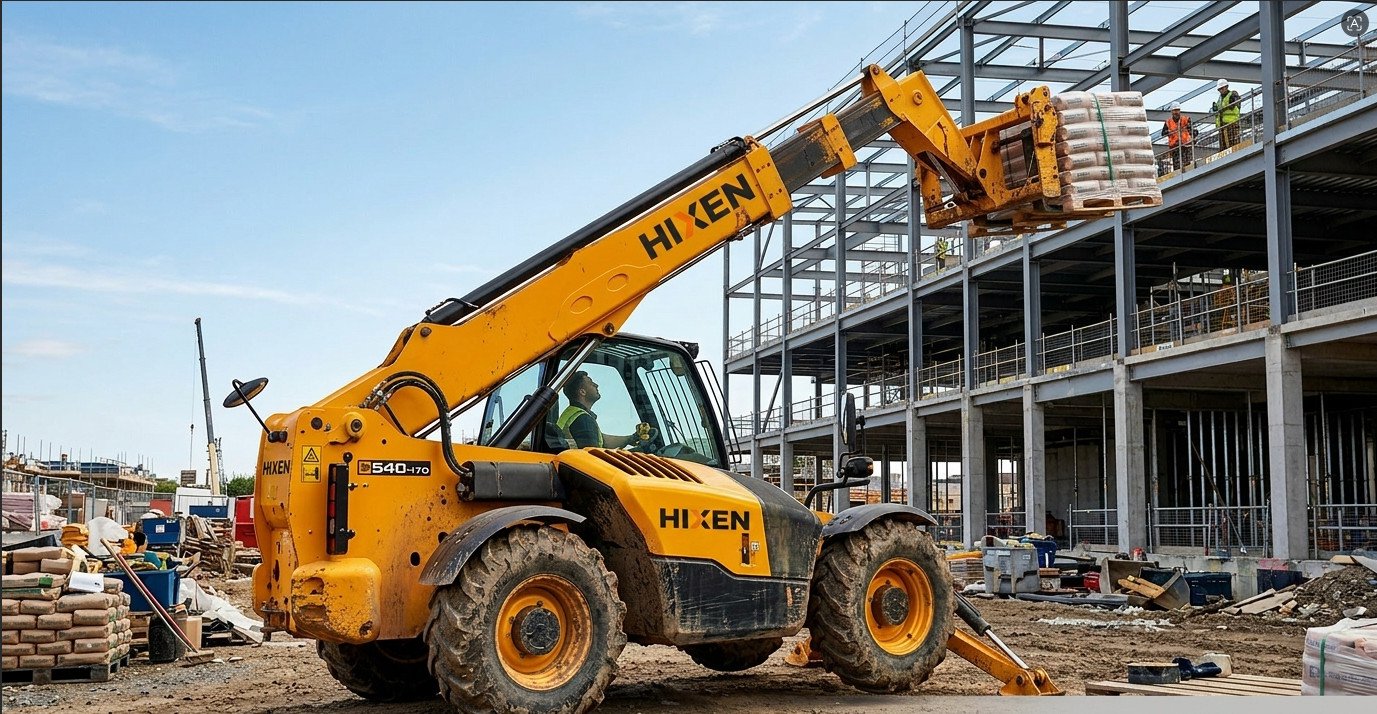
I’ve been exporting telehandlers from our factory in Shandong, China, for over 15 years, and I’ve seen it all. People often think a telehandler is just a telehandler. But that’s a costly mistake. The boom is the heart of the machine, and its design determines everything from how high you can lift to where you can work. To really understand the different types of booms, you first need to understand the machine itself. Let’s start with the basics to see why this matters so much.
What Is a Telehandler and How Does It Actually Work?
Ever seen a machine that’s part forklift, part crane? That’s a telehandler. But not understanding its core function can lead to inefficient use on your site and missed opportunities.
A telehandler, or telescopic handler, is a versatile machine with a telescoping boom that can lift, move, and place materials. It combines the reach of a crane with the utility of a forklift, using different attachments for various tasks.
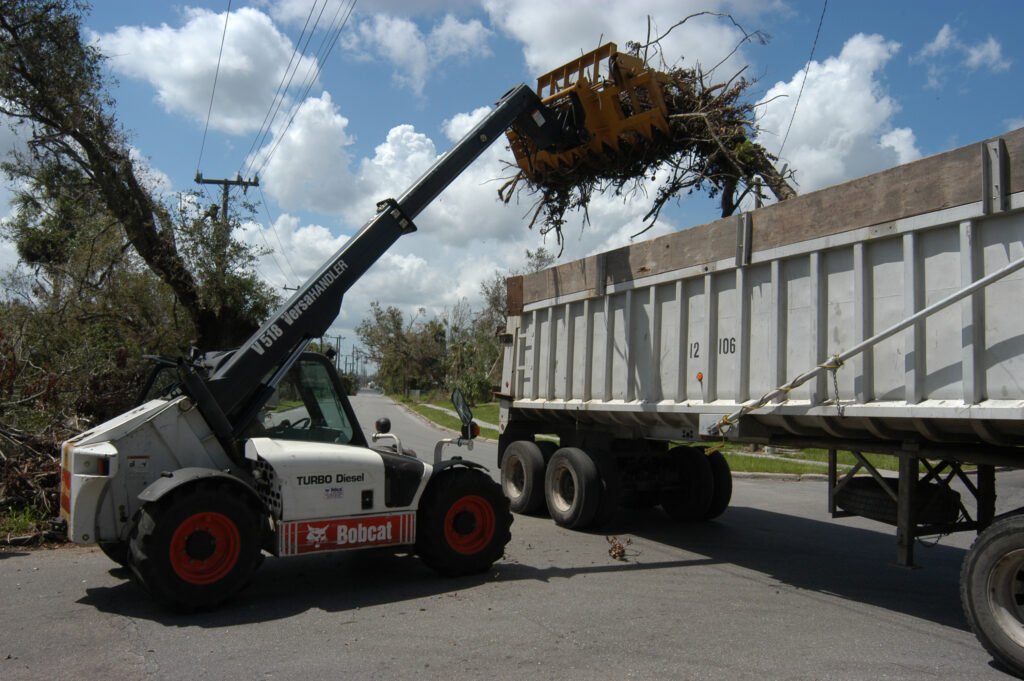
At its core, a telehandler solves a fundamental problem on any job site: the need to move materials not just up, but also forward. This is what we call “reach.” While a forklift lifts vertically, a telehandler’s boom extends telescopically, allowing it to place a pallet of bricks on the third floor of a building or reach over an obstacle to set down materials.
The machine consists of a robust chassis, a driver’s cab (either fixed or rotating), an engine compartment, and the all-important telescopic boom. Hydraulic cylinders power the boom’s extension, retraction, and lifting, giving the operator precise control. As a manufacturer, we build our machines around this principle of strength and precision. The different sections of the boom slide within each other, and the quality of the steel and the engineering of these sections determine the machine’s strength and longevity.
Here’s a simple breakdown of its main parts:
| Component | Function | Why It Matters |
|---|---|---|
| Chassis | The base of the machine, containing the engine, axles, and wheels. | A strong chassis provides stability, especially when the boom is extended. |
| Telescopic Boom | The arm that lifts and extends. | This is the machine’s key feature, defining its reach and lift height. |
| Cab | The operator’s compartment. | Can be fixed or rotating, which greatly impacts how the machine is used. |
| Attachments | Forks, buckets, grapples, etc., that connect to the boom. | These make the telehandler incredibly versatile for different jobs. |
Are All Telehandlers Just Fixed or Rotating?
People often think telehandlers are either fixed or rotating. This oversimplification can make you miss out on the perfect machine for your specific application and budget.
The main types are fixed boom (or rigid) and rotating. Fixed booms require the machine to move for positioning, while rotating booms have a turret that turns 360°, offering crane-like functionality. Your choice depends on site access and placement needs.
The biggest difference between boom types comes down to a classic trade-off: Simplicity and Stability vs. Mobility and Access. This is the first question I ask any potential customer. Do you have wide-open spaces, or are you working in a crowded, complex environment? The answer immediately points us toward either a fixed or rotating model.
Fixed Boom Telehandlers
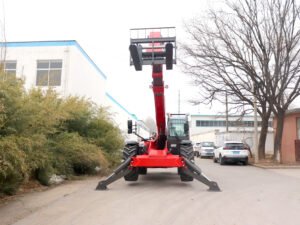
With these machines, the boom is mounted directly to the chassis. To move a load left or right, you must physically drive and reposition the entire machine. This design is simpler, more robust, and generally more affordable. It’s the workhorse of open construction sites and agricultural fields where there’s plenty of room to maneuver. Our most popular models, like the 3-ton and 4-ton telehandlers, are fixed boom because they offer incredible value and performance for most common tasks.
Rotating Telehandlers
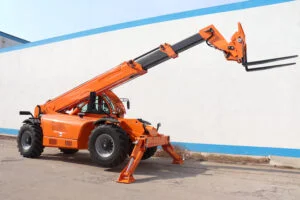
These are more like a mobile crane. The boom and cab are mounted on a rotating turret, or “slew,” that can spin 360 degrees while the chassis remains stationary. This is a game-changer for confined job sites. Imagine you’re working between two buildings; you can park the telehandler once and use the rotating boom to pick up materials from a truck and place them on multiple spots on the building’s facade without ever moving the chassis. They often come with outriggers for maximum stability, but this complexity comes at a higher price.
Here is a table to help you decide:
| Feature | Fixed Boom Telehandler | Rotating Telehandler |
|---|---|---|
| Positioning | Entire machine must move. | Boom rotates 360° on a stationary chassis. |
| Best For | Open spaces, straightforward lifting. | Confined spaces, complex placements. |
| Cost | Lower initial cost and maintenance. | Higher initial cost and maintenance. |
| Complexity | Simpler, more robust design. | More complex, acts like a mobile crane. |
| Setup Time | Minimal; drive and lift. | Longer; requires deploying outriggers. |
How Do Fixed Boom Telehandlers Really Operate on a Job Site?
You’ve chosen a fixed boom telehandler for its stability and price. But if you don’t use it correctly, you’ll lose all the efficiency you hoped to gain.
A fixed boom telehandler operates by driving to the work area, extending its boom forward and upward to lift or place a load. To move the load sideways, the entire machine must be repositioned. Stabilizers are often used for maximum height and reach.
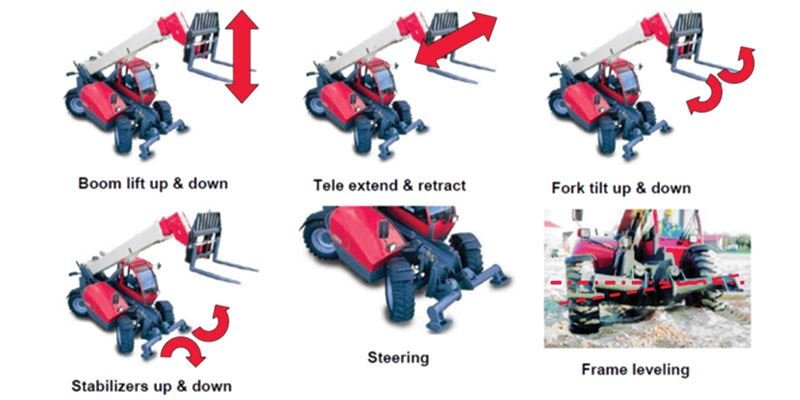
Even within the “fixed boom” category, there’s another important trade-off: Lifting Height vs. Machine Size. A customer can’t just ask for our longest boom without understanding the implications for the machine’s overall footprint. A longer boom requires more counterweight and a longer, heavier chassis to remain stable. We engineer different types of fixed boom machines based on this principle.
I remember a customer in Brazil building a large warehouse. He thought he needed an expensive crane to place steel beams. The site was wide open, so I recommended our 18-meter fixed boom model. Because his team could easily drive the machine to each location, it did the job for a fraction of the cost and time of setting up a crane. This is the power of choosing the right type.
Here’s how fixed boom models are specialized:
1. Standard Models
These are the all-rounders, like our 7-meter and 10-meter boom telehandlers. They offer a great balance of reach, capacity (typically 3 to 4 tons), and maneuverability. They are the backbone of many construction and rental fleets because they can handle about 80% of common lifting tasks effectively.
2. High-Lift Models
When a job requires placing materials on a 4th or 5th story, you need a high-lift model. Our 14-meter and 18-meter telehandlers fall into this category. To achieve this reach safely, the chassis is longer and heavier, providing the necessary stability when the boom is fully extended. They are specialists for vertical construction projects.
3. High-Capacity Models
For lifting dense, heavy materials like blocks of stone, precast concrete, or large industrial components, you need a high-capacity machine. Our 5-ton and 6-ton models are built for this. The boom itself is constructed with thicker steel, and the hydraulic system is more powerful to handle the immense stress. The trade-off is often a slightly reduced maximum reach compared to a high-lift model of a similar size.
When Are Compact Telehandlers a Smarter Choice Than Larger Machines?
Thinking a bigger machine is always better? This mistake can lead to access problems and site damage, especially in tight spaces. Sometimes, smaller is smarter and more profitable.
Compact telehandlers are most effective in confined spaces like urban construction sites, parking garages, or inside buildings. Their smaller size and tighter turning radius allow them to navigate where larger machines cannot, without sacrificing significant lifting capability for their class.
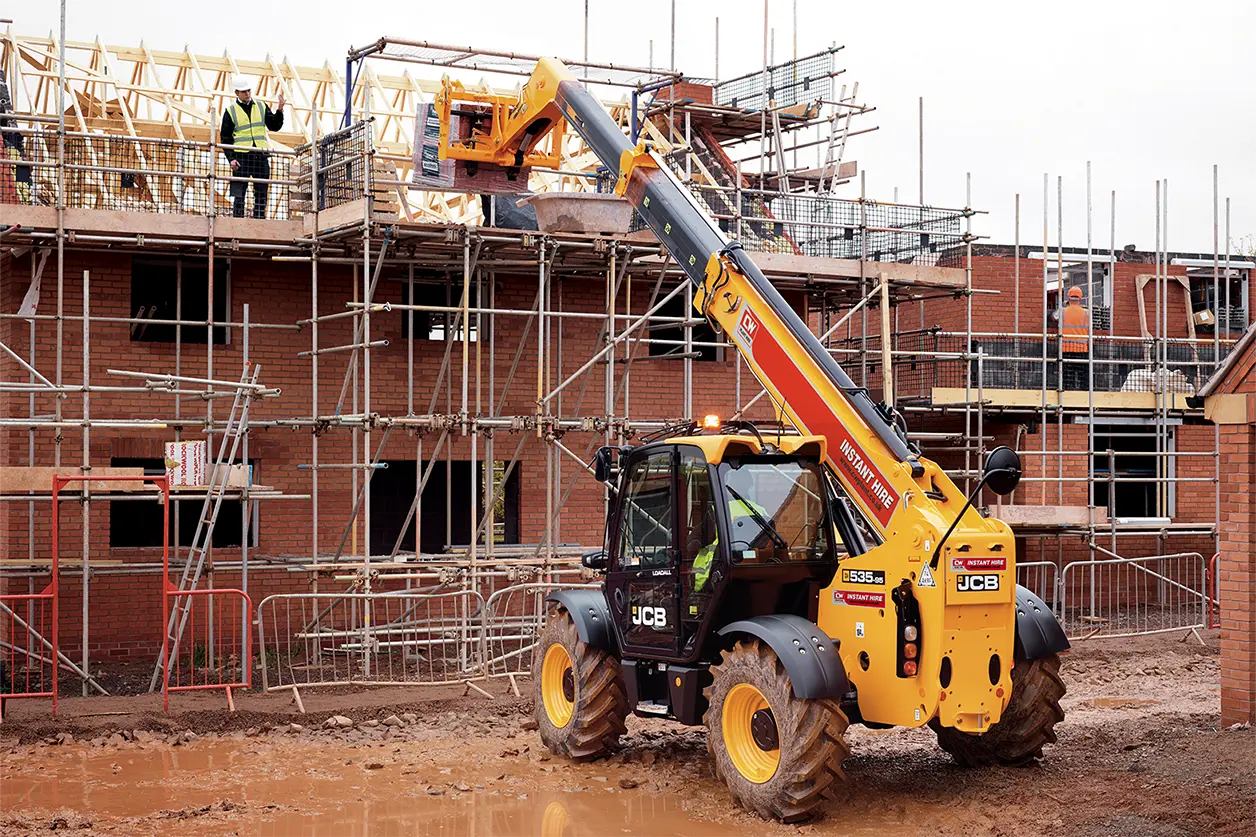
The key conflict that compact telehandlers solve is Maneuverability vs. Power. On many modern job sites, especially in dense urban areas or for renovation projects, space is the biggest luxury. A large, powerful telehandler is useless if it can’t get through the gate or navigate around existing structures. That’s where compact models shine.
I have a distributor in Germany whose biggest sellers are our 3-ton, 7-meter compact models. His customers are mostly landscapers and small residential builders. They love these machines because they can drive them through a garden gate, lift pallets of sod over a fence, or move materials around a cramped renovation site without tearing up the driveway.
This brings up another trade-off: Off-road Capability vs. Ground Protection. While our larger machines have deep-tread tires for extreme mud, compact models often use tires with a less aggressive pattern. This makes them ideal for working on finished surfaces like asphalt or lawns without causing damage. They are the perfect tool for precision work in sensitive environments, proving that the right choice is about finesse, not just brute force.
How Are Telehandlers Evolving for Specialized Industries?
Still thinking of a telehandler as just a construction machine? This limited view means you’re missing out on highly specialized models that could revolutionize your industry’s workflow.
Telehandlers are no longer one-size-fits-all. Specialized models now exist for agriculture (with PTO), demolition (with reinforced booms), and even tunneling (with low-profile electric chassis). Choosing the right one means matching the machine’s features to your industry’s demands.
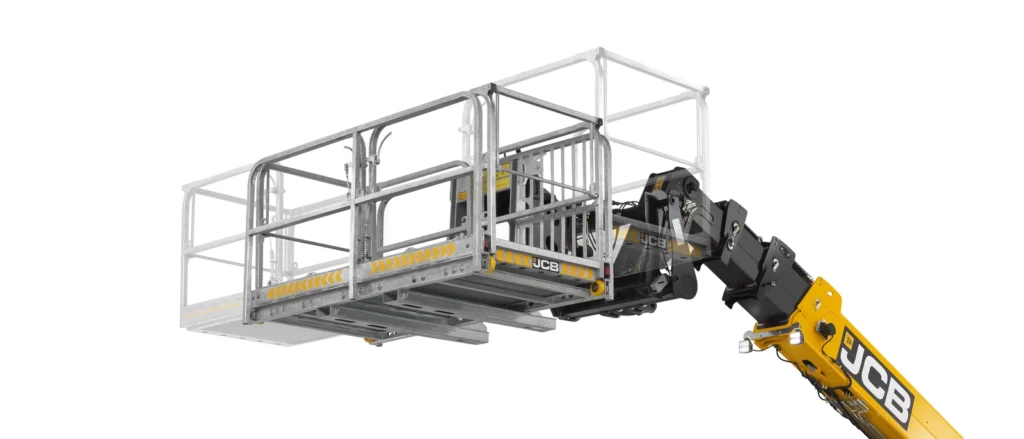
The biggest shift I’ve seen in my 15 years in this business is the move from “general-purpose” to “scene-specific” machines. A telehandler is no longer just a forklift that can reach high. It’s a specialized platform designed for the unique challenges of different industries. We don’t just sell a machine; we provide a solution tailored to a specific job.
For the Modern Farm
An agricultural telehandler is far more than a lifting machine. We equip them with features like a Power Take-Off (PTO) and a three-point hitch at the rear. This transforms the telehandler into a multi-function tool that can not only lift hay bales but also pull and power attachments like a mower or a spreader, just like a tractor.
For Heavy Industry and Demolition
These environments demand brute strength and durability. We build specialized models with reinforced booms, extra plating to protect components, and powerful hydraulic circuits designed to run attachments like grapples for scrap handling or hydraulic breakers for demolition. They are built to withstand punishment day in and day out.
For Mining and Tunneling
These are some of the most challenging environments on earth. Here, machines need to be low-profile to fit under low ceilings. Increasingly, they need to be electric to eliminate diesel emissions in enclosed spaces. We’ve even developed explosion-proof models for use in coal mines, where safety is the absolute top priority. This evolution shows that the “type” of telehandler is now defined by “who it’s for,” not just “how it moves.”
| Industry | Key Challenge | Specialized Features | Common Attachments |
|---|---|---|---|
| Construction | Reach, capacity, speed | High-lift/high-capacity booms, robust chassis | Forks, Jibs, Man Baskets |
| Agriculture | Versatility, multi-function use | PTO, three-point hitch, high-speed travel | Bale Spears, Buckets, Grapples |
| Demolition/Recycling | Durability, attachment power | Reinforced boom, protected hydraulics | Breakers, Shears, Sorting Grapples |
| Mining/Tunneling | Confined space, air quality | Low-profile design, electric/explosion-proof | Scaling Hammers, Buckets |
How Is Electrification Redefining Telehandler Types?
Sticking with diesel because it’s what you know? You might be falling behind as electric models solve old problems with noise, emissions, and even stability.
Electric telehandlers are changing the game. Their quiet, zero-emission operation allows them to work indoors and outdoors. The low-slung battery placement improves stability, potentially allowing for greater lift capacity in a more compact design, blurring traditional category lines.
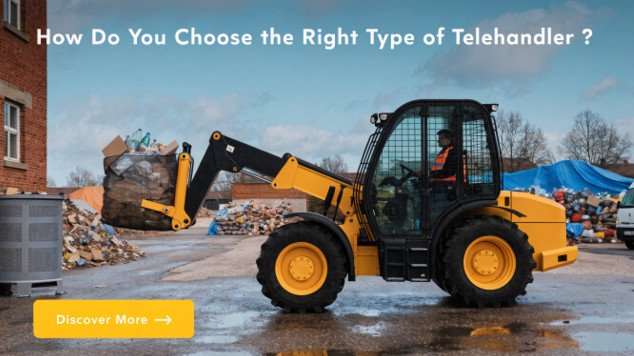
For decades, the diesel engine defined a telehandler’s design. Its size, weight, and need for cooling and exhaust systems dictated the machine’s shape and center of gravity. Electrification is tearing up that rulebook. As a manufacturer, this is the most exciting development we’re working on. It’s not just about swapping a diesel engine for a battery and motor; it’s about re-imagining what a telehandler can be.
The most profound change is in stability. A heavy diesel engine sits high in the chassis. A battery pack, which is also very heavy, can be designed as a flat, low-slung component that forms the base of the machine. This dramatically lowers the center of gravity. A more stable machine can safely lift more weight or reach further with a lighter boom, completely changing the old compromises between size, weight, and capacity. An electric rotating telehandler could potentially have a lighter upper structure, making it faster and more efficient.
Furthermore, the boundary between indoor and outdoor work is disappearing. With zero emissions and near-silent operation, the same machine that unloads a truck outside can drive directly into a food processing plant or a finished building to place materials. This eliminates the need for multiple machines and streamlines workflows.
| Feature | Diesel Telehandler | Electric Telehandler |
|---|---|---|
| Emissions | Present (Tier 4/Stage V) | Zero at point of use |
| Noise Level | High | Very low |
| Operational Area | Primarily outdoors | Indoor and outdoor |
| Center of Gravity | Higher | Lower (improves stability) |
| Maintenance | Engine oil, filters, coolant | Fewer moving parts, simpler |
| Refueling/Charging | Fast (minutes) | Slower (hours) |
Is a Telehandler Really Better Than a Forklift, Crane, or Skid Steer?
Your yard has a forklift, a small crane, and a skid steer. Why add a telehandler? Not understanding its unique advantages could be costing you in efficiency and versatility.
A telehandler is better when you need a combination of reach, mobility, and versatility. It outperforms a forklift in reach and rough terrain, is more mobile than a small crane, and has greater lift height and capacity than a skid steer.
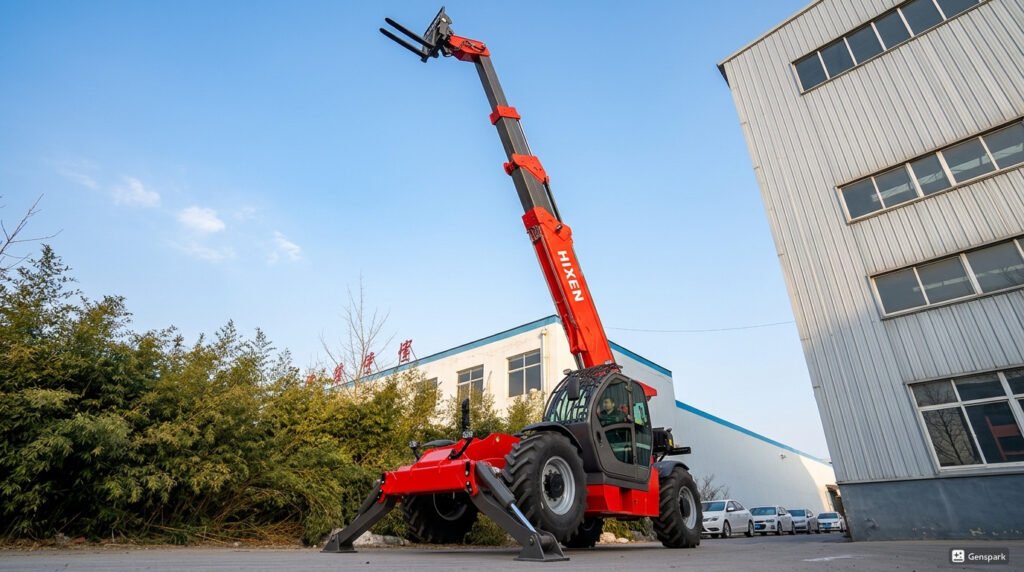
A telehandler isn’t meant to replace every other machine, but it can often replace several of them on a single job. It’s the ultimate multi-tool. The value proposition is simple: do more with one machine, one operator, and one fuel bill.
I once visited a customer in Southeast Asia who was building a series of two-story houses. He was using a skid steer to move pallets of bricks from the stockpile to the houses, and then a small, cumbersome mobile crane to lift them to the second floor. It was a slow, two-step process involving two machines and two operators.
We brought one of our 10-meter telehandlers to the site for a demonstration. The operator was able to pick up a pallet from the stockpile, drive across the muddy site, and place it directly on the second-story scaffolding in a single, smooth operation. The customer bought two machines on the spot. He saw immediately that a telehandler doesn’t just lift; it transforms a workflow.
Here is how a telehandler stacks up against other common equipment:
| Machine | Primary Strength | Key Limitation | Where a Telehandler Wins |
|---|---|---|---|
| Industrial Forklift | Excellent maneuverability on smooth surfaces. | Limited to smooth ground; only lifts vertically. | Rough terrain capability and forward reach. |
| Rough Terrain Forklift | Good on uneven ground. | Only lifts vertically. | Forward and upward reach. |
| Skid Steer Loader | Extremely agile, great for grading/ground-level work. | Limited lift height and capacity. | Vastly superior reach and lifting capacity. |
| Mobile Crane | Extreme lifting height and capacity. | Slow to set up; limited mobility on site. | Faster setup, much higher mobility, versatile attachments. |
Conclusion
Choosing the right telehandler boom isn’t a small detail; it’s the key to your project’s efficiency. Match the machine’s design and features to your specific job for maximum ROI.
Follow us on :YouTube.