Choosing the wrong machine for a job is frustrating. It wastes time and money. Understanding telehandler booms is the key to making the right choice and maximizing your efficiency on site.
The best telehandler boom depends on your job’s specific needs for reach, height, and space. Straight booms are best for long horizontal reach, articulated booms offer flexibility in tight spots, and rotating booms provide 360-degree access, like a mobile crane.
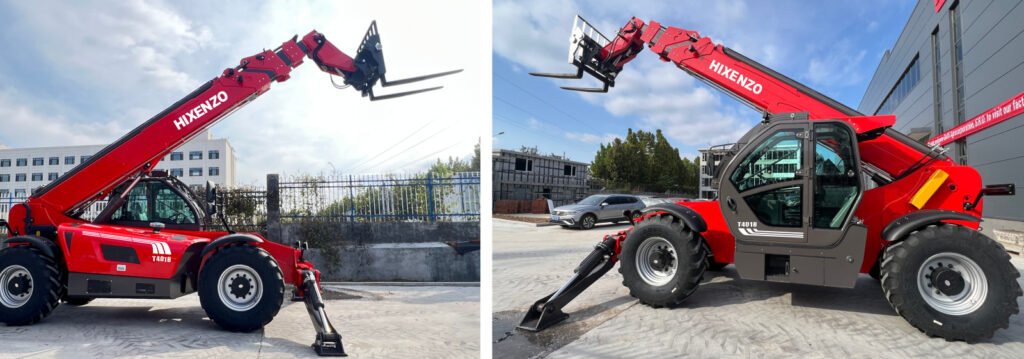
Making the right choice in a telehandler isn’t just about picking the biggest machine. It’s about understanding the heart of the machine: its boom. For 15 years, I’ve helped customers match the right machine to their work, and it always comes down to the boom’s design. The boom dictates what a telehandler can do, where it can go, and how safely it can perform. Let’s break down everything you need to know to choose wisely and get the most out of your investment.
What Is a Telehandler?
Are you confused by all the different machines on a job site? You might worry you are using the wrong one. A telehandler could be the single, versatile solution you need.
A telehandler, or telescopic handler, is a powerful machine built with a telescoping boom. It can lift, move, and place materials. Unlike a standard forklift, its boom extends forward and upward, giving it much greater reach and height for all kinds of jobs.
At my company in Shandong, China, we’ve been building these machines for over 15 years. A telehandler is essentially a mix of a wheel loader, a forklift, and a small crane. It has a robust chassis like a loader for rough terrain. It has a cab for the operator.
And most importantly, it has the boom. This boom is what makes it so special. I remember a customer who owned a small construction company. He had a forklift for pallets, rented a small crane for lifting trusses, and used a skid steer for cleanup. He replaced all three with one of our 4-ton telehandlers. It simplified his operations and saved him a huge amount of money on maintenance and transport. That’s the power of a telehandler’s versatility.
What Are the Main Types of Telehandler Booms?
Choosing a boom type can feel complicated. Making the wrong choice leads to inefficiency and even risk. Understanding the three main types makes your decision much easier and gets you the right tool.
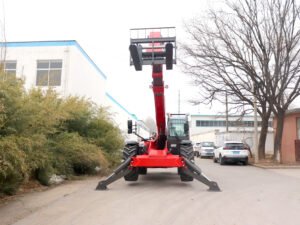
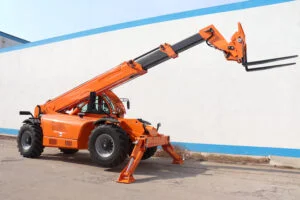
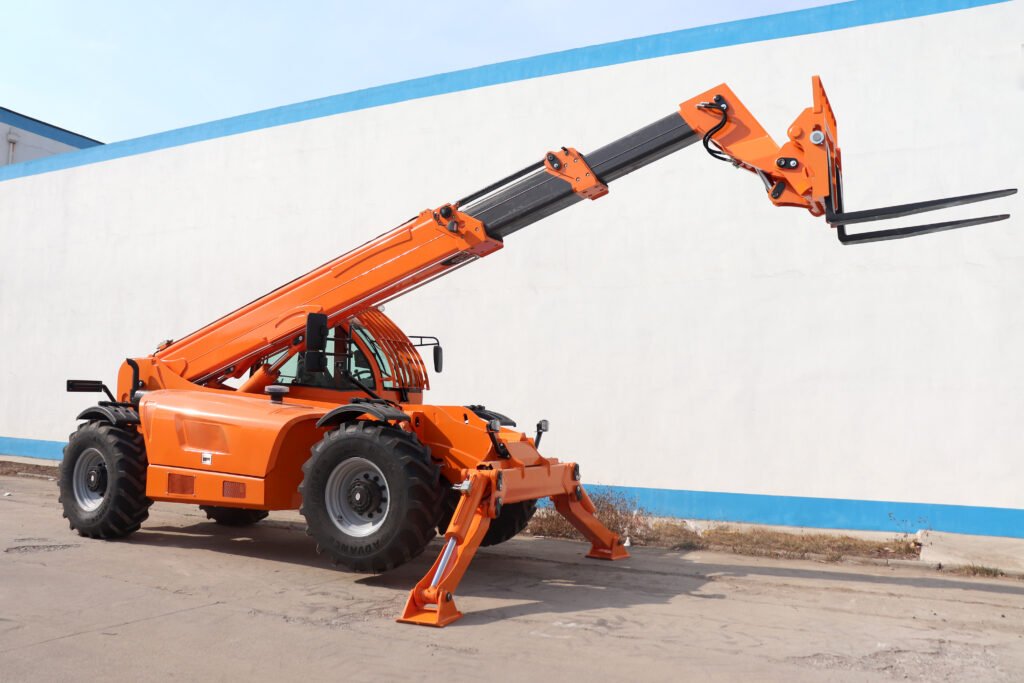
The main types are straight (standard), articulated (Z-type), and rotating. Straight booms are champions of horizontal reach. Articulated booms are perfect for up-and-over clearance. Rotating booms offer 360-degree placement, working like a mobile crane. Your specific job will dictate the best choice.
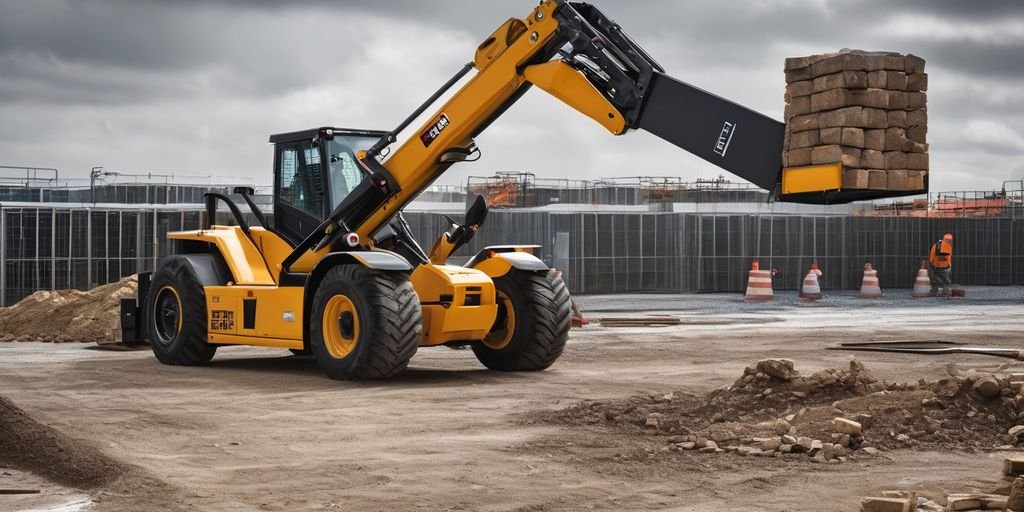
From an engineering standpoint, a boom’s design is always a trade-off. We balance the job site needs, the required flexibility, and the lifting capacity. There is no single “best” boom, only the best boom for a particular task. For example, a straight boom is excellent for reaching across a foundation to place materials on the other side. But it’s not great inside a packed warehouse. A Z-type articulated boom, however, can lift a pallet straight up and over a rack in a tight aisle. The choice comes down to the “working envelope,” which is the area the boom can reach.
Here is a simple table to break it down:
| Feature | Straight Boom | Articulated (Z-Boom) | Rotating Boom |
|---|---|---|---|
| Best For | Long horizontal reach | Up-and-over obstacles | 360° material placement |
| Strength | Maximum forward reach | Navigating tight spaces | Crane-like versatility |
| Weakness | Limited maneuverability | Shorter horizontal reach | Lower capacity for its size |
| Example Use | Placing materials on a roof | Loading pallets in a warehouse | Servicing multiple points from one spot |
What Sizes of Telehandlers Are Available?
Are you worried a telehandler might be too big or too small for your work? Choosing the wrong size costs you money and hurts efficiency. We offer a range of sizes to match your project’s demands.
Telehandlers come in various sizes, defined by their lift capacity and boom reach. Capacities often range from 3 to 6 tons, and boom reach can go from 7 meters up to 18 meters or more. The right size depends on your heaviest load and highest placement point.
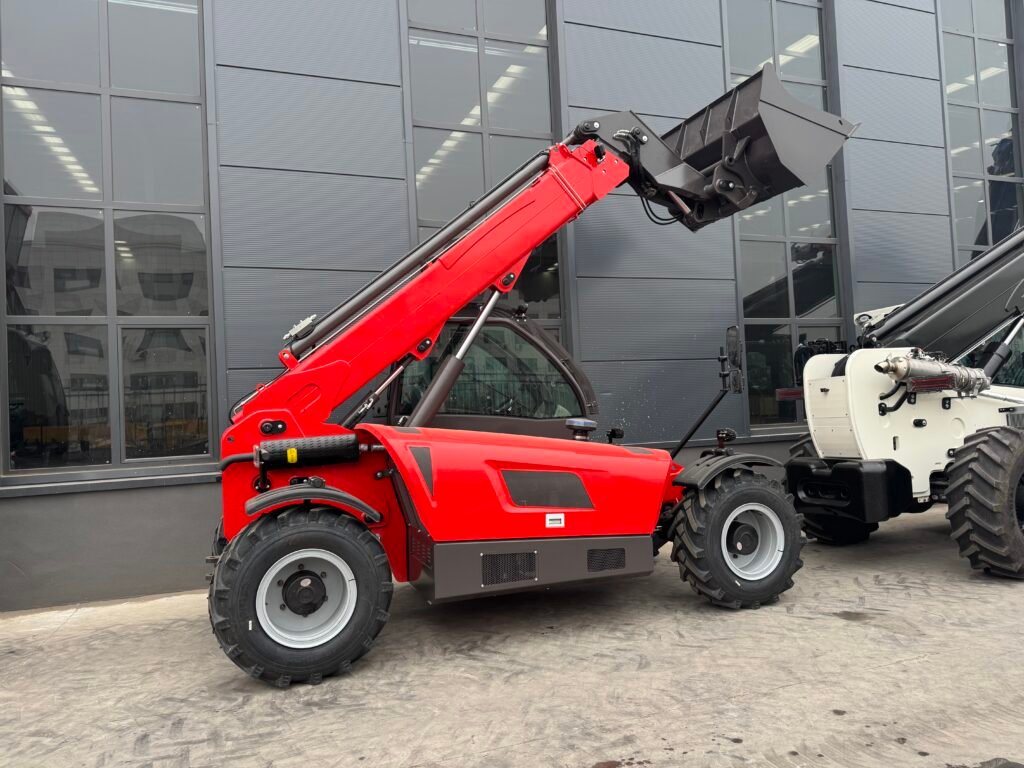
At our factory, we focus on the most popular sizes: 3-ton, 4-ton, 5-ton, and 6-ton models. Our booms can extend to 7, 10, 14, and 18 meters. The size you need is directly related to your work. If you are a farmer stacking hay bales, a 3-ton machine with a 7-meter boom might be perfect. If you are a builder working on three-story buildings, you might need a 5-ton machine with an 18-meter reach.
It’s not just about lifting a certain weight. It’s about lifting that weight safely at a specific height and distance. This is where stability standards like ISO 22915 come in. A larger machine has a heavier chassis and more counterweight, which allows it to remain stable when the boom is fully extended. A bigger machine has a larger “working envelope,” meaning it can safely handle loads over a wider area.
What Are Common Telehandler Uses in Agriculture & Earthmoving?
Are you using too many different machines on your farm or construction site? This wastes fuel and valuable time. A single telehandler can often do the work of several machines, streamlining your entire operation.
In agriculture, telehandlers are used to stack bales, load grain, and clean barns. In earthmoving, they move soil, transport pipes, and help with small-scale demolition. Their amazing versatility comes from the boom and the wide range of attachments you can use.
The telehandler is a true multi-tool, and I see it every day with the customers we export to.
In Agriculture:
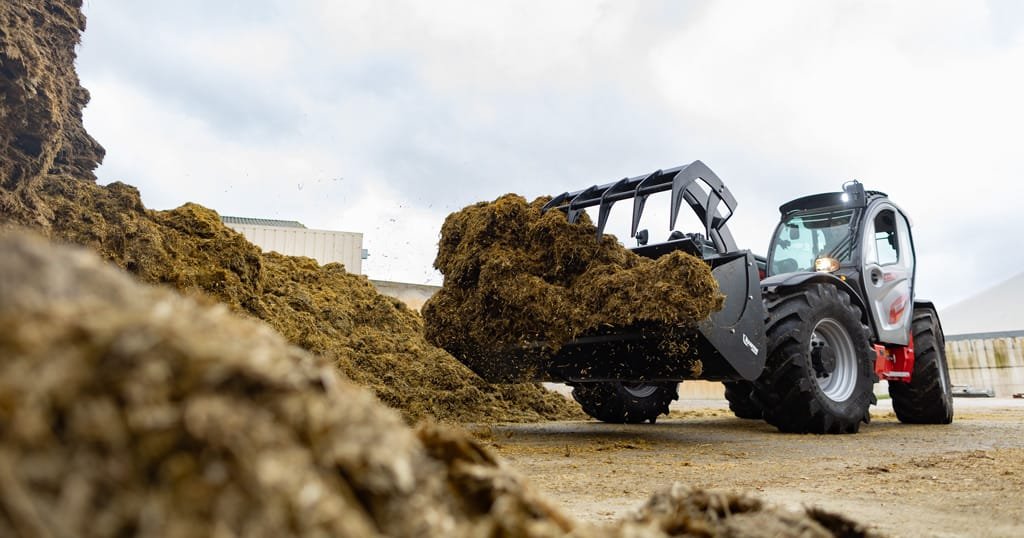
Farmers love our machines. With a bale grab attachment, one person can stack hundreds of large hay bales in an afternoon. Switch to a bucket, and they can load feed for their livestock or move grain. Put on a set of forks, and they can unload pallets of seed and fertilizer from a truck. One farmer in France told me our 3-ton telehandler cut his daily loading time in half.
In Earthmoving and Construction:
On construction sites, our CE-certified telehandlers are essential. They use them to lift pallets of bricks or roofing materials right where they are needed, saving manual labor. With a bucket, they can move dirt and clean up the site. With a jib attachment, they can carefully place heavy items like pipes or support beams. This ability to do many different jobs makes the telehandler one of the most valuable machines on any site.
What Are Some Key Telehandler Maintenance Tips?
Is unexpected downtime costing you money and jobs? Neglecting simple maintenance leads to expensive repairs down the road. A few minutes of daily checks can keep your telehandler running reliably.
Daily checks are the most important part of maintenance. Inspect tires, fluid levels like hydraulic oil and engine oil, and all the lights. Listen for any strange noises. Always keep the boom mechanism clean and well-lubricated. Regular professional service is also key for long-term health.
I always tell my customers that a well-maintained machine is a profitable machine. Here is a simple checklist you can follow to ensure your telehandler stays in top condition.
Daily Checks
[ ]Check tire pressure and look for any damage.[ ]Check fluid levels: engine oil, coolant, and hydraulic fluid.[ ]Test all lights, horns, and safety alarms.[ ]Do a visual walk-around, inspecting the boom for any damage or hydraulic leaks.
Boom-Specific Maintenance
The boom is a complex system, and it needs special attention. Many people don’t realize that how a boom extends—its internal mechanism—affects maintenance. Some booms use a simple, large hydraulic cylinder. For these, you must check the hydraulic hoses for wear. Others use a more complex system of chains and smaller cylinders to extend multiple sections at once. For these, you must inspect the chains for proper tension and keep them lubricated. A little grease prevents major problems. Also, check that all safety sensors, like limit switches and load indicators, are working correctly. They are there to keep you safe.
When Does a Rotating Telehandler Excel?
Are you tired of constantly moving your machine on a crowded job site? This repositioning wastes fuel and precious time. A rotating telehandler can stay in one spot and serve a huge area.
A rotating telehandler is perfect for congested job sites or when many tasks need to be done from a single position. Its 360-degree rotating turret lets it lift and place materials all around the machine without moving its chassis, just like a small, mobile crane.
Think of a rotating telehandler as a standard telehandler boom mounted on a spinning base, like a crane. This design is brilliant for specific situations. The main benefit is efficiency. Imagine a construction site for a new building. You can park the rotator in the center and use it to deliver materials to the front, back, and both sides of the building without ever starting the engine to move.
This saves an incredible amount of time. However, there is a trade-off. To make it stable, a rotating telehandler needs a heavier base and large outriggers. This often means it has a slightly lower lift capacity compared to a fixed-frame machine of the same size. It’s a specialized tool for a specialized job, and it requires more complex safety systems, like angle sensors and encoders, to track the boom and turret position at all times.
How Do Attachments Impact Telehandler ROI?
Is your expensive machine sitting idle for much of the day? A single-purpose machine limits your potential to make money. The right attachments can turn your telehandler into a whole fleet of machines.
Attachments massively increase your return on investment (ROI) by letting one machine do many jobs. Instead of buying a forklift, a crane, and a loader, you buy one telehandler and switch between forks, buckets, and jibs. This cuts down on equipment costs, maintenance, and transport.
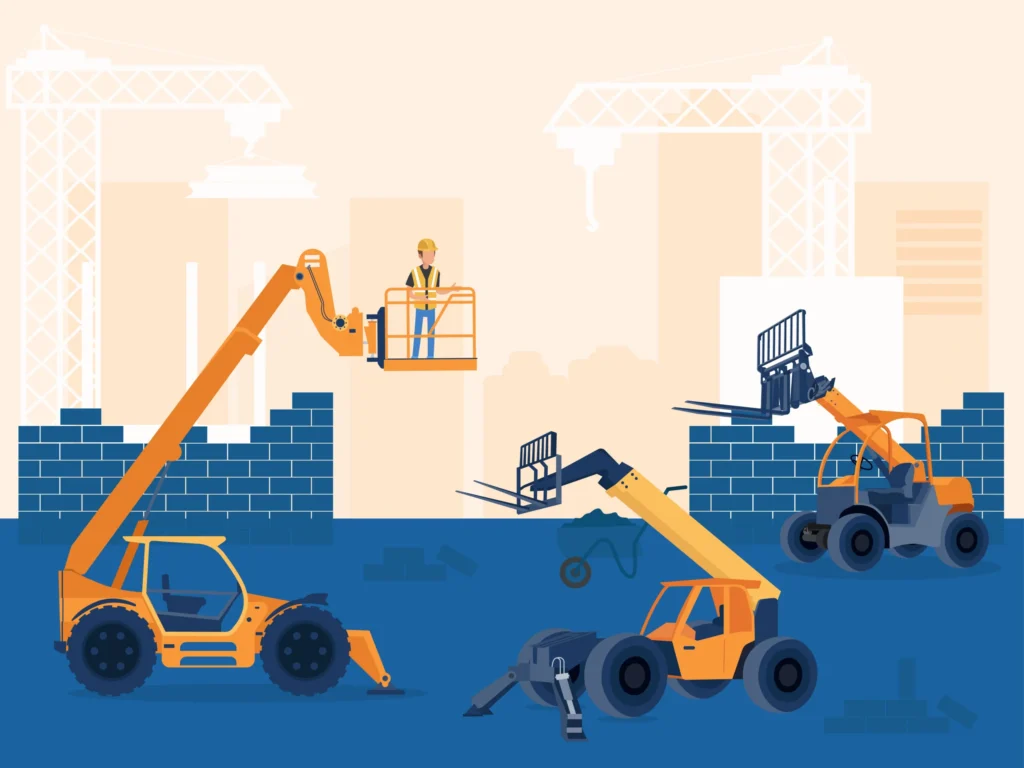
This is the secret to getting the most value from your machine. We design our telehandlers to be easily fitted with a wide range of attachments. A customer can start the day unloading pallets with forks, switch to a bucket to move some gravel, and end the day lifting an engine into a truck with a jib crane.
Here are some common attachments and how they create value:
| Attachment | Primary Function | How It Boosts ROI |
|---|---|---|
| Standard Forks | Lifting pallets | Replaces a dedicated industrial forklift. |
| Bucket | Scooping loose material | Replaces a wheel loader or skid steer. |
| Bale Grab | Handling round/square bales | A must-have for any modern farm. |
| Jib Crane | Lifting with a hook | Avoids renting a small mobile crane. |
| Work Platform | Lifting personnel safely | Replaces a scissor lift for maintenance tasks. |
Think about it this way: you buy one engine, one chassis, and one hydraulic system. But you get the benefit of five or more machines. This is how you get a fast return on your investment.
What Are the Best Uses of Telehandlers?
Are you still unsure if a telehandler is the right machine for you? Buying the wrong equipment is a very costly mistake. Understanding where they truly shine helps you see how they can improve your work.
The best uses for telehandlers are any jobs that need both long reach and significant lift capacity. This includes construction sites, farms, and industrial maintenance. Their number one strength is their incredible versatility.
After helping so many customers find the right machine, I’ve learned that a telehandler’s “best use” is all about matching the right machine to the right task. It’s a puzzle, and we have the pieces.
- For high-reach construction? A straight boom telehandler is your best friend. Its ability to reach forward and up is perfect for placing materials on the second or third story of a building.
- For busy farm work? A standard 3 or 4-ton machine with multiple attachments is unbeatable. It moves from stacking bales to loading feed without missing a beat.
- For work in tight, confined spaces? An articulated or Z-boom telehandler can get into places a straight boom can’t, lifting up and over obstacles.
- For a large, complex construction site? A rotating telehandler is the king. It acts as a central hub, efficiently distributing materials across a wide area from a single spot.
The best use isn’t a single answer. It’s a combination of the right boom, the right size, and the right attachment for your specific job.
Conclusion
Choosing the right telehandler boom is key. By understanding straight, articulated, and rotating types and matching them to your job’s needs, you ensure maximum efficiency, safety, and return on investment.
Follow us on :YouTube.