Are you confused by a telehandler’s complexity? Not knowing the key components can make buying or operating one feel overwhelming. Let’s break down the main systems so you understand everything.
Parts of telehandler’s are grouped into functional systems: the structural frame and boom, the power and drive systems for movement, the hydraulic system for lifting, the operator’s cab for control, and crucial safety features. Understanding these systems is key to its operation.
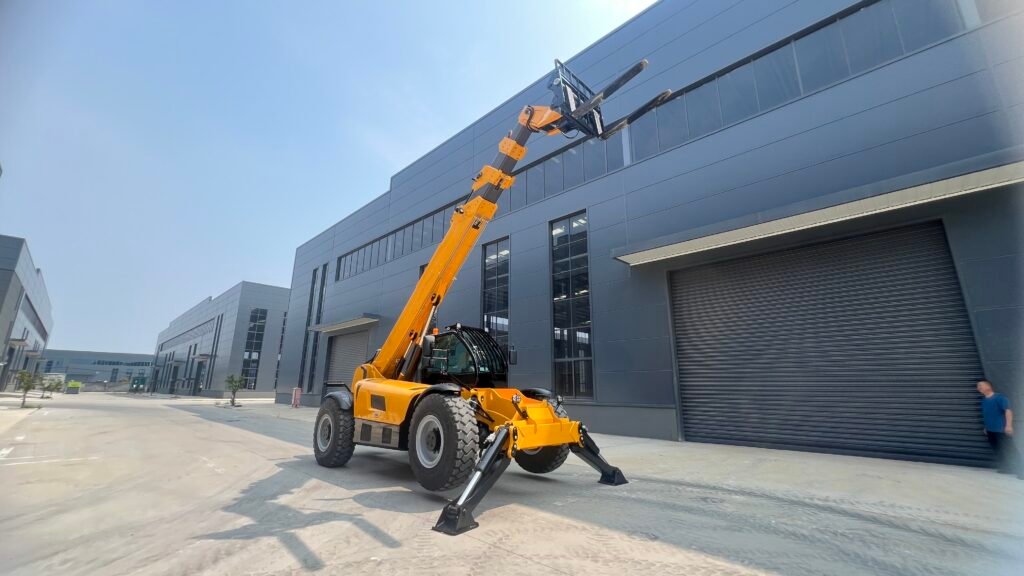
It’s easy to get lost in a long list of parts. After 15 years of manufacturing these machines, I’ve learned it’s much better to think about a telehandler like a living thing. It has systems that must work together perfectly. When you look at it this way, everything becomes much clearer. Let’s explore these core systems one by one.
What Are Parts of Telehandler’s Main Functional Systems?
Just listing parts like the boom, engine, and cab doesn’t explain how a telehandler really works. This can leave you confused about what’s truly important for performance. Let’s group the parts into functional systems to see the bigger picture.
Instead of a simple parts list, think of a telehandler in terms of its main systems. These are the structural system (frame and boom), the power system (engine), the hydraulic system (lifting), the drive system (movement), and the control system (operator’s cab).
Thinking in systems helps you understand how the machine performs a task. A single part does nothing on its own. But when you see how the engine powers the hydraulic pump, which then moves the boom, you start to understand the machine. We design our telehandlers this way, ensuring every system works in harmony with the others. It’s the difference between a simple collection of parts and a truly productive machine. This approach also makes it easier to diagnose problems. For example, if the boom is slow, you know to check the power and hydraulic systems.
Here is a simple breakdown of the main systems:
| System Name | Main Function | Key Components | Analogy |
|---|---|---|---|
| Structural System | Provides strength and reach | Chassis, Boom, Axles | The Skeleton |
| Power System | Creates energy | Engine, Cooling System | The Heart |
| Hydraulic System | Converts energy into force | Pump, Cylinders, Valves, Hoses | The Muscles |
| Drive System | Moves the machine | Transmission, Wheels | The Legs |
| Control System | Operator interface and safety | Cab, Joystick, LMI Display | The Brain |
What Makes the Telescopic Boom the Skeleton of the Machine?
The boom seems simple, just a big steel arm. But its design is absolutely critical for safety and lift capacity, especially at full reach. A weak boom design is a serious danger. Let’s look at the engineering that makes it work.
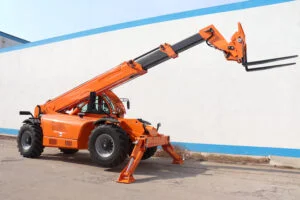
The telescopic boom is the telehandler’s core structural component. Made from high-strength steel, its sections slide within each other to extend reach. The design must balance length, rigidity, and weight to safely handle loads far from the chassis. It’s the machine’s backbone.
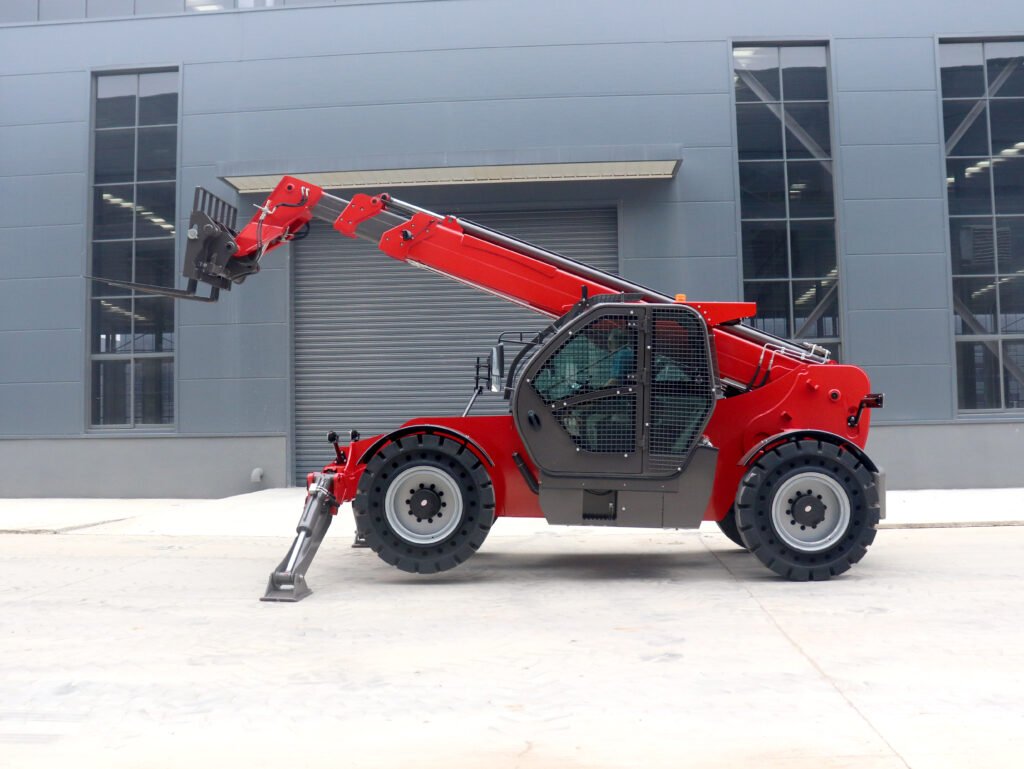
The boom is not just one solid piece. It is made of several box-shaped sections that nest inside each other. Our 14-meter and 18-meter telehandlers have four or five sections. We use very strong, high-tensile steel to build them. This allows the boom to be strong without being excessively heavy. A heavy boom would reduce the amount of weight the machine can lift.
Inside the boom, a large hydraulic cylinder pushes the sections out and pulls them back in. Between each section are special plastic or bronze pads called wear pads. These allow the sections to slide smoothly and prevent metal-on-metal contact. These pads are a key maintenance item. Worn pads can cause the boom to become shaky and unsafe. We spend hundreds of hours on computer simulations to perfect our boom designs, ensuring they can handle stress from all angles.
Why is the Engine the Heart of the Telehandler?
You might think an engine just provides power. But the wrong engine choice leads to poor performance, high fuel costs, and constant maintenance headaches. Let’s see why the right diesel engine is so vital for a telehandler’s daily work.
The engine is the telehandler’s heart, providing power for both moving and lifting. Most use diesel engines for their high torque at low RPMs. This is perfect for pushing into piles and powering the demanding hydraulic system simultaneously. Reliability and fuel efficiency are key.
The engine in a telehandler does two jobs at once. It powers the transmission to make the machine move, and it drives the hydraulic pump to operate the boom and attachments. This is why diesel engines are the best choice. They produce a lot of torque, or turning force, even when they are not running at high speeds. This is exactly what you need for tough jobs.
We carefully match the engine’s horsepower and torque to the machine’s size and hydraulic system capacity. A 3-ton machine has different power needs than a 6-ton one. As an exporter to many countries, we offer engines that meet different emissions standards, like EU Stage V. The cooling system is also part of this. The engine and hydraulic oil can get very hot during hard work, so a large, efficient radiator is essential to prevent overheating and damage.
Why is the Operator’s Cab the Brain of the Operation?
It’s easy to see the cab as just a seat with some levers. But a poorly designed cab causes operator fatigue, reduces visibility, and can be very unsafe. Let’s explore how a modern cab is the machine’s true nerve center.
The operator’s cab is the telehandler’s control center. It houses the joystick for boom and attachment control, the steering wheel, and the display monitor. Good visibility, ergonomic controls, and safety features like ROPS/FOPS are essential for productivity and protecting the operator.
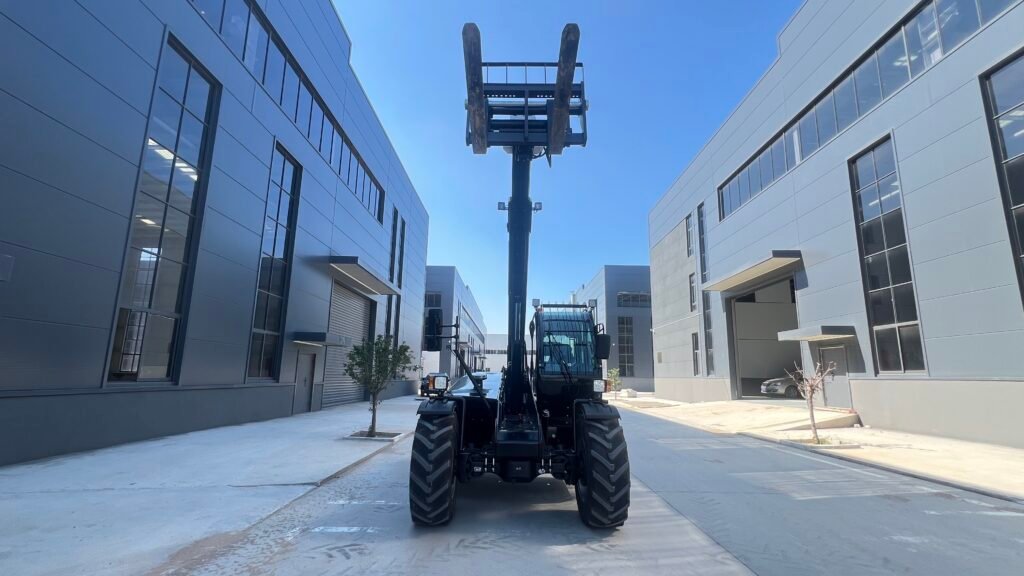
From inside the cab, the operator controls every action. The most important control is the single joystick. Pushing it forward and back raises and lowers the boom. Moving it side to side tilts the attachment. Buttons or rollers on the joystick control boom extension and any extra hydraulic functions. This single joystick control makes operation intuitive and fast. The cab is also a safety capsule. It must have ROPS (Roll-Over Protective Structure) and FOPS (Falling Object Protective Structure).
This is a strong steel frame that protects the operator if the machine tips over or if something falls on the roof. We design our cabs with large windows for 360-degree visibility because we know that a blind spot is a potential hazard. The cab also contains the main computer display, which shows a load chart and warns the operator if they are approaching the machine’s lift capacity limit.
What Makes the Chassis the Foundation for Everything?
The chassis is just the heavy frame under the machine, right? But without a solid, well-designed chassis, the machine would lack stability, durability, and the ability to lift heavy loads. Let’s look at how the chassis supports every other component.
The chassis is the telehandler’s heavy-duty frame. It supports the engine, transmission, axles, cab, and the boom. Its weight provides a crucial counterbalance to the load being lifted, ensuring stability. The design also incorporates the different steering modes.
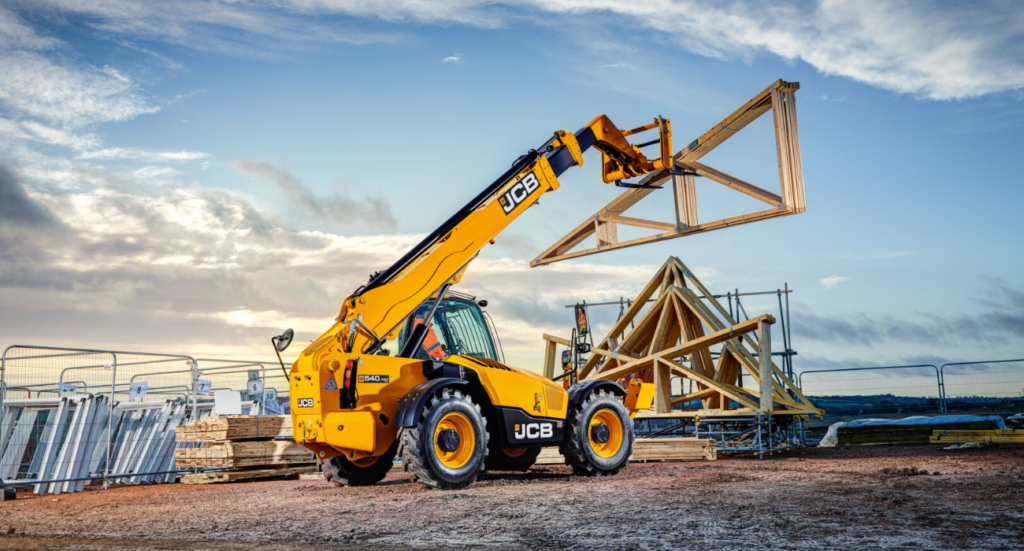
The chassis is the bedrock of the telehandler. It’s a thick, welded steel structure designed to handle immense forces. Everything is mounted to it: the engine, the cab, the axles, and the massive boom. The weight of the chassis itself is critical. It acts as a counterweight. When you lift a heavy load far out in front of the machine, the weight of the chassis is what keeps the back wheels on the ground. The chassis also determines the machine’s agility. The axles are mounted to the chassis in a way that allows for three different steering modes. We include this on all our models because it makes the machine so much more versatile on a job site.
| Steering Mode | How It Works | Best Use Case |
|---|---|---|
| 2-Wheel Steer | Only the front wheels turn. | Driving on roads at higher speeds. |
| 4-Wheel Steer | Front and rear wheels turn in opposite directions. | Making very tight turns in confined areas. |
| Crab Steer | All four wheels turn in the same direction. | Moving the machine sideways to get close to a wall. |
How Does the Hydraulic System Act as the Machine’s Muscles?
Hydraulics can seem complex and mysterious. But a weak or leaky hydraulic system means no lifting power, which leads to frustrating and costly downtime. Let’s demystify how oil under pressure gives the telehandler all its incredible strength.
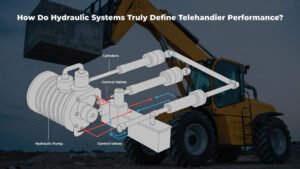
The hydraulic system is the muscle of the telehandler. An engine-driven pump sends hydraulic fluid under high pressure through hoses and valves to cylinders. These cylinders extend and retract to lift the boom, extend the sections, and operate attachments. It’s how engine power becomes lifting force.
The concept of hydraulics is simple: you are using a fluid that cannot be compressed (hydraulic oil) to transfer force. The system starts with the pump, which is attached to the engine. The pump draws oil from a tank and pushes it into the system under very high pressure. This pressurized oil flows through strong rubber hoses to control valve blocks.
When the operator moves the joystick, it tells the valves where to send the oil. The oil then flows into a hydraulic cylinder. A cylinder is basically a steel tube with a piston and rod inside. As oil fills the cylinder, it pushes the piston and rod out with immense force, which lifts the boom or tilts the forks. To lower the boom, the valve simply allows the oil to flow back out of the cylinder and into the tank. Keeping the hydraulic oil clean is the most important part of maintenance. Dirty oil will quickly destroy the pump and valves.
Why Does a Great Telehandler Depend on System Integration?
It’s tempting to focus on a single specification, like engine horsepower or maximum lift height. But a machine with powerful parts that don’t work well together will be inefficient, unreliable, and sometimes even dangerous. Let’s see why harmony between systems is the real secret to a great machine.
Individual parts are important, but how they are integrated into a balanced system is what defines a great telehandler. A powerful engine is useless without a hydraulic system that can handle its output, or a chassis that can provide stability. True performance comes from seamless harmony.
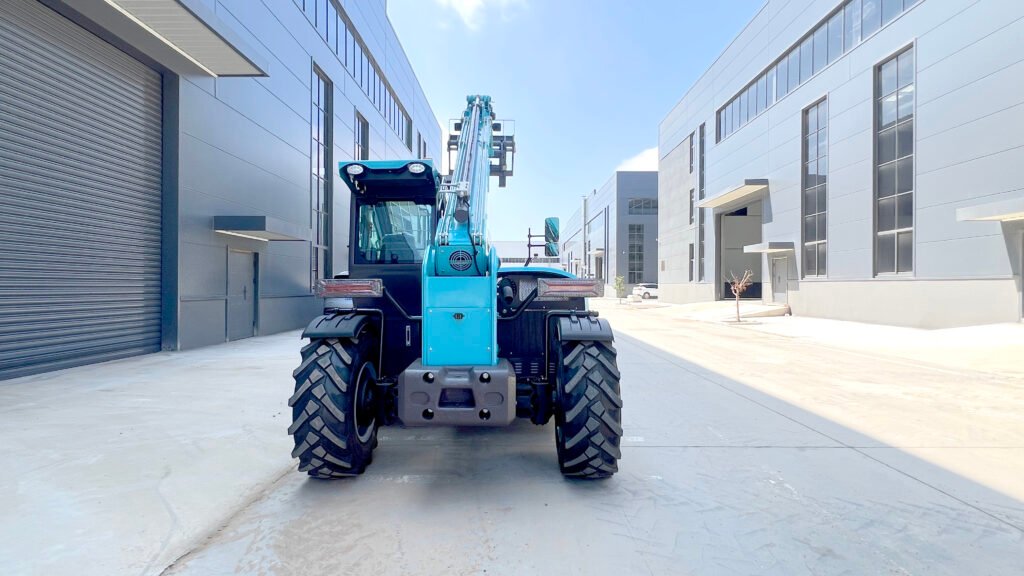
Think of it like a sports team. You can have the best players in the world, but if they don’t play together as a team, they will lose. A telehandler is the same. For example, imagine we install a very large engine in a 4-ton telehandler. If the hydraulic pump is only designed for a smaller engine, all that extra power is wasted. It can even damage the pump by trying to spin it too fast.
The chassis must also be heavy enough and the axles strong enough to handle the increased power and potential lift capacity. Everything must be balanced. The cooling system must match the engine’s heat output. The control system’s computer needs to be programmed to manage the power smoothly. As a manufacturer with 15 years of export experience, this system integration is our core focus. We don’t just assemble parts; we engineer complete, balanced systems that are reliable and efficient for our customers around the world.
Conclusion
Understanding a telehandler’s main systems—structure, power, hydraulics, and control—is more useful than a simple parts list. This knowledge helps you choose, operate, and maintain your machine effectively.
Follow us on :YouTube.